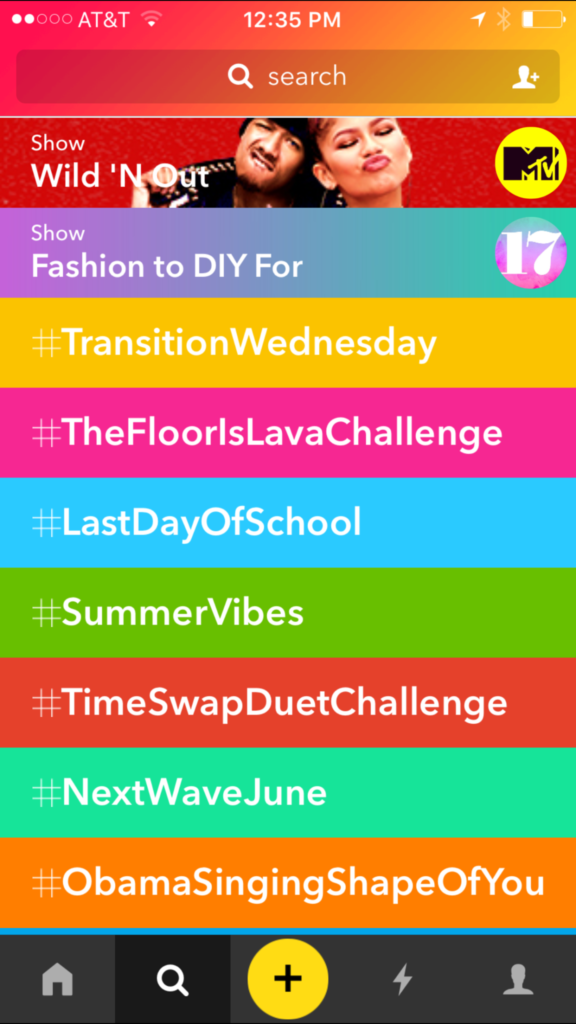
Musical.ly has joined the ranks of the social media apps that are bringing original show content to user’s feeds. The lip sync music video producing platform launched a couple of shows today. One of the shows is from MTV/Viacom and one is from Seventeen Magazine, with two more from the same companies coming out on Saturday. New shows are also coming from NBC, E!, and Telemundo. Musical.ly isn’t charging networks for this content or even selling ads for it, they’re really just using it as a test for future network deals. Whether or not this programming will provide value to the social media platform is yet to be seen. What is very apparent, however, is that there will be more content for your kid to watch than just the lip sync videos they’ve enjoyed thus far.
What Parents Should Know
Musical.ly is on my uninstall list because there is no age verification. Users can log in and watch other people’s videos without telling Musical.ly how old they are. This means you don’t know who’s watching you or sending you private messages. Most of the trending video sections are filled with tween and teen girls and boys acting out the different challenges or songs. The lack of age verification has brought some criticism to Musical.ly and many didn’t like their CEO’s response to such criticism. It seems they’re happy to allow people of any age to use the service without proving their age.
My advice is pretty obvious. I recommend you uninstall Musical.ly. Mostly because I wouldn’t allow my kids to use an app where they can be contacted by anyone and everyone regardless of age and gender. The addition of these new shows just strengthens my belief that Musical.ly can undermine your internet safety goals. Content on these shows can reach outside the boundaries of what is allowed on TV. Unless you’re watching every episode of the original shows Musical.ly puts on their trending feed, you have no real way of knowing what your kids are consuming. Musical.ly will stay on my uninstall list and if I had the list in any particular order it would probably move up the rankings as well.
Kids hide images on their phones in several ways and for many reasons. Some just don’t want all of their embarrassing goofy pictures with their friends to be shared. Sometimes there’s a more sinister reason. Something involving sexting or cyberbullying. Kids can use different kinds of apps to lock away photos. There are some that look like calculators or phone utilities apps and still some that don’t hide what they do. Now, Instagram is allowing posts to be saved within the app without being made public. It’s called Archive.
Instagram’s new archive feature allows users to remove posts from their feed without deleting them. It allows you to put the photos in an archive to be looked at in the future and even reposted. If you do repost it falls back in its original chronological order so it kind of just magically reappears where it was originally. A little arrow clock icon in the upper right corner of your profile page in the Instagram app will give you access to your archived posts. You can fill the archives by tapping on the “…” in the upper right of a post. Then just tap “Archive.”
Why would you want to archive photos? Well, some may decide later that their post wasn’t something they’d want everyone to see. Maybe the pictures from the party you attended last month wouldn’t look good to that employer you just applied for a job with. No problem, just archive those things and you can still see them without them being public. Maybe you broke up with that guy or girl and don’t want everyone to see you together all over your Instagram page. Well, just archive them and they become a private photo stash for you to weep over on your own. Your kids will even use the feature to hide posts that didn’t get as many likes as they want.
Tap the “…” then hit Archive.
Tap the circle-arrow-clock thing.
Only you can see these posts.
What Parents Should Know
I recommend you understand the Archive feature on Instagram and learn how to find it on your kids’ profile. If you often take your kids’ phone and look at their social media behavior this is a way for them to share a photo for a brief time and then save it to an archive, knowing you’ll be looking at their feed later. If you don’t know how to access the Archived photos it’s possible you can miss some of what they’ve been posting. “Finstagram” or Spam accounts are popular with teens because it’s a way to have a more private collection of photos that they don’t share with many people. I recommend you find out if your kid has a spam account and follow it. I now, recommend you check to see what photos they’ve archived as well.
There are more articles on this site about social media than any other topic. I truly believe that social media is not a part of the internet, it is the reality of what the world wide web is now all about. Every site you visit has a social aspect, even if it’s just a way to connect to your favorite social media platform. Our businesses are run through social media and advertising is more prevalent and successful on our newsfeeds than nearly anywhere else. Social media isn’t a fad or a trend. It’s the world we live in and for some, it’s an addiction. A new app, Binky, is providing a bit of a caricature of the social media lifestyle and it may just be something you should check out.
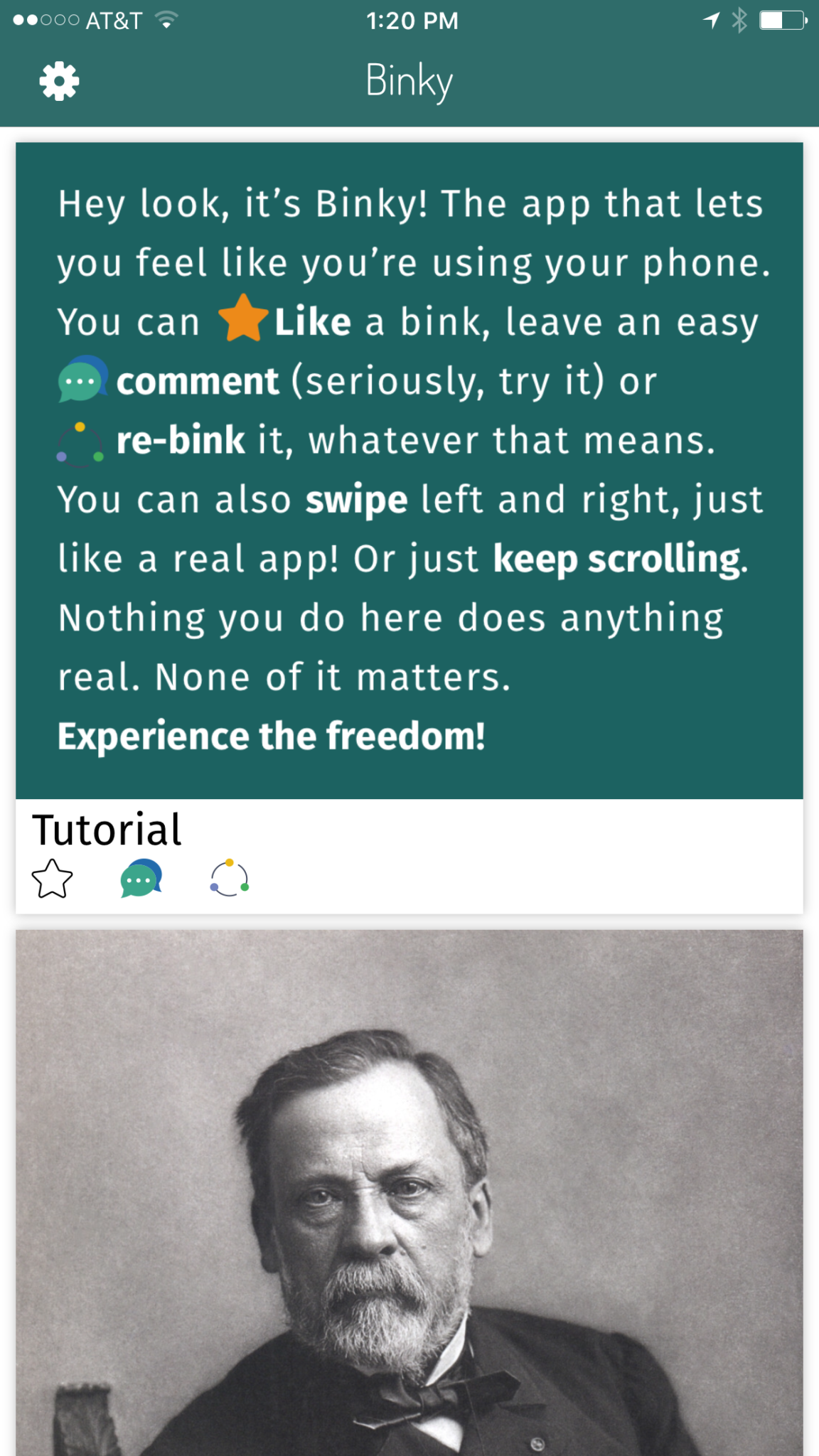
Binky is a social media simulator (more like a parody) app that started as a joke. It simulates the features of most status and photo sharing social media platforms by giving you a seemingly endless stream of fake posts to scroll through. As you scroll you’ll see absolutely random and unrelated images with captions that may or may not make sense. You have the option to “Bink,” (read: Like) comment or “Re-Bink” (read: Share) the images that you’re scrolling through. When you click the Bink button you get an explosion of stars from under your tapping finger and a delightful bloop bloop sound. Commenting is my favorite feature of this app because it doesn’t actually let you say anything. Every letter you type after tapping the comment icon automatically puts in a word to form a randomly generated comment of text and emoji complete with meaningless hashtags. Finally, when you share the app you’ll receive a notice that asks if you are sure you want to “Re-Bink” this post. You’re reminded that the Re-Bink doesn’t actually do anything but it actually does. You get an explosion of thumbs up icons. That’s it though, there is not really anyone to share with in Binky.
What is the point?
There really isn’t a point, except for satire and parody. You may be able to say that using this app is a bit eye opening, however. I think it was for me. As I mindlessly scrolled through Binky and clicked on the meaningless buttons and commented the automatically generated sentences on each post I couldn’t help but think about how not far from actual social media this was. What difference does what I do on Instagram or Facebook actually have? Is it any more that my activity on Binky today? I don’t know for sure but I think thinking this way is a good thing. We tend to be so concerned about how we look online that many of us, especially your teen and young adult children, may actually put on a false persona on our social media pages. Binky was a way for me to see the ridiculousness of working so hard to get more likes, comments, and shares.
What Parents Should Know
As I said before this app isn’t a real social media app. There is no social aspect to it at all. It’s more like a simulation of social media. Something to give us another perspective on what our behavior online truly looks like. I recommend spending some time messing with this app and encouraging your young teens and teens to install it and play around on it. It’s not only humorous but could lead to some conversations on the futility of living your life and finding your worth on social media. Maybe, just maybe, you can use an app like Binky to start a conversation that could help you make some good decisions with your kids on what healthy social media use looks like in your family.
We’ve got “covfeve”, Hillary Clinton speaking about politics at a programming conference, Kathy Griffin vs Donald Trump on Twitter, Mark Zuckerberg and Elon Musk talking about the President’s climate change beliefs, and all other kinds of tech notables using their platform to promote their political and ethical beliefs. There’s no doubt that our kids are growing up being more aware of the polarized political landscape we live in than ever before.
I remember knowing there was a President when I was a kid. I remember hearing a thing or two about impeachment and adultery but I didn’t care or pay too much attention. I was a preteen and I had more important things to deal with. Mainly video games, girls, and baseball. I don’t remember hearing anything about politics while I was in middle school or high school. I registered to vote when I was 18 and voted for who my family said would be a good choice. Now, the people who run our favorite entertainment companies openly state their disdain or support for our government officials. Protests have hashtags and political videos and memes go viral equally because of people agreeing and disagreeing with them. It’s obvious to our kids now that we are living in a volatile political situation.
Political opinion is formed by who you grow up listening to. It used to be formed by parents, grandparents, and the culture in your local community. Globalization now allows our kids access to every opinion from any voice they want to hear from. Many times these voices are people mom and dad may not be comfortable with. Declaring whether or not that is a good thing is not the intent of this article. My goal with this article is to give understanding to parents who are confused about why their kids grow up to think differently than they do.
Your children live in a globally influential world instead of the small section of the country that we grew up in. I grew up in Texas, New Mexico, and Missouri and believed the better part of what I was raised to believe. The global landscape of social media (which is just the state of the internet in our culture) has caused many of those beliefs to shift or even outright be changed. Not just for me but for most in my generation and younger.
Parents should be aware, whatever your thoughts are on today’s hot political topics, that your voice is most likely not the loudest voice in your children’s lives. The Snapchat Discover page, that YouTube vlogger, Instagram influencers, and even Twitter are telling them whatever message they’re more interested in soaking in. The algorithm’s on these platforms provide them with a steady stream of reinforcement for whatever it is they’ve been tapping or clicking on up to this point. Opinion isn’t being formed by their church, their school, or their family like it used to. It’s formed by anyone and everyone in the entire world. Whatever your thoughts on what your kids should believe or where they should form these beliefs, I just wanted you to know where it’s actually coming from.
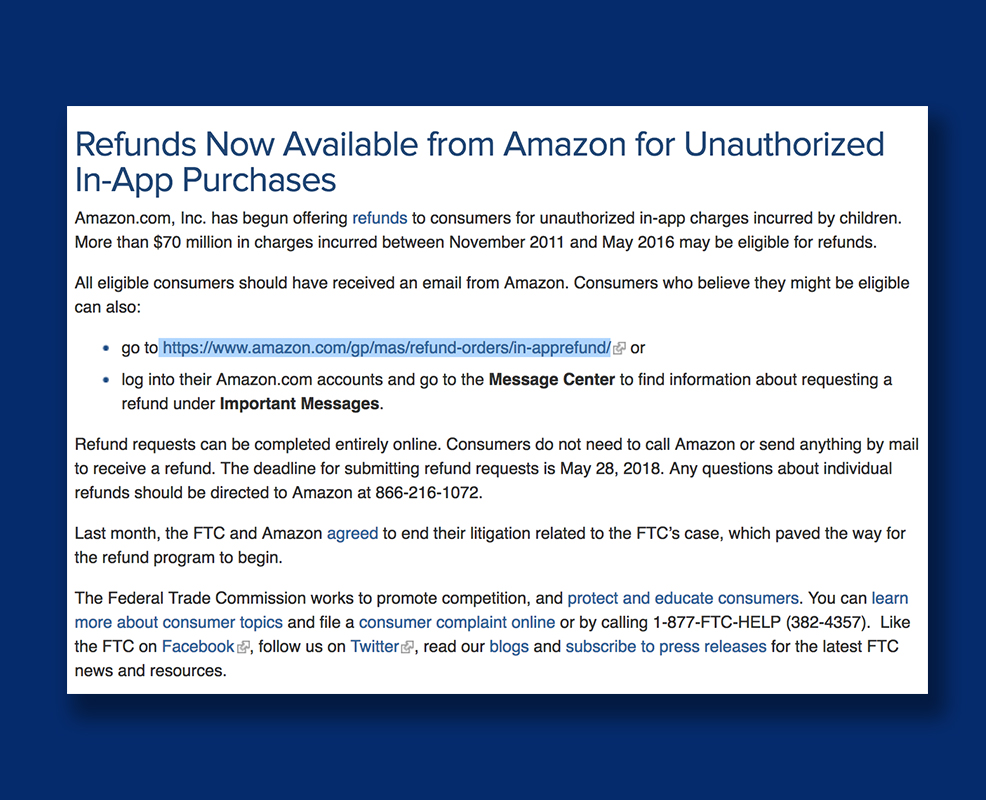
Remember those unintended charges your kid racked up on your Amazon account? You can finally get a refund for that. Amazon announced this week, after teasing in April, that they’re opening up their refund system for those old charges. You may recall that Amazon got in to some trouble with the Federal Trade Commission for being too lax on in app purchases. This caused thousands of parents to see charges show up on their accounts that they weren’t responsible for. Their kids could buy gems, gold pieces, upgrades, or whatever else in the games they were playing with no secret pin or passcode required. At the time Amazon added the parental restrictions but were still working on a way to give out all of the refunds.
They will be emailing users who are eligible for a refund and you can follow the steps from there. There is a one year deadline to submit for your refund and them the time is up. These refunds will cost Amazon up to $70 million dollars and are available to users who had this problem from 2011 through 2016. If you think you’re eligible but didn’t get an email you can visit https://www.amazon.com/gp/mas/refund-orders/in-apprefund/ to find out if you qualify.
The Federal Trade Commission’s Official Statement
What Parents Should Know
Obviously you should get your refund if you qualify but these charges can still happen if you don’t have your settings right. You can set up purchase permissions on iTunes, Amazon, or Android’s Google Play store. You also have to set individual permissions on most of your devices. This will allow you to require passwords and pins in order to make a purchase, thus keeping you from seeing strange charges on your credit card or bank statements. I’ve made a video to help you with your Apple devices. Hopefully you can use these steps to keep from having to apply for any refunds for purchases you didn’t make yourself.
One of the most popular questions I get when I do tech safety workshops for parents is “how do I set restrictions for my older teen?” I think the most important thing to remember is that you’re not just setting restrictions, you’re teaching healthy habits. The brain of an adolescent is developing in such a way that your guidance is critical as they navigate these murky digital waters.
I like the term healthy when it comes to internet use because right and wrong is subjective. Your sixteen year old may believe that it’s ok to watch YouTube videos for five hours on a Saturday afternoon but you can use facts to help him understand that it may not be healthy. Our conversation with our teenagers shouldn’t be about what digital habits are right and wrong but what is healthy. Here are three critical factors to keep in mind while teaching healthy tech habits.
Relationship
Boundaries without relationship become rules and rules were made to be broken. Because of your healthy relationship you can help your teenager understand that the rules exist to protect them. You can create a safe place for them to come to when they need guidance on their tech habits, about how they’ve been treated online, or about regrets regarding something they’ve seen or done online.
As parents we shouldn’t close the door to conversation with instant judgement or constant nagging about the time they spend online. I recommend using digital means to keep track (with their knowledge) of what they do online and only bringing it up when it becomes a consistant problem. Relationship is the most important part of any internet safety strategy.
Transparency
Openness and transparency is key, not just on your teen’s part but on your part as well. It is critical that you are transparent with them about your tech habits. They need to understand that you’re trying to get it right as well and that the habits they develop now will affect them as they grow older. The best way for them to learn this is by watching you and hearing about how you’re having to deal with these same issues now. Whether you’re trying to keep them from dangerous content or help them avoid tech addiction, they should understand that you’re trying to protect yourself from those things too. The quickest way to cause your teen or young adult child to stop taking you seriously is for you to not practice what you preach.
Time Management
Obviously time management will be critical as your child graduates high school and enters college. Between jobs, studying, and extra activities they’ve probably already had to develop some form of time management skill. The lure and appeal of constantly available video, music, and gaming entertainment can make time management more difficult now than it’s ever been.
You have to help your teen understand what good time management looks like. Point them towards content on the tech that they enjoy, like YouTube videos, podcasts, or productivity apps and other tools that will help them learn more about healthier time management habits. Encourage them to use these tools alongside some of the entertainment they consume.
All three of these steps are related to each other and will greatly impact one another. If you don’t have a good relationship with your child that encourages communication, if you aren’t being a good example, and if you aren’t teaching and showing time management skills your kids are going to have a hard time navigating healthy tech habits. Online life is a real part of our world and it’s too important to ignore so utilize these steps and let me know what others you have used that have been successful.
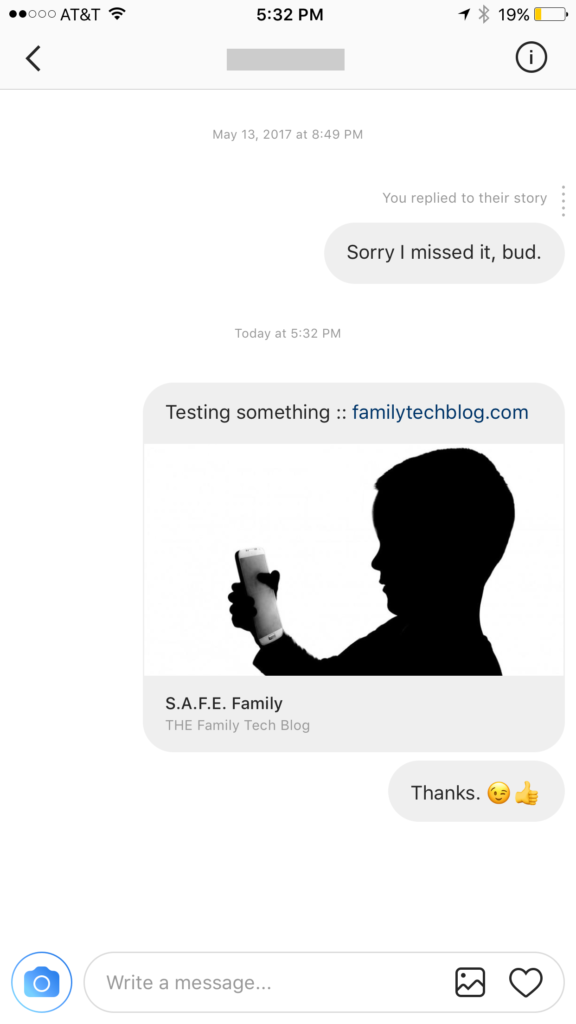
Instagram has launched their seemingly weekly major update today with a focus on their direct messaging feature. Now it’s possible to see previews of links and to send full size images. (Not just squares.) While most of Instagram’s updates have focused on it’s Stories feature, the DM gets quite a bit of attention every now and then too. There seems to be a race between Instagram and Snapchat to develop the best private messaging option out there. Features like link previews and removing the image dimension limits will go a long way to make Instagram a serious contender for direct messages.
Link previews look a lot like in FB Messenger.
What Parents Should Know
Obviously it’s important to know who your kids are talking to online. Private messages open up the possibility for kids to contact people they don’t really know very well. This can lead to full, private conversations with videos and images that are difficult for parents to monitor. There is no way to disable direct messaging in the Instagram app so if your kids are using the service they have the ability to contact people in private. These messages won’t show up on their image timeline and images won’t be stored on their phones unless they manually save them. This can result in private messaging that may cross your line of what’s appropriate.
Links that show up in Instagram will open in the Instagram browser when clicked. This means some accountability software and filters won’t take affect. You should keep that in mind when deciding whether or not to allow them to use Instagram.
My advice, as always, is to take whatever measures you’re most comfortable with to monitor your kids Instagram activity. The only way to monitor their private messaging is to have their login information. I show you how to log in as them on your own device in a video here. Prevention, monitoring, and conversation are the most important things you can do to keep your kids from unwanted material online.
Is there porn on Pinterest? Does Pinterest allow porn? I’ve heard both of these questions many times and the answers are very very different. Today, as Pinterest announced their new approach to advertising videos on their site and app, I’m reminded of the many parents who have discussed the potential dangers of Pinterest with me at workshops and other events. Lets unpack a few of those dangers, what Pinterest’s approach is, and what parents can do about it.
There IS porn on Pinterest.
I can confirm that there is pornography on Pinterest in two ways. First of all, I started some searches for inappropriate topics and (without having to click through to results) could see that there was porn available. Just typing the first few letters of these search terms produced recommended searches that told the entire story.
These results pretty much let you know what is available on the site and in the app. Searching more specific terms would, obviously, produce more specific results.
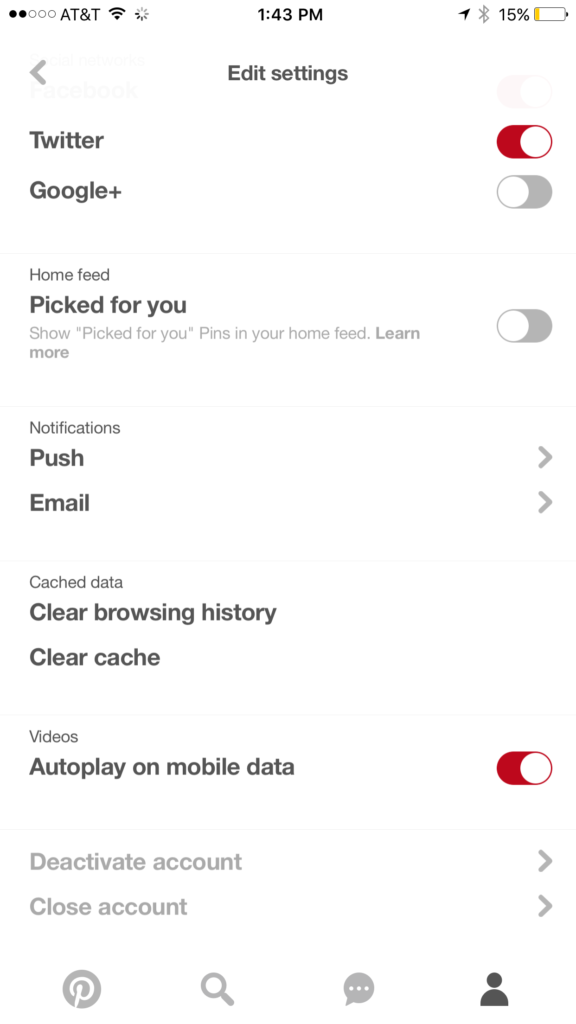
While this covers intentionally searching for content, your kids may not be the type to have been in to that before so you don’t expect them to go searching for it. This is where it gets a bit tricky. Pinterest feeds you new content in two different ways. They show you pins from people you’ve decided to follow and they show you pins that have been “picked for you.” Pinterest uses what you do in their app and site as well as what you do on other websites to recommend different things to you. If you’ve liked art before then you’ll start to get more art posts. If you’re into geeky quotes, you’ll see pins from people you don’t follow based on what you’ve pinned or viewed in the past. This can lead to being shown pinners who’s pins may not line up with what you’d consider “safe” for your kids. There is, however, a way to turn off the “picked for you” option. See the image below:
Go into your profile, then settings, and you can turn off personalization AND picked for you.
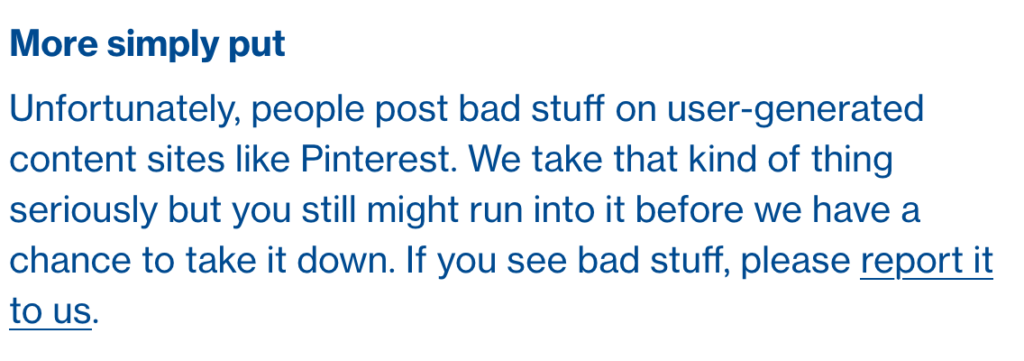
Pinterest Doesn’t Allow “Explicit Content.”
From Pinterest’s terms of service.
Pinterest’s rules don’t allow explicit pornography to be posted but it relies on reporting from users to identify and remove the offending pins. This means that the post can be up for days or weeks before it gets enough reports to have it taken down. Another thing to keep in mind is that Pinterest will still use their own definition of “explicit.” You may think something is not good for your 14 year old son to view while they view it as art or expression. This means you have to truly stay on top of what they’re seeing.
What Parents Should Know
Again, much is left to interpretation. Some parents may say a photo of a nude statue is artistic and cultural and some might say it’s inappropriate. While some folks think any nudity should be considered explicit, there are parents who would disagree unless it’s in a sexual situation or atmosphere. There are many factors that keep photo sharing sites like Pinterest from making a blanket NO NUDITY rule.
I would prefer if there were some way to turn off nudity as an option for users but as of right now that isn’t possible. It also isn’t easy to monitor what content is being viewed in the Pinterest apps. Yes, the service is built to work best on the mobile apps, my recommendation is that you limit your younger teen (over 13 to comply with the service agreement) to using Pinterest on a browser. Use something like Accountable2You to monitor their activity so you can be alerted if they’ve come across something inappropriate. This could help keep you from difficult situations stemming from your kids happening upon something adult oriented on Pinterest.
So, to answer the question, is Pinterest safe for your kid or teen? The answer is no and yes. No it isn’t recommended for your child. The age restriction to get an account is 13. I would, however, begin to ease up on a strict anti-Pinterest rule as my kids enter their teen years but I would monitor their usage in the most effective way possible. Just because you’ve never seen anything when you creep Pinterest doesn’t mean it isn’t there. Know that this risk is real and that your kids are as susceptible as any. Take precautions BEFORE anything regretful happens.
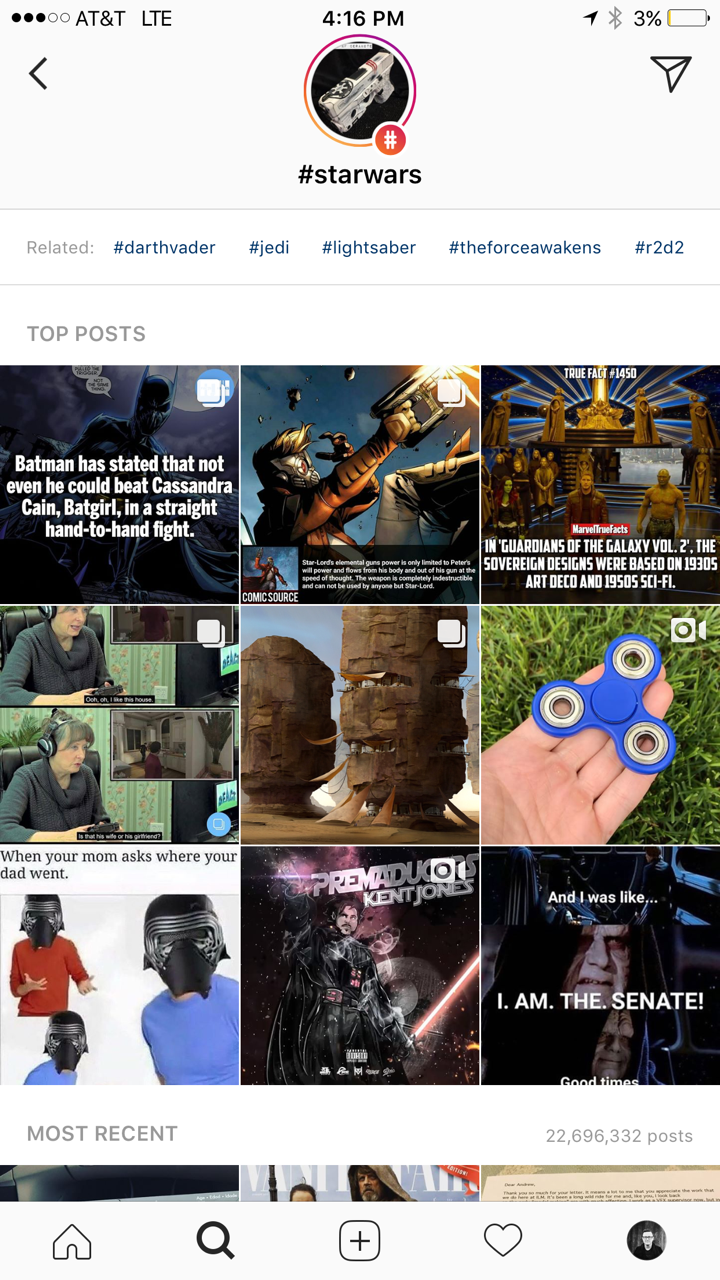
Instagram has added the ability to search Stories by hashtag and location. This means that your explore tab will now give you access to basically unlimited Instagram story content. Instagram is going to feature location tagged stories by people you follow and also from people you don’t. If you search for your town, or any town for that matter, you’ll see a small map, the posts featured from that town, and if it’s been tagged in a story you’ll see that above the map as well. This will give more access to more stories and may lead to following more people on Instagram. Hashtag results will work in much the same way. You’ll be able to search stories by topic with the hashtag. It will also highlight the posts you and your friend’s made by featuring them first in the results.
You can see the location stories above the map.
Location
Location
This is the hashtag search result.
What Parents Should Know
There’s always a bit of a red flag for me when there’s more potential to be connected with strangers on Social Media. Location and Hashtag filters allow you to find people you’ve never met and see what they’ve posted. Granted, the explore feature already makes that pretty easy. Instagram’s algorithm will gather these people and posts and present them to you from a simple search. These explore and search results aren’t going to be monitored by any accountability software since they’re not technically in a browser. You should take steps to monitor what your kids do in Instagram yourself. You should also lead the conversation with them about Instagram as these new updates come out.






 Obviously time management will be critical as your child graduates high school and enters college. Between jobs, studying, and extra activities they’ve probably already had to develop some form of time management skill. The lure and appeal of constantly available video, music, and gaming entertainment can make time management more difficult now than it’s ever been.