A reader sent me this article written in the Washington Post today and I wanted to post my response. The article outlines the problems that Apple is having keeping “unwanted sexual content” out of apps on their iOS App Store. Apps like Monkey, Yubo, and ChatLive are all apps that allow you to chat live with random people, often only connecting you based on the gender you say you’d like to chat with. The problem with these apps is that most of them have no way to verify your identity, gender, age, or anything. This means that kids who use these apps are chatting with random strangers, many of whom are much older than them and have nefarious intentions.
Tag: monkey
-

Dangerous Random Live Video Chatting Apps are Dominating Social Media
The complains in the article are centered specifically around “unwanted sexual material.” As you can imagine, the consequences of this content is often our young kids seeing images of people in mature circumstances whether they were seeking that kind of content or not. When you can just chat with someone randomly, you never know who is going to show up on your screen. When the person that shows up is in a compromising position, you’ve already seen it and it is impossible to unsee it at that point. Our kids are being shown this nonsense and the developers of apps are monetizing some of the only ways you can filter the content. (i.e. Monkey making you spend their in-app currency called “bananas” to select what gender you want to chat with). Those who run the app stores (Google or Apple) often say they do their best to keep apps with inappropriate content off of their stores, especially when it comes to apps that children use, but once they’ve labeled the app 17+ they pretty much shift the responsibility to the adult who is caring for the child.
What Parents Should Know
Two years ago I wrote an article about the dangers of the app Monkey and how it would become a hotbed for predators and “unwanted sexual content.” Today, Monkey is mentioned in the Washington Post article as one of the main companies with this content in their app, citing: “About 2 percent of all iOS reviews of Monkey, ranked 10th most popular in Apple’s social networking category earlier this month, contained reports of unwanted sexual experiences, according to The Post’s investigation.” Does 2% constitute a “hotbed?” I don’t know. But I will say it is a cause for great concern, especially since this is only a percentage of the reviews that mentioned the problem, mostly parents who saw that their children had been assaulted with adult content in the app. It doesn’t measure those who saw it and didn’t report it for one reason or another. I had been contacted by Allen Loh, head of global expansions for the Holla Group, operators of the Monkey App, six months ago or so and he assured me that they were working to address some of the safety and content concerns within the app. I have reached out again to get updated information about these issues but have not, as of yet, received a response.
The only real way to ensure your child is protected from the unwanted content in apps like these is to use the restriction settings built in to your operating system. Apple’s Screen Time has a restrictions setting in which you can set a maximum age rating for apps that your child can download. If your 15 year old has an iPhone, you can set the restriction to 12+ to ensure that apps rated 17+ won’t be available. Android users can use FamilyLink to set App Store restrictions for their younger children. These restrictions, however, will be automatically set to “adult” when your child turns 13.
As I always say, the most important thing is communication with your child. You have to make them aware of the dangers of chatting with random strangers on the internet. As obviously dangerous as that sounds, these apps are branded and marketed as a fun way to meet new people. They build an environment that is like going to the mall or the movies back in our day, but instead it is all within the anonymity an app. Unfortunately, within an app, the weirdo who wouldn’t go out into public and make advances at your kids is there waiting to find someone he can groom, send adult pictures to, or violate in some other way. Parents need to create a safe space for our kids to come when they feel threatened or violated by someone online or in an app they use. Many of the stories of parents finding unwanted sexual content within an app were made known only because their child knew to come to them when they saw something that made them uncomfortable or feel violated. Do everything you can to protect your children’s hearts, eyes, and minds and then be sure they know they can come to you if something inappropriate comes across their screen.
Podcast: Play in new window
Subscribe: Apple Podcasts | Spotify | RSS



5 Kinds of Apps Parents Should Look Out For
It’s that time again, time for BecauseFamily to release our list of apps you should look out for on your kids phones. Unfortunately things change so fast that is seems silly to just throw a list together and tell you to look for those particular icons. Instead, this is a list of app categories that you should be aware of. Some are very malicious and can be dangerous for your kids, some aren’t inherently dangerous but can have some risk associated with them. The list below is not exhaustive, though, I have included several examples of some of the most popular apps that come up when you search for these particular types of app in the app stores. Hopefully this will help you make quality decisions as to what apps your kids have and don’t have on their devices.
Photo Vaults
These apps allow users to store private images and videos behind a password of some kind. Oftentimes hidden behind a calculator, camera, or music icon, these apps are intended to fool people into ignoring them and are disguised well. Of course these apps can pose a problem for parents who are worried about their child(ren) sending or receiving inappropriate images or videos. Having a supposed safe place to hide them could make more kids prone to take the risk. Some examples of photo vault apps include:




Social Gaming
Many games come with built in friend messaging and ways to connect with players you didn’t already know. This is considered social gaming and it’s standard with most mobile games. Many games seem like they are intended for a younger audience but are actually played by people of all ages. Language, sexual innuendo, and much more can be expected in these “in-game” chat rooms. Also, predators have been known to use messaging in some of these games to identify, target, and groom their prey. Some examples of these social games are:




Apps with Disappearing Messages
Cyberbullying and sexting have become a major issue for many junior high and high school administers. Parents are also concerned that their kids are sending and receiving messages they shouldn’t be distributing. Disappearing messages can encourage more of this behavior since it enhances the sense of anonymity. It’s critical our kids understand that what you send over the internet should always be considered permanent and that just because something said it has disappeared doesn’t mean it’s gone. Some examples of apps that allow you to delete messages after sending are listed below:




Dating Apps
Online dating is nothing new, apps that connect singles for chatting, dates, and much more are all the rage as well. Sometimes they become trendy among teens also. The following apps are meant to connect older users for romantic purposes but have no foolproof way to be sure kids don’t use the app:




Live/Life Streaming Apps
It seems like every social media platform encourages its users to “go live” as often as possible. Live streaming broadcasts you to all of your followers and allows them to engage through comments and questions. Oftentimes you can even broadcast publicly and allow anyone who would like to watch you. Life-streaming is when kids, teens, and adults broadcast much of every day of their lives. The following apps allow kids to life stream to their audience:




Try Not to Freak Out
Please keep in mind that just because you see one of these apps on your kids’ phone or tablet doesn’t mean they are using the app for the wrong reasons. Much of this list is based on a risk that is associated with the app, not an automatic danger as soon as it is installed. We need to be vigilant when it comes to our kids’ online activity. Not because of fear or mistrust but from a place of wisdom. Remember to keep communication open with your kids. You should be a safe place to come if something negative does happen to them online. I never recommend spying on your children without their knowledge and I always recommend over communicating with them about the steps you are taking to keep them safe and what you expect from them while they use their connected devices. Be sure to download the PDF of our internet safety resource list!

Video Chatting Apps You Should Uninstall NOW
Chat Roulette was a challenge that became its own website. The idea was that people could log on to the site and be connected with someone from around the world at random. The website isn’t as popular as it once was but there are many apps that simulate that experience and some of those apps are gaining popularity. Here are some of the ones climbing the app store charts. The ranking listed is for the Social Media category in the iOS App Store as of the publishing date of this article. I’ve only listed the live video or random connection chatting apps in the top fifty.

Melon #14
Melon is making the news as the latest video chatting fad. It connects you with new people based on social media friends and offers private messaging, video chat, and a people search feature. It’s gaining popularity and being featured in articles that are blasting it for the frequency of cyberbullying and the high concentration of males looking for girls that will do whatever they ask on camera.

Live.Me #16
Live.Me touts the ability to chat with stars and celebrities and broadcast to anyone all over the world. You can find anyone from anywhere or just look to see who is broadcasting around you. There is also the ability to search by topic or interest. Live.Me uses “gifts” and “diamonds” to allow you to share things with other users and even advertises the ability to “date” virtually through the app.

Monkey #25
I’ve written about Monkey before. This app was created by a couple of teens who dropped out of high-school to launch a tech startup. It quickly gained a reputation for having too much nudity and not taking some of the responsibility for the content found in the app. This app has been on the FamilyTechBlog uninstall list for a while now.

MeetMe #35
Formerly called “MyYearbook,” MeetMe is a app that advertises itself as a way to “meet new people.” The app uses your location to find people near you and information that you’ve entered to connect you with people who share your interests. It’s popular in the app store as it’s been around for quite a while and has the largest fan base. MeetMe offers private chat and video chatting as well as live video broadcasting.
Climbing the Charts:

YouNow #52
Live stream video chat is pretty much all YouNow is about. You can broadcast yourself, find broadcasters, and even join the broadcast as a video guest. The app store listing calls for you to build your fanbase and become a YouNow celebrity. There are some complaints on in the reviews about accounts that have been reported for inappropriate content not being removed because they are popular on YouNow.

CAM #56
CAM is popular because it allows you to select the gender you’d like to chat with. It automatically connects you with someone and even automatically texts an invite to everyone on your contacts list without your permission. This practice has caused it to dip in the standings but some continue to use the app because they like the ability to chat or flirt with people they are attracted to.
What Parents Should Know
I don’t usually recommend any of these type of app for your teens or kids. Not only is it dangerous to connect with random people who could be broadcasting whatever they’d like for you to see. It’s also a problem because of the potential for predators. Any connection with strangers is dangerous. Some of these apps use your location to connect you and it’s therefore possible to meet people online that you may meet up with later. My advice is to uninstall any of these apps if you see them on your kids phones or tablets. There is no reason to use one of these apps to connect with friends since you can use Instagram or Facebook Messenger to do that now. Uninstall on sight.

PODCAST: Date Night Monkey Business
Podcast: Play in new window
Subscribe: Apple Podcasts | Spotify | RSS
Amazon is changing the parental controls game, Instagram has 200 mil users, and MONKEY is a hotbed for predators.
FAMILY TECH WEEKLY EPISODE 3
Social Media Links
Facebook: http://facebook.com/4pointfamilies
Instagram: http://instagram.com/becausefamily
Twitter: http://twitter.com/becausefamily
Newsletter Signup
Ministry Updates:: http://eepurl.com/R7Btr
Weekly Blog Posts:: http://eepurl.com/cvnhXD
Websites
Ministry Site:: http://becausefamily.org
Tech Blog:: https://safe.becausefamily.org
Michael’s Speaking Info:: http://kmichaelprince.org
Donate and Affiliate Links
http://BecauseFamily.org/partnership
Music by incompetech.com

The Monkey App will be a Hotbed for Predators
You can often tell a lot about an app or product by their logo. (See Instagram or YouTube) They often use the small icon to entice you into using their app based on the style or the creative way the image can explain what the app is used for. Sometimes, though, you can be lured into a false sense of security by the playfulness of an app’s logo or icon. Monkey is a perfect example of this. When I saw Monkey listed as number 51 on the app store’s top downloads I was expecting to see some kid’s social media platform that would allow you to chat privately or play games or something. That’s not at all what I found.
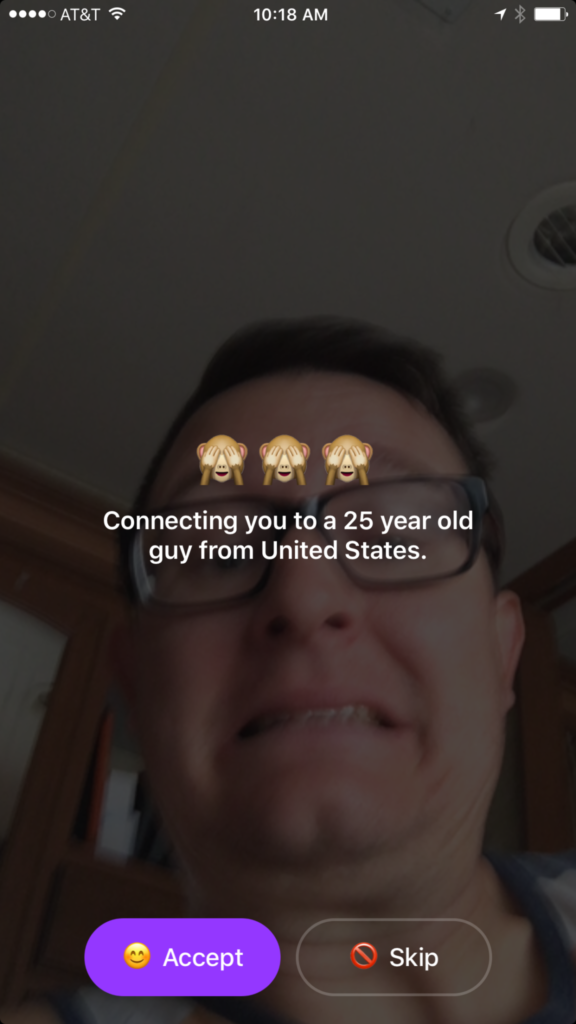
In reality Monkey is a chat roulette type of video chatting app. Once you’ve downloaded the app it will ask you your age. You set your age to whatever you’d like it to be, provide your phone number and your snapchat username and you’re in. It immediately begins connecting you with someone to video chat with. While it’s connecting it shows your face dimly in the background and says who it’s connecting you to. You have the option to skip the connection or accept. If you accept you’ll be shown their video feed and they’ll see yours. In the short time I tested the app I was connected with all males ranging from ages 22-45.
Once you have connected with someone a countdown clock begins. You can tap the clock to add time and keep talking but if they don’t tap their clock you’ll be disconnected. This is another “swipe right” concept that gives each user the option to continue the connection with a simple gesture on their smartphone. To be honest I never accepted a connection. I still just don’t get a good feeling about the gamble of finding random video chatting partners. I don’t know what I”ll see when I connect. You also don’t know what your kids might see.
What Parents Should Know
The dangers of a roulette style video chat app should be pretty obvious. The potential for unwanted material and contact with dangerous people is real. While there is a report button to flag any inappropriate content, that method takes the “after the damage is done” approach to keeping their app free from pornography and bullying. The app is rated for users aged twelve and over and the terms and agreements explain how the company takes no responsibility for the content that may be displayed on the app.
YOU FURTHER UNDERSTAND AND ACKNOWLEDGE THAT, WHILE THE SERVICES ARE NOT PROVIDED FOR PORNOGRAPHIC PURPOSES OR FOR MAKING SEXUALLY EXPLICIT CONTENT AVAILABLE, YOU MAY BE EXPOSED TO CONTENT THAT YOU DEEM TO BE OFFENSIVE, INDECENT, OBJECTIONABLE, OR SEXUALLY EXPLICIT, AND YOU AGREE TO WAIVE, AND HEREBY DO WAIVE, ANY LEGAL OR EQUITABLE RIGHTS OR REMEDIES YOU HAVE OR MAY HAVE AGAINST MONKEYSQUAD WITH RESPECT THERETO. – Monkey Terms of Use (All caps theirs.)
This app was developed by two sixteen year old kids from Australia. They said that they designed the app to allow teens to build more random online relationships. Ben Pasternak and Isaiah Turner told Mashable “…Snapchat is for your real life friends and Monkey is for your internet friends.” These teenagers saw a line between their real world relationships and the ones they could make with people all over the world through the internet. This is exactly what parents need to consider. While living in a more globalized world has many positives there are also very real risks to exposing our young teens and kids to the entire globe.
My advice is to put this app on your uninstall list. Never trust an app based on their branding or icon. Have a real conversation with your teen about the potential of seeing body parts or other unsightly things on this app. Remind them of the problem of connecting with random people online. There are always people who will lie about their age or their gender in order to connect with someone they’d like to prey on. Even if they know they’re only going to be connected for a few seconds. Sometimes a few seconds is enough to cause major problems for our young kids. Don’t let the cute monkey emoji logo fool you. Uninstall on sight!
Does your family have an internet safety plan? Sign up for our email list to get a free checklist that will guide you to family internet security.