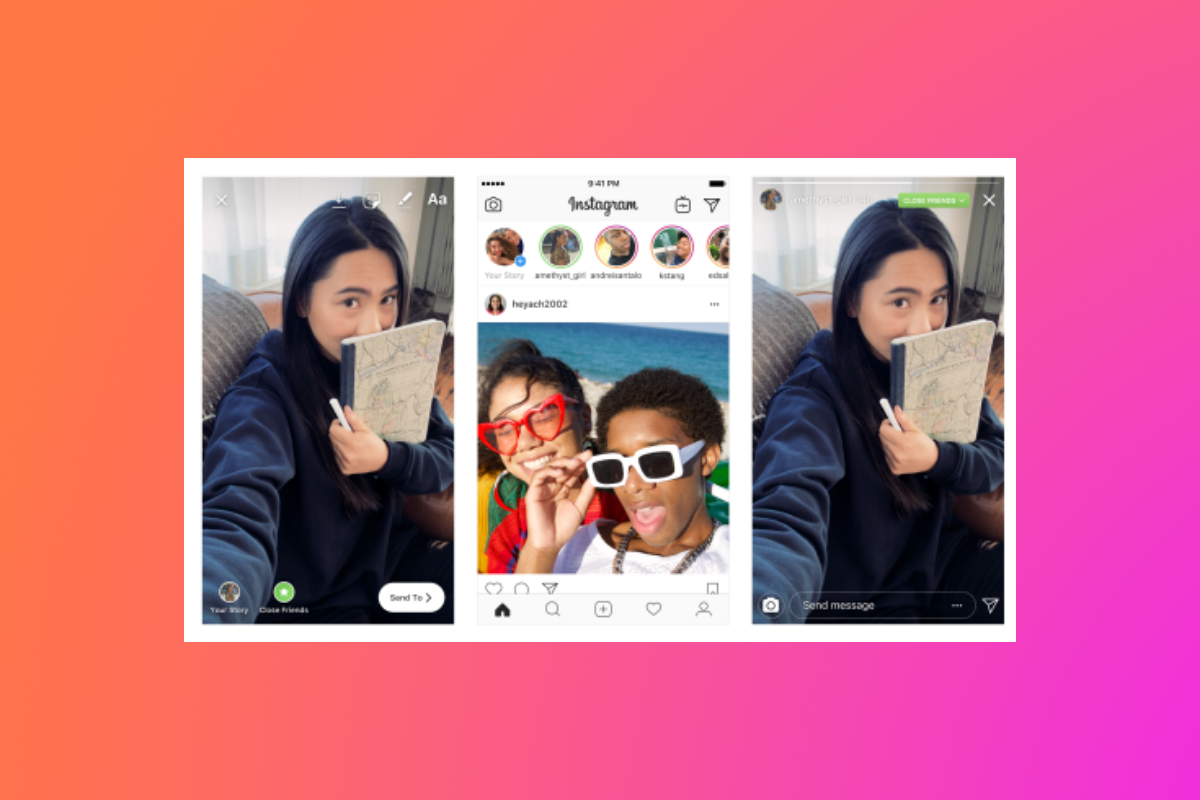
Instagram is rolling out another update today and this one gives users the ability to build a “Close Friends List.” This category of friend creates a list of names that will see stories that you post and designate for that group only. This allows you to post more private or personal posts and trust that it will only be seen by a pre-approved group of friends. This feature should roll out today and will be available through the settings menu on your profile page in the Instagram app.
You set up your list and then choose, in your stories posts, to designate that post only for your “Close Friends.” The update shows a green badge to notify those seeing it that it is from your Close Friends list. Those on your list will also see a green circle around your “Stories” icon.
What Parents Should Know
This update can be a really good thing. It is important to know who is seeing your posts and keeping your audience in mind. A way to separate those who you are ok with seeing certain things could be a way to eliminate the “finsta” or “Spam” instagram account. My advice, though, is to make sure your child has you on their Close Friends list. If they’ve been posting Close Friends posts and you aren’t seeing a green circle around their stories post, you aren’t on their list and you should have a conversation with them about why you don’t want them hiding posts from you.
Remember that you should be a safe place for your kids to come if they have serious issues to discuss. They shouldn’t be afraid that you won’t understand their depression or that you won’t believe them if they are having problems with people at school or work. You should be THE place that they know they’ll be heard, believed, and understood. I truly believe that if you create that culture in your family your children will automatically think to add you to their Close Friends list because you actually belong there.
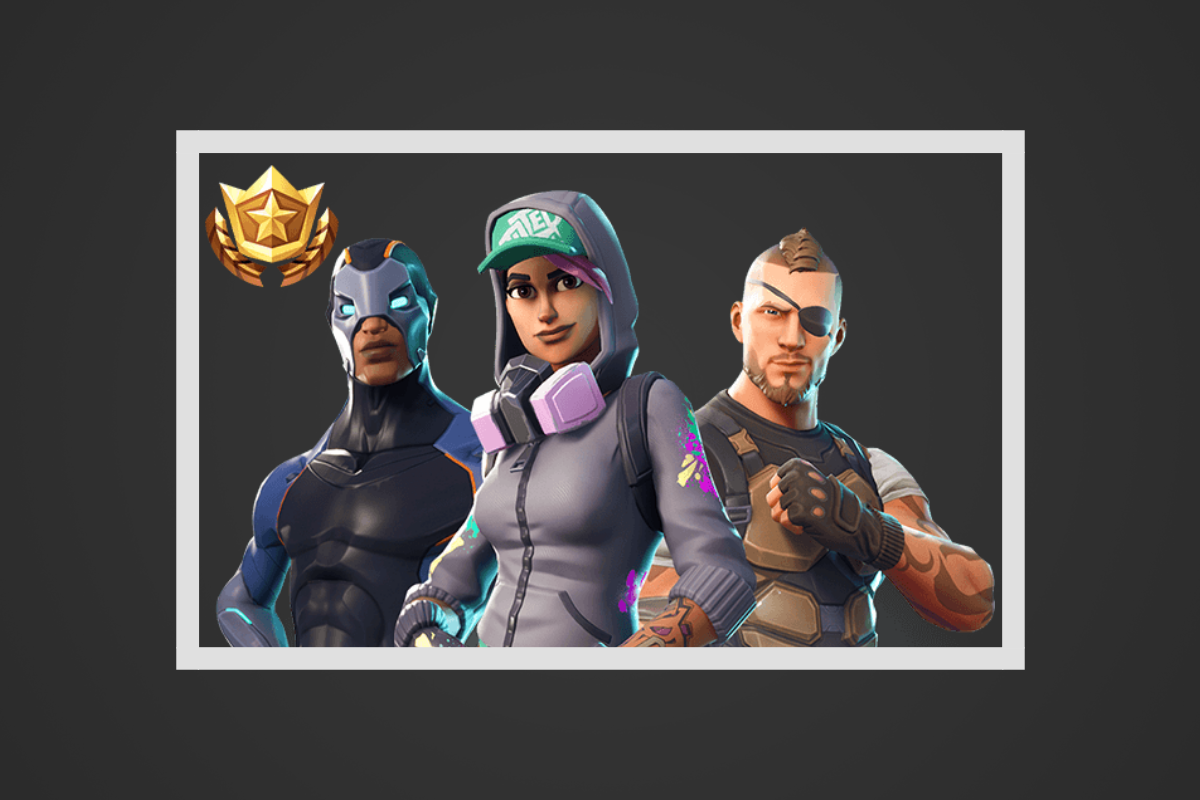
There hasn’t been a game that has taken the tween world by storm quite like Fortnite has. Its “freemium” business model and “T for teen” rating has caused it to become a larger hit than any game ever has before. Recently, psychologists are making news because they are beginning to treat more and more kids who are addicted to gaming, namely, Fortnite. An article by Bloomberg quotes behavioral specialist Lorrine Marer:
“This game is like heroin… Once you are hooked, it’s hard to get unhooked.”
Game addiction was named an official disorder by the World Health Organization and can be diagnosed with some of the same symptoms of other behavioral disorders. Here’s a list of those symptoms:
Obsession, or constant thoughts of the behavior
Continuation of the behavior despite adverse consequences, risky situations, and poor performance of responsibilities
Compulsive engagement of the behavior or inability to stop despite a desire to quit.
Cessation of the behavior causes irritability, cravings to resume the behavior, restlessness, and depression.
Denial of addiction and issues resulting from the behavior
Concealment of the behavior from family and others close to the addict
Amnesia regarding the behavior
Depression, even when engaging in the behaviors
Many parents report their children failing classes in school, falling asleep during classes, lying about how much time they’ve spent playing, and throwing toddler type temper tantrums when asked to turn the game off. Many of these behaviors are signs of an addiction and a combination of many of these could mean your child needs expert treatment. Children aren’t the only ones, however, with this problem. Medical and mental health professionals are also documenting cases of adults who have had many of the symptoms of behavioral addiction when it comes to playing video games, and even Fortnite itself.
Epic Games, the company behind Fortnite, hasn’t said anything about the addictive nature of their game but it is obvious that their business model depends on gamer’s inability to give up the game. Since the game is free, Epic Games can only make money by encouraging gamers to buy items within the game to enhance the look and actions of their characters. This is causing kids to spend their parent’s money, sometimes without mom and dad even realizing what they’ve done.
What Parents Should Know
I have counseled several parents about potential addictive gaming behavior by their kids and I believe it’s important to keep the eight key symptoms in mind when looking at your child’s behavior. How are their grades? Do they have an offline social life? What is their reaction when you mention taking a break? If their responses to these conversations aren’t healthy, it might be time to get some help in convincing them they need time off from gaming.
Games like Fortnite, Minecraft, and Roblox, are what experts call, “lost time” games. This is when players can spend so much time in-game without even realize how many hours they’ve been playing. This is how your son can play twelve hours of fortnite before you realize you haven’t seen him all day. Twelve hours, if you pretty good at the game, is only six to ten Fortnite matches. That’s nothing to your child while they are sitting there playing.
If you haven’t opened the gaming pandoras box for your child yet, good for you. (My oldest is eleven and we are just now easing him into it.) Prevention is key. It is important to only allow gaming with time limit parameters set. If you can introduce these time limits as they start to get more into gaming that’s great. Sometimes you aren’t that lucky and you have to have the battle to set time limits once it’s already gone too far. My advice, though, is to do what you have to do because your child needs you to help them learn self control and your teenager needs your guidance as they learn time management. Remember to talk to them about it often and use terms like healthy and unhealthy instead of dumb, stupid, or right and wrong. Hopefully your child will never need a professional counselor to help them get over Fortnite. We have enough problems in the world, we don’t need a widespread epidemic of entertainment addiction.
As you make your #givingtuesday plans please consider BecauseFamily. As a small startup non-profit I can guarantee that your donation goes to help us protect kids and teens by bridging the technology gap between them and their parents.
No VP or CEO pockets to line with cash, no big fancy expensive parties or fundraisers to finance. Just a guy doing his best to spread the word about the importance of screen safety for our families. Please donate and share.
Photo blogging app Tumblr has been removed from the iOS App Store because of child pornography. Earlier this month the iTunes App Store removed Tumblr from their market unexpectedly. The reason wasn’t announced at the time but it has recently become clear that scans showed child pornography was making it through Tumblr’s content filters. A statement from Yahoo (owners of Tumblr) confirmed that child pornography was the reason for the app’s removal and said that they are working hard to fix the flaws in their scanning algorithm and get the app back on the app store.
Tumblr has been criticized for their lack of concern for adult and inappropriate content on their app. Some even call it “porn gif central.” They added an on/off switch for adult content when Apple made it a requirement but didn’t password protect it. Tumblr has a reputation for doubling down on the fact that pornography is what makes their app so popular. The app is still available on Android’s Google Play Store.
What Parents Should Know
It didn’t take much research for me to add Tumblr to my uninstall list a couple of years ago. It is still there and this latest news only solidifies that fact that it belongs there. There is content on Tumblr that many feel they want to see. Geek stuff, memes, humor, art, and photography are all featured on the app prominently but a simple search or click on the wrong related image can lead you to hardcore adult images and animated images. Your children shouldn’t be allowed to use Tumblr and your teens should be advised against it.
Facebook is testing a new feature that will allow you to unsend messages after you’ve sent them. As long as you decide to take the message back within 10 minutes you can undo your typos, unintentional rants, or inappropriate messages. This feature currently isn’t available in all markets but will be very soon.
What Parents Should Know
Anytime a Messenger has the ability to delete messages you’ve already sent, I see red flags. One of the problems with our young people using messenger apps is the false idea that they are anonymous or that they can hide what they said. Being able to send disappearing messages on Instagram and Snapchat has put them on my uninstall list. This new feature for Facebook Messenger might be a dealbreaker as well.
Always discuss with your kids the idea that anything posted online should be considered there forever. Even though a message says it could be deleted doesn’t mean it wasn’t saved by the recipient before you removed it. Also, the increase in cyber bullying and sexting can sometimes be attributed to the ability to take back messages you’ve already sent. Young people could be more inclined to send a sensitive message if they think they can just delete it later. Predators also use disappearing messages to allow them to groom there pray without any evidence being compiled.
Keep communication about social media open with your kids. Use something like Bark to manage what they are sending and receiving. And model good examples on how to use a Messenger app in a healthy way.
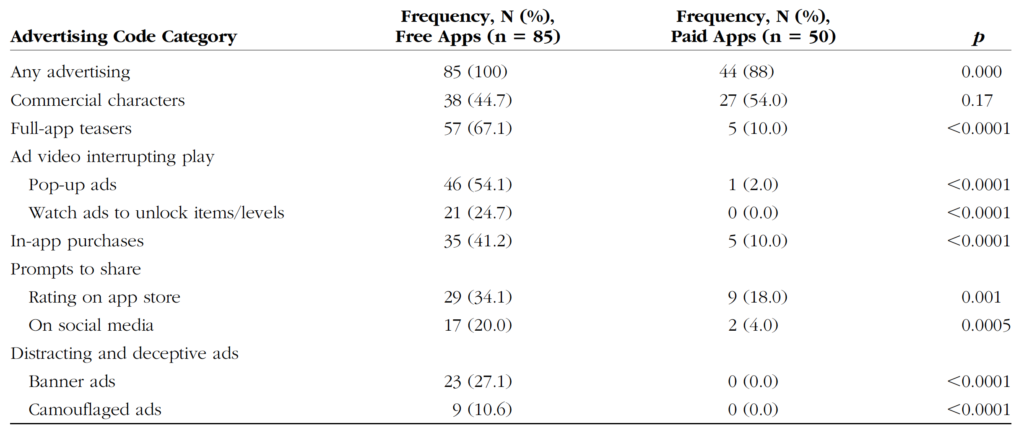
This review by Wolters Kluwer Health looked at 39 apps that target kids ages 5 and under. They reviewed the different kinds of advertising and manipulation used in the apps to encourage engagement by the young users. Researchers used Android devices and tested the most popular apps in the age category at the time.
Types of Advertising:
Commercial Characters – These are apps that are designed around marketing certain characters that your kids may already love. i.e. Daniel Tiger, Mickey Mouse, Bob the Builder, or Hello Kitty.
App Teasers – Encouragement for kids to unlock the “full version” of the app.
Ad Videos Interrupting Play – Videos that feature other apps in the marketplace by interrupting your child’s use of the current app and showing videos of gameplay.
In-App Purchases – Items, levels, or other content that your child can’t use in the app without purchasing them. These may be items that can be used in game, costumes or costume pieces or even in-game currency that can be used to purchase other things in the app.
Prompts to Share – Encouragement to share the app on social media sites or even just to rate it on the app store.
Deceptive or Distracting Ads – These ads often trick your child into thinking they are playing another level of the game. Sometimes they look like they are a part of the app your child is using and then open up an app store link when tapped.
What Parents Should Know
To get my full thoughts on this research watch the video above. Liking it and sharing with your friends would be super helpful as well. I will say here, though, that it is critical that we as parents understand how these apps are marketing to our children and help our kids understand the difference between something they are playing or learning from and an advertisement. This study also looked at the difference between ads in paid apps vs free apps and educational apps vs entertainment. None of the results are shocking but hopefully, they are a bit eye-opening for parents who allow their kids unsupervised time on screens.
This is just a brief notice to let parents know that PUBG, a battle royale game similar to Fortnite but more realistic and graphic, is free today and for a limited time on Xbox. The game usually costs $29.99 but has been marked down for the rest of the week and likely the weekend. The version for iOS and Android has been free since release.
Player Unknown’s Battleground is similar to Fortnite in that you parachute onto an island and try to be the last player standing. That is about where the similarities end, though. The graphics, while not nearly as polished, are more realistic and the death animations are geared a bit more towards adults. This news is important for parents who keep their credit card number or csv from their kids as a way to force them to ask permission to download a game. Since PUBG is free right now, this method of monitoring may not be effective since a payment won’t be necessary.
I always advise that parents know what their kids are playing on their game consoles and that you discuss with them that there is a healthy and safe way to play and that they should make those good choices. Avoiding strangers and keeping from sharing too much personal information is the best start for your multiplayer gaming safety conversation. Just remember that like Call of Duty’s Blackout, PUBG may seem like its “basically Fortnite,” but it is very different.
Coming November 9th, NFL fans will be able to represent their favorite teams with their Fortnite avatar. The uniform packs will be available for purchase ($12-$15) and will allow you to customize your uniform to select any of the NFL’s 32 teams and any jersey number you’d like. You will not see any names on the back of the jersey’s, though. Emotes (dances,) goal posts, and referees will also show up during your Battle Royale matches.
The partnership between the NFL and Epic Games (developer of Fortnite) is no surprise as the video game phenomenon has taken the world by storm. We’ve already seen many of the NFL’s end zone celebrations feature some of the dance moves showcased in Fortnite’s emotes and heard many players discussing their love of the game. Blending the video game world with the NFL team culture is great marketing for both Epic Games and the NFL. The NFL will especially benefit since gaming is such a major market for younger generations whom the league is wanting to attract for obvious future-proofing reasons.
A major frustration for many parents is the constant nagging from their children to allow them to buy skins for their avatars on Fortnite. It’s possible it will get a lot worse. The biggest difference, though, is that some parents may actually see the benefit of allowing their kid to get an NFL Themed skin. If parents are major supporters of an NFL team, it’s possible they would approve of such a purchase because of their desire to see their child express their fanaticism as well.
All of this is well and good. Just know, if you are the type of parent who doesn’t want your kid spending actual money in a game like Fortnite, this could be one of the first major areas of conflict between you and your child. If you’re ok with Fortnite and even making purchases in the game, remember to keep track of the amount of time your child is spending playing the Battle Royale game. Be aware that advertising your favorite NFL team in a massively online game could broadcast a little bit (obviously not always) about where you live. i.e. Chiefs fans are in Kansas or Missouri, and Broncos fans are likely in, or at least from, Colorado.
There have been instances of predators grooming kids in Fortnite and any detailed interest about your child that is proclaimed through their profile or avatar can give a predator more information to use for grooming purposes. Talk to your child about who they are playing with in-game and remind them to avoid lengthy conversations or “squadding up” with strangers. I don’t say any of this to scare you, only to remind you to be vigilant in monitoring the amount of time your child spends on the game, and to maintain an ongoing conversation with them about their time in the game, who they play with, who they talk to, and what their experience is like.
It’s that time again, time for BecauseFamily to release our list of apps you should look out for on your kids phones. Unfortunately things change so fast that is seems silly to just throw a list together and tell you to look for those particular icons. Instead, this is a list of app categories that you should be aware of. Some are very malicious and can be dangerous for your kids, some aren’t inherently dangerous but can have some risk associated with them. The list below is not exhaustive, though, I have included several examples of some of the most popular apps that come up when you search for these particular types of app in the app stores. Hopefully this will help you make quality decisions as to what apps your kids have and don’t have on their devices.
Photo Vaults
These apps allow users to store private images and videos behind a password of some kind. Oftentimes hidden behind a calculator, camera, or music icon, these apps are intended to fool people into ignoring them and are disguised well. Of course these apps can pose a problem for parents who are worried about their child(ren) sending or receiving inappropriate images or videos. Having a supposed safe place to hide them could make more kids prone to take the risk. Some examples of photo vault apps include:
Calculator+
Secret Photo Vault
Lock Secret Photo Album
Photo Safe Vault
Social Gaming
Many games come with built in friend messaging and ways to connect with players you didn’t already know. This is considered social gaming and it’s standard with most mobile games. Many games seem like they are intended for a younger audience but are actually played by people of all ages. Language, sexual innuendo, and much more can be expected in these “in-game” chat rooms. Also, predators have been known to use messaging in some of these games to identify, target, and groom their prey. Some examples of these social games are:
Fortnite
Clash Royale
Apps with Disappearing Messages
Cyberbullying and sexting have become a major issue for many junior high and high school administers. Parents are also concerned that their kids are sending and receiving messages they shouldn’t be distributing. Disappearing messages can encourage more of this behavior since it enhances the sense of anonymity. It’s critical our kids understand that what you send over the internet should always be considered permanent and that just because something said it has disappeared doesn’t mean it’s gone. Some examples of apps that allow you to delete messages after sending are listed below:
Snapchat
Instagram
WhatsApp
Signal
Dating Apps
Online dating is nothing new, apps that connect singles for chatting, dates, and much more are all the rage as well. Sometimes they become trendy among teens also. The following apps are meant to connect older users for romantic purposes but have no foolproof way to be sure kids don’t use the app:
Tinder
Bumble
Coffee Meets Bagel
OKCupid
Live/Life Streaming Apps
It seems like every social media platform encourages its users to “go live” as often as possible. Live streaming broadcasts you to all of your followers and allows them to engage through comments and questions. Oftentimes you can even broadcast publicly and allow anyone who would like to watch you. Life-streaming is when kids, teens, and adults broadcast much of every day of their lives. The following apps allow kids to life stream to their audience:
TikTok
Twitch
Tango
Monkey
Try Not to Freak Out
Please keep in mind that just because you see one of these apps on your kids’ phone or tablet doesn’t mean they are using the app for the wrong reasons. Much of this list is based on a risk that is associated with the app, not an automatic danger as soon as it is installed. We need to be vigilant when it comes to our kids’ online activity. Not because of fear or mistrust but from a place of wisdom. Remember to keep communication open with your kids. You should be a safe place to come if something negative does happen to them online. I never recommend spying on your children without their knowledge and I always recommend over communicating with them about the steps you are taking to keep them safe and what you expect from them while they use their connected devices. Be sure to download the PDF of our internet safety resource list!
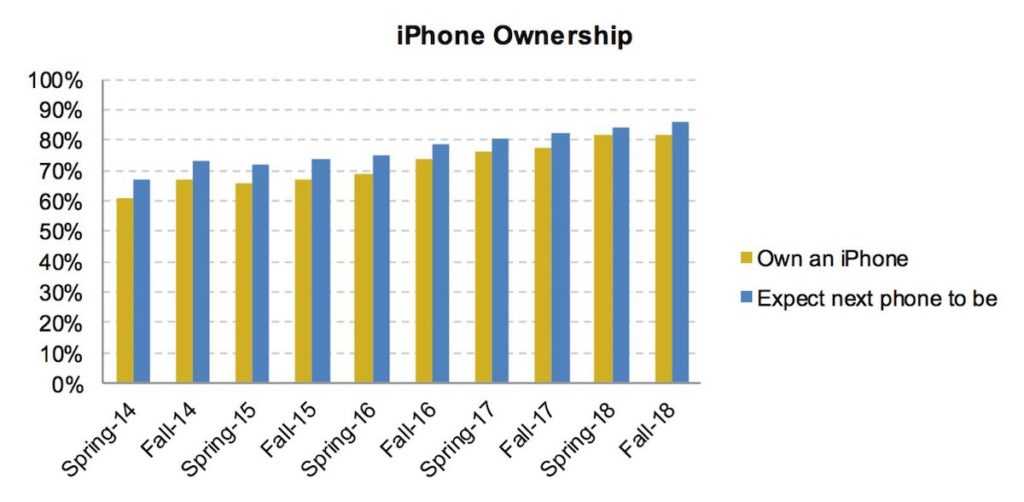
A new survey by research firm Piper Jaffaray called “Taking Stock with Teens” has highlighted some of the most noticeable trends in teenagers’ purchasing habits and tastes. The survey polled more than 8,000 teenagers about how they spend their money and what influences their purchase decisions. The average age of teens surveyed is 16 and the survey is done every spring and fall. The Fall 2018 survey revealed a dominating presence by iPhone, Netflix, and Instagram.
The survey concluded that 82% of teens owned an iPhone and 86% planned to buy an iPhone for their next smartphone. The iPhone has dominated the marketshare for a while now but it’s still growing in the Teen market. Only 10% of teens said they planned to buy an Android phone. Nearly half of those surveyed said that the brand of a product had a major influence on their decision to purchase.
Instagram is now the social media leader among teenagers passing up Snapchat and Netflix provides the most streaming video to our adolescent kids at 38% of the share vs 33% for YouTube. Other interesting info from the survey is that food is the highest budget priority for teens, they prefer to shop online, and the majority of video game purchases are now made through online download.
What Parents Should Know
This info is meant to help marketers plan their products and advertising campaigns but it can go a long way to help moms and dads and other guardians of kids better understand how our teenagers tick. The emphasis on the iPhone speaks to the exclusive nature of the brand, the appeal of feeling like you belong to a niche group causes kids to move towards a brand that is considered to be more premier than the rest. Instagram has passed snapchat by adding much of the features that kids loved about Snapchat without changing the core timeline of the app. Snapchat has admitted to making a mistake by altering what made their app popular with the younger crowd. After going public, Snap made decisions to buffer their ability to become a marketing destination for companies. This undermined their core fanbase of kids and teens who are more likely to skip an ad or unfollow an account that seems to be too “pitchy.”
Netflix is now a more popular video streaming service among teens than YouTube, though not by much. The focus on original content and many of our kids’ favorite stars creating shows and movies for Netflix is driving them to use the streaming service. There has also been a surge in younger people enjoying television shows from the past twenty years or so because of Netflix’s ability to keep those shows streaming on their service. While YouTube is pushing their own TV solution, Netflix is just continuing to build upon the genres they created and it seems to be drawing in folks from most demographics.
I want to conclude by mentioning again that kids are buying their video games through online downloads. This means that the restrictions on games have to be set digitally or your kids can buy whatever games they’d like. If you have set up their Xbox Live or Playstation accounts to make purchases then they can buy whatever games they’d like without any restriction. You have to set that up yourself. There is no longer a cashier at the store who will ask to see your kids id when they try to buy a game that is rated M for mature. It is up to you to get those settings set up.
This data is super helpful for us, as parents, to understand our kids’ preferences and influences. Information like this can help us make quality decisions and chose the right battles when trying to protect our kids from adult content, online predators, cyberbullying, and other dangers of using the internet with no filters or boundaries. Subscribe to our newsletter, our YouTube account, our Twitter and Facebook, and to our podcast to stay in the know as to what’s happening in the digital and connected culture your kids are growing up in.