Tag: youtube

  • The Bird Box Challenge and the Decline of Self Responsibility

    The Bird Box Challenge and the Decline of Self Responsibility

    What’s in a Meme?

    It seems that every time something gets popular, someone finds a way to turn it into a dangerous internet meme. The movie Birdbox on Netflix stars Sandra Bullock and features her adventure with two children through a dystopian wasteland five years after a mysterious force caused mass suicide all over the world. Because this force causes you to kill yourself when you look at it most of the main characters spend the entire movie wearing blindfolds. Enter said internet meme.
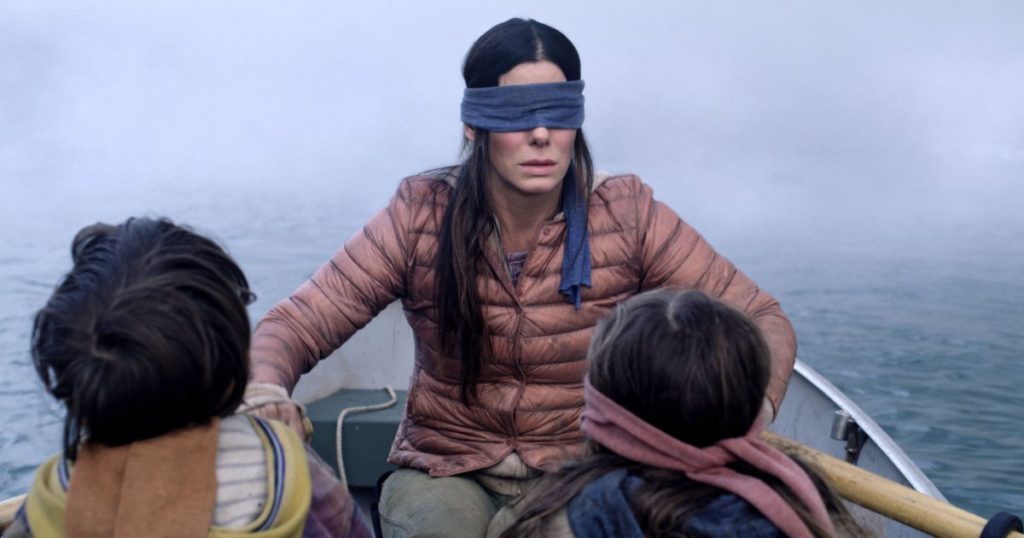
    Bird Box

    The Birdbox Challenge is a video meme that asks its participants to do mundane, regular tasks while blindfolded. People have done things like cooking, walking through their home, spend 24 hours blindfolded, and even driving while blindfolded. Some of the earliest challenge videos received millions of views in a matter of days. Obviously content creators felt the need to outdo themselves and others. This led to some dumb and even dangerous stunts that eventually led to a warning from Netflix and the banning of all BirdBox challenge videos from YouTube.

    People have filmed themselves walking through traffic and driving while blindfolded leading to a couple of car crashes including one by a teen in Layton, Utah. These challenges can be dangerous and unfortunately the popularity travels so fast that our kids are the first ones to learn of them and try them themselves. Always looking for something of theirs to go viral, our kids will try to copy and even outdo the other videos they’ve seen online. The TidePod challenge is another example of escalation causing a silly meme to get out of hand and even hurt people. The Tide Pod challenge was also banned by YouTube and Tide even did a series of commercials to discourage people from participating.

    Do Violent Video Games Create Killers?

    The Decline of Personal Responsibility

    Whenever anyone, especially our kids, gets harmed by something as ridiculous as a challenge on the internet there is an outcry for someone to take responsibility. We may speak out against law enforcement for not cracking down or the production company for making the show the memes are based on. Maybe we’ll want the streaming platform or social media service that these memes are being shared on to take responsibility. Wherever we place the blame, we are understandably longing for someone to answer for these stupid and dangerous occurrences.

    Gaming, social media, entertainment, and education have all come under fire from time to time for the influence they have over our kids. Learning about dangerous challenges can happen naturally from friends but the ability for information to spread over the internet is unprecedented until now. The inspiration for some of these challenges come from the media our kids consume. There are so many factors, though, that cause the spread of all this craziness but the one factor that is constant is the lack of moderation and responsibility.

    As parents, we should see these occurrences as warnings that it is time for us to be more involved in what our kids are doing, whether online or offline. We have no excuse since there is so much hardware and software available to help us monitor what is happening on our kids’ screens. We are hearing all of the time that we need to be involved and that we should take responsibility for the things our children are seeing. It also falls to us to teach our kids to take personal responsibility for their actions.

    Teaching Responsibility

    When our kids see Netflix putting out warnings or YouTube banning content, they see a major corporation taking responsibility for their user-base’s stupid choices. In reality, though, these companies aren’t taking responsibility, they are covering their own back sides before something truly horrible and reputation ruining happens on their service or platform. We live in a world that wants to skirt around responsibility and find someone else to blame. Our kids aren’t going to learn how to take the fall for their own actions unless we teach them to do so. Here are some ways my wife and I teach that to our children:

        1. They must ask forgiveness and they must give forgiveness.

    We don’t just let our kids say they’re sorry. When they hurt each other’s feelings they must ask to be forgiven and then we expect the other child to say more than “It’s ok.” we want them to say “I forgive you.” This causes the offender to understand that their actions caused someone harm and the offended to realize that they have a responsibility to honor the request for forgiveness.

    2. They have chores.

    Our children have responsibility for things they do around the house and they don’t get paid for it. We consider keeping your room clean and your laundry in the hamper a basic requirement for living in our home. They have other chores that they cycle through and they don’t get to bargain or trade, no matter which ones they dislike or like they have to do what the chart says for that day. This way they’re learning to do junk they don’t enjoy just because they are required to do it. They don’t get paid for this either unless you consider that fact that they have to have it done to even ask to get screen time.

     3. They buy their own stuff.

    Our oldest two children have made some money through performing and sometimes they all get a chance to do odd jobs for friends and family to earn some cash. When they have money, they like to spend it and when it’s gone, it’s gone. We don’t usually agree to fit the bill on stuff they want. They can wait for birthdays or Christmas or they can buy it themselves. That’s how life works.

     4. They are told no a lot.

    We have learned the power of saying no to your children. As our oldest two have grown up they’ve heard no so much that they know when to not even ask. Sometimes I’ll have what I call a “Yes day!” this is a day when I say yes to pretty much anything they ask me (within reason.) I don’t tell them it’s a yes day but they tend to figure it out pretty quick and we all really enjoy doing things together that I would normally say no to without thinking. (Think playing four hours of Risk with your 11 and 9 year old.)

    These things aren’t world changing but they can be life changing and can go a long way to help you instill a sense of responsibility in your kids. Making them take responsibility for how they feel and how they make others feel is something that I believe is truly lacking in our society and our kids have a head start at becoming excellent human beings from that step alone. Learning how to work for and spend money wisely teaches them that they are responsible for how they spend their time as well as what they earn and what they have. Finally, hearing no is critical for kids from a very young age. Life isn’t fair. There are things in life that just happen when you don’t want them to or things that you wish would happen to you that happen for others instead. This. Is. Life. Get used to it.


     

  • Family Tech Blog’s Top Five Posts of 2018

    Family Tech Blog’s Top Five Posts of 2018

    Thank You for Everything!

    I can’t believe the year is over. During 2018 the Family Tech Blog has more than doubled in monthly reach and many articles have been read thousands of times each. I am so grateful for all of you who read and share our content and especially to those who have chosen to support BecauseFamily financially so that this blog can exist. Looking back on this past year it is crazy to think of what all has happened in the tech and family tech safety world. I wanted to write one last post for 2018 that highlights some of the most read articles from this past year. Here are the most read posts from a busy and fascinating 2018.

    Number Five

    Three Ways to Identify a Dangerous YouTube Video Before Your Kids See It

    YouTube is a popular topic for parents and educators. The video streaming site provides some of the most helpful and easy to access free resources on the internet. Unfortunately, however, when anything is as easy to use and popular as YouTube, you will have content on there that isn’t appropriate. I think this article was so popular because in it, I lay out some steps parents can take to identify dangerous or misleading videos on YouTube just by looking for a few signs. I’ve had parents, youth workers, and teachers tell me this article helped them make better choices in what their child was able to watch. Remember that YouTube is the wild wild west. Nearly anything goes. Parental supervision is HIGHLY recommended.

    Number Four

    unGlue is a Great Way to Teach Your Older Kids Screen Time Management

    There comes a time as parents that we should transition from control to guidance. unGlue (a BecauseFamily affiliate) is a great software option for parents who want to add guidance to their internet safety plan without giving up all control at once. This article came out before Apple rolled out Screen Time so it was one of the first software options to provide the kind of limits parents were looking for. It you are trying to protect Android devices or even some older hand me down iPhones, unGlue is still a great option.

    Number Three

    Do Violent Video Games Create Killers?

    Tragedy at a gaming competition in Florida spurred this article that explored some of the opinions that float around about gaming and violence every time a young man commits a violent crime. This article unpacks actual research that has been done to try and answer the question: Do violent video games create killers?

    Number Two

    Tools to Monitor Your Own Screen Time in 2018

    As parents, it is critical that we live out the lessons we try to teach our kids. They retain more of what they see you do than what hear you teach. Monitoring your own screen time, even if just to increase your awareness, can be a very helpful practice in trying to set a healthy example for our kids and teens. This article was released right at the beginning of 2018 and continued to grow in popularity all year long. It is obvious that people realize they spend a lot of time on their phones, here’s hoping they used some of these resources to keep track and make some healthy choices.

    Number One

    Parent Guide: Call of Duty Black Ops 4

    Finally, we are back to gaming. Call of Duty Black Ops 4 released on the back of a ton of hype based around their Battle Royale mode titled “Blackout.” The game released to positive reviews but had a lot of kids asking their parents if they could play it. This Parent Guide is a great way for moms and dads to see if this game would be appropriate for their child.

    Final Thoughts and Trends

    There are the top five posts from 2018. Obviously video games and screen time was a major trend with YouTube maintaining  a presence as one of the most common apps used by parents. I was surprised that there were no articles about Fortnite on the list as that game has taken the world by storm. You can’t look anywhere without seeing the dances, costumes, and merchandise. Voice control is another major trend in 2018 that I am surprised didn’t get as many readers as some other topics. I imagine 2019 will be all about gaming, internet privacy, voice control, and of course…YouTube.

    Thank you for reading the Family Tech Blog this year. We appreciate your support and sharing. Keep checking in through the next year as we have even more awesome plans including adding more tutorial content, including Xbox and Android tutorials, and a lot of news from CES2019, starting next week. Thank you again, Happy New Year, and we will see you in 2019!

  • A Warning For Parents Buying Android Tablets for their Kids this Christmas

    A Warning For Parents Buying Android Tablets for their Kids this Christmas


    Android Tablets are a great option for parents who want to get their kids some form of screen device without breaking the bank. The addition of Android FamilyLink has made Android and even better choice for our kids’ introductory tech device. They are affordable, fairly easy to use, and most all apps our kids want to play or use are available through the Google Play store. There is, however an issue that faces parents when they are ready to set up these devices for their kids: compatibility.

    Compatibility is the ability of a device to run the software you are trying to install on the device. Android FamilyLink requires operating system 7.0 or higher in order to work on your child’s device. That means that if your device runs an older version of Android, the app that connects your parental control settings to their device won’t even be available to install from the app store.

    I ran into this problem today while helping a family set up controls on the brand new tech devices they had purchased for their two girls. I initially thought it odd that on one device I could login an account as a child and on the other I could only make a basic adult Google account. Then, halfway through setup I realized that one tablet would run FamilyLink while the other would not. Both of these devices had been purchased from the same place on the same day and were brand new, not refurbished or used, but the operating system was different in each tablet. One was running Android 4.4 while the other, the one that let me set up FamilyLink, was running Android Version 7.1.

    I understand that newer software will not work on older devices but these are two devices being sold at the same time as brand new. There is nothing, without further investigation, that would cause a parent to expect they couldn’t do all the same things on both tablets. The truth, though, is that not all Android Tablets are equal. We won’t get into opinions on Apple vs Android but I will make this comparison: when Apple updates their operation system ( iOS) they ping all of the devices at once and encourage installation of the newest version of the software. Android, however, is a crap shoot. You have to go see if your device will be compatible with the newer software every time a new one comes out. The main reason for this is that different companies make phones that run Android while Apple makes the device, the operating system, the app store. Basically the whole shebang.

    People have different tastes and whether it’s the way the software functions, the look and feel of the phone, or just not wanting to spend as much money, Android will always be a significant part of the smart device market. My advice isn’t to just always use Apple products. I will encourage parents, instead, to always look at the specifications of any device you want to buy and see what operating system it is compatible with. If you are buying an Android product and want to instal FamilyLink, the device must run 7.0 or higher for the FamilyLink Children and Teens app to show up as downloadable in the Google Play Store. Otherwise, you’ll be looking for some third party app or combination of third party apps to add parental control functionality to your devices.

    Need help? Shoot me a message HERE.

  • Here’s How YouTubers and Streamers Make Money

    Here’s How YouTubers and Streamers Make Money

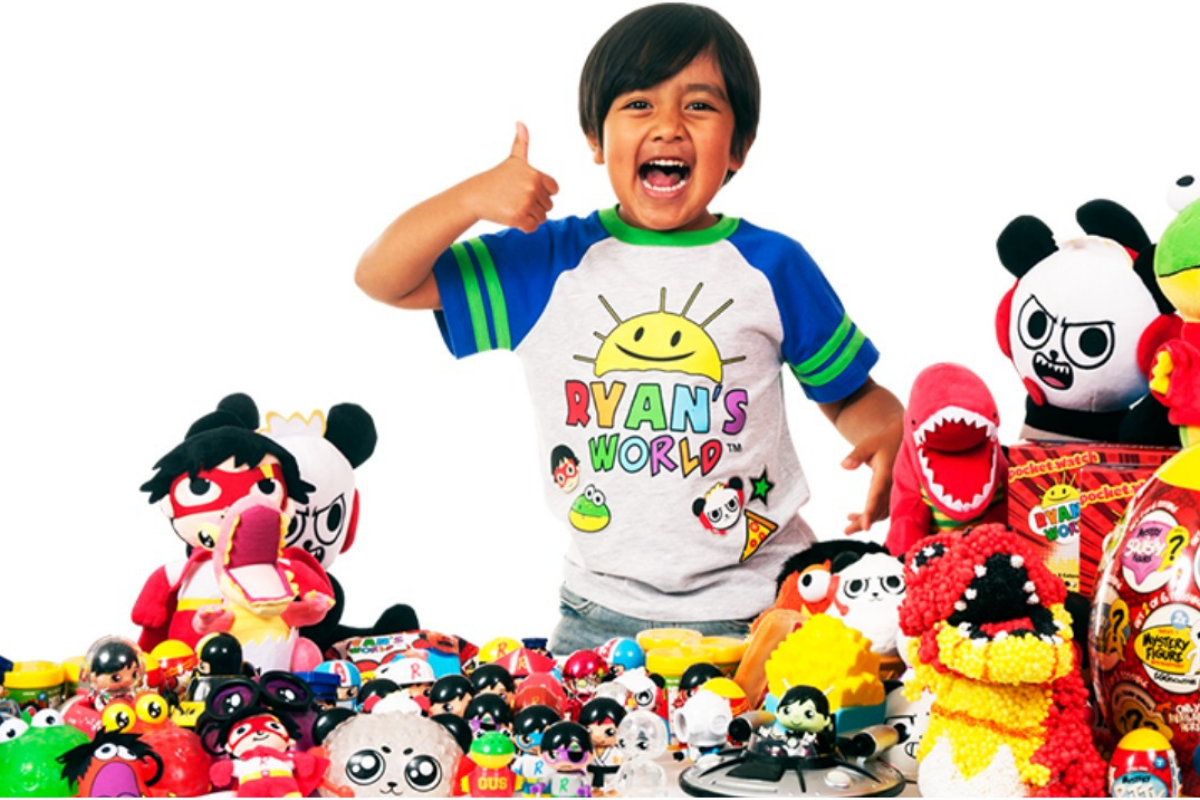
    The top earners from YouTube have been released in an article from Forbes and on the top of the playlist is a seven year old boy who opens and plays with toys on his channel. Ryan Toysreview features short videos that include product unpacking, play, challenges, and of course, seven year old Ryan. His videos each have view counts in the millions and that has amassed an estimated 21 million dollars to him during the past year. Ryan and his family aren’t the only content creators creating million dollar companies out of their videos. The top ten list includes vloggers, make up artists, and gamers, all who post weekly to daily videos and rack up millions of views on each one.

    When I speak to parents about the kind of money gamers and other content creators can make on YouTube and Twitch I see their eyes open wide with wonder. They have no clue how doing something like gaming or unpacking toys can result in millions of views, much less millions of dollars. There are several ways that online content creators make money, some are fairly conventional and some may surprise you. Here’s a quick breakdown for those of you who can’t imagine making internet videos as a career choice.

    Traditional Advertising

    Pretty much all YouTubers “monetize” their videos. This means that they allow YouTube to put ads into their content and then get paid a little bitty bit every time someone sees a video or clicks on an ad banner. The rules and settings for this form of advertising is always changing and can often be frustrating to deal with. For instance, if your videos contain any content that belongs to someone else, the YouTube algorithm can sometimes flag your content as “demonetized.” That means, while your fans will see your videos, you won’t be able to make any direct ad income from it. Or, in some rare circumstances, you will have to share ad income. Below is a video that I made with my family a couple of years ago, it is a parody of a song by One Direction. Since the music is copyrighted, my video was demonetized even though the lyrics were all changed to fit our family parody.

    Product Placement/Sponsorships

    These regulations can be a pain for some content creators and so they choose to use other methods of advertising. Product placement and sponsorships are becoming some of the leading examples. There are many ways YouTubers and streamers can make their content fit with sponsorship deals. Channels that feature trick shots and other sports topics will be sponsored by active wear companies or stores that sell sports equipment. Our channels and blog are affiliated with sites and software that help parents with accountability monitoring and filtering.

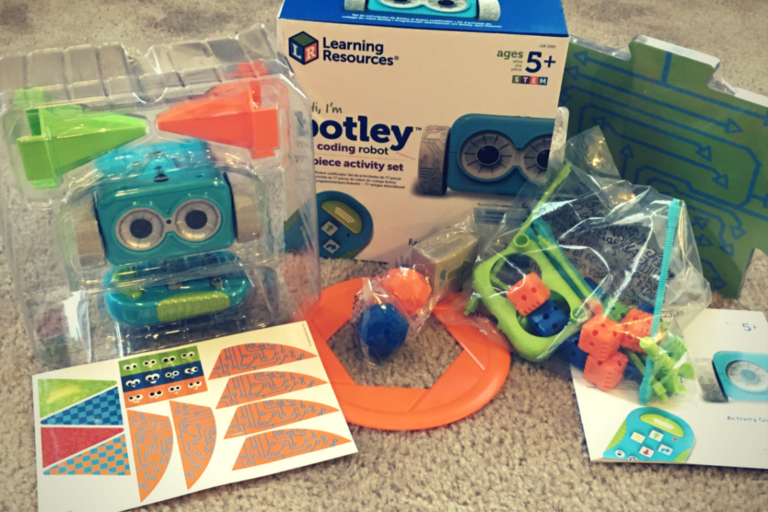
    Sometimes these sponsorships are soft or quiet which means they just have the equipment or products in their videos without much mention other than maybe in the video description. Mostly, though, you’ll see content that is made as a special sponsorship video or series and many times they’ll be labeled as “sponsored” by the creators. This is very common in unboxing or gaming videos where the creator is opening toys that were sent to them for free (maybe also with some form of financial payment) to highlight that toy or gamers are playing and doing commentary on a game that they got access to a week before release to build hype for the upcoming sales of the game. Our article and video featuring Botley was one that we were able to do because the company sent us the coding robot to play with and write about.

    Direct Viewer Support

    Finally, we come to direct viewer support. This method is indicative of the time we live in where people are drawn towards benevolence and away from fees and subscription pricing. People also prefer not to have products pushed on them in a non relevant way like commercials on TV or even in-line ads during a YouTube or Facebook video. This direct viewer support is a way for those who enjoy a creator’s content to literally give back to that creator and support them in their effort to make their videos full time. Gamers will stream live on Twitch.tv for six to eight hours several days a week and their viewers will reward them with small donations of a buck, five dollars, or more just to have their screen names read live on the stream. Creators will thank their supporters with mentions called “shout outs” during or at the end of their videos. There are content creators that make hundreds of thousands of dollars a year just on their viewer support alone.

    There aren’t many creators who only use one method of monetization for their videos. The combination of traditional online advertising, product placement and sponsorships, and direct viewer support has allowed many gamers, vloggers, make up artists, and more to leave behind a traditional full time job and make internet videos for a living. This is the world we live in now. Entertainment looks a lot different than it did ten or even five years ago. Imagine what it will look like ten years from now.

    What Parents Should Know

    This article is meant to be informative and to answer a question I am asked quite often. There is a world of internet content available to our kids. Some of it is interesting and informative or educational and some of it isn’t meant to be seen by your seven year old. There has been research to show how addictive the short and fast paced videos on YouTube can lead to attention problems and issues at school so limiting screen time is important for our younger kids. As your kids get older, you’ll see their desire to consume web content increase and you will want to give them the freedom to do so more and more. This is good as long as you’ve had boundaries in the past and taught them to be aware of the time they are spending on their phone or computer.

    When your son or daughter tells you they want to play video games or make internet videos for a living, don’t look at them like they are stupid. While not everyone will become a millionaire by making online content, there are many who have made it their full time job (myself included.) Just remind them that many of the things they’ll need to know to be successful they will still learn in school. Let them know that the work of an internet content creator is not easy and the expectations from viewers can be excruciatingly heavy. The most important thing they’ll have to be able to do if they are going to be online for a living is not give up. Tell them to practice that with the things they are into now. Don’t quit that sport, maintain your high grades, keep going to dance or piano classes. Whatever that thing is, learning the ability to see it through will be what can drive them to success in any venture in life. Even if it’s opening toys on videos on the internet.

  • iPhone, Netflix, and Instagram are Dominating Teen’s Time Online

    iPhone, Netflix, and Instagram are Dominating Teen’s Time Online

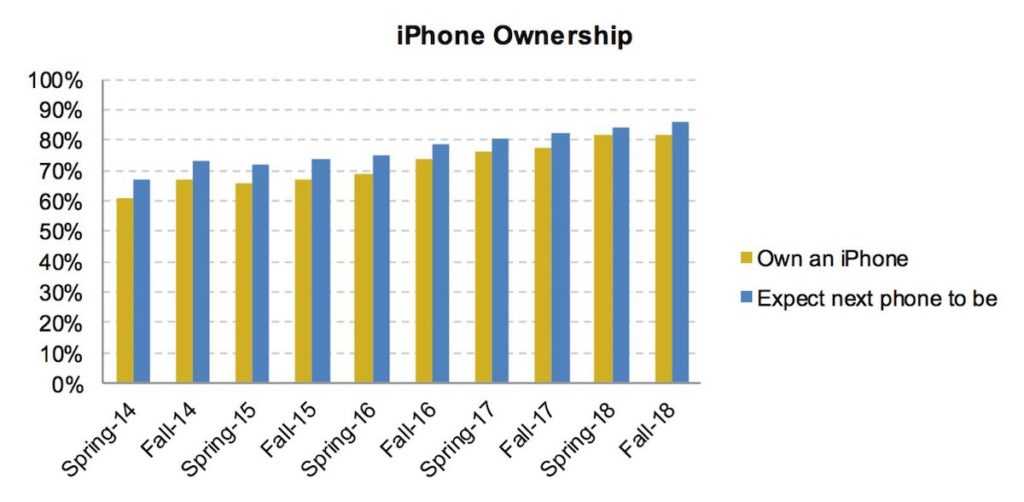
    A new survey by research firm Piper Jaffaray called “Taking Stock with Teens” has highlighted some of the most noticeable trends in teenagers’ purchasing habits and tastes. The survey polled more than 8,000 teenagers about how they spend their money and what influences their purchase decisions. The average age of teens surveyed is 16 and the survey is done every spring and fall. The Fall 2018 survey revealed a dominating presence by iPhone, Netflix, and Instagram.

    The survey concluded that 82% of teens owned an iPhone and 86% planned to buy an iPhone for their next smartphone. The iPhone has dominated the marketshare for a while now but it’s still growing in the Teen market. Only 10% of teens said they planned to buy an Android phone. Nearly half of those surveyed said that the brand of a product had a major influence on their decision to purchase.

    Instagram is now the social media leader among teenagers passing up Snapchat and Netflix provides the most streaming video to our adolescent kids at 38% of the share vs 33% for YouTube. Other interesting info from the survey is that food is the highest budget priority for teens, they prefer to shop online, and the majority of video game purchases are now made through online download.

    What Parents Should Know

    This info is meant to help marketers plan their products and advertising campaigns but it can go a long way to help moms and dads and other guardians of kids better understand how our teenagers tick. The emphasis on the iPhone speaks to the exclusive nature of the brand, the appeal of feeling like you belong to a niche group causes kids to move towards a brand that is considered to be more premier than the rest. Instagram has passed snapchat by adding much of the features that kids loved about Snapchat without changing the core timeline of the app. Snapchat has admitted to making a mistake by altering what made their app popular with the younger crowd. After going public, Snap made decisions to buffer their ability to become a marketing destination for companies. This undermined their core fanbase of kids and teens who are more likely to skip an ad or unfollow an account that seems to be too “pitchy.”

    Netflix is now a more popular video streaming service among teens than YouTube, though not by much. The focus on original content and many of our kids’ favorite stars creating shows and movies for Netflix is driving them to use the streaming service. There has also been a surge in younger people enjoying television shows from the past twenty years or so because of Netflix’s ability to keep those shows streaming on their service. While YouTube is pushing their own TV solution, Netflix is just continuing to build upon the genres they created and it seems to be drawing in folks from most demographics.

    I want to conclude by mentioning again that kids are buying their video games through online downloads. This means that the restrictions on games have to be set digitally or your kids can buy whatever games they’d like. If you have set up their Xbox Live or Playstation accounts to make purchases then they can buy whatever games they’d like without any restriction. You have to set that up yourself. There is no longer a cashier at the store who will ask to see your kids id when they try to buy a game that is rated M for mature. It is up to you to get those settings set up.

    This data is super helpful for us, as parents, to understand our kids’ preferences and influences. Information like this can help us make quality decisions and chose the right battles when trying to protect our kids from adult content, online predators, cyberbullying, and other dangers of using the internet with no filters or boundaries. Subscribe to our newsletter, our YouTube account, our Twitter and Facebook, and to our podcast to stay in the know as to what’s happening in the digital and connected culture your kids are growing up in.

  • What’s With Kids Watching Other Kids Play with Toys?

    What’s With Kids Watching Other Kids Play with Toys?

    It was originally called “unboxing” and it’s not new. Tech nerds have been watching online videos of other people open and try out products for more than fifteen years. YouTube coming in 2005 aided in a surge in popularity in the unboxing genre, which is now one of the most popular categories on the video streaming site. What has taken parents by surprise recently is how much their own children like to watch other kids play with toys on YouTube.

    Companies are lining up to have kids play with their products on their YouTube channels and many of these channels are receiving marketing deals to add to their hundreds of thousands of dollars per month of ad revenue from YouTube itself. One such channel, “FunToys Collector Disney Toys Review” has more than ten million subscribers and is estimated to have made over $550,000 so far in 2018. Often (but not always,) these YouTube stars are often given toys to open for free. They usually have to post a notice that they received products for the video, but viewers don’t care. They just want to see what the latest toy can do outside the box.

    These videos can serve a purpose, however. They allow us to see what products are like before we buy them. Many people admit to watching review videos online before deciding to make a purchase. We read Amazon reviews to help us decide which vacuum we want to get. These toy videos can help parents weed out toys their kids may think they are interested in until they see them unboxed and used. Unboxing is one thing, but what about watching other kids play with the toys, is that weird?

    Check Out: Botley the Screen Free Coding Ed Robot Product Review

    Our desire to see people use things we don’t have isn’t reserved only for children. We watch reality shows about the drama in the lives of the richest members of our society. There are entire channels dedicated to people buying extravagant homes and their popularity is driven by the desire to see others who have what we cannot or have not attained. We sit and watch shopping infomercials, never buying anything, but watching how the items can be used. Lets Play videos and eSports also speak to this need, allowing video game fans watch games perform at higher levels and maybe even play games that fans aren’t able to get their hands on right away. It’s a form of entertainment and it meets what some psychologists say are critical instincts that are within all of us.

    Memetic Desire

    At the risk of sounding like a neuroscience and psychology nerd, I’d like to explain some of the instinctual foundations of our love for unboxing and product demo videos. Memetic desire is the type of longing that comes from seeing someone else enjoy something. When you order the salad and your date orders the cheeseburger and you just have to have a bite is an example of memetic desire. The burger didn’t sound good when you were ordering but seeing your date enjoy it made it irresistible. The popularity of these videos is likely due in great part to our memetic desire. Watching someone open up the next iPhone will create in us the desire to obtain that device for ourselves. It’s normal, and it isn’t even too bad of a thing as long as it doesn’t turn to jealousy.

    Memetic desire can breed discontentment. For this reason we should be careful with what attitude our kids enjoy these unboxing videos. Are they loving watching someone else play and use their imagination? That’s all well and good. If they are watching and then demanding that you allow them to go purchase that toy, there is the problem. There haven’t been any studies to ascertain any danger to allowing your kids to watch unboxing and product review videos. If there is any risk, it’s likely based on the personality and behavior of your child.

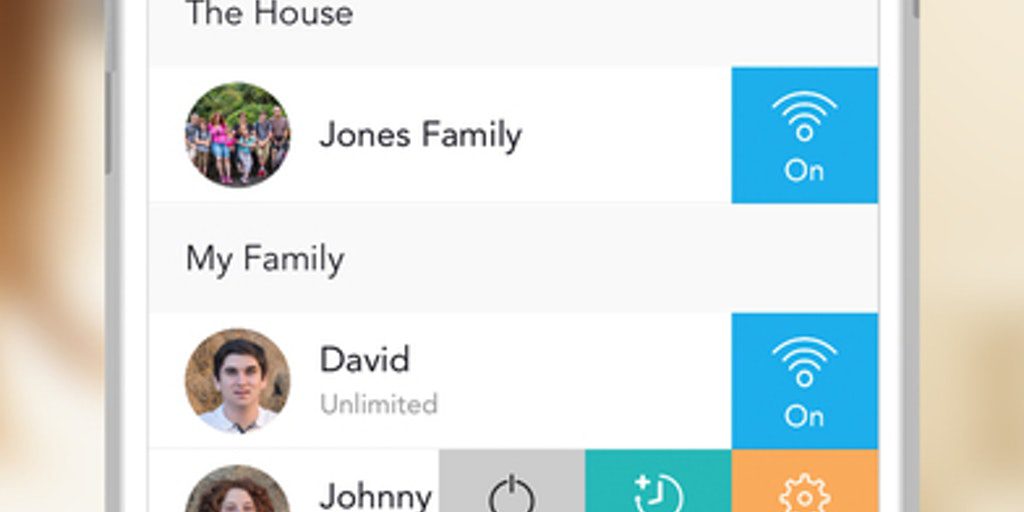
    The best advice that experts give is for you to monitor and limit screen time. Whether they are watching someone play a video game, playing a game themselves, watching toy demos, or even watching a PBS show about math, too much screen time rewires the brain in an unhealthy way and should be avoided. If your kids are watching these video too much, the reason is simple. You are allowing them to do so. You can be the parent, use your knowledge of what these videos are all about and the amount of screen time that is healthy (usually an hour or less per day) to set boundaries for your kids. Use tools like unGlue or Accountable2You to keep track of the time spent on their devices. Take responsibility for your children’s online activity and you’ll create a safer and healthier environment for them to grow in. 

  • You Can Watch and Create Longer Videos on Instagram with IGTV

    You Can Watch and Create Longer Videos on Instagram with IGTV

    Instagram has joined the long form video club with the release of IGTV. You have probably already started seeing the organizations (Like Us) and companies you follow posting about their new longer content on Instagram. It’s pretty easy to get to and built into the base app. It’s also easy to make a “channel” and everyone can do it. This video content can be up to 1 hour long for approved accounts and a half hour for everyone else. 

    You should expect to see much of the same videos you would see on YouTube make their way to Instagram as well. There are already podcasts, tutorials, and news reports being uploaded and, since literally, anything else you can imagine will be available soon as well. 

    What Parents Should Know

    With excessive screen time becoming an increasing problem, longer videos on the fastest growing social media app among most age groups could be cause for concern. Content is also, often a consideration since Instagram filters photos and videos through an algorithm. This means their software has to detect adult or dangerous content and if it fails the content has to be flagged enough times to be changed. Parents who are concerned about online content and screen time should be sure that their younger teens and children have time limits and content filters set. The other issue will be brands and entertainment companies creating content to market to our kids. They know that our kids and teenagers use Instagram and they will be targeting them with their videos. My advice is (as always) for parents to talk to their kids about the content they view online and try to help them keep an eye on how they spend their time and what they’re watching.

  • Instagram Updates Give You More Control Over Your Feed

    Instagram Updates Give You More Control Over Your Feed

    So many people found themselves migrating their photo sharing to Instagram several years ago because of their chronological timeline. As Facebook became more algorithm based, people felt like they had no control over what they were seeing on their timelines so they opened Instagram accounts. A few years ago Instagram went the way of the algorithm as well trying to give posts you are most interested in a higher priority in your feed. This was met with mixed reactions and now Instagram is working to give you more control.

    external link…

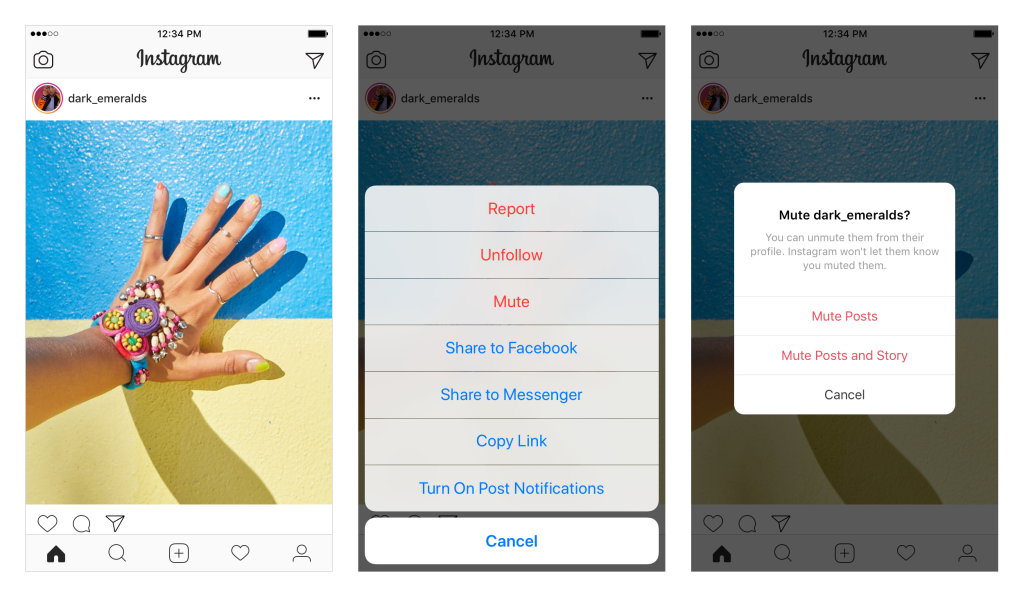
    The first addition, effective now, is the “Mute” feature. This allows you to hide posts from your feed without completely unfollowing them. This could be useful for hiding bullies without letting them see that you’ve unfollowed (which could encourage even more bullying) and just helping the algorithm know your preferences even better. To mute someone simply press the three dots to open the menu on a post. Select Mute in the menu and that’s it, you shouldn’t see posts from that user anymore.

    The second announcement is for updates that haven’t made their way to users yet. Soon, Instagram will include an insights feature that will allow you to see how often and how you use the social media service as well as a notification when you’ve seen all the posts from the previous 48 hours. Instagram and parent company Facebook are hoping that these features will improve the user experience by helping them develop better usage habits. There has been more of a focus recently on improving the “overall well-being” of their users. Some of the recent updates on YouTube, Facebook, Snapchat, and Instagram have been attempts to encourage more engagement within their communities without having to spend as much time using their services.

    What Parents Should Know

    Any changes made to social media sites that encourage breaks from screens are good changes. But nothing will replace a parent setting limits for their children. Remember, also, that there is no better lesson than your own example. Monitor your own screen time and make healthy choices so that you can advise your kids from a place of leadership. Instagram’s new mute feature will help moms and dads keep unwanted posts away from their kids as well as help older kids silence those they don’t longer want to hear from.

    My hope is that as parents we can guide our children into proper use of social media. Statistics are showing that the chance of depression increases the more our children use social media. More depression increases the rate of suicide among young people. In fact, suicide is now the second leading cause of death among teenagers. With these facts in place, even the social media services themselves are taking notice and making changes. Parents, do not allow yourself to be caught in the dark when it comes to your kids and safe use of their technology. While Facebook, Instagram, and Youtube have been making changes, the responsibility does not fall to these companies to protect our children. It falls to us, their parents.

  • YouTube Adds Reminders to Take a Break from Your Screen

    YouTube Adds Reminders to Take a Break from Your Screen

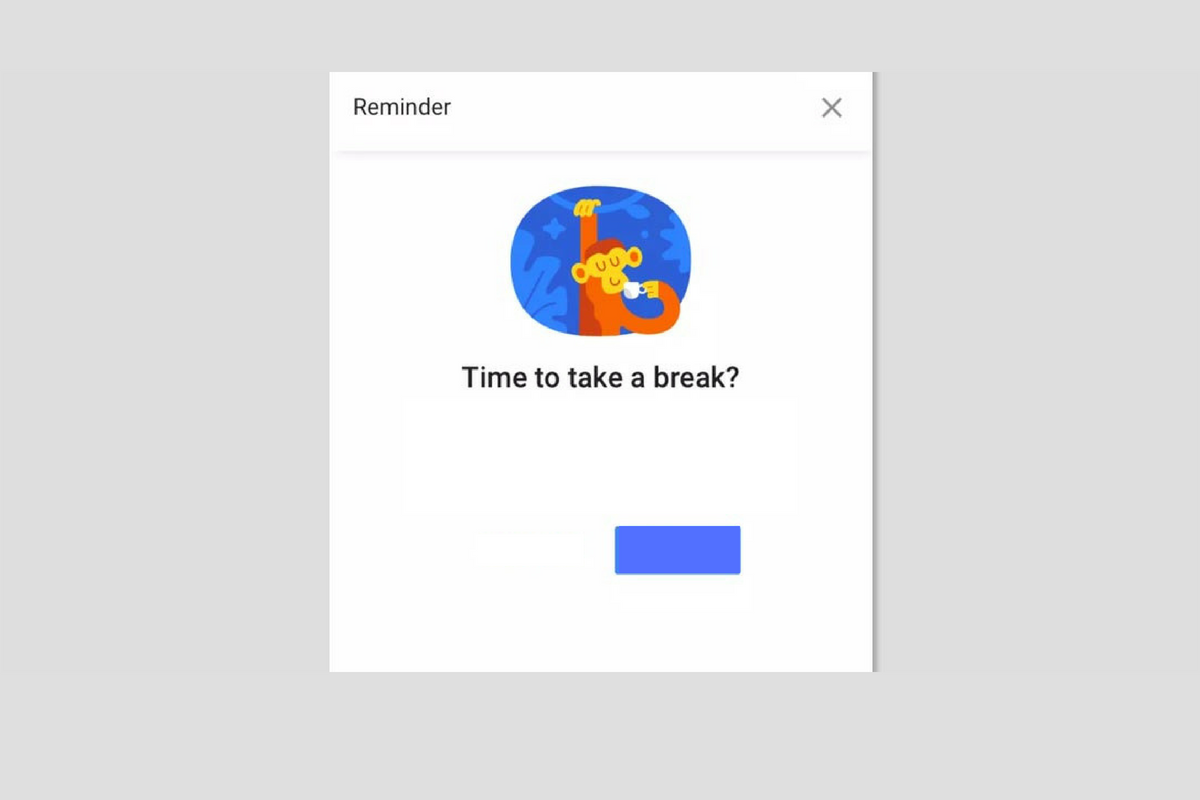
    Software and web developers are getting serious about the time well-spent movement. The focus on taking breaks from our screens is more and more popular and even Youtube is getting in on the trend. Their latest update includes the ability to opt-in to reminders to take a break from watching videos in the app. iOS and Android users can turn on and set the frequency of break reminders that will interrupt your viewing and remind you that you should take a break.

    This feature is currently only available on the iPhone and Android app. There isn’t any information whether it is going to be rolled out to the website, smart TVs, or other streaming TV devices.

    What Parents Should Know

    This is a good idea and hopefully, it will trickle down to YouTube Kids soon. I always tell parents to be the example for their kids. If mom and dad are on their screens constantly then it doesn’t do much good to preach healthy screen time limits in your home. YouTube’s break reminders can be a good way to manage your own healthy screen habits so that you’re setting a better example.

    Psychologists are recommending that our kids spend less time on screens and more time outside. They’ve even coined the phrase, “Green Time,” stating that kids are spending so little time outside that their development is being stunted. Use whatever tools you can find, whether it’s a built-in reminder like YouTube is offering or a separate software like unGlue to monitor and limit screen time. Build healthy habits now that will last a lifetime.

  • YouTube Boasts 8 Million+ Flagged Videos Removed, is That Enough?

    YouTube Boasts 8 Million+ Flagged Videos Removed, is That Enough?

    A new report from YouTube has disclosed the removal of over 8 million videos that didn’t lineup with their content guidelines. Most of the videos were removed by their algorithms system. Videos that contained sexual content, extreme violence, hate speech, or terrorism all made the list of removed content. Some had been flagged by the system, some by viewers, and a few by YouTube employees who watch for non-compliant material on the video site.

    Many of the videos that were flagged by YouTube’s software were removed before they even received a single view. These algorithms can scan the videos through the processing system and deny them before they’re made public. Does this mean that YouTube is a lot safer for Felix?

    Check Out: Youtube Kids

    What Parents Should Know

    This is a major step in the right direction for YouTube. Unfortunately it’s never going to be full proof. The only real way to monitor inappropriate content is for human eyes to be on that content. Also, as parents it’s tough to allow another person, much less a company, to decide what is appropriate for our families and what is not.My advice, as always, is that parents have their eyes on the stuff their kids are watching whenever possible. If not possible then be sure to use tools like Guided Access or android family link or kid mode to be sure kids can’t explore YouTube unmonitored or unfiltered. YouTube does have a safe mode as well as a separate app for kids (YouTube Kids) and I recommend these tools as well.