WELCOME to Raising Connecting Kids the podcast that answers your questions about the connected world your kids are growing up in.
Thank you to everyone for partnering with BecauseFamily and making these resources possible. Visit BecauseFamily.org/partnership to help us continue to protect your family by making free content like this podcast.
QUESTION OF THE WEEK
I get multiple questions a week. Sometimes through email or FB messages and sometimes face to face at an event or meeting. In this podcast, I’ll be answering the most common questions I’ve had and even, your questions. Email me at BecauseFamily@gmail.com to get your question read and answered on the Podcast.
Question: How do Social Media Sites censor content?
User-Generated Content
Generally accepted standards.
Nudity/Sexual Content
Extreme Violence
Hate Speech
Harmful content disguised as kid content.
Keep in Mind:
Location of the company.
Lawsuits and bad PR
More than one reviewer.
Usually flagged by users.
Protecting viewers from dangerous false facts, visual content, and messages is not censorship. It is the company’s right to protect their image and intellectual property.
These companies can make decisions based on their own guidelines. They are not government entities. The CAN censor content if they want as long as they have put reasons in their terms and agreements.
CONCLUSION
Thank you again for listening to Raising Connected Kids, the podcast that answers your questions about the connected world your kids are growing up in. Subscribe on iTunes, Stitcher, YouTube, Spotify, Google Podcasts, and anywhere else you listen to podcasts. Like/Follow us on Facebook, Twitter and InstagramShare the show with your friends and leave a review on your favorite podcast app to help spread the word. Remember to visit BecauseFamily.org/partnership to partner with us as we protect children and teenagers by bridging the technology gap between them and their parents.
We’ve all seen ads for Quibi and it has officially launched. So what the heck is a Quibi? I first heard about Quibi at CES in 2019. I wasn’t sure what it was all about except that a lot of celebrities from different genres were endorsing (and likely investing) in the app. Turns out Quibi is a video streaming app designed for use on your mobile device. It was founded by Jefferey Katzenberg, of Disney productions fame, and features short, high-quality television shows news reports, sports features, and movies.
Right now, the content on Quibi seems to be 100% original. In fact. A lot of the shows on Quibi are produced by and starring the celebrity backers that you see in the commercials. Shows star the likes of Chance the Rapper, Lebron James, Liam Hemsworth, and Chrissy Teigen.
What the Heck Is a Quibi?
Quibi features short-form content or normal length content split into short-form episodes. You can usually watch an episode in five to ten minutes and with episodes releasing daily it doesn’t take too long to get to the end of a series. I found myself interested in a show called Murder House Flip, a blend of true crime and home improvement. The first story, renovating a house where a gruesome murder took place thirty years ago, took three episodes to complete. Total running time was similar to that of a half-hour show on TV if you account for ad breaks.
image: Quibi
Watching Murder House Flip is where it clicked for me. Quibi isn’t all that different than television except for being formatted for your mobile device. It is a new concept for high definition, highly produced shows, and movies to flip to verticle mode when you tilt your phone but that’s about where the innovation stops in my opinion. Television has always been featured in short bits, split up by advertising. The difference here is that the content is a bit shorter overall, including the advertising content. I think Quibi is more of a tv channel than a world-changing app.
What Parents Should Know
There is currently no content on Quibi for children. The shows on Quibi, like most streaming services, are rated 14+ up to Mature. You will hear adult language and see some adult themes as well. Most content wouldn’t even be very entertaining for most younger viewers. I would rate the app 16+. As I mentioned above, the idea that Quibi is innovative is only partly accurate. Younger digital natives will see this concept as new. One show being split into several parts separated by ads is pretty new to young ones who are used to clicking play and binging, ad-free, and interruption-free with whole seasons of shows being released all at once. Those of us who lived through Saturday morning cartoons and TGIF every week aren’t so impressed.
I will remind you that the content on Quibi is considered rated teen or higher. Many of the shows feature adult language, extreme violence, and some sexual content. While you may enjoy Quibi, since the shows are new and feature some celebrities that we all love, I wouldn’t recommend it for your kids.
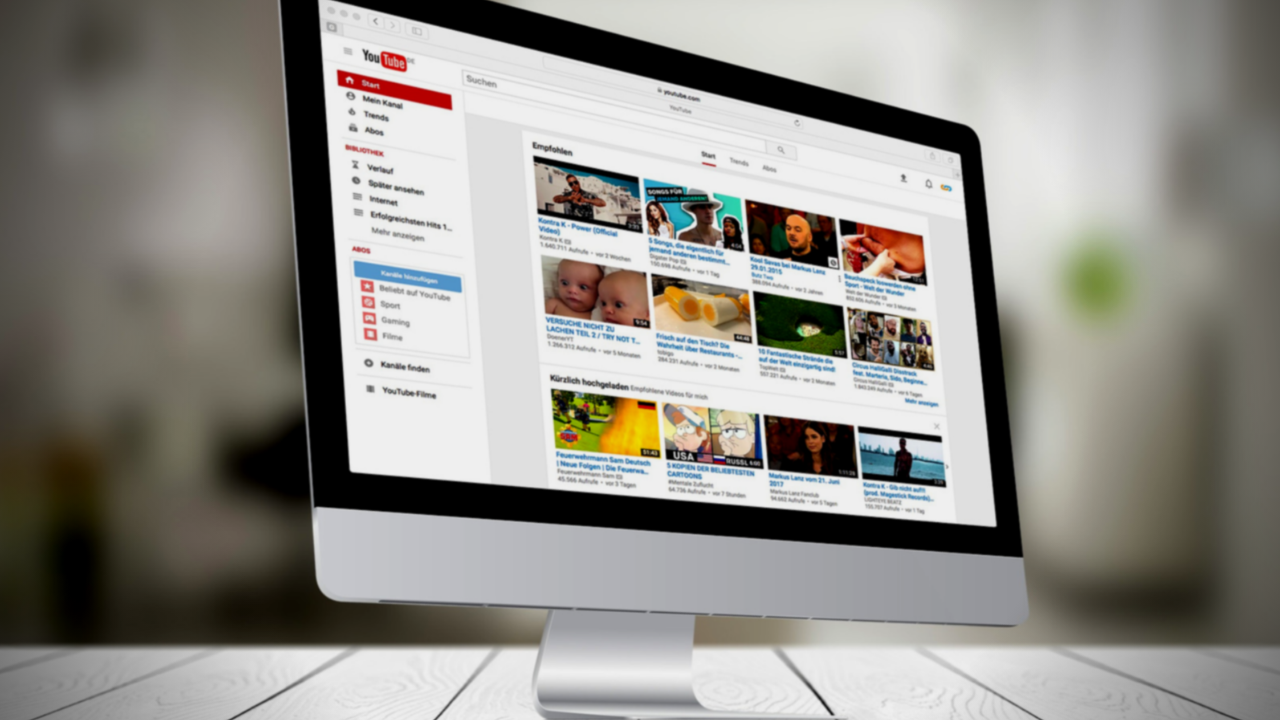
I am an avid YouTube viewer. I get most of my entertainment from the video streaming service, watching gaming videos, D&D streams, and educational tutorials. I have noticed a trend since YouTube changed its policies for creators to be more responsible for their channel’s content as it pertains to advertising to children.
Since YouTube cannot collect viewer data from videos that are intended for children, the company has asked creators to label whether their videos are for kids or not. They are also using an algorithm to view popular videos and identify the content as meant for kids or not meant for kids. This algorithm has content creators concerned for the viability of their channel. This has caused them to be more blatant with crude content and swearing in order to make it very obvious to this algorithm that their video is not meant for children.
One YouTuber that I enjoy watching, partially because he isn’t overly crude, has been starting his videos with strings of swear words and jokingly saying “This video isn’t for kids YouTube, just be aware, not meant for children.” One of the reasons he feels the need to say this so blatantly is because he plays video games on his channel that may appeal to children. The images of the game alone could lead a person or artificial intelligent software to believe the video was made for children even though that isn’t this creator’s main target audience. Another YouTube content creator that I know has lamented on social media that his channel, which is family-friendly, has lost hundreds of dollars monthly in revenue since YouTube changed their policies.
SirWillow is a Family-Friendly YouTube Channel with nearly 30,000 subscribers and over 4 and a half million views.
Would you be willing to tell me a percentage your ad revenue went down when YouTube changed their policies?
I’m still waiting to see how it all sorts out, but right now in my case I’m looking at about a 30% drop, but it’s in a state of flux. What will be telling will be the end of January when the full force of the new policies kicks in.
How have the changes to the ad policy changed your process for making videos?
In my case, it hasn’t changed any of my process. But I may not be the norm in that regard. I know several that do YouTube “full time” and for them, it has meant some drastic changes. I know at least one that is likely going to shut down, another is cutting back on YouTube to increase time in other projects. For me, it’s been a hobby that has brought in a part-time job income, and while the income has dropped it’s still going to fit the same role. It has meant a change in how many videos though. I am cutting back my production some from 10-12 videos a month to closer to 7.
Your videos are “family-friendly.” Do you think that YouTube is becoming a less friendly place for families in general or is it mostly up to creators?
I absolutely think YouTube is becoming less family-friendly, and these changes are going to directly impact that and make it worse. The changes are going to pretty much destroy financial benefits for anyone producing kid-focused videos, and there are a lot of family-friendly channels that are going to get caught in that backwash and cut back or stop producing. It’s also going to be harder to find kid and family-friendly videos because of all of the blocks that will remove them from the normal algorithms that recommend videos.
And there are a number of producers who have, as you mentioned, increased cursing and crude language, along with images and subjects to make it clear that they aren’t “kid-focused” It’s going to make it hard to find, and hard to produce and make money, kid and family-friendly content.
My thanks to SirWillow for answering these questions for me. He does videos about theme parks and what it has been like working at theme parks. Go check out his channel!
What Parents Should Know
It should be very clear by now that YouTube isn’t intended for children. It is becoming harder and harder for people who make videos for kids to sustain a profitable channel on the site. This is causing some different reactions. Some kids’ channels are switching to a subscription method where you can sign up to pay monthly for more content from them. Others are changing to Facebook or Twitch because of their less strict ad policies.
The only real way to be sure your kids aren’t watching videos that aren’t intended for their age is for you to control what they are viewing. Legally, our young kids (under 13) are supposed to be using only apps intended for their age group. The legal responsibility, however, doesn’t fall to our kids or even us as their parents, it falls to the company. Hundreds of millions of dollars worth of fines have been handed out by the FTC for companies illegally collecting data from children. They are being investigated and forced to make changes. The changes seem like they should be good for the safety of our children but so far they are only truly helping protect the company from the repercussions of disobeying child safety laws.
When the safety measures protect only from advertising info being collected, they may be intended to protect children but in practice, they seem to be increasing the volatility of the content on the service while only protecting the service itself. Parents are the only true guardians of our kids’ hearts and minds. The only way to protect them from adult content and crude language on the videos they watch are to take responsibility for their screen time ourselves. Here are some tips:
Only allow screens in a public area.
Limit headphone use so you can hear what they are watching.
Build playlists on YouTube to ensure they are only watching videos meant for kids.
Use apps like PBS Kids or DisneyPlus to keep them watching family-friendly videos.
Use YouTube kids instead of YouTube; while not foolproof its a far better option than basic YouTube.
Limit the amount of time watching videos; the more time spent on YouTube the more chance of coming across inappropriate content.
Parents should take the steps necessary to protect their children online. Companies should be held responsible for their advertising practices and the content on their sites and apps but the responsibility for protecting our children falls strictly to parents. When the measure taken by companies to protect kids backfire by causing creators to lose money unless they swear, use violent and sexist language, or show adult images on their videos, the measure don’t protect our kids, they make the app more dangerous. Parents are the gatekeeper. Protect your children.
Tik-Tok is at the center of a controversy surrounding the exposure to predators and child pornographers through live streaming on their app. One in twenty children who use live-streaming apps have been asked to take off their clothes according to a study by the UK’s Children’s Charity NSPCC. Originally called Musical.ly, Tok Tok claims to “empower everyone to be a creator directly from their smartphones, and is committed to building a community by encouraging users to share their passion and creative expression through their videos.” Their mission statement sounds like they are building a place for our kids to stretch their creative muscles and build a supportive audience but in reality it is exposing them to potential danger.
Sexual exploitation is only a part of the issue, there are popular hashtags on the app that highlight self harm and eating disorders. Tags like #thinspo (thinsporation) feature videos of children as young as eight showing their rib cages through their skin and proclaiming that they are inspiring to others who desire to be thin. Suicide and self harm are also featured on the app with complete with encouragement to hurt yourself and instructions on how to do so. Tik-Tok says you have to be 13 to use the app but as we have shared multiple times on this site, that age exists to protect the company from legal action concerning the collection of children’s data, not to protect your children from content on the app.
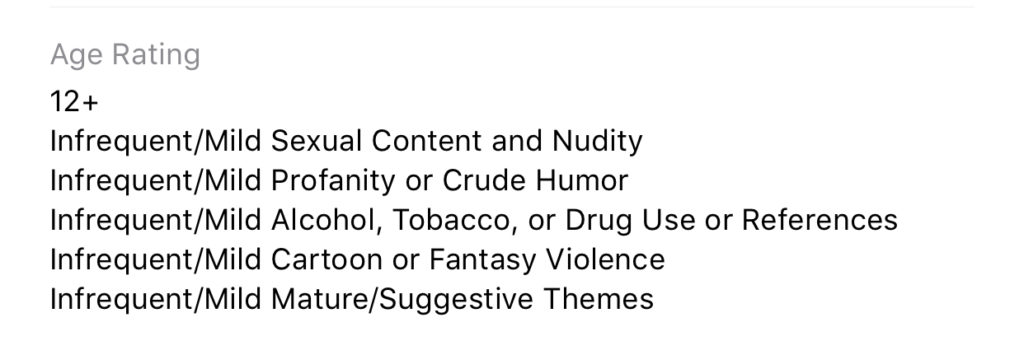
While the app is rated 12+ in apps stores in the U.S. the reasons listed for the rating prove to be, in fact, very mature. The issue, again, as I’ve mentioned, is user generated content. Anyone with a smartphone and a wifi connection can make videos and now livestream in Tic-Tok, they can also watch you perform on the app. This makes for an open, dangerous atmosphere filled with predators, adult content, scams, and violence.
What Parents Should Know
Tik-Tok says they have filters and parental controls in the app that allow you to set the app to private but all of these measures have proven to be less than effective. Kids who use the app on their own can easily come across content that isn’t age appropriate. The content restriction and time management settings in the app are password protected; they can be useful and should be set up if you allow your child to use Tik-Tok. Also be sure to turn off the ability for non-friends to comment on, share, and download (this is on by default, creepy right?) your child’s videos.
We don’t want our kids talking to strangers online. All parents understand the dangers associated with live-streaming and posting public videos to the internet. Unfortunately many parents feel that their hands are tied when it comes to keeping their kids safe on these apps and websites. That isn’t the truth, however, there are tools (some in the app and some third party) which you can use to keep them from accessing things that are dangerous. An algorithmic filter is never going to be enough, though, so it is important that we have open communication with out kids about what they are posting and seeing on apps like Tik-Tok. Also, if your child doesn’t meet that age restriction then they shouldn’t use the app.
Twenty five percent of kids talking to strangers online is a horrifyingly high statistic. It shows that while there are privacy settings and parental controls out there for parents to use, either parents aren’t using them or their kids are getting around them. I know that the privacy settings in Tik-Tok aren’t password protected so if your children want to talk to strangers on the app and they have time using the app by themselves there are ways for them to make that happen. It is important that parents take the responsibility to protect our kids online. Many media outlets are blasting these companies for putting our kids in danger but I have to be honest, you don’t blame the slide for your kid falling off and busting their face, you think of precautions that YOU can take to keep that from happening in the future.
A YouTuber (sensitive content warning) has found evidence that there is a vast community of child predators and those who watch content that contain child exploitation on YouTube. They are using comment sections and timestamps to lead each other to actual child pornography. They start with a search for a simple popular YouTube trend and then the algorithm that YouTube uses to connect viewers with like content will eventually propose a video of kids that can be considered appealing to these viewers. They then click through in the comments section to parts of the video that seem innocent but are, unfortunately, what these predators have been looking for.
YouTube’s response didn’t come until after advertisers begin pulling down there ads. They began by removing some of the videos and some of the comments, as well as demonitizing (pausing ad revenue) videos on which these comments are posted. YouTubers are concerned because some of their videos have been or could be demonetized because of a commenter’s words, not something they control. Whether you want to blame the site, the viewers, or the makers of the videos, the fact that the conversation goes strait to money is a serious problem.
I think the money isn’t the issue. I understand hitting them where it hurts and that YouTube should do something but we have to take some responsibility. I believe we need to have a serious conversation about what types of videos we allow our children to post publicly and we should be very concerned about the types of people who watch these videos. Watch the video above to hear more of my thought son this issue.
The video to initially expose this issue is below, be warned that it’s disturbing to watch and there is adult language.
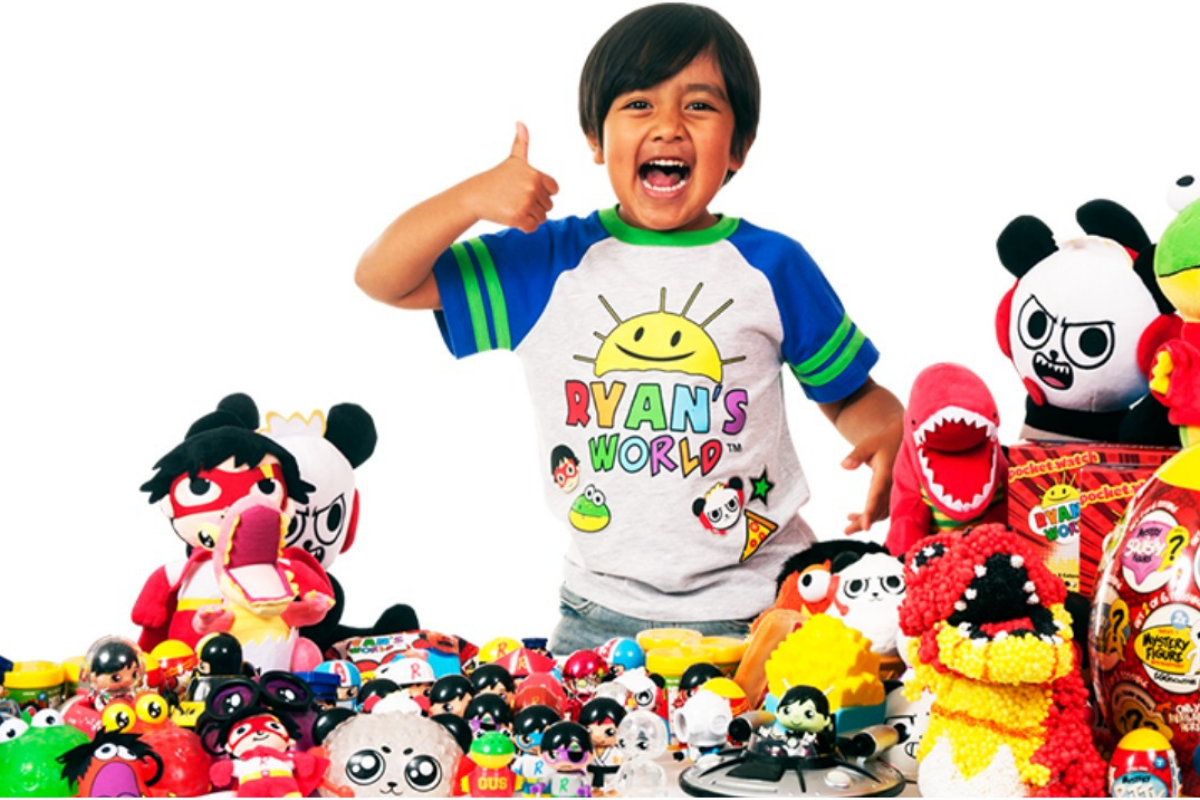
The top earners from YouTube have been released in an article from Forbes and on the top of the playlist is a seven year old boy who opens and plays with toys on his channel. Ryan Toysreview features short videos that include product unpacking, play, challenges, and of course, seven year old Ryan. His videos each have view counts in the millions and that has amassed an estimated 21 million dollars to him during the past year. Ryan and his family aren’t the only content creators creating million dollar companies out of their videos. The top ten list includes vloggers, make up artists, and gamers, all who post weekly to daily videos and rack up millions of views on each one.
When I speak to parents about the kind of money gamers and other content creators can make on YouTube and Twitch I see their eyes open wide with wonder. They have no clue how doing something like gaming or unpacking toys can result in millions of views, much less millions of dollars. There are several ways that online content creators make money, some are fairly conventional and some may surprise you. Here’s a quick breakdown for those of you who can’t imagine making internet videos as a career choice.
Traditional Advertising
Pretty much all YouTubers “monetize” their videos. This means that they allow YouTube to put ads into their content and then get paid a little bitty bit every time someone sees a video or clicks on an ad banner. The rules and settings for this form of advertising is always changing and can often be frustrating to deal with. For instance, if your videos contain any content that belongs to someone else, the YouTube algorithm can sometimes flag your content as “demonetized.” That means, while your fans will see your videos, you won’t be able to make any direct ad income from it. Or, in some rare circumstances, you will have to share ad income. Below is a video that I made with my family a couple of years ago, it is a parody of a song by One Direction. Since the music is copyrighted, my video was demonetized even though the lyrics were all changed to fit our family parody.
Product Placement/Sponsorships
These regulations can be a pain for some content creators and so they choose to use other methods of advertising. Product placement and sponsorships are becoming some of the leading examples. There are many ways YouTubers and streamers can make their content fit with sponsorship deals. Channels that feature trick shots and other sports topics will be sponsored by active wear companies or stores that sell sports equipment. Our channels and blog are affiliated with sites and software that help parents with accountability monitoring and filtering.
Sometimes these sponsorships are soft or quiet which means they just have the equipment or products in their videos without much mention other than maybe in the video description. Mostly, though, you’ll see content that is made as a special sponsorship video or series and many times they’ll be labeled as “sponsored” by the creators. This is very common in unboxing or gaming videos where the creator is opening toys that were sent to them for free (maybe also with some form of financial payment) to highlight that toy or gamers are playing and doing commentary on a game that they got access to a week before release to build hype for the upcoming sales of the game. Our article and video featuring Botley was one that we were able to do because the company sent us the coding robot to play with and write about.
Direct Viewer Support
Finally, we come to direct viewer support. This method is indicative of the time we live in where people are drawn towards benevolence and away from fees and subscription pricing. People also prefer not to have products pushed on them in a non relevant way like commercials on TV or even in-line ads during a YouTube or Facebook video. This direct viewer support is a way for those who enjoy a creator’s content to literally give back to that creator and support them in their effort to make their videos full time. Gamers will stream live on Twitch.tv for six to eight hours several days a week and their viewers will reward them with small donations of a buck, five dollars, or more just to have their screen names read live on the stream. Creators will thank their supporters with mentions called “shout outs” during or at the end of their videos. There are content creators that make hundreds of thousands of dollars a year just on their viewer support alone.
There aren’t many creators who only use one method of monetization for their videos. The combination of traditional online advertising, product placement and sponsorships, and direct viewer support has allowed many gamers, vloggers, make up artists, and more to leave behind a traditional full time job and make internet videos for a living. This is the world we live in now. Entertainment looks a lot different than it did ten or even five years ago. Imagine what it will look like ten years from now.
What Parents Should Know
This article is meant to be informative and to answer a question I am asked quite often. There is a world of internet content available to our kids. Some of it is interesting and informative or educational and some of it isn’t meant to be seen by your seven year old. There has been research to show how addictive the short and fast paced videos on YouTube can lead to attention problems and issues at school so limiting screen time is important for our younger kids. As your kids get older, you’ll see their desire to consume web content increase and you will want to give them the freedom to do so more and more. This is good as long as you’ve had boundaries in the past and taught them to be aware of the time they are spending on their phone or computer.
When your son or daughter tells you they want to play video games or make internet videos for a living, don’t look at them like they are stupid. While not everyone will become a millionaire by making online content, there are many who have made it their full time job (myself included.) Just remind them that many of the things they’ll need to know to be successful they will still learn in school. Let them know that the work of an internet content creator is not easy and the expectations from viewers can be excruciatingly heavy. The most important thing they’ll have to be able to do if they are going to be online for a living is not give up. Tell them to practice that with the things they are into now. Don’t quit that sport, maintain your high grades, keep going to dance or piano classes. Whatever that thing is, learning the ability to see it through will be what can drive them to success in any venture in life. Even if it’s opening toys on videos on the internet.
Instagram has joined the long form video club with the release of IGTV. You have probably already started seeing the organizations (Like Us) and companies you follow posting about their new longer content on Instagram. It’s pretty easy to get to and built into the base app. It’s also easy to make a “channel” and everyone can do it. This video content can be up to 1 hour long for approved accounts and a half hour for everyone else.
You should expect to see much of the same videos you would see on YouTube make their way to Instagram as well. There are already podcasts, tutorials, and news reports being uploaded and, since literally, anything else you can imagine will be available soon as well.
What Parents Should Know
With excessive screen time becoming an increasing problem, longer videos on the fastest growing social media app among most age groups could be cause for concern. Content is also, often a consideration since Instagram filters photos and videos through an algorithm. This means their software has to detect adult or dangerous content and if it fails the content has to be flagged enough times to be changed. Parents who are concerned about online content and screen time should be sure that their younger teens and children have time limits and content filters set. The other issue will be brands and entertainment companies creating content to market to our kids. They know that our kids and teenagers use Instagram and they will be targeting them with their videos. My advice is (as always) for parents to talk to their kids about the content they view online and try to help them keep an eye on how they spend their time and what they’re watching.
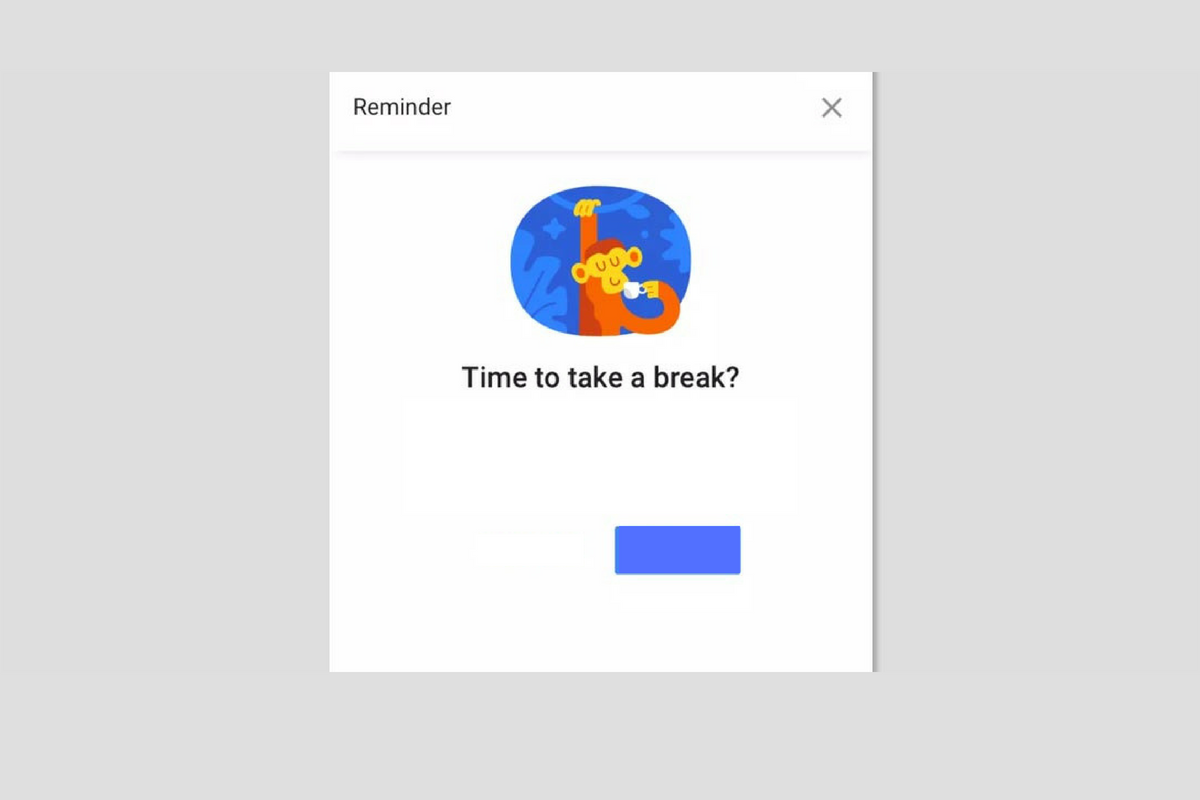
Software and web developers are getting serious about the time well-spent movement. The focus on taking breaks from our screens is more and more popular and even Youtube is getting in on the trend. Their latest update includes the ability to opt-in to reminders to take a break from watching videos in the app. iOS and Android users can turn on and set the frequency of break reminders that will interrupt your viewing and remind you that you should take a break.
This feature is currently only available on the iPhone and Android app. There isn’t any information whether it is going to be rolled out to the website, smart TVs, or other streaming TV devices.
What Parents Should Know
This is a good idea and hopefully, it will trickle down to YouTube Kids soon. I always tell parents to be the example for their kids. If mom and dad are on their screens constantly then it doesn’t do much good to preach healthy screen time limits in your home. YouTube’s break reminders can be a good way to manage your own healthy screen habits so that you’re setting a better example.
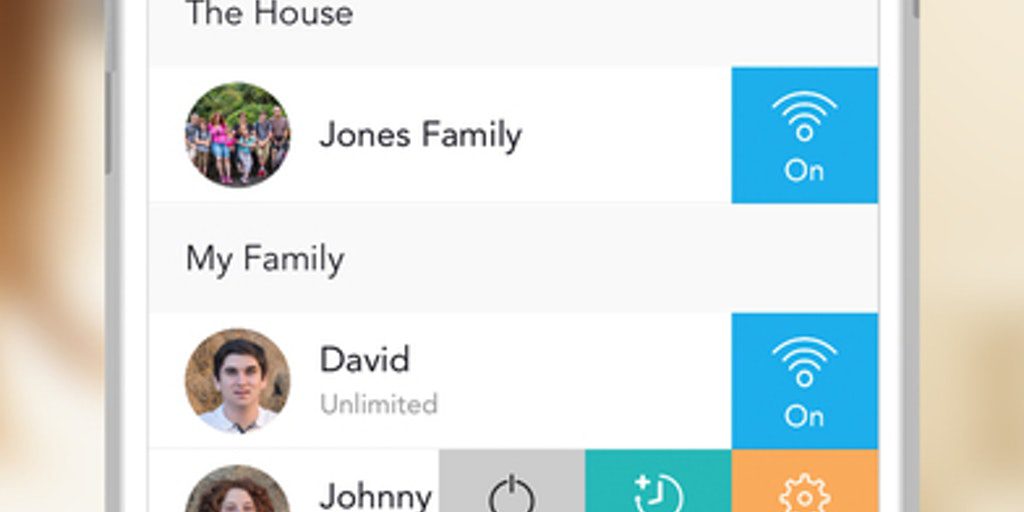
Psychologists are recommending that our kids spend less time on screens and more time outside. They’ve even coined the phrase, “Green Time,” stating that kids are spending so little time outside that their development is being stunted. Use whatever tools you can find, whether it’s a built-in reminder like YouTube is offering or a separate software like unGlue to monitor and limit screen time. Build healthy habits now that will last a lifetime.
After the shooting in February, many user generated content sites are making changes to how they handle media about firearms. YouTube is the latest to make changes to their guidelines with an emphasis on videos about assembling, building, and customizing guns.
Videos that feature “instructions on manufacturing a firearm, ammunition, high capacity magazine, homemade silencers/suppressors, or certain firearms accessories … This also includes instructions on how to convert a firearm to automatic or simulated automatic firing capabilities.” are not permitted on YouTube. – Youtube Guidelines
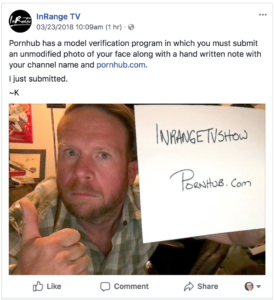
Since these changes have taken effect, some of the channels that feature firearms are going to be making changes to how they broadcast their content. Obviously, their videos are no longer welcome on YouTube so some are looking for a different outlet. PornHub, one of the leading adult video sites on the internet, is the destination of one popular firearm focused channel. InRangeTV, stating that “YouTube’s newly released vague and one-sided firearms policy makes it abundantly clear that YouTube cannot be counted upon to be a safe harbor for a wide variety of views and subject matter,” has begun to upload new and past content to PornHub as of this week.
What Parent’s Should Know
People of all ages are fascinated by guns. I’ve had dads and teens and even older elementary aged kids ask me if filters that they have installed would block their favorite gun videos and sites. The fact, now, is that more of those niche interest videos will be moving onto sites like PornHub.
Even Google searches for gun videos will likely now result in links to sites that feature pornography and other extreme content. This brings a subject that is often considered interesting by many conservatives of all ages into the world of content that they would not consider appropriate. So what should parents do?
My recommendation, if your kids enjoy watching videos about guns and will follow them anywhere the Internet takes them, is to install accountability software and a filter to any of their devices. A filter will block content you don’t want them to see. Accountability software will help you find if they got a hold of any websites you don’t approve of. I recommend Accountable2You because they have frequent updates and their iOS app will scan any browser on an iPhone or iPad. And as far as filters go, Net Nanny is also a good quality option.
Whatever your views on guns and the age appropriateness of videos about guns I think we can all agree that putting content kids may be interested in viewing on sites made explicitly for adults is a dangerous proposition. Be vigilant and do something to keep your kids off of the sites.
Everyone has an idea of how you should safely view today’s eclipse. Use the glasses, don’t use the glasses, use a pinhole projector (we’ve made ours) watch live coverage. However you want to view the eclipse in person, you need to know a few things before choosing which live stream coverage you’re wanting to use. For some reason, those who cover events like the eclipse aren’t always scientists or educators and they may give dumb, or even dangerous advice. They might even have non-age appropriate language or other content in their videos, coverage, or advertising. Here are a few of the channels and videos that we recommend so that you can learn about and enjoy live coverage of today’s total eclipse.
Live Feed
NASA:
I’m only listing this one option. They have a pre-show with more science facts than you can handle and then live coverage from multiple parts of the country. You know the information and advice will be good because these are some of our country’s absolute best scientists. Enjoy!
Some great educational videos about the eclipse and other science facts. National Geographic is a trusted source for nature and science information and education.
Sci Show Space has great scientific learning videos as well and is perfect for those who are a bit older. The link above is to a search for the eclipse videos on their channel.
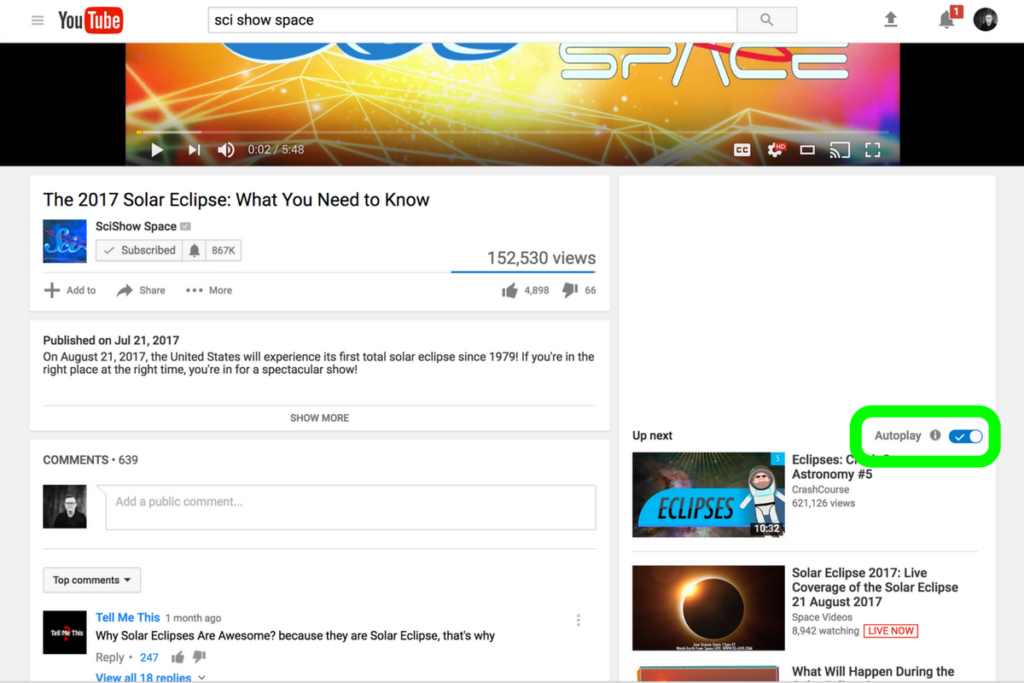
Be smart about what videos you show your kids and whether or not you allow follow-up videos to autoplay. Turn autoplay off to avoid accidentally exposing them to content you didn’t expect and aren’t ready for them to see. The eclipse is a great opportunity to teach your children some science facts but you have to be wise with what tools you use. Hopefully, the resources listed in this article will give you an idea of where to start. Be safe, and have fun.