Tag: study

  • LETS RESEARCH | Predatory Advertising in Preschooler Apps

    LETS RESEARCH | Predatory Advertising in Preschooler Apps

    The Study

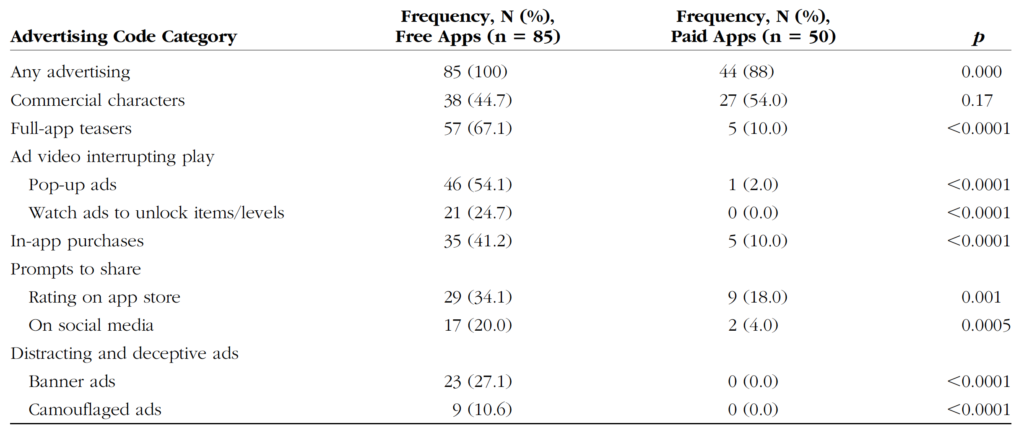
    This review by Wolters Kluwer Health looked at 39 apps that target kids ages 5 and under. They reviewed the different kinds of advertising and manipulation used in the apps to encourage engagement by the young users. Researchers used Android devices and tested the most popular apps in the age category at the time.

    Types of Advertising:

    Commercial Characters – These are apps that are designed around marketing certain characters that your kids may already love. i.e. Daniel Tiger, Mickey Mouse, Bob the Builder, or Hello Kitty.

    App Teasers – Encouragement for kids to unlock the “full version” of the app.

    Ad Videos Interrupting Play – Videos that feature other apps in the marketplace by interrupting your child’s use of the current app and showing videos of gameplay.

    In-App Purchases – Items, levels, or other content that your child can’t use in the app without purchasing them. These may be items that can be used in game, costumes or costume pieces or even in-game currency that can be used to purchase other things in the app.

    Prompts to Share – Encouragement to share the app on social media sites or even just to rate it on the app store.

    Deceptive or Distracting Ads – These ads often trick your child into thinking they are playing another level of the game. Sometimes they look like they are a part of the app your child is using and then open up an app store link when tapped.

    What Parents Should Know

    To get my full thoughts on this research watch the video above. Liking it and sharing with your friends would be super helpful as well. I will say here, though, that it is critical that we as parents understand how these apps are marketing to our children and help our kids understand the difference between something they are playing or learning from and an advertisement. This study also looked at the difference between ads in paid apps vs free apps and educational apps vs entertainment. None of the results are shocking but hopefully, they are a bit eye-opening for parents who allow their kids unsupervised time on screens.


  • PODCAST: Our Top Posts from the Past Three Weeks

    PODCAST: Our Top Posts from the Past Three Weeks

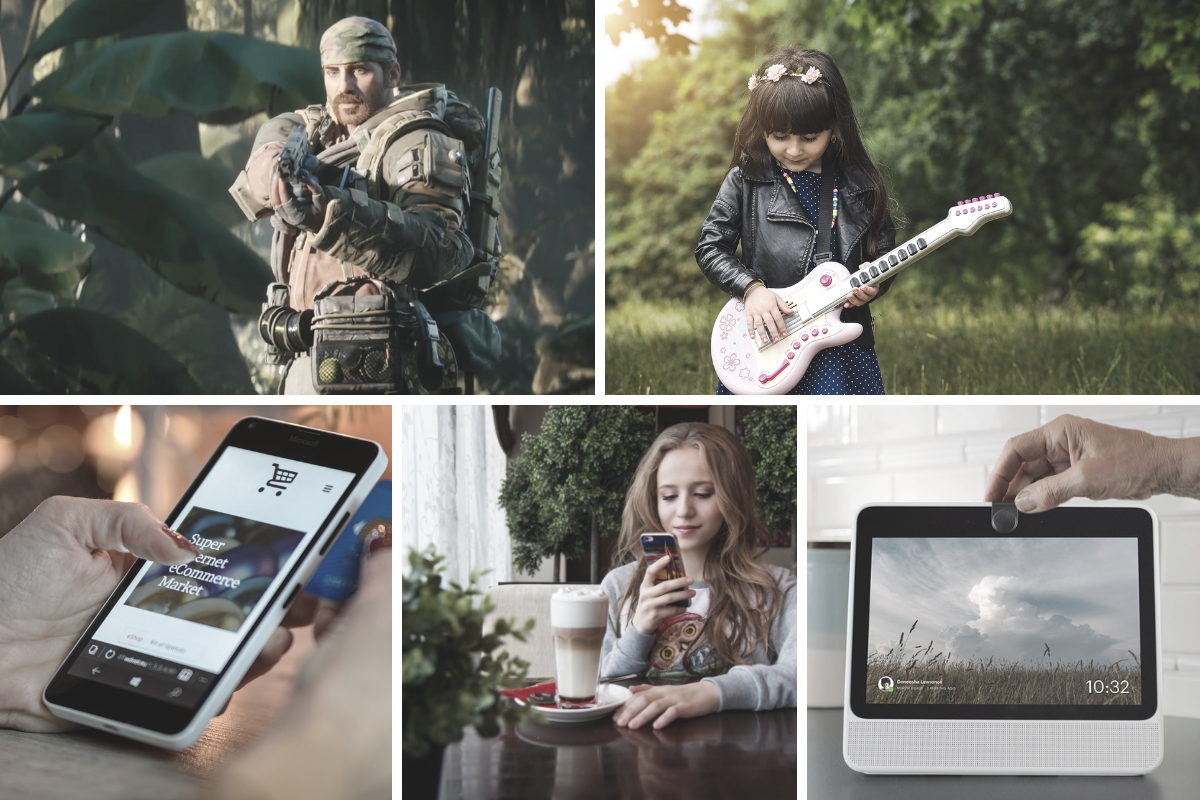
    In the new iteration of the Family Tech Update Podcast, we’ll be sharing the audio from our most recent top posts. In today’s episode, we’ll be discussing Call of Duty Black Ops 4, shopping in social media, Facebook’s new touchscreen smart speaker, and new research about screens and the cognitive health of our children.

    If you enjoy this podcast please consider subscribing on iTunes and sharing it with some friends. Also, you can enter to win 6 months free with Accountable2You’s accountability software by simply EMAILING ME a question to ask on the front end of the next podcast episode.

    Enjoy!

    Music by Keven Maccloud at Incompetech.com

    Read More:

    Parent Guide: Call of Duty Black Ops 4

    Facebook Portal is a Microphone, Camera, Smart Speaker, and Screen for Your Home

    New Research Includes Screen Time Limits as Critical for Childrens’ Cognitive Health

    Instagram and Snapchat go Full Consumer Sales, Will Your Kids Migrate?


  • New Research Includes Screen Time Limits as Critical for Childrens’ Cognitive Health

    New Research Includes Screen Time Limits as Critical for Childrens’ Cognitive Health

    The elements that create a healthy environment for our children are ever-changing. We want them to understand how to eat right, get exercise, get an education, stay off drugs, and so much more. A new study in Canada has isolated three critical factors for our kids’ health, and not surprisingly, the amount of time they spend on a screen is one of the major players.

    Jeremy J Walsh of the Children’s Hospital of Eastern Ontario published the study that surveyed more than four thousand children ages eight to eleven. They measured cognitive abilities and the amount of time kids spent in active play, sleeping, and on screens. These three factors proved key to high cognitive health in children. The strongest results were from children who slept for 9 to 11 hours per night, spent at least 1 hour per day in active play, and spent less than two hours per day on screens. The study did not differentiate between types of screen time (entertainment/education) but researches say they are continuing their studies in that direction. 

    The report stated that sleep and screen time were the categories most strongly related to cognitive health and that only five percent of children surveyed met the requirements on all three categories. Sadly, nearly one third of the children in the study didn’t meet any of the requirements at all. 

    What Parents Should Know

    You’ve probably heard the fact that many of the developers of the most popular tech products have strict screen time limits for their kids. As do family tech safety experts, myself included. Research is continuing to show that unlimited access to screens can be detrimental to our health and especially to our children’s health. Childhood obesity, mental health, and even suicide rates are rising in the United States, right alongside the number of people who would consider themselves addicted to their screens and to social media. 

    I am looking forward to seeing what the researchers conclude concerning the types of screen time children are having. Smaller studies have shown that young kids learn less when they learn on screens, so I wouldn’t be surprised if cognitive health is affected just as negatively by screen time used for education as it is for entertainment. We will have to wait and see. 

    In the meantime I recommend using Apple’s Screen time, Accountable2You, or UnGlue to monitor the amount of time your child is using their screens. Include the amount of time you know they spend in front of a screen at school as well. Remember that four rounds of Fortnite is about two hours (if you’re pretty good at it) and that game is available on every device your kid has. YouTube videos, social media scrolling, and messaging all add up to two hours of screen time rather quickly too. This is why it is so important to monitor their time spent and even limit it with software or hardware on your wifi and data connection. 

  • Common Sense Media Releases Six Year Study on Teens and Social Media

    Common Sense Media Releases Six Year Study on Teens and Social Media

    Non-Profit research and resource organization, Common Sense Media, released their six year study of teenager’s use of social media. The survey based study polled more than a thousand teenagers from ages 13-17 and from all walks of life. Some of the results were surprising while most were exactly what you’d expect.

    In the video above, I walk through some of their findings and my thoughts on them but I’ll list some of the highlights below:

    Teens use social media now more than ever before.

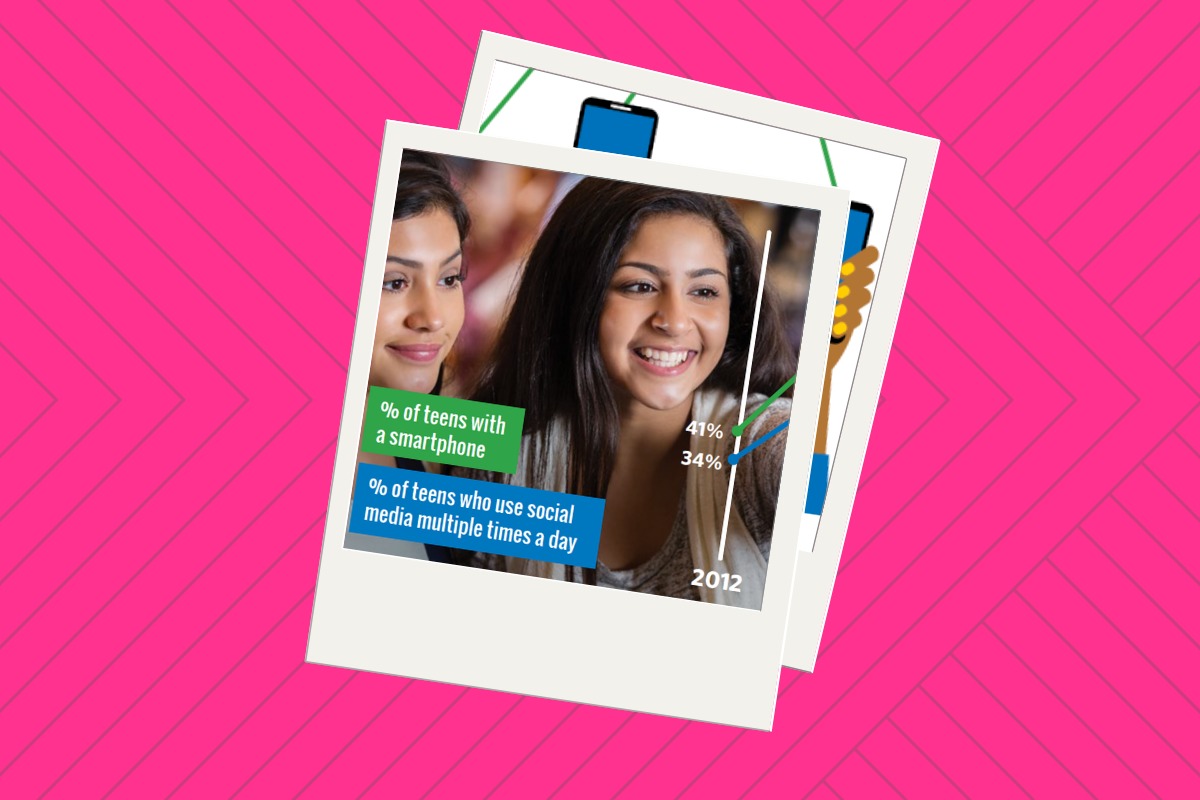
    Put this down in the not surprising category. The study found that there was a large increase in the number of teens who say they use social media in 2018 compared to 2012. Also, Facebook isn’t as commonly used by teens as it was six years ago with Snapchat and Instagram being the favorite of most of those surveyed.

    Social media is very important to most teenagers.

    Also not surprising is that many teens aren’t too good at self regulating their device usage and that many prefer social media interaction above face to face.

    Social media plays a critical role in the lives of most of those polled in this study. They agree that there are positive and negative affects but most feel that there are more benefits to their social media use than negative impacts. Those who were considered to have a low “social-emotional well being” were found to have more negative impacts from social media and most of those impacts were from bullying, racism, and sexism. Also not surprising is that many teens aren’t too good at self regulating their device usage and that many prefer social media interaction above face to face.

    Teenagers are wise to tech companies’ attempts to manipulate their users.

    A large majority of teens say that they believe tech companies manipulate their customers to encourage more device use. They admit that, sometimes because of this, they are often distracted by their devices when they should be doing something else. Many say that digital obsession is a problem for their parents as well. Also, quite an eye opening find.

    What Parents Should Know.

    Social media isn’t a phase and it is not something that you can keep your kids from forever. The most important thing is that when they begin to log in to social media accounts, they have an idea of what it means to do so safely. Model healthy social media and technology use for your children and try not to be hypocritical about your screen time limits. Talk to your kids about the time they spend online and let them know that they can come to you when something inappropriate or dangerous happens. 

    Know your child and if they seem to be the type who would be affected negatively by the use of social media then you shouldn’t allow them to use it. Encourage more face to face interaction with their friends and facilitate that with rides and your schedule. Finally, know that social media is a serious topic for your teen, a negative attitude that lacks any empathy to that fact will cause your advice to fall on deaf ears. Speak to your kids about healthy tech use and let them know this is a partnership, not a dictatorship where what you say goes and they’ll have to obey because you said so.

  • Taking Too Many Selfies is Officially the Latest Mental Disorder

    Taking Too Many Selfies is Officially the Latest Mental Disorder

    “Selfitis” is the new term for obsessively taking selfies and it’s being called a symptom of other, more serious, mental disorders. The study by Nottingham Trent University was held in India because of their high population and social media user numbers. Also, because of the high number of deaths caused by taking selfies in a dangerous situation. Researchers studied a focus group of 200 people and asked them questions about their selfie-taking behavior. The results had some surprises and some expected outcomes. The most likely candidates to have selfitis were men, which was unexpected, but as you may have guessed, the youngest group also scored the highest probability to suffer from the disorder.

    The idea for this study came from news stories in 2014 about selfitis becoming a recognized mental disorder. At the time these stories were false but now the term is beginning to get scientific research to back it up. The researchers’ findings are, probably, only the beginning of the information we will get about what our increasingly online lives are doing to our habits and mental condition.

    “Typically, those with the condition suffer from a lack of self-confidence and are seeking to ‘fit in’ with those around them and may display symptoms similar to other potentially addictive behaviors,” – Dr. Janarthanan Balakrishnan

    What Parents Should Know

    It’s obvious how the appeal of Instagram likes and Twitter followers can lead to obsessive behavior. This condition falls under the same category as internet, video game, and media addictions and its actual diagnosability is debatable in some psychological circles. My unprofessional but educated opinion is that anything that becomes obsessive and compulsive should be considered dangerous by parents. It can take conscious effort for many of us to avoid taking a photo or selfie to share during an event. I have often made the distinct decision to not take a photo and just enjoy a moment for myself. The study of selfitis shows that there are increasingly more people out there who cannot make that decision for themselves. The first thing they think about is what a good social media post this moment would make and then they can’t deny themselves the opportunity to share it online and see how many likes it gets.

    Selfitis and other social media related conditions will always be ridiculed because it seems like just making a decision to stop something would solve the problem. Serious professionals, however, are giving these behaviors real attention and I think we, especially parents, should too. Find out what your child’s attitude is about social media. Why do they post? How important is it to them to get likes and followers? Do they take down photos if they don’t get the amount of attention they want them to? Knowing your child’s online and social media habits can go a long way to help them have a healthy attitude towards how they represent themselves online. Mom and dad are the first line of defense and diagnosis. You should be having conversations with your kids.

    You can see the entire study HERE. Including the questions asked to those tested in the study. Maybe you can use these questions (also listed below) to see what your kids think about their selfie habits…or your own.


    Selfitis Behavior Scale

    1. Taking selfies gives me a good feeling to better enjoy my environment
    2. Sharing my selfies creates healthy competition with my friends and colleagues
    3. I gain enormous attention by sharing my selfies on social media
    4. I am able to reduce my stress level by taking selfies
    5. I feel confident when I take a selfie
    6. I gain more acceptance among my peer group when I take selfie and share it on social media
    7. I am able to express myself more in my environment through selfies
    8. Taking different selfie poses helps increase my social status
    9. I feel more popular when I post my selfies on social media
    10. Taking more selfies improves my mood and makes me feel happy
    11. I become more positive about myself when I take selfies
    12. I become a strong member of my peer group through selfie postings
    13. Taking selfies provides better memories about the occasion and the experience
    14. I post frequent selfies to get more ‘likes’ and comments on social media
    15. By posting selfies, I expect my friends to appraise me
    16. Taking selfies instantly modifies my mood
    17. I take more selfies and look at them privately to increase my confidence
    18. When I don’t take selfies, I feel detached from my peer group
    19. I take selfies as trophies for future memories
    20. I use photo editing tools to enhance my selfie to look better than others

    Scoring: Responses are rated on a 5-point Likert scale: (5 = strongly agree; 4 = Agree; 3 = Neither Agree or Disagree; 2 = Disagree; 1 = Strongly Disagree). Scores are summed. The higher the score, the greater the likelihood of selfitis

    Items 1, 7, 13, and 19 relate to environmental enhancement – Items 2, 8, 14 and 20 relate to social competition – Items 3, 9, and 15 relate to attention seeking – Items 4, 10, and 16 relate to mood modification – Items 5, 11, and 17 relate to self-confidence Items 6, 12, and 18 relate to subjective conformity
     

  • Just Be Nice!

    Just Be Nice!

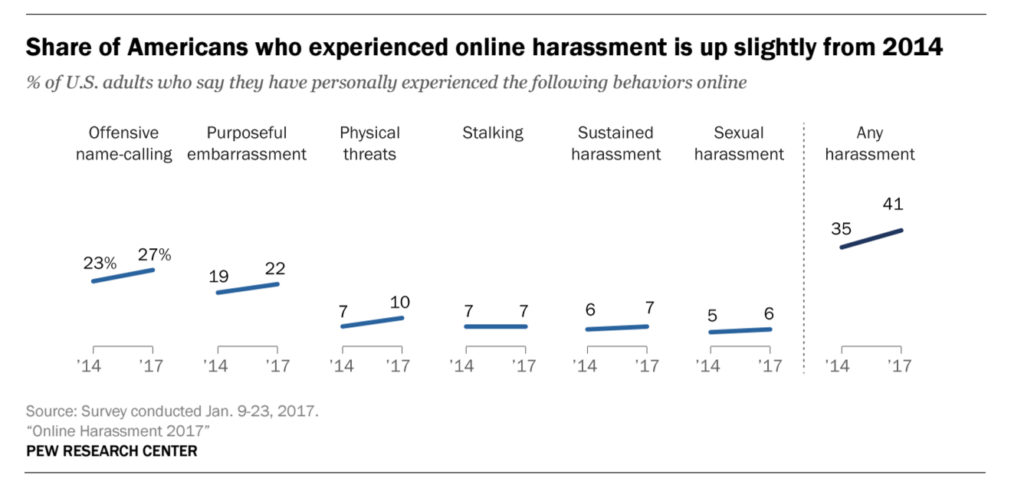
    A new study by the pew research center has highlighted that online harassment and bullying isn’t isolated to kids and teens. It seems that adults have become more comfortable with speaking their mind online even if what’s on their mind isn’t very nice. The study shows 27 percent of adults admit to being called “names” on social media and as many as 41 percent say they’ve been harassed in some way. This was up from 23% being called names and 35% being harassed in 2014.

    Obviously social media was the most popular platform that people reported seeing harassment. Men were the most harassed except for sexual harassment cases, more women admitted to being victims of unwanted sexual content including images sent over messaging. You can see more of the results in the chart below.

    What Parents Should Know

    How can we expect our kids and teens to stop or report bullying if we are participating as well? What example are we showing our kids when we profane someone because they disagree with something we said or shared online? Just because we aren’t face to face doesn’t mean the words don’t have an effect. These are things we should be teaching our kids but we obviously need to heed these warning ourselves.

    We’ve all heard the old adage, “If you can’t say anything nice, don’t say anything at all.” Apparently we have forgotten that what we say online still has consequences. This is the exact message that I have shared with teenagers and kids all over the country and I can guarantee I’ll be sharing the same message with adults now as well.