Tag: statistics

  • iPhone, Netflix, and Instagram are Dominating Teen’s Time Online

    iPhone, Netflix, and Instagram are Dominating Teen’s Time Online

    A new survey by research firm Piper Jaffaray called “Taking Stock with Teens” has highlighted some of the most noticeable trends in teenagers’ purchasing habits and tastes. The survey polled more than 8,000 teenagers about how they spend their money and what influences their purchase decisions. The average age of teens surveyed is 16 and the survey is done every spring and fall. The Fall 2018 survey revealed a dominating presence by iPhone, Netflix, and Instagram.

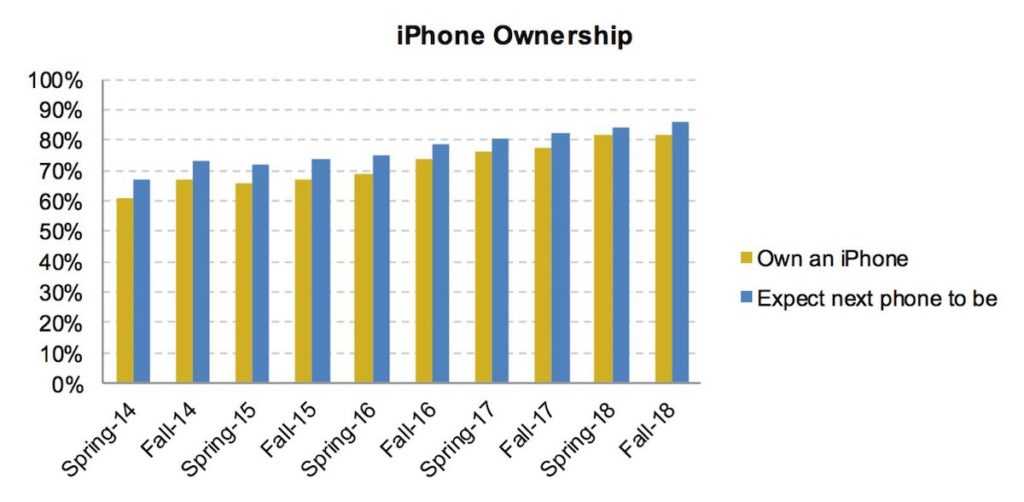
    The survey concluded that 82% of teens owned an iPhone and 86% planned to buy an iPhone for their next smartphone. The iPhone has dominated the marketshare for a while now but it’s still growing in the Teen market. Only 10% of teens said they planned to buy an Android phone. Nearly half of those surveyed said that the brand of a product had a major influence on their decision to purchase.
    Instagram is now the social media leader among teenagers passing up Snapchat and Netflix provides the most streaming video to our adolescent kids at 38% of the share vs 33% for YouTube. Other interesting info from the survey is that food is the highest budget priority for teens, they prefer to shop online, and the majority of video game purchases are now made through online download.

    What Parents Should Know

    This info is meant to help marketers plan their products and advertising campaigns but it can go a long way to help moms and dads and other guardians of kids better understand how our teenagers tick. The emphasis on the iPhone speaks to the exclusive nature of the brand, the appeal of feeling like you belong to a niche group causes kids to move towards a brand that is considered to be more premier than the rest. Instagram has passed snapchat by adding much of the features that kids loved about Snapchat without changing the core timeline of the app. Snapchat has admitted to making a mistake by altering what made their app popular with the younger crowd. After going public, Snap made decisions to buffer their ability to become a marketing destination for companies. This undermined their core fanbase of kids and teens who are more likely to skip an ad or unfollow an account that seems to be too “pitchy.”

    Netflix is now a more popular video streaming service among teens than YouTube, though not by much. The focus on original content and many of our kids’ favorite stars creating shows and movies for Netflix is driving them to use the streaming service. There has also been a surge in younger people enjoying television shows from the past twenty years or so because of Netflix’s ability to keep those shows streaming on their service. While YouTube is pushing their own TV solution, Netflix is just continuing to build upon the genres they created and it seems to be drawing in folks from most demographics.

    I want to conclude by mentioning again that kids are buying their video games through online downloads. This means that the restrictions on games have to be set digitally or your kids can buy whatever games they’d like. If you have set up their Xbox Live or Playstation accounts to make purchases then they can buy whatever games they’d like without any restriction. You have to set that up yourself. There is no longer a cashier at the store who will ask to see your kids id when they try to buy a game that is rated M for mature. It is up to you to get those settings set up.

    This data is super helpful for us, as parents, to understand our kids’ preferences and influences. Information like this can help us make quality decisions and chose the right battles when trying to protect our kids from adult content, online predators, cyberbullying, and other dangers of using the internet with no filters or boundaries. Subscribe to our newsletter, our YouTube account, our Twitter and Facebook, and to our podcast to stay in the know as to what’s happening in the digital and connected culture your kids are growing up in.


  • CES 2018: Here’s What Marketing Researchers are Saying About Your Teenagers

    CES 2018: Here’s What Marketing Researchers are Saying About Your Teenagers

    Karen Rampacher and Kathy Sheehan from the market and user experience research firm GfK spoke about the changing culture of one of the newest most powerful buying groups. This group is teens and young adults ages 15-24 and they’re calling them Generation NOW. GfK studies the trends of buyers of all ages but they’ve been doing it so long that they can compare different age groups from different eras and track the differences. Here is what they’re saying about your older teens.

    Who is GenNow?

    GenNow is a major market for businesses and advertisers with $830 billion spent by them or on them. They are digital from birth (digital natives) and don’t have to spend much time getting to know devices and screens. Interestingly they don’t define themselves by their ability to use tech but feel as if it’s something everyone can do now, no big deal. In fact, they don’t really worry too much about how they define themselves at all. The research has shown that they aren’t concerned as much about “standing out” as they are being true to their own identity. Identity brings up a whole new set of issues for marketers, who consider the self-identification of the Now Generation to be a puzzle that they have to solve. This age group’s interest in social justice and equality surpasses any generation before them and they are content to just let people be who they have decided they want to be. They are also less likely to reach the traditional “adulthood milestones” as early as their predecessors. Things, like getting married, having children, moving away from home, and starting a lifelong career, aren’t less important but have been placed on the backburner for most of this group.

    GenNow and Advertising

    The question of for the meeting I attended was: “How do you market to a group like Generation Now?” The answers may surprise you. First of all the data suggests that, while this younger generation is most likely to adopt new tech, they’re more concerned about their privacy and security than generations before them. They know what data is being collected, who is collecting it, and what it’s being used for. Sometimes they’re ok with it and sometimes they aren’t. A recent mistake by Netflix on Twitter shows that this generation isn’t going to ignore an inappropriate use of their data. This generation understands artificial intelligence to some degree and they aren’t afraid of it. They are, however, smart enough to disapprove of a misuse of their own info and invasion of their privacy.

    More interesting data suggested that some in this group may never enter a retail store. They purchase things online and trust user/peer reviews to help them determine what they’d like to buy. They value convenience and there’s nothing less convenient than having to go to a store to buy a pair of pants.

    As far as how they consume media, things are changing but not in the ways many have expected. Yes, more kids are viewing streaming media but they haven’t necessarily lost interest in the traditional TV. 85% of Gen Now polled admitted that watching TV makes them happy. They usually define TV, however, as anything you watch on a television. Many even label watching content on any device as TV. Streaming, DVD/BluRay movies, and gaming all fall into the “TV” category for most of the Gen Nowers polled by GfK.

    The amount of content watched was no surprise with an average of 29 hours per week being consumed. More than three-quarters of those polled admitted to binge-watching their favorite shows. (Binge watching is defined as watching three or more episodes of a show in one sitting.) Most of them are watching content on “ad-free environments.” Netflix, Hulu, Youtube Red, and other paid streaming services keep them from having to watch commercials.

    Media companies have answered with short “six-second” adverts that even run alongside live events like sports games and concerts. Product integration or product placement has also become a very important thing for advertisers. Think, Eggo waffles in Stranger Things. Finally, marketers are having to be more careful about how they use the data they collect from this generation’s online and social media activity. They have to prove that they’re not being “creepy” and that the information is being used to bring value and not inconvenience.

    What Parents Should Know

    Obviously, all of the information in this post falls into the category of things parents should know. To summarize, Generation Now is bringing some interesting challenges for marketers and corporations as well as for parents. Moms and dads should take heed of some of the trends this research has found. Use this information to help you build your strategy for internet safety, security, and health.

    As for advertising you’ve probably already noticed short social media videos and posts being used to promote various products. You’ll also see social media influencers being used more and more by companies to review and sponsor their offerings. Your child’s favorite YouTuber or Instagram influencer will be trying out products on their channels and accounts in no time.

    The advertising world is always working as hard as they can to reach our kids with their message. It is important for us as parents to understand the message we want to convey to our kids and retrofit the message that the media is telling them to fit our standards. That’s why this blog is here, to teach you how to do exactly that.

  • Just Be Nice!

    Just Be Nice!

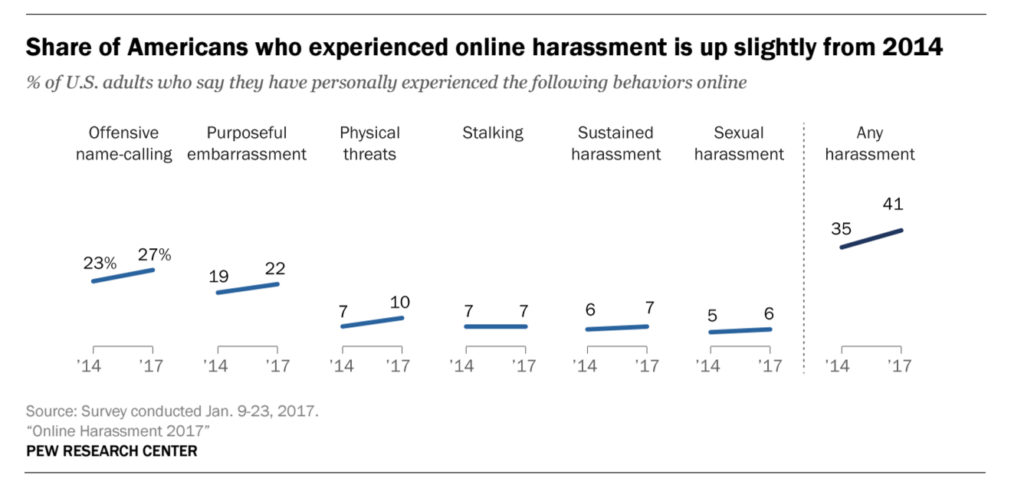
    A new study by the pew research center has highlighted that online harassment and bullying isn’t isolated to kids and teens. It seems that adults have become more comfortable with speaking their mind online even if what’s on their mind isn’t very nice. The study shows 27 percent of adults admit to being called “names” on social media and as many as 41 percent say they’ve been harassed in some way. This was up from 23% being called names and 35% being harassed in 2014.

    Obviously social media was the most popular platform that people reported seeing harassment. Men were the most harassed except for sexual harassment cases, more women admitted to being victims of unwanted sexual content including images sent over messaging. You can see more of the results in the chart below.

    What Parents Should Know

    How can we expect our kids and teens to stop or report bullying if we are participating as well? What example are we showing our kids when we profane someone because they disagree with something we said or shared online? Just because we aren’t face to face doesn’t mean the words don’t have an effect. These are things we should be teaching our kids but we obviously need to heed these warning ourselves.

    We’ve all heard the old adage, “If you can’t say anything nice, don’t say anything at all.” Apparently we have forgotten that what we say online still has consequences. This is the exact message that I have shared with teenagers and kids all over the country and I can guarantee I’ll be sharing the same message with adults now as well.

  • Here’s Why Your Kids Watch Other People Play Video Games

    Here’s Why Your Kids Watch Other People Play Video Games

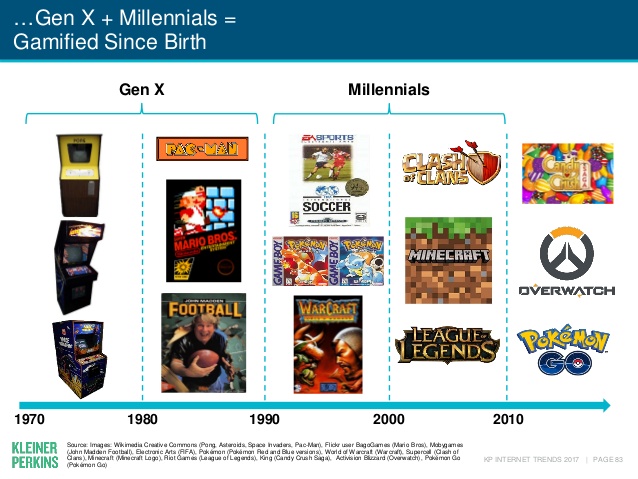
    Watching other people play video games may not be something that you, as a parent, understand. The truth, however, is that it isn’t weird. It’s called esports and its popularity has grown in leaps and bounds. In fact, the recently released Kleiner Perkins 2017 Internet Trends report states that the popularity of esports has grown 40% every year. Also, 40% of the demographic that your kids belong in (millennials) even state that they prefer esports to traditional sports.

    Esports is growing all over the world it allows those with video game skills to test their abilities against the best on our globe. Most esport competitions begin with online qualifying matches and then culminate in an actual tournament style playoff in front of a live, and online audience. You can find an esports league for pretty much any video game you play. There are sports gaming leagues, Role Playing Game leagues, first person shooter game leagues, and even leagues and competitions for the most casual of puzzle games.

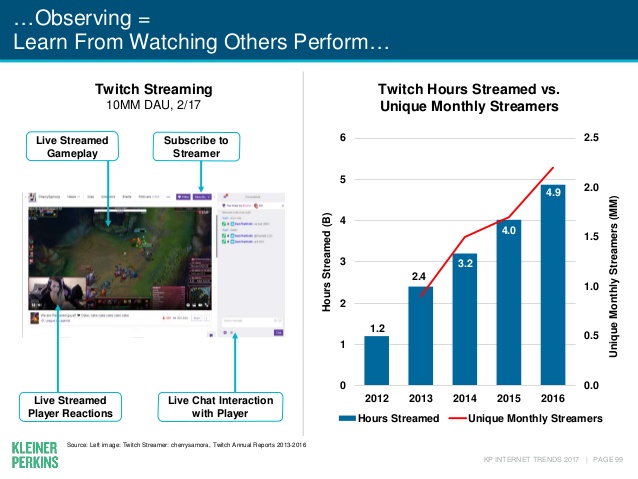
    Not all video gaming entertainment is competition based. “Let’s Play” video games on YouTube and LiveStreams on Twitch have also seen a massive increase in popularity. These videos feature gamers playing their favorite games and narrating their experience while thousands of fans watch and comment on the videos. On Twitch, streamers react in real time to the comment section or “twitch chat” allowing them to engage with their viewers and even let those watching help them make in-game decisions and strategies. These Let’s Play gamers build large communities that are extremely faithful and supportive. Many have even been able to make gaming their full time job because of ad revenue and the generosity of their viewing community. 

    What Parents Should Know

    First of all I recommend you take the idea of esports being a fad out of your mind completely. The truth is that esports is simply the next phase of the same video game culture that started while or before you were even a child. When people start to do something that takes any level of skill, opportunities to measure your skill against opponents will soon follow. Then, of course comes the chance to play for money since these competitions will surely draw a crowd who will pay for the privilege to be entertained by your tournament. Just think about poker or chess or cheerleading. These are all things that many start out doing as a hobby but there is a real competitive culture for these activities and therefore, a real industry. Video Gaming is no different.

    As far as your kids’ safety, I recommend that you know what games and gamers they like to watch. Get into that world a little bit for yourself and learn who these people are that your kid is watching play. There are adults that play games you kids love on YouTube but they don’t use very kid friendly language while they play. There are also people on YouTube who play very adult oriented games. You should have a general idea who your kids are viewing and what kind of content they share. The best way to do this is to share their YouTube and Twitch account and keep an eye on who they follow or subscribe to and their viewing history. I know this just adds more pieces to the internet safety puzzle but it’s worth the effort.