Tag: social media

  • Everyone You Know Uses Instagram Stories

    Everyone You Know Uses Instagram Stories

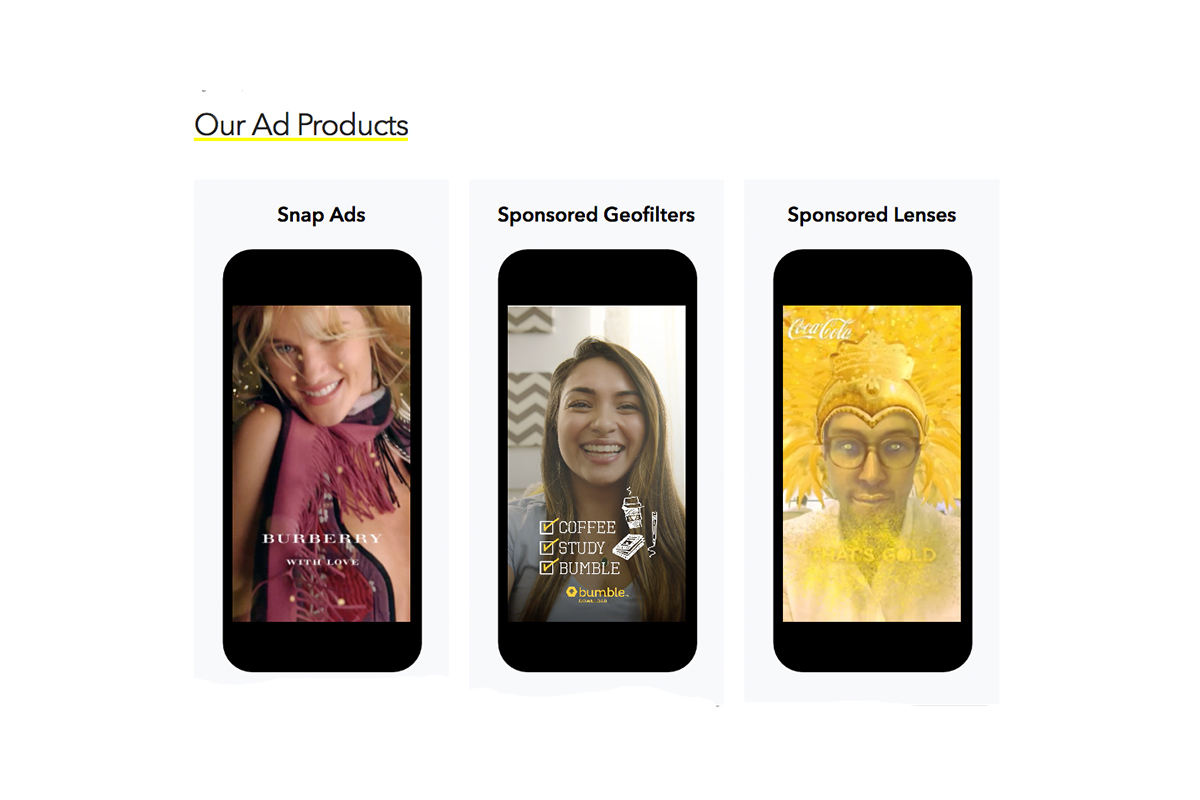
    There are those who made fun of Instagram for copying the Snapchat stories feature. Some of us saw it as a step towards saving Instagram from going the way of MySpace. Today, they’ve announced that the stories feature has 200 million daily users. That’s 40 million more than Snapchat announced this winter when they took their company public. To celebrate this momentous occasion they’ve added a few more features that Snapchat has had for a while. You can now add more stickers to your stories and even pin them to something in your video so they’ll move with you. They’ve also included Geostickers for several new cities.

    These stickers, no matter what social media platform they’re on, are causing a term to enter the conversation that may have some parents scratching their heads. AR. AR stands for augmented reality which is exactly what it sounds like. Using your camera, these apps view the real world and then change it in whatever way you choose. Whether it’s a dog mask that pants when you open your mouth or stickers of bunny ears to celebrate easter, AR allows you to apply animation or illustrations to your images and videos. This is a popular feature that folks have been using for a while and it’s now been spotted by advertisers as a major opportunity for promotions. That’s why you’ll see masks featuring the latest movie release or a filter that has the logo of a make up product or beverage in the corner. AR is the new Television commercial but people are actually paying attention to it. Instagram’s celebration of these numbers with more AR features is guaranteed to bring in more users and more advertisers.



    What Parents Should Know

    Your kids and teens love nothing more than making silly faces in their selfies and sharing them with their friends. It’s good fun and usually not a big deal. Obviously advertising is everywhere and it was only a matter of time (it’s already been happening for a while) until marketing companies caught on that this was the best way to gain access to young people. I would expect more and more advertisers to jump on this bandwagon in the near future. The thing for parents to keep in mind is that these social media options allow marketers to identify their niche audience more easily and reach them more frequently. They can target age groups, locations, and even specific likes and dislikes to cater their marketing for that audience. 

    AR is just where entertainment is right now for our young people. Advertisers have always looked to target them in the cheapest and most direct way possible. My advice is simply to be aware of the amount of time your kid is spending on social media. There are always dangers that we want to keep them from but, while I wouldn’t call it dangerous, the constant barrage of advertising can become worrisome for some kids. My strongest advice is for you to get an account on the social media services your children use and get to know them a little bit. At worst you’ll have to see some dumb ads and lots of dog faces, at best you could have something in common to talk with your teenager about.
  • This Bot Predicts Your Photo’s Awesomeness

    This Bot Predicts Your Photo’s Awesomeness

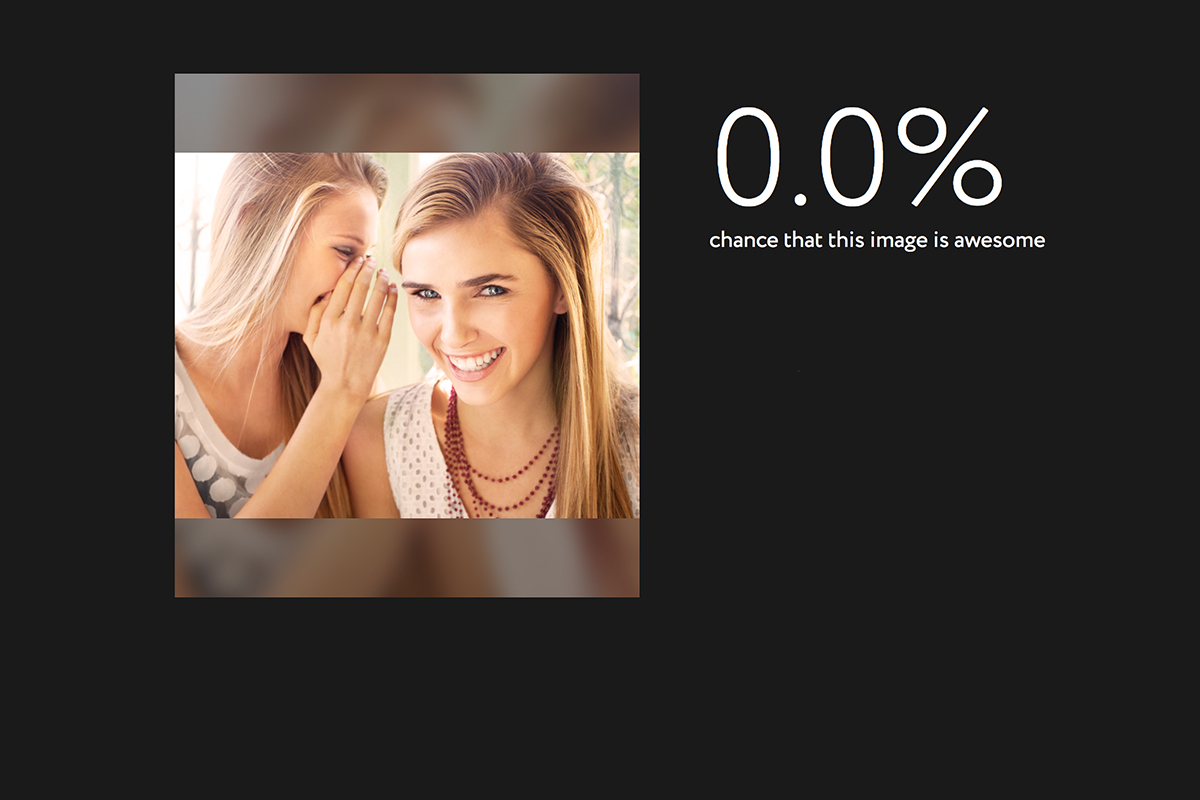
    The selfie is this generation’s business card. We use these photos to say who we are and what we’re all about. We try to put our best face forward and represent ourselves as what we’d like others to think about us. Everypixel Aesthetics uses artificial intelligence to tell you whether or not humans will think your photo is awesome. Its created to scan your stock photos to help you choose what to use for your designs but is it a stepping stone to using AI to define beauty?


    While this photo of me scored 100% on the awesomeness scale (and labeled me a Young Adult) I don’t feel as if most of us would put a lot of credit on an AI and it’s opinion of our photo. I do, however, wonder about our young teens. As discussed in an earlier post about the adolescent brain and another post about the narcism of the Instagram selfie taker, our young people can sometimes have poor judgement when it comes to self esteem. With apps like Tinder, After School, and Wishbone our kids are letting their photos or photos of what they love be judged and voted on by a simple tap of a screen or swipe. This level of constant scrutiny can give our kids some very serious identity issues. What feelings could the opinion of an artificially intelligent bot cause to rise up in our kids?

    What Parents Should Know

    (The opinion is strong in this one.)

    Everypixel Aesthetics is in beta. It’s not a widely known service and it’s intended to rate stock photos, not to judge your looks. My apprehension is about what can result from giving AI the ability to rate someone’s photo. What about sites/apps like PrettyScale that will tell you if you’re pretty or not based on some pre-designated programing? What will something like that do to our kids’ self image? While that sort of app is always intended for entertainment it’s important to know our children and give them the confidence that can only come from knowing truly who they are. Helping our sons and daughters know that their beauty is based on more than their outside appearance is a major job of the parent. 

    I recommend learning all you can about what your child may consider beautiful or ugly. Keep them from using silly image rating apps and websites until you know they can truly see it as entertainment and laugh off a potential negative result. Everypixel Aesthetics gave some pretty interesting looking photos very low scores. I don’t know why or what institutes an “awesome” picture but imagine your daughter uploading a picture of herself and getting a low score. How could that make her feel? I think we should take an active role in helping our children develop a high self esteem while protecting them from influences on the outside that will hinder that progress. What do you think?


  • Amazon is Changing the Parental Controls Game

    Amazon is Changing the Parental Controls Game

    Many parents purchase their children a tablet without taking built in parental controls into consideration. Amazon’s addition of the Parent Dashboard should cause most parents to lead towards a Kindle Fire tablet. Amazon FreeTime has been available for a little while and allows parents to set child profiles, manage content, set time limits and bedtimes, and feature’s curated content. The Parent Dashboard, launching today, takes FreeTime to the next level by giving parents a breakdown of their kids digital habits. The app will allow parents who have set up FreeTime to see the time your kids have spent on certain apps. You can see what they’ve been reading and watching and it even suggests discussion starters for the content your children have been consuming.

    FreeTime features tens of thousands of apps, books, websites, and videos. The built in web browser only allows pre-approved content and features age appropriate Amazon prime videos. All of this content is curated by an actual editorial team. They watch videos through to the end and read every page of every book to be sure it’s suitable for the age group it’s listed under. This is not filtering based on algorithms, it’s work done by live people to help you protect your kids. They’re keeping in mind that you don’t want your kids to run in to something online that they’re not ready to see. In factKurt Beidler, director and general manager of Amazon FreeTime, told Digital Trends: “We take a conservative approach.” 

    What Parents Should Know

    It seems like the internet safety market is always trying to play catch-up with the latest online and social media trends. The stuff we don’t want our kids to see always seems to creep its way onto every platform. The only true way to keep inappropriate content away from our kids is for human eyes to make the distinction between what is suitable and what is not. The human editorial team for Amazon FreeTime is one of the first of its kind, surveying content with a conservative, kid’s health comes first mindset that we can hopefully take comfort in.

    I don’t usually recommend getting devices for our young children but I understand that many parents or grandparents will insist. If that is you or someone you love, may I suggest the Kindle Fire Kid Edition. This thing comes pre-loaded with the kid friendly content and a 12 month subscription to FreeTime. Yes, FreeTime is a pay subscription based service. It’s $2.99 per child or $6.99 per family. That’s not a lot to pay for your own team of content curators working to help your children be safer online. No, I don’t have an affiliate link to promote. I just think this is a great option for families.

    I do recommend, as always, talking to your children about what is appropriate online and what is not. I recommend they know that you are the safe place to come to if they see something that they shouldn’t see. Obviously the goal is to keep this from happening and using Amazon FreeTime with the Parent Dashboard is a great step in that direction.

  • Instagram Voted Most Narcissistic Social Media Platform

    Instagram Voted Most Narcissistic Social Media Platform

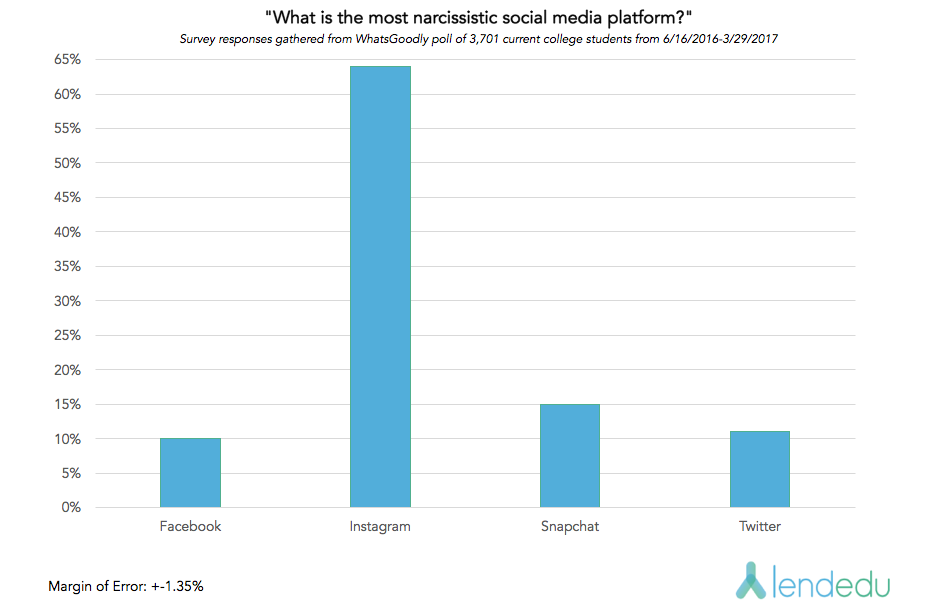
    We’ve all seen that special selfie smile. The one that doesn’t allow your eyes to crinkle since we don’t like how our faces look when we laugh. This smile is most noticeable on the photos in your Instagram feed. As you scroll through you’ll see a version of people’s reality that usually makes their life look incredible. Is it possible that people are just posting to get more likes and comments on their photos? Could, maybe, these posts be a vain attempt to be accepted by your peers online? A large group of young adults were polled and they think that’s exactly what’s going on.

    A recent study by LENDEdu rates the vanity of the users of major social media platforms. Facebook, Snapchat, and Twitter users all seem to be equally motivated by getting likes but Instagram users are extremely more driven by that double tap. It’s all about getting the LIKES on Instagram. So much so that more young people voted Instagram as the most narcissistic platform than the other three platforms combined.


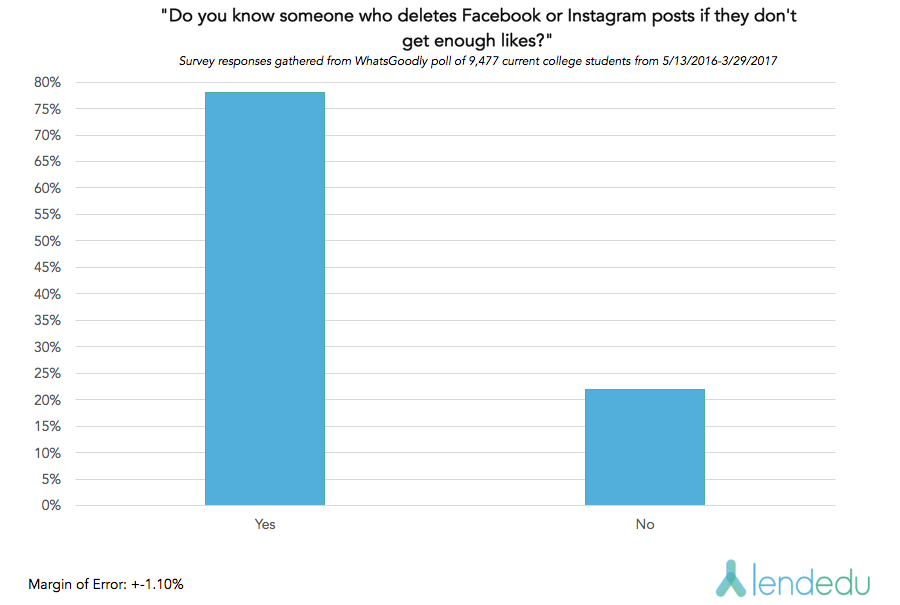
    In fact, likes are so important that many who were polled admitted to taking down a photo or video if it didn’t get enough likes. This strengthens the case for the narcissism of Instagram. Some even use social media to create a different version of themselves. If they aren’t perceived in the way they’d like to be perceived they’ll just remove the evidence like it never happened. They also speak of an unspoken rule in which you like the posts of those who liked yours. This code of conduct allows users to build their desired persona while helping their friends build theirs.


    What Parent’s Should Know

    If you use Instagram you would probably answer these questions the same way. It’s obvious that people are only posting what they consider the best version of themselves on social media. When it comes to our teenager and tweens there is a risk involved with wrapping your self worth around the response your posts get online. Our children should be taught how to find their confidence and identity in something other that what others think about them.

    The “narcissism” referred to in this study points to young people in our culture’s desire to be accepted. That desire has always existed but it’s so very volatile in this increasingly global world. While social media may have been invented to allow us to share our experiences with the world, in reality, many are posting a filtered (literally) version of their lives. The quest for likes and approval from those who follow our accounts can easily lead to negative consequences in our children’s lives.

    My advice is to keep your child away from social media as long as possible. When you feel they are mature enough to have the right attitude about their reasons for posting online then let them open an account. If you feel they are merely looking for acceptance from their peers then it may be a good idea to delay access to such obvious criticism. As a parent you are what stands between your kids and some of the emotion that can come with your online activity being commented on, liked, and hated. Step in and take action to protect them from some of those potential negative emotions until they and you feel they are able to handle the load.

  • Meet Sprinkles, Microsoft’s New Fun Camera App

    Meet Sprinkles, Microsoft’s New Fun Camera App

    Here’s what you need. You need a new camera app that will allow you to put text, stickers, and emojis on top of your photos. That’s what we all need, right? What? You already have six apps on your phone that do that? Well, nobody told Microsoft because they’ve just released their own. Ignoring the fact that they released it on April 1st (it’s still there so no, not entirely a joke) we should spend some time looking at what this app does and who the target audience is. 

    First of all it’s just a camera. This is not a photo sharing app with a built in social experience. When you take and edit your photo you can share it on any of the social media sites you have connected on your phone but there no native sharing system. The app uses a basic AI (artificial intelligence) to recommend what you could put on your picture. The choices are mostly text overlays and are based on what you took a photo of. You don’t have to post what it recommends, you can add your own text, stickers, or emojis by swiping the screen and hitting a few buttons.


    What Parents Should Know

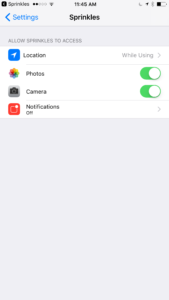
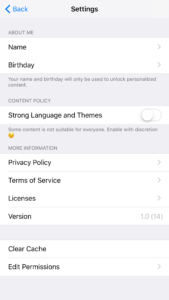
    This app is geared toward young users. The quotes or sayings are silly and there is a high volume of illustrated overlays and emojis to chose from. This app could be a good option for kids who want to take photos and put silly stuff over the top but shouldn’t share online. Just be sure to look at the settings by clicking the gear in the top left of the camera screen. The settings will give you the option to activate or deactivate more mature overlays. (Mostly language.) You can also set the permissions it has, such as location and notifications. You can enter your name and birthdate to allow the app to recommend certain overlays on your special day or with your name on them. Remember that photos taken on this app are scanned so that overlays can be recommended. Encourage your children that even if they aren’t posting online, they don’t want to take a photo of something they don’t want anyone else to see. It is a good idea to familiarize yourself with this app if you’re going to let your younger kids use it. Take it seriously, even though it was released on April Fool’s Day.

  • Adolescent Neuroscience and Online Safety

    Adolescent Neuroscience and Online Safety

    You hear it all the time. “Kid’s these days.” or “I just don’t get teenagers.” There’s a myth that our teenagers are becoming more and more selfish and entitled. In reality, however, adolescence is nothing new. William Shakespeare wrote of the craziness of the teen years in The Winters Tale,

    I would there were no age between ten and three-and-twenty, or that youth would sleep out the rest; for there is nothing in the between but getting wenches with child, wronging the ancientry, stealing, fighting.

    Teenagers of “the good ol’ days,” while they may have had jobs earlier in life or were thrown into battle before they could legally buy a beer, were still teenagers and dealt with the same issues as our kids do these days. The issues may be highlighted these days by the availability of technology and the hyper-connectedness of our culture. Young people have the entire world at their fingertips and can have face to face type interactions with anyone from anywhere. This is what is new and some recent studies in neuroscience have shed light on some of the biological reasons for a teen’s selfishness, risk taking, and lack of self control. Watch this Ted Talk from neuroscientist Sarah Jayne Blackmore.


    What Parents Should Know

    You, most of all, should be encouraged that your teen is just like every other teen. Their outbursts and seeming lack of responsibility is largely based on biological reasons. They aren’t stupid or handicapped, they are developing and this affects their behavior, especially online. A book by David Walsh called Why Do They Act That Way? reminds parents of the “use it of lose it” factor of brain development.

    During development your brain synapses are growing and they literally have to connect to each other in order for you to learn something. During the development of adolescence if you are not guided into proper choices the synapses in your brain will never connect. This means you could struggle with those types of decisions for the rest of your life. With the advent of social media and our dependency on screens for entertainment this necessity for guidance in healthy behaviour is even more evident.

    When your son or daughter tells you that they want a smart phone because all the other kids have one, this is an opportunity to help their brain develop a proper attitude. When your 13-year-old son has been watching YouTube videos for six hours a day setting time limits on your Wi-Fi is helping him practice self-control. When your daughter received a message from somebody she doesn’t know and you see it on your monitoring app and immediately tell her to block that person you’re teaching her how to make good decisions.

    Let this post encourage you. You are the mom or dad, and it’s up to you to help your young adult grow to be a contributing member of society. Their biology can get in the way but your guidance can show them how to make the right decisions. Hang in there, keep doing the hard stuff, we’ll keep giving you the info you need.

  • Facebook Creepers Beware!

    Facebook Creepers Beware!

    Anonymity on the internet is and has always been a myth. Facebook, however, has become a place where people can search for others and learn all about their lives without revealing their creepy behavior. Facebook’s new Stories feature is changing that a bit. In a move to keep and attract younger users Instagram and Facebook messenger added their own version of Snapchat’s stories. That feature has now been rolled out to the main Facebook app and it gives people an way to see who’s been watching. 

    Facebook’s stories are photos and videos that post in vertical-full screen format on your phone. They last only 24 hours and you can add text or drawings on the screen and the in-app camera has filters, masks, and overlays that you can add to your photos as well. There is also an option to see who looked at your photo or watched your video. This is a major difference for Facebook since the standard has been to go see what folks are up to with no threat of them finding out you’ve been watching. This may be good news for you because you don’t like the idea of people looking at your stuff without you knowing. Or, this may be disturbing because you, my friend, are the creeper. 

    What Parents Should Know

    Facebook is trying to become a real social media contender for young people again, so parents should be keeping tabs on the moves their making. The stories on Facebook add another way for people to show the reality of their life and world which is what your kid or teen likes to see and do on social media. You should encourage your son or daughter to keep an eye on who’s watching their story. Let them know that the feature is there and that if they’re using Stories they should go check out who’s been following their Story.

    Remind them, also, that anonymity online is a myth and that everything that is posted online can be there forever. Just because their Story disappears from Facebook after a day doesn’t mean it’s truly gone. Screenshots can capture an image and then it can be uploaded anywhere else on the internet. The rule should be that you never post anything on the internet that you don’t want the entire world to see and that you don’t want to be there forever. I say that these rules are good for us to teach our kids but some of us parents may need to remember these warnings as well.


    Get Our Latest Posts in Your Inbox


  • Snapchat isn’t Just a Messenger Anymore

    Snapchat isn’t Just a Messenger Anymore

    It may have all started with “secret” messaging but it hasn’t stopped there. Soon public sharing became the norm on Snapchat, a feature that was copied by many other Social Media networks soon after it’s release. Then, Snapchat’s “Discover” page was released, this was a way for news and media corporations to reach the users of Snapchat with their messages and advertising. Lately, Snap Inc. has been working towards becoming a serious form of entertainment for it’s users, incorporating videos and even original show content into their network. Today, VICELAND has announced they’re producing several new shows exclusively for Snapchat. They’re starting with a “reality” dating show titled “Hungry Hearts with Action Bronson.”

    VICELAND Productions is following several other studios in making original shows for Snapchat. Networks including NBC, CBS, and A&E have already announced that they’re making versions of their existing shows for viewing on Snapchat. These studios are seeing the growing adoption of Snapchat as an opportunity to reach a broader audience with their shows and content. One of the fastest growing demographics on Snapchat is the 18-35 age-group, one of the main target audiences for the late night and primetime television networks. With this trend towards entertainment content on our social media apps, it’s important that parents are aware of what these apps are becoming, we have to make good decisions on whether or not we want our kids consuming the media they’re producing.

    What Parents Should Know

    Snapchat isn’t a trend and it’s not just a messenger anymore. What was once the “Secret Message App” or the “Sexting App,” as some called it, is now a major source of media for those who use the social media platform. This means we have to treat it differently than we do many social media apps. Keeping track of who they are friends with on these networks isn’t enough anymore. We have to keep a few things in mind if we are going to allow our kids to use Snapchat, Instagram, or any of these other apps that give advertisers and media content creators a direct outlet to our kids.

    Same Media as TV, Movies, YouTube, or Games.

    The creators of the content that will be made available through social media (Facebook has been signing agreements with media companies too) aren’t producing special more family appropriate shows. They will be making content that will reflect every other media outlet they produce for. Think YouTube Red, Netflix, or Amazon Prime. In fact, some of the rules that apply to broadcast television don’t apply to shows that are streamed online. This means that you’re more likely to see content like on Game of Thrones or Orange is the New Black than something with more restrictions like Blacklist or CSI. Don’t let the fact that these programs are being produced for free public streaming online fool you. They won’t be family friendly or edited for content.

    No Parental Control

    Snapchat currently has no parental control options. Their app is geared towards teenagers so they most likely won’t feel the need to add parental restrictions any time soon. The terms and agreements on most social media services allow for accounts to be created as long as you’re 13 years old or older. The question you have to ask is whether or not you’re ok with your 14-15 year old watching online reality dating shows or politically fueled sketch comedy. If you aren’t ok with these things then you have to make a choice about whether or not snapchat is welcomed on your kid’s phones or tablets.

    All or Nothing

    Social media apps are basically creating an “all or nothing” atmosphere for content created by these media outlets. Once you have an account on Snapchat, you have access to all that is contained in the app. Every person can be a friend or follower, every feed can be found and viewed, and every original show, no matter the target audience, will be available for viewing. With no parental control options the question isn’t what Snapchat content will be allowed, it’s “all or nothing.” They can see all of it, or none of it, those are your only choices. 

    Whatever you choose, you need to be educated about what these social media apps are producing. Keep checking in to Safe.BecauseFamily.org for up to date tech news that’s relevant for your family. Also, sign up for our Safe Online Newsletter. Just fill in the short form below.


    Sign Up for the Latest Family Tech News in Your Inbox

    * indicates required


  • Kids Online Too Long? Put the Power of Time Limits in Their Hands with UnGlue

    Kids Online Too Long? Put the Power of Time Limits in Their Hands with UnGlue


    Every now and then a resource comes along that we can’t wait to tell you about. Today, we are excited to show you UnGlue. We are always looking for the newest and simplest way to protect your kids online and UnGlue is answering the time limit question with some pretty great new ideas. Check out the video below to see the heart behind their cool new time limits software.


    “Kids are the ones that are hooked… they’re the ones using these devices …  And it’s not even their fault… they’re fighting with the best minds in the industry that are set on having them scroll just a little bit more. Just one more like, one more picture, one more chat, one more Pokémon, one more level. And they’re losing,” – Alon Schwartz (CEO of UnGlue

    UnGlue runs with the idea that kids truly want to do better at managing their screen time by placing the power in their hands. In fact, the founder of UnGlue doesn’t like to call their service “Parental Controls.” While parents do set the time limits, the kids are able to decide what they do with that time. UnGlue doesn’t only turn off internet access at a certain time, it designates between productive and “entertainment” internet activity. Parents establish the amount of time their kids are allowed to spend being entertained on a screen and their child is then able to use the time as they choose. They can even store up unused time to use later for some good ol’ fashion binge watching or playing. The UnGlue concept is a new one and, I think a great one.

    The only thing more important than keeping kids safe from the dangers of internet use and over use of the internet is teaching them how to be responsible in those areas for themselves. UnGlue puts the power in their hands and allows you to show them, through their own experiences, how they can better manage their time and be more effective and productive every day. In fact, I would go as far as to say that most of us parents could use an education on screen time management.

    I could go through all of the ways UnGlue allows you to set up their mobile app but I’ll just point you to their website and let you watch this video below. UnGlue is FREE to use so go check it out and email us at BecauseFamily@GMail.org to let us know how your experience was.


  • LEGO Life is a Social Network for Your Masterbuilder

    LEGO Life is a Social Network for Your Masterbuilder

    Social Media can be a dangerous place. Especially for our kids and pre-teens. More and more parents are allowing their kids to be social on the internet. Kids have channels on youtube, they share pictures on instagram, record publicly accessible music videos on Musical.ly, some even send disappearing images on Snapchat. LEGO is starting their own Social Media site that is focused on keeping kids safe while they share.

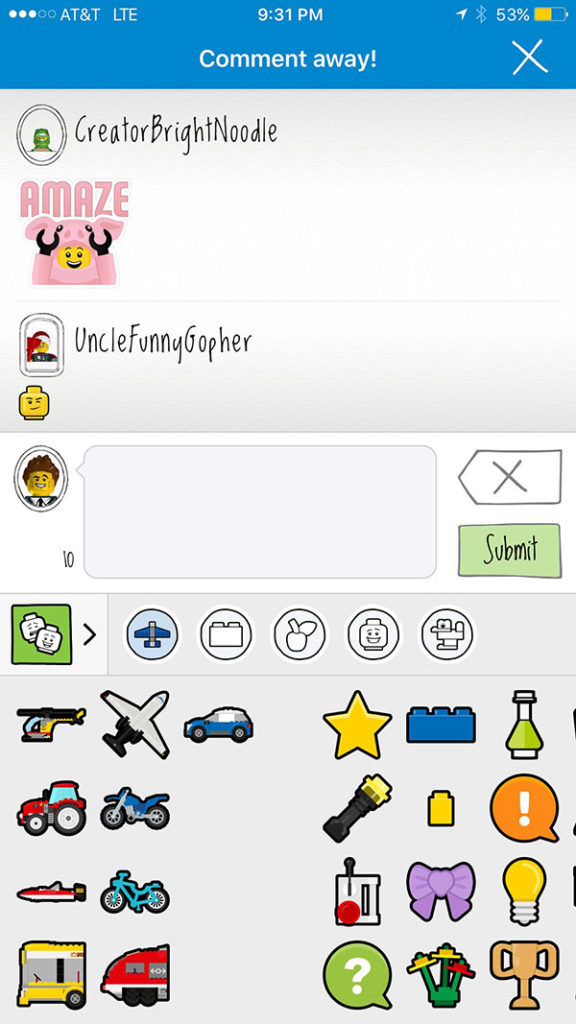
    LEGO Life is a new app by LEGO that allow children and their parents to share their LEGO creations in a safe and positive environment. The app’s safety focus is made obvious right away. You are required to create an account to share or comment on anything on the app and your account has to be approved by a parent through an email sent to their address. Also, while you can put a description and a title on your photos, comments are only allowed to be done in LEGO emoji’s and stickers. There will be no dumb kid telling your son that his makeshift Tie Fighter is stupid looking. Nope, only positivity and encouragement is allowed.

    Other safety features include the profile names and image restrictions. You are only allowed to share with a randomly generated name that you choose when you set-up your account. Images can only be of LEGOs. The app has algorithms and even live moderators keeping photos of people off of the app. You can only share what you’ve built. These features keep kids safe from bullying, predators, and the unfortunately all too common trend of inappropriate images being uploaded to photo sharing sites.

    As far as usage of the app, it’s pretty fun. You can upload pictures of your favorite builds and see photos of other users as well. You can search by theme (i.e. StarWars, Minecraft, LEGO City) or characters and even watch videos from LEGO right in the app. The coolest part, in my opinion are the challenges. Building inspiration from the folks at LEGO to help your children reimagine what they want to create. Fun ideas like, “Put a Minifig in Your Favorite Place to Be” and “Build a Super Bowl Party” are highlighted in the app as you scroll down the different categories. Recently LEGO used the challenges as a way to teach kids about internet safety by asking them questions about how to post positively on social media. LEGO Life is a pretty great idea and I installed it on my phone to check it out for this post but it’s probably on there to stay. I should probably tell my kids it’s on there too.

    What Should a Parent Know

    LEGO Life is a great example of someone creating a social media experience with kids in mind. The precautions they take to protect children are mostly unprecedented. The inability to privately message users and the use of LEGO emojis for commenting makes it a place free from cyberbullies and predators. The algorithm and moderators that keeps watch over images posted protect children from seeing something inappropriate as well. I have a hard time not recommending an app like this for parents of kids who love LEGO. It’s our kids’ favorite toy so you know it’s on my phone. I still am not allowing any of my children to have their own account on it. We post pictures of what they build on an account on my phone,that I monitor. I don’t think this app will turn out to be as dangerous as most other social media but I’m always going to err on the side of caution when it comes to my children posting anything online.

    My final thought and really only potential criticism is the merchandising and advertising aspect of an app like LEGO Life. Obviously it’s a very easy way for LEGO to promote their new products and they are definitely doing that. In between posts you’ll see banner ads for new LEGO sets and themes and some of the videos are basically entertaining ads for some of their other products. If you don’t want your kids to fall for the advertising game played in this app then you may not be so quick to allow them to use it. As far as my family goes, we are already so far down the LEGO rabbit hole that there isn’t much more damage that can be done. We will absolutely be posting our favorite creations to LEGO life, albeit together.