Tag: smarthome

  • The Risks of a Fully Connected Home Part 3

    The Risks of a Fully Connected Home Part 3

    Security and advertising are the most obvious concerns when it comes to connecting your appliances and devices via smarthome technology. We must take precautions to protect our identity and our privacy. We should also be careful in our new wifi connected homes with the content that can come across these connections. In this final part of our Connected Home series we’ll talk about the content available on our smarthome devices and what we can do to filter that content.

    Unsupervised Content

    After a recent Setting Digital Boundaries workshop a  mother asked me what I knew about the parental controls on Amazon Echo. I hadn’t ever set one up and hadn’t really looked into them so I didn’t have many answers for her at the time. She told me why she had asked: her daughter likes to ask Echo to play songs that she likes but she’s young and her words don’t always come out sounding like they should. This causes the Echo to mis-hear what is said and the devices has, more than once, played a song that is not from any playlist they’ve set up and is not at all appropriate for a young toddler. With the increasing popularity of the Amazon Alexa and Google Home parental controls are becoming a major topic on tech forums and blogs. The reason it’s such a major part of the discussion is because there aren’t (yet) any real parental controls.

    On the Amazon products you can set a pin to make purchases. This will keep your child from making an order and you being shocked to find a two hundred dollar doll house at your door. That’s about it, though. There aren’t any music or video rating limits that you can set. There aren’t any separate voice commands that will let Alexa know the child is in the room. So far, there isn’t much. Google only has the filter settings you’ve given YouTube to protect from inappropriate content. These filters are strictly for video content though and won’t block explicit lyrics.

    It’s likely that more effective parental controls will become a reality on these popular products sooner rather than later but until then you should take precautions to keep your children from encountering more of the internet then you’re ready for them to connect to. 

    What Parents Should Know

    My advice is to hold off on extensive use of Alexa, Echo, or Google Home until real parental control options are made available. If you have already been using these devices or you’ve decided you can’t live without them I recommend setting up what restrictions are available. Protect yourself from surprise purchases with a pin on your Alexa or Echo and set your YouTube filter to protect your children from videos you wouldn’t want them to see. Other apps or web video and audio services that have parental controls may protect your family when connected through your smarthome device as well. Right now this is about all you can do but if you’re going to use these devices then something is better than nothing.

    Should Your Home Be Connected?

    The level of connectivity in your home is obviously a choice your family has to make. There are absolute benefits to having your house connected to a network and working together to make your life easier. The reality, though, is that these conveniences could come at a cost. Some may feel the cost isn’t that high and some may say it’s unfounded fear or foil hat conspiracy theory. My advice is to just stay informed. No matter your decision become a student of the way your connected home works. Reset passwords often, and don’t store your personal data somewhere that is easily accessible through your smart home device network. If you just use common sense and think ahead of the potential risks you may be able to be wired up like it’s the year 2025. Just do it with wisdom.

  • The Risks of a Fully Connected Home Part 1

    The Risks of a Fully Connected Home Part 1

    If there’s one thing that CES 2017 showed us last month, it’s that the “internet of things” is our future. Our world is becoming increasingly more connected and so are our homes. Everything from your television or thermostat to your mirror or even your toaster can be intertwined in a web of wireless connectivity. These advances in technology offer new and exciting levels of convenience but what are the risks involved in being so connected all the time? This three part series of posts will help you weigh the potential risks of home connectivity and make a knowledgeable decision for your family.

    Internet Privacy

    There have been news reports about hackers playing with people’s wifi enabled thermostats, unlocking their smartphone controlled door locks, turning on closed circuit security cameras and even baby monitors. Many of these connected home appliances come with basic, easy to guess passwords and usernames and can be messed with very easily. The best advice for these types of products is to always change the username and password from the one that comes pre-designated. Now, however, more families are inviting a new digital personal assistant product into their home.

    Many experts are looking at smart home and “PA” devices such as Amazon Alexa/Echo and Google Home with some caution due to their microphone “always listening.” There has been much conversation among internet privacy and security experts about the risks involved with a device in your home that can hear every conversation you’re having. Amazon and Google both say that their products were designed with privacy in mind and that they don’t store any information you say that wasn’t preceded by the command words. (i.e. Ok Google or Hey Alexa) What you say after you activate the devices is stored on an encrypted server but spokespersons for the companies are silent on what happens to the data after that. They only admit that your voice patterns and speech is being monitored to help the devices become better at recognizing you.

    What Parents Should Know

    “These devices are microphones already installed in people’s homes, transmitting data to third parties,” Joel Reidenberg, director of the Center on Law and Information Policy at Fordham Law School in New York City, told USA Today. “So reasonable privacy doesn’t exist. Under the Fourth Amendment, if you have installed a device that’s listening and is transmitting to a third party, then you’ve waived your privacy rights under the Electronic Communications Privacy Act.” – Tec.Mic

    Using a device like Alexa or Google Home effectively waives your right to privacy in your home. While you can mute the device to turn off the microphone, that decreases the convenience and usefulness of the product. When you use the product, however, you are accepting the terms and agreements and are allowing a microphone to be “always listening” (Google’s words) during all of your conversations. Be sure, if you think you need to be this connected, to read all of the legal documentation and make sure you feel confident that the risks you may be taking are outweighed by the benefits of having a “smarter,” more connected home.

  • The Connectivity of Your Home is a Main Feature at CES 2017

    The Connectivity of Your Home is a Main Feature at CES 2017

    If this year’s Consumer Electronics Show is any indication, your home is going to get smarter and smarter. The idea is that the things you used most can help you become better at what you use them for. If they can all communicate with each-other they can do even more, including lower your energy use and costs, increase convenience, and educate you and your family. Check out some of the smart home products, some great, some kind of silly, that you may be buying in the next several years.

    Smart Mirror

    The smart mirror is a connection hub for you to start your day with the info you want to see most. You set it up to show you what you’d like to see. Maybe your instagram and twitter feeds, perhaps you want to know the weather or news, or just watch your favorite YouTube channel. The smart mirror will respond to your hand gestures or voice commands to provide you with the convenience level you desire.

    Smart Bed

    Sleep number is at CES showing off their smart bed. Yes, apparently a bed can be smart. This bed will warm your feet, decrease the mattress firmness if you toss and turn, and even tilt your head up if you start to snore. You didn’t know you needed a smart bed did you?

    Smart Hairbrush

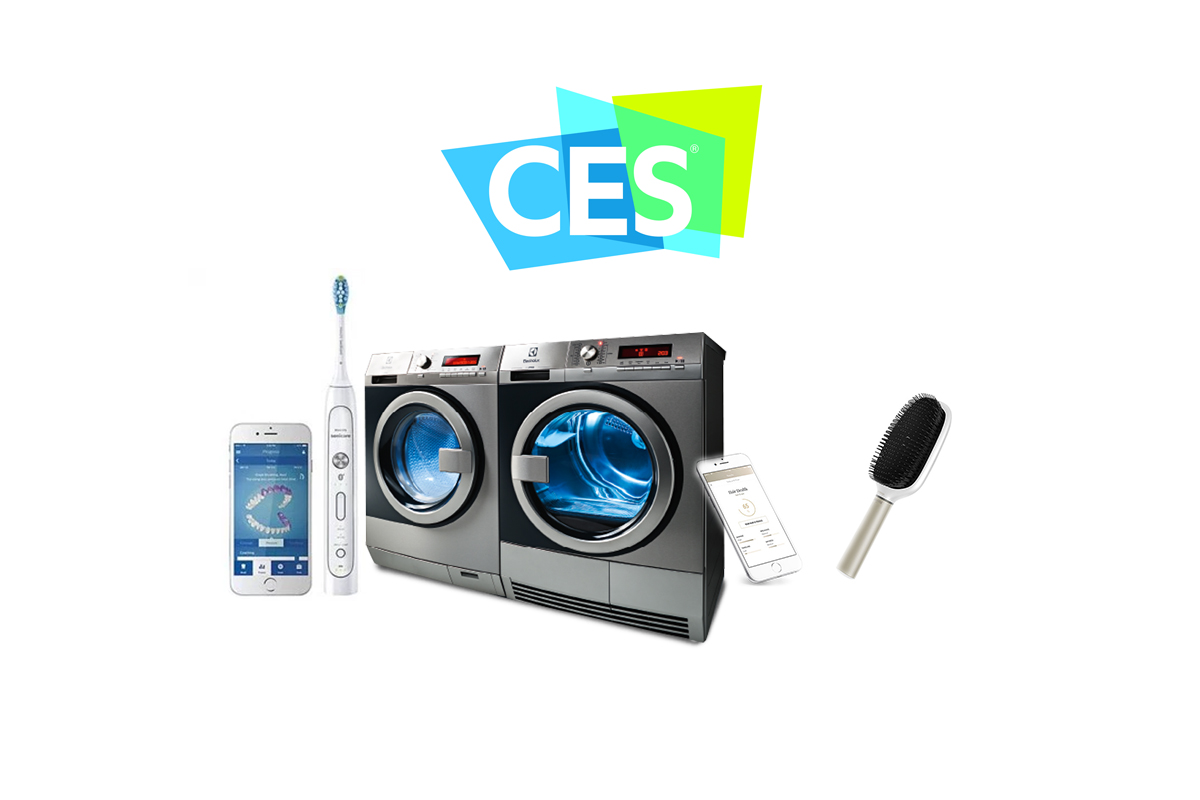
    File this one under more stuff you didn’t know you needed. A smart hairbrush will track your hair brushing technique and teach you how to brush your hair better. The designers of the brush say it will help keep your hair healthier and look better. Maybe this will go in the “stuff you definitely don’t need” file. That’s just my opinion though.

    Smart Toothbrush

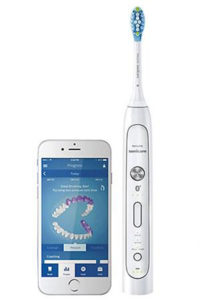
    This toothbrush has computer components built in that will track your brushing habits and give you recommendations to do a better job. The verge’s article says it’s “you-missed-a-spot for dental hygiene.” For someone like me who thinks brushing my teeth is boring, it’s a struggle to do it for as long as is recommended. A smart toothbrush would be pretty good accountability for me. Plus, since I’m a tech nerd, it would probably make me a bit less annoyed to stand in one spot for two minutes with a brush in my mouth.

    Toothbrush Game Controller

    There’s also a smart toothbrush option for the kids but theirs has a game built in. I know, the kids get all the good stuff. The game helps coach the kids to brush all of their teeth and take all the time necessary. It will distract them from the time they are spending brushing by letting them battle monsters by moving the brush to different areas of their mouths. The app on a phone or tablet provides the instructions and how well they follow those instructions will determine if they win the game or not.

    Connected Appliances 

    Another major product being featured at CES is the connected appliance. I wrote about the washer and dryer yesterday but there are refrigerators, ovens, trash compactors, dishwashers, and even a toaster that will communicate with each-other and allow you to control them from your smartphone or other controller. The apps will let you adjust settings on your washer and dryer, monitor your home while you’re away, and even turn off the off the oven if you’re coming home late. It’s all connected and it’s becoming the majority of what these appliance companies are producing.


    Should Your Family Be So Connected?

    I look at a smarthome like social media. There are things that make sense for some folks that don’t for others. Is it cool to be on the fringe beginnings of the latest trend? Sure it is, but it isn’t always practical. I, for instance, use Facebook to promote our ministry and this blog and I use Instagram to keep track of friends, Twitter is where I turn for professional growth and information. These smarthome and connected appliances fall into a similar category for me. There are those who are going to feel like they need a smart hairbrush, I will never see the need but some will. I may like having my kitchen all connected and controllable from an app on my phone but you may not. Chalk it up to “different strokes for different folks.”

    As for safety and security, the more connected you become,  the more you’ll have to keep an eye on how you’re protecting your family. This entire site is dedicated to the fact the being connected online comes with risks. While your oven may not lead your kids down a road to temptation, what if you daughter uses that smart mirror to compare herself with photos of people she thinks is more beautiful? What if your son is using it to watch videos you wouldn’t normally allow him to watch. Some of these smart products are just new screens and new screens mean new parental controls to set up. Do you know how to do that? You should.