Tag: rant

  • The Worst Thing About CES2020!

    The Worst Thing About CES2020!

    I spent five days walking around the show room floor and attending conference sessions at CES2020. It is the largest trade show in the world. I saw all kinds of technology from smart cars, smart homes, and toys and ed products for kids. These people are why I am at CES. I’m there to learn how their products can benefit our kids in the future. Tech is super helpful and useful as a tool for education, entertainment, and development. Many kids are learning in ways they couldn’t before, children are getting opportunities they didn’t have before because of vr and ar classrooms. Technology is and always will be a part of our lives. The world is getting more and more tech-centric. The worst thing about CES2020 seems to be that parent’s concerns about the amount of tech in their kids’ lives are being ignored.

    The Worst Thing about CES2020

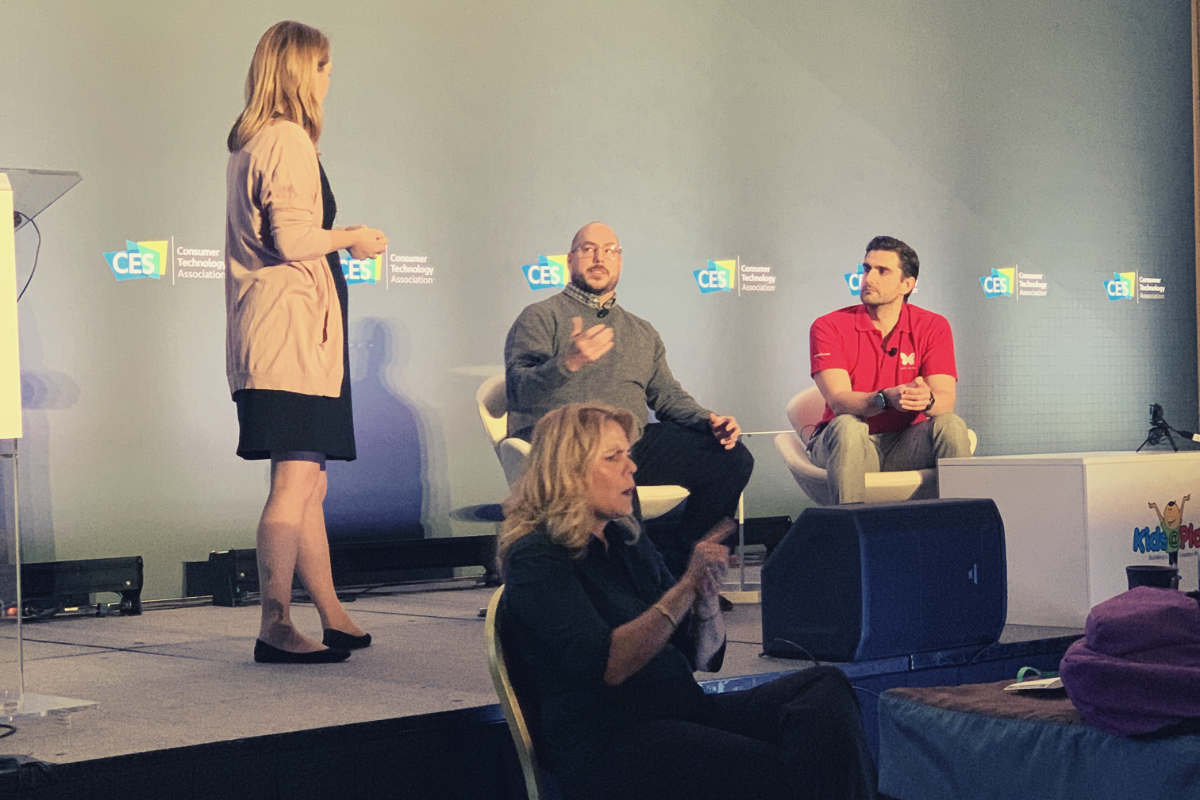
    I heard a lot of mixed messages at CES this year. Especially at the Living at Digital Times “Family Tech Summit.” It has become increasingly frustrating to listen to software developers and hardware engineers talk about how their new technology is going to change the world. While much of this technology is very neat, and as mentioned, can be helpful. There are also a small percentage of people on the stages at CES warning us that our kids are becoming too dependent on this technology. Parents and teachers are getting concerned because they feel like technology is moving far faster than they can keep up. The experts at CES don’t seem to understand the anxiety caused by new, “world changing,” technology being announced every single year.

    Most technology being announced at CES is a new take on the same thing we’ve had for the past ten years. I am walking in to the Family Tech Summit expecting to hear about what new products will be best for our kids. Instead I am hearing what will be best for these developers and companies. How to market and close sales with their new products. I did hear from a few people about ways to protect our kids on the technology we allow them to use.

    Unfortunately they were given a small amount of time. They were followed by someone who just got on stage to celebrate the latest voice control tech. This “expert” explained how great it is for our kids. He marginalized parents’ concerns by calling them misguided. then he touted the fact that parents seem to be concerned but don’t take action to protect their kids. He ignored the fact that companies make their products and advertise them as safe. They build in parental controls that are weak and hard to set up. Then they wonder why they show up in the news when a kid comes across adult content on a smart speaker or is visited by a stranger on their in-room nanny cam.

    It wasn’t all bad.

    There were highlights at CES2020, though. Dr Amanda Gummer with the Good Toy Guide, spoke of using tech to encourage kids to play and learn. Sean Herman, author of “Screen Captured,” shared about his own kids and how their attention to screens caused him to start Kinzoo. Kinzoo is a messenger app that “turns screen time into family time.” I met Carrol Titus, founder of GoldenPoppy Inc. who is making augmented reality games to teach physics, programming, and positive self awareness. I enjoyed speaking with Ahren Hoffman and Sue Warfield from the American Specialty Toy Retailing Association, “ASTRA.” We talked about the lack of attention to giving parents tools to learn and use tech wisely and the benefits of kids playing off of screens. Especially young children.

    Everyone can say what they want about screen time and the benefits or risks. The truth I see is ‘that technology should enhance our play and education. It shouldn’t replace it. Parents aren’t freaking out because their kids are spending too much time watching educational videos. They’re not concerned about them playing apps that teach them to read or do math. The concern is the unstoppable flow of entertainment that comes flying at our children at toy stores and app stores. Entertainment that has no intention of teaching anything, just using up your child’s time and attention to show them ads or sell them access to more entertainment. I understand that many want to see tech become the new norm for education, recreation, entertainment, and everything else.
    The issue is that we currently aren’t promoting balance. Surely not at CES2020, definitely not in our app stores or on the shelves of our retailers. Once again, it falls to us as parents to take the step towards a healthy attitude toward s tech. Digital wellness is our responsibility and the more I hear from app developers and toy makers, the more I am sure they won’t be taking it seriously, not really, so we have to.


    If you’re concerned about what your kids are doing online, be sure to check out Accountable2You.com. This software is my favorite accountability software and will help you keep a close eye on the websites your kids view.

  • How Video Game Developers can Help Parents

    How Video Game Developers can Help Parents


    I think video games can be fun and good for my kids if kept in the right context. We have very strict rules about gaming in our home and do our best to limit our kid’s access, screen time, and exposure to some of the gaming content available. Unfortunately many developers build their games (even kids’ games) that make screen time and other restrictions hard for parents. If I could speak to a room full of game devs, here a few of the things I would say.

    1 Let me save the game whenever I want.

    My children have a strict 30 minutes per day rule on our xbox. They understand when they sit down to play they they have a limited amount of time. My kids know that they’ll be “kicked off” the xbox after a half hour so they save often. They save their Minecraft worlds because they can’t build the crazy epic structures they’ve planned in just 30 minutes. 

    The problem rises when we play games, like the Lego games, that don’t allow you to save your game whenever you want. You have to reach certain milestones or the end of levels to save. When the xbox kicks you out of the game, it resets the game causing you to lose your progress. This means mom or dad have to either continually add time to the limits for the day until they can save the game or we just have to deal with the kids’ frustration for wanting to see the next levels of this game but not being able to because of our time limits. We, as parents, don’t mind being the bad guy but a simple save mechanic built into the pause menu sure would make life easier.

    Parent Guide: Call of Duty Black Ops 4

    2 Password protect your content controls.

    The most popular comment on my review for last year’s Call of Duty game is “hey man, you can turn off the graphic violence.” I’ve replied to most of those comments with, “Cool, but it isn’t password protected so it may as well not be there.” Can we please put content restriction settings behind some sort of pin code? It isn’t that difficult to do. I don’t want my kids playing games that are meant for adults, but some families are ok with their fourteen year old playing a Rated M game if the gore is turned off. Unfortunately, most warm blooded 14 year old boys are into or at least interested in that sort of violent content in film and video games. That means they’ll often turn the restrictions off when mom and dad aren’t looking.

    Maybe that’s a bit too restrictive as your kids get older but isn’t that the parent’s decision to make? Game developers make their games with over the top graphic violence and pretend that their target audience is adults. The reality is that at least half of those who play your games are below the recommended age. This is why they add a content restriction in the game, however, that restriction isn’t helpful if it is only buried a couple of levels deep into your settings menu and doesn’t require any sort of passcode to change.

    3 Don’t force me to make an account to play your game.

    It is already frustrating to have to have an account for everything I do online. Then I have to create separate accounts for each of my kids to let them play games or use apps with parental control settings turned on. If I want each of my kids to have their own settings or their own way through the game I have to have an account for them on our gaming system. When I turn on a game and see that the developer of that title wants me to create yet another profile, on their site this time, it is infuriating. I don’t want to give you my email address. I paid to play your game, isn’t that enough? I get having an online account so I can play multiplayer but games that require me to have a profile with your company even to play the local offline campaign is simply data mining. I don’t need it. Especially with my kids information.

    Parents Guide: Apex Legends (Titanfall Battle Royale)

    What Can Parents Do?

    This post may be a bit ranty but I’m not the only parent I know who has complaints about these issues. It’s hard enough protecting our kids from cyberbullies, adult content, and predators. We have enough drama from our kids alone when we want to simply limit their screen time. The last thing we need is some setting or lack thereof in a video game to make it even harder. The truth, however, is that it’s unlikely a game developer will see this article or video. We have to take responsibility as parents. Either we have to take the role of gatekeeper and keep our kids from games that pose these problems or we have to just have the conflict when it arrives because it’s worth it. It’s worth it to have kids who know how to function when screens are turned off. It’s worth it to have kids that are safe from violent thoughts, nightmares, and attention problems. It’s worth it to protect our kids private information and data from collection by gaming companies and who knows who else.

    Talk to your kids about the limits you’ve set. Take a stand when they try to bypass your settings. Don’t let them play games that cause their behavior to change or keep them interested to the point of obsession. Protect their information by only creating accounts for them on sites that absolutely require it and when you do, use an alias. We live in a new world. A world where data is a form of currency and your kids gaming behavior can be used in so many ways so it is invaluable to the companies that create these games. We have to be responsible for our own family’s Internet safety and healthy tech habits. We can ask developers to make it easier and hope for the best but when it all comes down to it, it is up to you and me.


    Podcast:

  • I Can’t Help You Protect Your Kids on Apps Meant for Adults

    I Can’t Help You Protect Your Kids on Apps Meant for Adults

    I field messages and requests all week long from parents who want the latest tools for keeping their kids safe online. They ask about everything from YouTube to Instagram to Snapchat and want apps that will monitor social media use, block adult content, and limit screen time. While there are resources to help parents in each of those departments, some apps just aren’t intended for your younger child. Unfortunately many parents have a real problem giving in to that fact.

    Streaming Videos

    Let’s look at YouTube as our first example. The video app was created in 2005 as a place for anyone to upload short videos to share with their friends. Google purchased YouTube in 2006 and Social Media became popular soon after, rocketing YouTube to the successful streaming platform it has become. The site is loaded with videos from filmmakers, vloggers, video gamers, makeup artists, geeks, professionals, educators, ministers, animators, artists, basically any category you can think of. It has evolved into an immovable force on which there are 300 minutes of footage uploaded every single minute. YouTube has come under fire for some of their content being too mature or sensitive and so they’ve employed algorithms to keep tabs on inappropriate videos. They also released n app for children called YouTube Kids. This app has also seen its share of controversy after YouTube has been unable to keep sensitive material from showing up in videos on the app.

    YouTube obviously wasn’t intended for young viewers. It is a site that is populated primarily by videos uploaded by its users. Some companies that make content for kids use YouTube but this is a choice by these companies in response to the popularity of the platform. It’s an attitude that says: “Kids are there, so we should be there too.” The goal is to reach the audience already there, not necessarily to build an audience on YouTube. There are no real parental controls (safe search is mostly useless) and videos that are labeled as kid friendly are done so without any human eyes ever seeing the entire video. The only time a content reviewer sees the video is when enough users of the site have flagged it as inappropriate. Allowing your kids to watch YouTube on their own is a risk that many parents don’t even realize they are making.

    What about Social Media?

    Snapchat, Instagram, or Facebook are all the same. They, like YouTube, feature content created and posted by the users of the service. This “User Generated Content” can vary from political or religious views, to silly cat videos or memes, and random personal updates that mean nothing to anyone. People also post updates on their serious mental health issues, they share about their plans to harm themselves or others, the post images of themselves in compromising situations, and that’s just what people post publicly. Private messaging contains content that people post when they think nobody except those they trust is watching. Private messaging is how predators groom their victims. It’s how the out of control teenage boy convinces the girl to send him inappropriate pictures of herself. Social Media is intended to be a place to connect with people, some you may know, some you don’t. It is meant to be a public forum and that which is meant to be private, is meant to be completely private. This is where the problems come in when parents ask for ways to monitor their kids social media.

    Age Rating vs Terms and Agreements

    I see a lot of parents giving their kids access to social media and other online activities when they reach the age of 13. This is based on the fact that the terms and agreements that these sites have you approve before making an account list 13 as the minimum age to use their service. A common mistake parents make is thinking that this age is meant to protect their kids from content on the site when, in fact, it’s intended to protect the company from having data and information on kids under the age of 13. COPPA laws say that companies can’t collect and use information of kids under 13 without parental consent. If a company says you can’t use the site if you’re under 13 then they can do whatever they want with all of that data and if your kid is underage, it isn’t their fault. You ignored the Terms and Agreements when you allowed them to use the site.

    Age rating is the age recommendation you’ll see in the app store when you are downloading and app. This age restriction is based on the actual content in the app, not any legal requirements for the company. The usual standard is that apps populated by user generated content are rated 17+. This is because the company can’t guarantee that what is seen on their product won’t be considered adult content. When we allow our kids to use apps that contain user generated content we are allowing them to be subject to the opinions, behavior, and whims of everyone else who uses that app.

    Parental Involvement Before Parental Control

    When I am asked to help parents protect their kids in apps that are obviously not made for children I feel like I’m being asked to give parents a suit their kids can wear to protect them while they play in a burning building. I get it. It isn’t easy to tell your kids they can’t do something they want to do. “My friends are all on Snapchat.” or the one that irritates me to no end, “The teacher/coach says I have to use Facebook to get the homework/practice schedule.” Sometimes we just have to say no. It is difficult to set the boundaries and limits that keep our kids safe but if we have the right attitude about what we’re protecting them from it becomes easier. Social Media, YouTube, video games that are rated M for mature, non of these things are intended for people under the age of 17 and when we allow our kids to use these products, we open them up to a world that is meant for adults.

    It is difficult for algorithms to catch nudity or violence in uploaded videos. Social Media sites and private messaging apps go to great lengths to keep prying eyes from seeing what is being sent. This makes parental monitoring software hard to develop. Unfortunately some burning buildings are just too dangerous and there isn’t much that can be done to protect you if you’re inside. If you aren’t ok with your child seeing content that is meant for grown ups then I recommend thinking about uninstalling that app instead of trying to find software that doesn’t it allow it to do what it was intended to do.