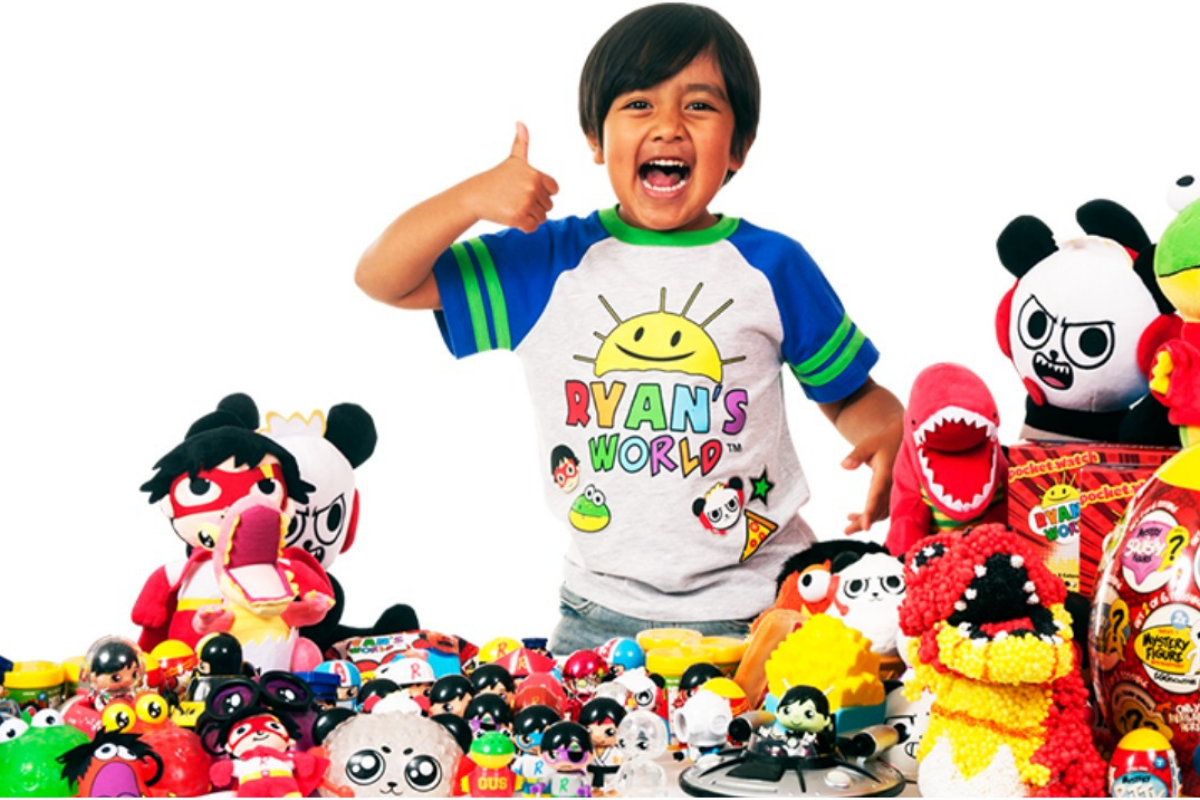
The top earners from YouTube have been released in an article from Forbes and on the top of the playlist is a seven year old boy who opens and plays with toys on his channel. Ryan Toysreview features short videos that include product unpacking, play, challenges, and of course, seven year old Ryan. His videos each have view counts in the millions and that has amassed an estimated 21 million dollars to him during the past year. Ryan and his family aren’t the only content creators creating million dollar companies out of their videos. The top ten list includes vloggers, make up artists, and gamers, all who post weekly to daily videos and rack up millions of views on each one.
When I speak to parents about the kind of money gamers and other content creators can make on YouTube and Twitch I see their eyes open wide with wonder. They have no clue how doing something like gaming or unpacking toys can result in millions of views, much less millions of dollars. There are several ways that online content creators make money, some are fairly conventional and some may surprise you. Here’s a quick breakdown for those of you who can’t imagine making internet videos as a career choice.
Traditional Advertising
Pretty much all YouTubers “monetize” their videos. This means that they allow YouTube to put ads into their content and then get paid a little bitty bit every time someone sees a video or clicks on an ad banner. The rules and settings for this form of advertising is always changing and can often be frustrating to deal with. For instance, if your videos contain any content that belongs to someone else, the YouTube algorithm can sometimes flag your content as “demonetized.” That means, while your fans will see your videos, you won’t be able to make any direct ad income from it. Or, in some rare circumstances, you will have to share ad income. Below is a video that I made with my family a couple of years ago, it is a parody of a song by One Direction. Since the music is copyrighted, my video was demonetized even though the lyrics were all changed to fit our family parody.
Product Placement/Sponsorships
These regulations can be a pain for some content creators and so they choose to use other methods of advertising. Product placement and sponsorships are becoming some of the leading examples. There are many ways YouTubers and streamers can make their content fit with sponsorship deals. Channels that feature trick shots and other sports topics will be sponsored by active wear companies or stores that sell sports equipment. Our channels and blog are affiliated with sites and software that help parents with accountability monitoring and filtering.
Sometimes these sponsorships are soft or quiet which means they just have the equipment or products in their videos without much mention other than maybe in the video description. Mostly, though, you’ll see content that is made as a special sponsorship video or series and many times they’ll be labeled as “sponsored” by the creators. This is very common in unboxing or gaming videos where the creator is opening toys that were sent to them for free (maybe also with some form of financial payment) to highlight that toy or gamers are playing and doing commentary on a game that they got access to a week before release to build hype for the upcoming sales of the game. Our article and video featuring Botley was one that we were able to do because the company sent us the coding robot to play with and write about.
Direct Viewer Support
Finally, we come to direct viewer support. This method is indicative of the time we live in where people are drawn towards benevolence and away from fees and subscription pricing. People also prefer not to have products pushed on them in a non relevant way like commercials on TV or even in-line ads during a YouTube or Facebook video. This direct viewer support is a way for those who enjoy a creator’s content to literally give back to that creator and support them in their effort to make their videos full time. Gamers will stream live on Twitch.tv for six to eight hours several days a week and their viewers will reward them with small donations of a buck, five dollars, or more just to have their screen names read live on the stream. Creators will thank their supporters with mentions called “shout outs” during or at the end of their videos. There are content creators that make hundreds of thousands of dollars a year just on their viewer support alone.
There aren’t many creators who only use one method of monetization for their videos. The combination of traditional online advertising, product placement and sponsorships, and direct viewer support has allowed many gamers, vloggers, make up artists, and more to leave behind a traditional full time job and make internet videos for a living. This is the world we live in now. Entertainment looks a lot different than it did ten or even five years ago. Imagine what it will look like ten years from now.
What Parents Should Know
This article is meant to be informative and to answer a question I am asked quite often. There is a world of internet content available to our kids. Some of it is interesting and informative or educational and some of it isn’t meant to be seen by your seven year old. There has been research to show how addictive the short and fast paced videos on YouTube can lead to attention problems and issues at school so limiting screen time is important for our younger kids. As your kids get older, you’ll see their desire to consume web content increase and you will want to give them the freedom to do so more and more. This is good as long as you’ve had boundaries in the past and taught them to be aware of the time they are spending on their phone or computer.
When your son or daughter tells you they want to play video games or make internet videos for a living, don’t look at them like they are stupid. While not everyone will become a millionaire by making online content, there are many who have made it their full time job (myself included.) Just remind them that many of the things they’ll need to know to be successful they will still learn in school. Let them know that the work of an internet content creator is not easy and the expectations from viewers can be excruciatingly heavy. The most important thing they’ll have to be able to do if they are going to be online for a living is not give up. Tell them to practice that with the things they are into now. Don’t quit that sport, maintain your high grades, keep going to dance or piano classes. Whatever that thing is, learning the ability to see it through will be what can drive them to success in any venture in life. Even if it’s opening toys on videos on the internet.

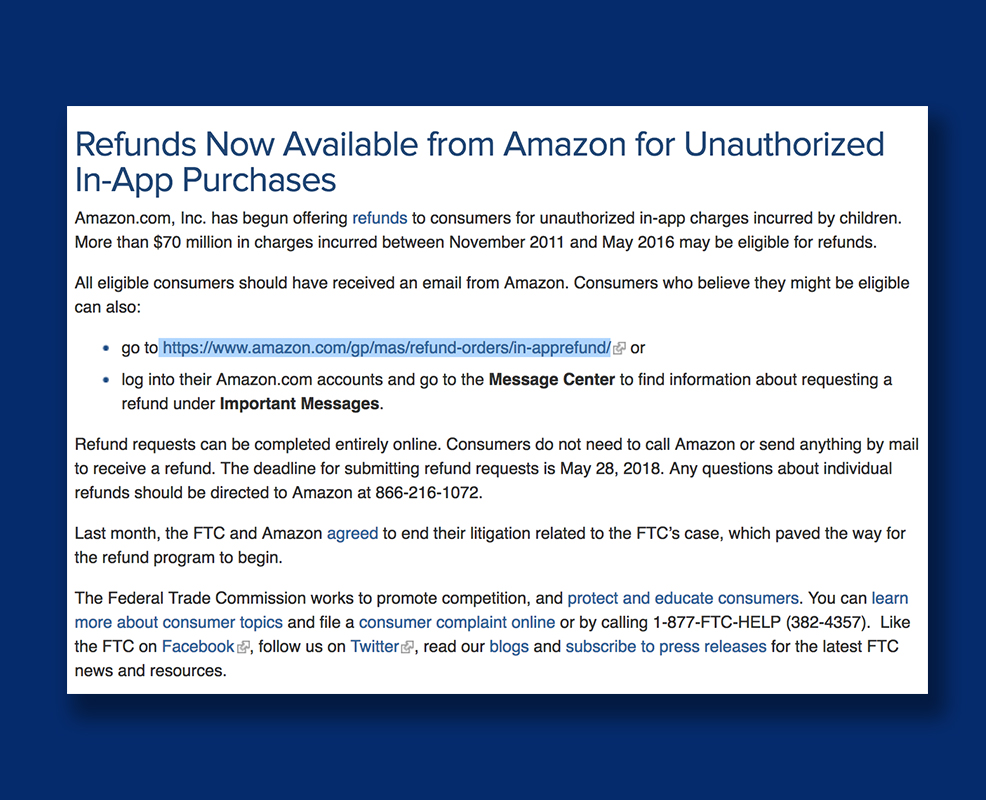


 The software store on Kindle simply didn’t have a password protection setting for their in-app purchases. This is what got them in to trouble. Children could log in to make purchases on these apps and there was nothing built in to stop them. Shortly after complaints started coming in, Amazon updated software to include a password and had already refunded money but the FTC said that wasn’t enough.