Tag: messaging

  • FB Messenger Kids “Error” Allowed Thousands of Kids to Talk to Unapproved Strangers

    FB Messenger Kids “Error” Allowed Thousands of Kids to Talk to Unapproved Strangers


    Facebook Messenger kids was created to give children a safe place to communicate through text, stickers, video, and gifs with friends that are pre-approved by their parents or guardians. This week, however, the kids’ messenger app has had to send notifications to thousands of parents about their children having access to strangers in the app. 

    What happened is that a technical error allowed kids to create a group message with friends who would then invite their own friends who, while approved for them, may not have been approved by the parents of the first child. Confusing? Ya, this is possibly why the flaw was even possible in the first place. Facebook says they have alerted parents whose children may have had this type of interaction and that they’ve disabled any chats that were created, using this flaw. The story isn’t over, though, as some are calling for the FTC to look in to the error since it may have resulted in a COPPA violation.

    Released Today: Facebook Messenger For Kids!

    What Parents Should Know

    The moral of this story centers around trust. It is important that, while we may trust our children, we can’t always trust who our kids are in contact with. We definitely shouldn’t blindly trust the companies who make the hardware and software that our children are using. When our kids use an app like Messenger Kids, the whole point of the app is that it gives parents control. When the control is hindered, even by a “technical error,” that is a severe violation. We can, however, take actions to protect our kids from dangerous effects that could come from these errors.

    I recommend having a copy of the messenger kids app on your phone logged in to your child’s account. My wife and I are each logged in to one of our kids’ messenger kids apps and can see when they get messages and what the messages are about. We are notified when they receive a message and can look to see who it is from and even read it. I have, a time or two, jumped into the app to tell a friend to stop messaging since my son was past his allowed time for social media that day. I received a “yes sir,” and there were no more messages until the next day. We also use BARK to monitor their messages and alert us of any dangerous or inappropriate content.

    Parents are gate keepers. Our job is to be sure our kids are growing up with guidance through every area of life. If they aren’t being taught how to manage social media and internet use safely then they will struggle to make healthy decisions when they are older. Messenger Kids is a good tool to help your kid learn the right way to use a messenger but it won’t work if you are uninvolved, pretending that the creators of the app only have your kid’s best interest in mind. The truth is that they want to provide you a service to make a profit. We cannot overlook that. It is our responsibility, and ours alone, to teach our kids how to be safe online. We should take it seriously. We should hold companies accountably when they have errors that put our kids at risk but ultimately we should be the ones making sure our children are protected on every app, site, and software they use.

  • It’s Being Called the Ultimate Unsend Button, Does it Encourage False Anonymity?

    It’s Being Called the Ultimate Unsend Button, Does it Encourage False Anonymity?

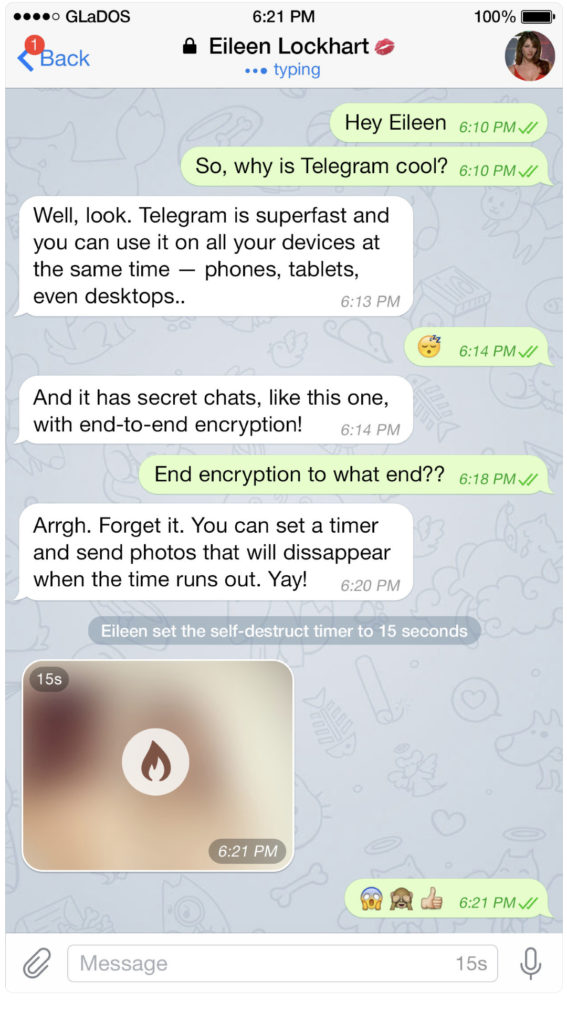
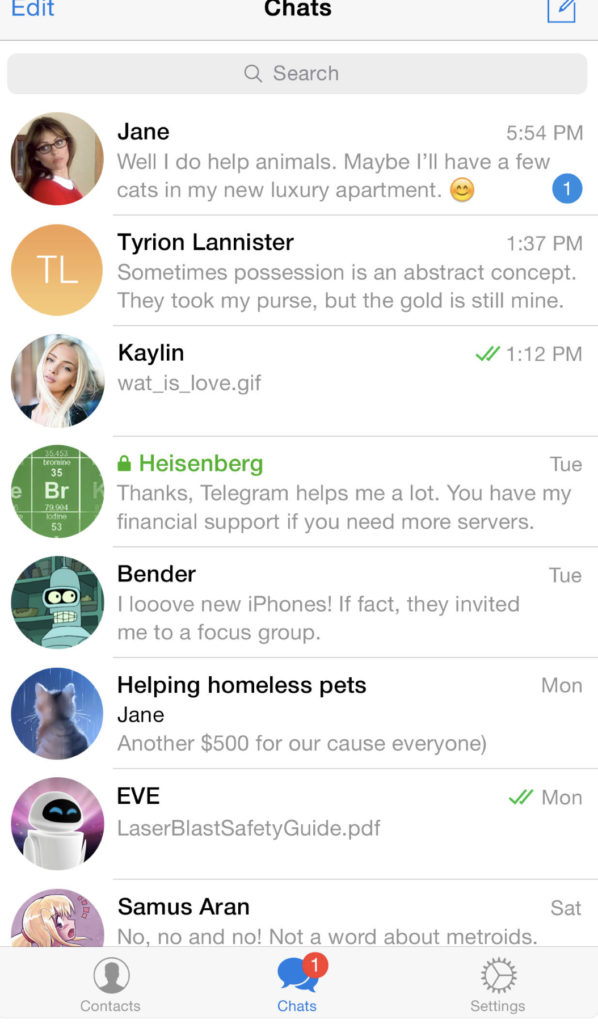
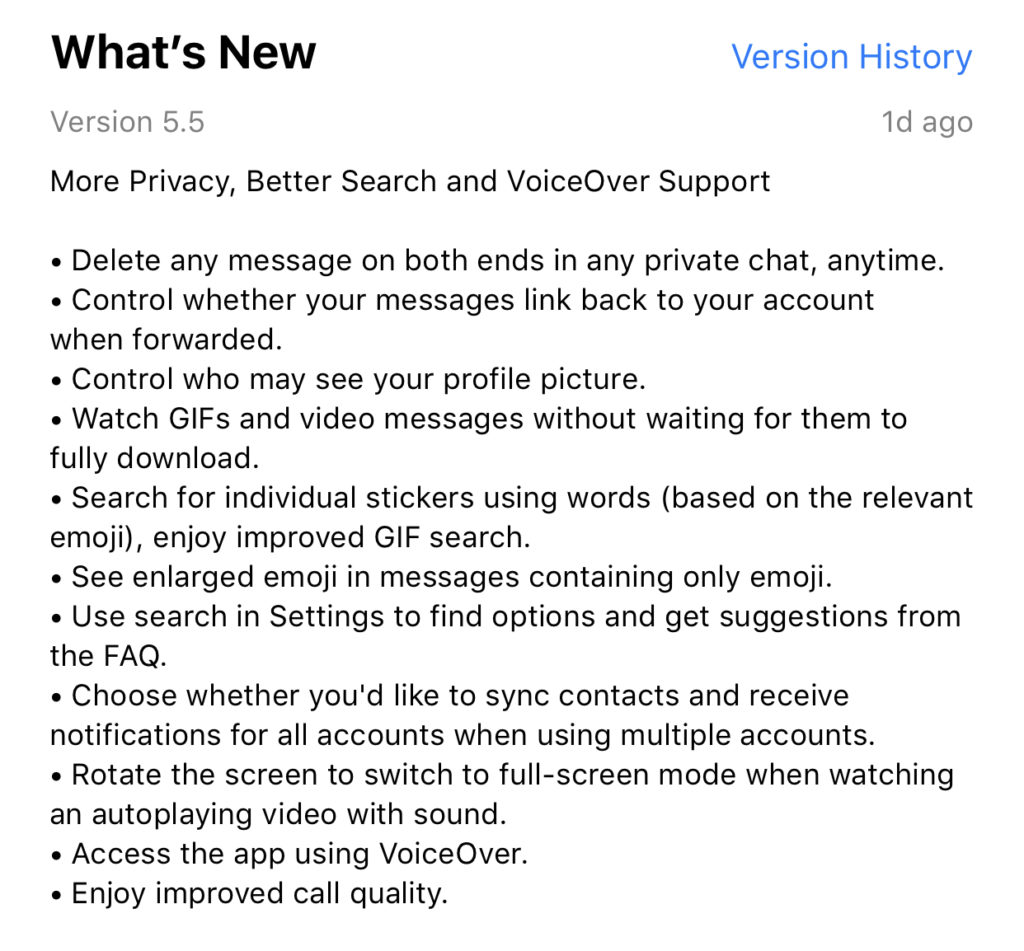
    Telegram is an end to end encrypted messenger that touts speed, privacy, and security. They have featured private messaging and self destructing messages for a while but their new feature takes privacy to a new level. You can now delete a message you’ve sent from your account and the account you sent it to no matter how long ago it was sent. Telegram is, again, standing up for privacy and users are buying in. Millions have flocked to Telegram after Facebook’s data leak news from the past several months. It looks like Telegram is doubling down on Privacy as their claim to fame. They’ve also added the ability remove your information from a message when the message is forwarded to other users. Some accessibility and ease of use features have also been aded.


    What Parents Should Know

    Security and privacy are often overlooked when we allow our kids to use internet connected devices. Privacy is becoming a major concern for experts and activists of family tech safety. Messengers that allow data to be collected and used for advertising shouldn’t be used by children and even teenagers due to the risks of such data being released or revealed without the messenger app developer’s consent. When an app features privacy as it’s distinquishing feature, you have to ask who the data is being kept private from. Obviously, we want data to be kept from third party companies who would use that data to advertise. Sometimes data is even kept private from the company that developed the messenger app that you are using. Telegram has a “secret messages” setting that must be set to keep your information encrypted from end to end. (End to end encryption means not only the company can see or collect what is being sent.)

    Anytime the ability to delete messages you’ve sent is added, I see red flags. While I think privacy is critical, there is also a risk of kids thinking they are safe from inappropriate or incriminating photos or messages being saved and used for nefarious purposes. It only takes a half a second to screen shot a message or image on your screen. Most phones allow you to record your screen to a video very easily. This means that you are non always anonymous online. If you are sending messages to someone, thinking you have complete privacy, you are trusting that the person you’re sending the messages to has your privacy in mind as well. Telegram is an easy way for predators, cyberbullies, and those interested in sexting, to send and receive messages that do their damage and then are removed as evidence.

    I have spoken to parents who have taken their kids to the police with complaints about people trying to groom them online but the police had no evidence because the messages had all been deleted. This is why a messenger makes the FamilyTechBlog uninstall list as soon as they add disappearing messages. It isn’t safe for your kids to chat with a feeling of anonymity or for them to chat with people who can send what they want and make the message go away after it’s been viewed. Telegram is rated 17+ and I fully agree with this rating. Private messengers that allow you to chat with anyone, anywhere shouldn’t be used by children and young teenagers. Especially when the messages can be removed at will.

  • WhatsApp Update Brings Thumbprint and FaceID Lock To Private Messenger

    WhatsApp Update Brings Thumbprint and FaceID Lock To Private Messenger

    The private messenger, WhatsApp, has updated recently to allow users to lock the app from prying eyes by using their Touch or Face ID. Private messaging is becoming more important to users these days since the spotlight has been on Facebook and Google for their data mining and sales. WhatsApp has been a mainstay of private messaging for some time now and this new update takes privacy from an algorithmic/software level to a more obvious tangible place. You can now use your FaceID or TouchID, depending on the generation of your iPhone, to lock people out of the WhatsApp software entirely. This will keep people from opening the app and looking through your messages. Currently this feature is available for iOS only but it is rumored to roll out to Android soon.

    What Parents Should Know

    It’s important to know that there are options that allow you to keep an eye on your kids’ messaging without having to physically take their phone from them. However, if the physical approach is your style then this update from WhatsApp could become a problem for you. Messages being locked in this way needn’t deter you from checking up on your child’s messaging activity, though.  You can store your thumbprint in your child’s device so you can unlock it or just make them unlock the app for you when it comes time to inspect their messages.

    I recommend allowing your children to have a feeling of privacy by using some sort of software to monitor their messaging apps instead of taking the device from them every now and then. Not only does that plan give them a feeling of privacy, it is also a far better monitor then your weekly check up. If a message monitoring algorithm like Bark is active it will look at every single message your child sends or receives in real time, notifying you if any of those messages cross the line to dangerous or inappropriate content. Taking the phone from them to monitor it yourself allows messages to be removed before you get around to looking at it.

    I never advise spying on your children without their knowledge. They should know that you are keeping an eye on their messages and how the software works. They should also know what the consequences are if they send messages they shouldn’t be sending. Finally, you should have an open conversation to allow them to feel like they can come to you if they receive a message they are not comfortable with. No matter what you do to monitor your kids messaging, having a culture of transparency and openness in your home is critical.

  • The FamilyTechBlog Uninstall List for Spring 2018

    The FamilyTechBlog Uninstall List for Spring 2018

    Please consider keeping resources like this free to you by donating $5 to our non-profit organization.
    Visit BecauseFamily.org/partnership to give.

  • Should Your Kids Use Sarahah?

    Should Your Kids Use Sarahah?

    Sarahah is an app that snuck up the charts over the past weeks. It was originally put on the app store in June but is already sitting at number one on the free app charts in iOS. This app allows you to leave anonymous comments about people. The idea is that, since it’s completely anonymous, you can be honest and say what you really think. This can obviously lead to some really encouraging and uplifting posts, maybe it could cause a crush to reveal themselves, but definitely, it will cause mean people to do what mean people do. The risk of bullying on this app is very very high.

    This isn’t the first app of its kind but none have risen in popularity so quickly. “Sarahah” is the Arabic word for honesty, the app’s website describes the goal of the app simply:

    “Sarahah helps you in discovering your strengths and areas for improvement by receiving honest feedback from your employees and your friends in a private manner.”

    Again, the app is very new but development is happening fast (five updates since its June 13th release) and the app promises more features to come. Something like a planet icon on the bottom of the screen seems to hint at a future explore or discover page and they mention on their site that they’re studying an option to allow users to reply to the comments that come through Sarahah. The appeal of the app is obvious, most of us wish we could say whatever we are thinking to someone and there are also those of us that wish we could hear exactly what people think of us all the time. This may be fun or even cathartic for grown adults, but when teens and tweens are in the throes of development, hormones, and emotion, is this app a good idea?

    What Parents Should Know

    My Facebook feed has begun to blow up with Sarahah messages that have been screenshotted and shared. Most of the ones I see are people celebrating a super nice comment they got from someone but I’ve seen a few that were laughing at the commenter who was being a jerk. Those I’ve seen on Sarahah were adults, mostly because I don’t follow many young people on Facebook but there is no doubt, seeing this app climb the charts like it did, that there are younger users too. Parents should be cautioned that this app is rated 17+ for unrestricted web access, profanity, and adult humor. The issue is that since anyone who wants can post whatever they want (it’s called user generated content) it’s next to impossible to ensure there will be no adult content on the app. Secondly, I warn parents, as I did above, about the dangers of bullying through this app. The bully follows our kids around in their pocket and this app gives them the ability to say whatever they want without any way to identify who they are.

    There is already an epidemic of kids feeling like they can say whatever they want online without consequence. Unfortunately, that isn’t the case because the one reading what is written feels real emotions based on what’s been said. The ability to be completely anonymous could cause kids to be even crueler and could even lead to kids who wouldn’t say anything mean to some one actually doing it because they don’t see how they can be identified as the culprit. You can block users who you don’t want to message you anymore but once you’ve done that the damage could already be done.

    My advice is to disallow this app on your kids’ phones. You can do it the old fashion way by looking at their phone yourself and uninstalling that app if you see it. You can also set age restrictions in the app store or parental control/restrictions options on your kids’ devices. This should block Sarahah since it’s rated 17+. As an adult, maybe you enjoy this app, I would advise caution to you too. Not only are you putting yourself out there to be spoken to anonymously by anyone who could say whatever they want but you’re also setting an example for your kids.

  • Should Parents Worry about the Video Messaging/Live Video Craze?

    Should Parents Worry about the Video Messaging/Live Video Craze?

    Periscope, Facebook Live, Twitter, Houseparty, Squad, Instagram, and now here comes Ping Pong. These are all ways to record or live broadcast your life or segments of your life for the entire internet to see. Our teens and young teens are eating up this new live and sometimes raw form of communication. I’ve mentioned Musical.ly a few times in the past and warned parents about some of the risks associated with the app. This week, Musical.ly has announced the release of a their newest application, Ping Pong. This app allows users to record and send video messages much like Snapchat or Instagram Stories.

    Musical.ly launched Live.ly, a live broadcasts app last fall and have seen major success in adoption of the service. In fact, there are many users who are now just live streaming almost every moment of their lives. Users can create their own channel for people to follow and be live online at any given moment. The issue here is that some of Musical.ly and Live.ly’s most popular users are young people who aren’t even old enough to have their own social media page. Apparently that doesn’t bother the CEO of Musical.ly at all.

    While Ping Pong hasn’t fully launched yet (it’s available but you can’t create an account) it is being rolled out soon and will be another app that parents must understand.

    What a Parent Should Know

    Live video and video messaging are now mainstays of the social media your teens and young teens are using every day. It’s important to remember that they are able to broadcast and watch broadcast of everything that happens in their and their friend’s daily lives. For most young people this is going to be trips to the coffee shops, dumb stunts in the gym at school, and evening’s at friend’s houses goofing off. Unfortunately it can mean other, less savory, content as well. These apps are rated for ages 17 and up because the content is provided by the users of the services. This means that parents are expected to be monitoring what their kids are doing on these applications. Allow me to second that expectation. Use monitoring software like TeenSafe and filters like NetNanny to guard your teen from unwanted content. This will protect them while giving them full use of the social media they want to have access too. They will just be using it under your boundaries.

  • Mobile Device Vocabulary Lesson 3: Messaging

    Mobile Device Vocabulary Lesson 3: Messaging


    Our kids and teenagers are communicating more differently than ever before. The note being passed from desk to desk has been replaced with words typed on a screen. Long phone conversations with friends every evening have given way to short, emoji laced text messages with pictures, videos, animated images, and links to other online content. Communication has evolved, or at least changed and it’s more common than you may have ever imagined. Just look at these statistics from April of 2015.

    73% of teenagers have a smartphone and 91% of those teens text. Teenagers send and recieve and average of 30 text per day. (PEW Research Center)

    More than nine out of ten teens who own a smartphone give and receive an average of 30 text messages every single day. That means, your child texts. The following abbreviations/phrases will give you greater insight to what messenger apps are capable of.  (more…)