
Tag: lawsuit

  • Disney Being Sued for “Spying on Children”

    Disney Being Sued for “Spying on Children”

    Disney is in the news again and this time it’s for spying. Apparently, over 40 of the smartphone/tablet games released by Disney have ad tracking built in. That is usually not a surprise when you’re using an app but when the apps are intended for children it changes the game completely. The Children’s Online Privacy and Protection Act puts certain limits on what a website or app are allowed to do with information collected from individuals under 13 years of age. Using their information for ad tracking isn’t allowed under COPPA guidelines and a resident of California is taking the company to court because of this policy.

    AvengersNet, Beauty and the Beast, Cars Lightning League, Club Penguin Island, Disney Gif, Frozen Free Fall, and many more apps have all been discovered to be collecting data entered by the children using the apps so that Disney can sell it to advertisers. This information is then used to easily target children with these advertiser’s marketing campaigns. Information such as geolocation, age, web history, email address, and full name are collected in many of these games and are quite valuable to marketing companies. Disney can also use this information to better target the advertising built into their own apps.

    Disney has paid fines for misuse of information before. In 2011, Playcom, a Disney subsidiary paid 3 million in fines for collecting email addresses, full names, and other information from minors.  There’s obviously money to be made from collecting personal information. The question is how can we keep this from happening to our kids?

    What Parents Should Know

    This is why so many apps are free. You’re not paying with money but you’re paying with information. When you or your kids use an app, you should always assume your information is being collected. Sites and apps save passwords, email addresses, and usernames to use on their site but they don’t have to just store that information. They can use that info to make more money as well. There is no way to avoid having the information you enter into apps, software, and websites collected for purposes outside of your control. The key is to control what information you put into those apps.

    There are browsers and plugins that will help you avoid ad tracking. You can search with DuckDuckGo instead of Google, for instance. You can install the AdBlocker extension for Google Chrome to keep some sites from taking your information. The problem is that many of these sites know that blockers are in effect and won’t release all of the features of their site until you disable them. Apps come with tracking built in so there isn’t really any way to avoid letting them take your information. My advice is to only enter information that you would be willing to make public. If you wouldn’t put it on an advertising survey for some company then you shouldn’t enter it into their site or app either.

    As for your children, you have to take the same precautions as you would yourself. In fact, consider being even more strict with the information you enter into the apps your children use. Don’t let them use their real full name or their social media account usernames. Don’t allow them to enter their email address or any contact information. You should enter whatever info you would for yourself and then allow them to use the app. I have a “family” email address that I use for apps or software that want an email address from my kids. My children don’t even know the address or login information, it’s strictly to use for logging in to a couple of the educational or silly game apps they like to use. These are a few of the things you can do to protect your kids from being tracked for advertising. It’s important that they understand that whatever information they enter online will immediately be outside of their control. Teach them to keep private things private. This will protect them from so much more than just advertising.



  • VidAngel Plays “The Devil’s Advocate”

    VidAngel Plays “The Devil’s Advocate”

    Streaming Filtered Hollywood Movies Sounds Awesome!

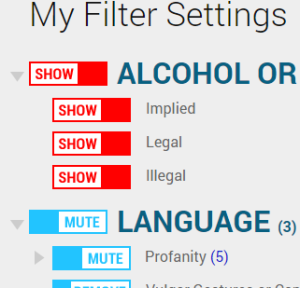
    A few weeks ago I downloaded an app that allows users to view movies with filters set. Cutting out nudity, language, suggestive themes, violence, all at your discretion, VidAngel turns some of the most “raunchy” movies into near family friendly entertainment. The problem is that, under current copyright laws, their methods are illegal.

    A recent ruling by a California federal judge has ordered VidAngel to stop their service immediately. The ruling states that the service provides content illegally and that their claim that they’re allowing users to “purchase” the film only applies to a physical copy of the DVD. That means they don’t have the right to stream a filtered copy (illegally copied according to the claims of Fox and Warner Bros) to their app’s users.

    “Subscribers view a stream from a master copy stored on a server, not a DVD temporarily “owned” by the user. Furthermore, lawful ownership of a DVD only conveys authorization to view the DVD, not decrypt it for the purpose of viewing it on an alternative platform. Therefore, VidAngel’s customers are not lawful “owners of possessors” of the digital content that is streamed via VidAngel’s service”. – US District Judge Andre Birotte Jr.

    The company claims that their service is using a loophole to remain legal. Subscribers “buy” a movie for $20, set their desired filters and view the film within 24 hours, and then “sell” it back for $19, resulting in a $1 rental of a filtered hollywood blockbuster. The US District Court in California has said this isn’t legal and their loophole isn’t valid. This doesn’t mean viewers are breaking the law, but it does mean that VidAngel is dangerously close to having to close down its service. In fact, they’ve already been asked to do just that, but they aren’t backing down.

    “We will aggressively pursue an appeal and take this case to a higher level where we have always believed we will ultimately prevail. – CEO Neal Harmon (VidAngel)

    VidAngel has not shut down their service as requested. They are trying to fight the legal battle and keep their service going. They have even raised millions from investors and subscribers to help with legal costs of the battle. Warner Brothers and Fox have recently filed to ask the court to find VidAngel in contempt. We will keep an eye on this continuing battle.

    Our Thoughts

    I am an advocate for filtering entertainment as long as it’s customized by the viewer themselves. I’ve always maintained that it’s up to the viewer or parent to decide what is and isn’t “too much” for their family’s standards. That said, I also believe in the right of a director, producer, and studio to protect their property. Streaming services such as Netflix and HULU pay for the rights to stream movie and TV content to their subscribers. This keeps the income flowing to the studios who produce these movies and allows quality content to be accessed by the users of the services. The problem comes when filtering is mentioned. Most studios and filmmakers don’t want their movies altered in any way. They even try, in this lawsuit, to make the case that VidAngel’s filtering isn’t legal. The judge ruled that allowing users to filter out unwanted content isn’t the same as adding material that changes the film altogether. That’s a win for VidAngel but it’s unlikely that permission to stream filtered movies will ever be given by movie studios and major motion picture companies. It’s just too close to breaking their creative rules.

    I don’t think VidAngel will be allowed to continue unless the laws are changed to make it possible. As these laws seem to be stated now, VidAngel isn’t handling copyrights properly and are misinterpreting a loophole to try to justify it. I will uninstall the app and not rent movies from VidAngel for the same reason I don’t watch live sports streamed illegally online and don’t download software illegally. It makes me feel icky knowing that it even though it may not be technically illegal it isn’t technically legal either.