Tag: internet safety

  • Internet Safety Training in Your Home

    Internet Safety Training in Your Home

    I approached the mother of a family we have been friends with for a while and asked if she would be willing to host one of our first Digital Boundaries Workshops. She immediately began to tear up and say absolutely yes. I was thrilled but concerned and confused by her tears. She confessed that, while we had discussed setting up internet safety solutions in her home nearly a year earlier, we had never made the scheduling work and she felt horrible. Especially because her son, who was in third grade, had just been caught searching for information on some very adult topics online. A younger child on the school bus had told him what he should search for and curiosity immediately took over. “We need to do something as soon as possible.” she said, “I wish we hadn’t waited, I hope it’s not too late.” We did a workshop for her just a couple weeks later.

    This response is all too common. Our work for families gets far more attention from parents who’ve been through some kind of related struggle than those who want to set up preventative measures to keep their family from such a story becoming their reality. Our children are being called digital natives by psychologists. This is a label that identifies them as a generation that’s so used to technology, it’s like it’s their native tongue. If you’ve spent any time with a young child or teen you’ve probably been impressed with their ability to maneuver digital devices. It’s hard for parents to keep up. It’s even harder if you’re an older parent or a grandparent who feels left behind by the online world. My “Setting Digital Boundaries” living room workshop is an easy way to get some training that will set you on the path towards understanding the digital world your kids are growing up in. Starting next month (August 2017) these workshops will be available both live and through skype.
    What Happens at a Workshop?

    I jokingly tell people that our Setting Digital Boundaries Workshop is like a Mary Kay party. You invite your friends over and serve up some snacks. After everyone has had some time to arrive and say hello we begin the presentation. Instead of selling you make up I’ll be teaching you and your friends how to protect your children online. After updating you on some of the latest dangers and threats available to your kids online I teach you our internet safety plan that I call S.A.F.E. (Setup Accountability Filtering and Education)
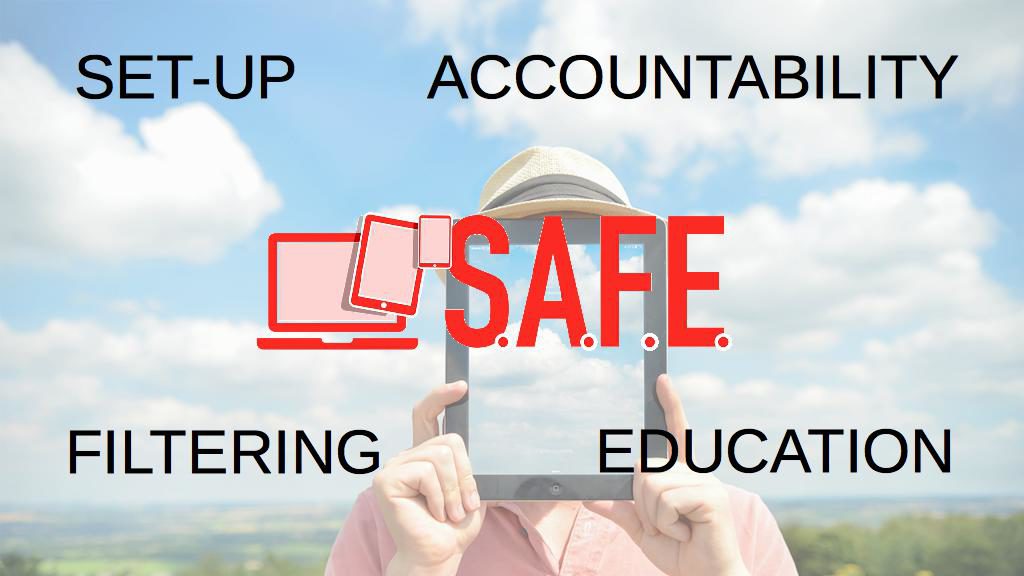
     

    Each section of this presentation will be spent unpacking the four keys of our S.A.F.E. plan all the while highlighting some of the best resources you can use to protect your family. Each section ends with a time for questions. The sessions last anywhere from 40 to 60 minutes and afterward, I always stay available to answer more questions and give feedback on some of yours and your friends’ tech safety needs.

    These workshops are so valuable because of how quickly the internet safety atmosphere changes. Our book is helpful for getting you started and teaching you some of the terms that you need to understand to protect your kids online. A book, however, can’t give you step by step help with your internet safety goals. A blog post or YouTube video can’t listen to your specific internet safety needs and diagnose the best plan for protecting your family. That’s what makes Setting Digital Boundaries Workshops so critical.

    Email Us to book a workshop and go to BecauseFamily.org to learn more about what we teach and how you can partner with us financially to help us keep these workshops free.


  • Five Internet Safety Mistakes Parents Make

    Five Internet Safety Mistakes Parents Make

    I spend most days trying to help parents make and implement an internet safety plan. Too often I run into hurdles that I have to jump over in order to help them out. Here are five of the most common mistakes that get in the way of parents’ internet safety strategy.

    1. Secrecy

    Parents of older kids want to give their kids freedom on their devices but keep an eye on them at the same time. I’m often asked how to do that without the kids knowing mom and dad are watching. My answer is usually, “don’t do that.” The goal is building trust and a better understanding of responsible technology use and internet accountability. Sneaking around and spying on your kid, while it may seem like a good way to see what they’re actually in to, is an even better way to ensure they won’t ever come to you when they need to talk to someone about what they’ve seen or experienced online. Obviously, if they know you’re watching and you approach them about something you didn’t approve of then they’ll know it’s coming and will be ready to have that discussion. If you have to talk with them about something you caught them doing while you were sneaking around they’ll see that as a breach of trust and you’ll find yourself with a much harder road to travel from then on. The best thing about transparency is that your kids are more likely to make better decisions when they know they’ll be held accountable for those decisions. Telling them you’re watching them can lead to better responsibility.

    2. Giving Up

    Setting digital boundaries is not easy. There will be arguments, sneaky kids, tutorial videos, and lots and lots of research. The key is to never give up. Things change fast and it truly is difficult to keep up. You have to find the resources that you trust that can help you stay informed. You should find the people you know can help you set your boundaries up to fit your needs. You have to keep reading up on what’s going on in the digital world your kids live in. If you give up you will get left behind and that means you’re not keeping your children safe.

    3. Sharing Passwords

    As obvious as this may seem, I have to say it. You must resist the temptation to reveal passwords to your kids. What happens is that kids (especially the younger ones) get tired of what they’re doing very quickly. When they are playing a game and you have it set with guided access or something like it that won’t allow them to back out of the app you will have to be the one who has to switch apps for them. Unless you just tell them the password. More convenient? Maybe. Safe? Absolutely not! There is honestly no reason at all to have any kind of boundaries set up if you are easily urged to hand over the passwords to the tools you use to establish those boundaries. Passwords are meant to keep the parental controls within the controls of the parents. Again, seems obvious, but you would be shocked at how many people have to be reminded of this truth.

    4. Not Starting

    The hardest step to take in protected your family online is the first one. Creating your internet safety plan begins with assessing the current situation in your home. That can be overwhelming at best, and extremely discouraging at worst. Some families don’t even know how many devices are in their home or who they all belong to. I worked with a family once that was shocked when their kids kept bringing phones down out of their rooms over and over again. Come to find out, their friends would give them their old phones and they’d use them on wifi when they were grounded from their own. Yes, it is discouraging but it is absolutely necessary. You need to have a plan and you must have conversations with your kids about that plan. You can’t do anything, though, if you never start. Begin today! Email me if you’d like. I will help you get started.

    5. Never Updating Software

    I covered this in a recent post but I have to reiterate because its one of the most common mistakes I see parents make. If your accountability software, filter, or devices are not updated regularly then they aren’t as secure as you’re needing them to be. If you pay monthly for these apps and software then you aren’t getting what you’re paying for, you’re only getting part of it. Updating the software when you see the notification is critical for keeping your internet safety tools in full working order. Filters use updates to load the latest information that lets the filter know what sites should be blocked and what shouldn’t, other apps like accountability software use the updates to keep their “red-flagged sites” lists up to par with what’s out there. If you aren’t updating you are eliminating an entire piece of your digital boundaries puzzle.

    Don’t let yourself fall victim to any of these blunders of internet safety planning. Read all you can on this site and subscribe to our mailing list so you see the latest news. Keep track of internet safety news with other blogs and websites as well. Keep your software updated, talk to your kids about your plan, and for the love of facepalm emojis, get started as soon as you can.

  • Just Be Nice!

    Just Be Nice!

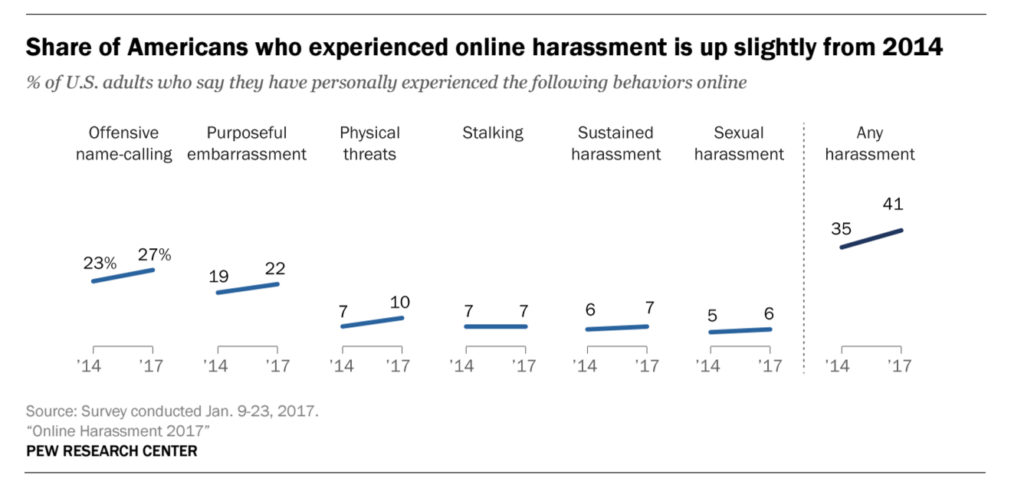
    A new study by the pew research center has highlighted that online harassment and bullying isn’t isolated to kids and teens. It seems that adults have become more comfortable with speaking their mind online even if what’s on their mind isn’t very nice. The study shows 27 percent of adults admit to being called “names” on social media and as many as 41 percent say they’ve been harassed in some way. This was up from 23% being called names and 35% being harassed in 2014.

    Obviously social media was the most popular platform that people reported seeing harassment. Men were the most harassed except for sexual harassment cases, more women admitted to being victims of unwanted sexual content including images sent over messaging. You can see more of the results in the chart below.

    What Parents Should Know

    How can we expect our kids and teens to stop or report bullying if we are participating as well? What example are we showing our kids when we profane someone because they disagree with something we said or shared online? Just because we aren’t face to face doesn’t mean the words don’t have an effect. These are things we should be teaching our kids but we obviously need to heed these warning ourselves.

    We’ve all heard the old adage, “If you can’t say anything nice, don’t say anything at all.” Apparently we have forgotten that what we say online still has consequences. This is the exact message that I have shared with teenagers and kids all over the country and I can guarantee I’ll be sharing the same message with adults now as well.

  • Snapchat Update Adds New Effects and Sharable Links

    Snapchat Update Adds New Effects and Sharable Links

    Snapchat’s latest update will give the camera background effects and allow you to change your voice without using one of their filters. The other major feature is the ability to share links and open them within Snapchat’s very own browser. While you can’t type a url into the address bar at the top of the browser you can click around online and end up at any website you’d like. That’s right, that means your kids can now browse the internet within Snapchat. This has always been possible in other social media apps like Twitter, Instagram, and Facebook but now Snapchat will allow users to tap right on a picture and open a link without leaving the app.

    What Parents Should Know

    If the Discover Page, disappearing photos, private video chat, and SnapMap isn’t enough to put this on your uninstall list, perhaps the ability to access the entire internet without leaving the app will help you pull the trigger. Yes, this feature is available in other social media apps but when you factor in all of the other features that can be a detriment to your internet safety plan it puts Snapchat at the top of my uninstall list.

  • New Filters, Reactions, and Screenshot Controls in FB Messenger

    New Filters, Reactions, and Screenshot Controls in FB Messenger

    Facebook is updating their camera in Messenger so you can have some new AR filters while video chatting. The first is Filters which will add color schemes and other effects to your video feed. Reactions will allow you to use the like/love/emoji reactions you can use on FB posts to enhance your live video chat experience. Finally the screenshot button will let you take a still image of your chat with a simple tap of the screen instead of having to fumble around with the hardware buttons on your phone.

    Obviously Facebook is doing its best to separate itself from the rest of the video chatting market. These new features make Facebook live video chatting more interesting than Skype or FaceTime and definitely go a long way to compete against Snapchat’s offerings. What will this all mean for our families? Well, the main thing to remember is that your kids should only be chatting with people they know.

    What Parents Should Know

    It’s important that your kids understand the dangers of video chatting with anyone they don’t know. Messenger uses your friends list to populate your contacts so, in theory, your kids should only be chatting with friends. These augmented reality filters and reactions will add to the reasons to want to upgrade a text messaging session to video chat so if you’re against video chatting by principle then you’ll want to keep them off of FB Messenger. I recommend keeping an eye on who your kids have been messaging no matter what platform they use or if it’s by text, images, or videos. You can do this a number of ways but none is better than having their passwords and checking in on their account regularly. As always I recommend you have a conversation with your children about what they are and aren’t allowed to do on messenger and why. Let them know you’re keeping an eye on things and don’t sneak around. You want your kids on your team.

    Want to get exclusive content and support our work to keep you more informed about your kid’s digital culture? You can partner with us at Patreon.com/BecauseFamily.

  • PODCAST: Is My Kid Safe on Tumblr?

    PODCAST: Is My Kid Safe on Tumblr?

    FAMILY TECH WEEKLY: Tumblr “safe mode” is a joke, Musical.ly is bringing original show content, and you can now hide images in Instagram.

    Social Media Links

    Facebook: http://facebook.com/4pointfamilies
    Instagram: http://instagram.com/becausefamily
    Twitter: http://twitter.com/becausefamily

    Newsletter Signup

    Ministry Updates:: http://eepurl.com/R7Btr
    Weekly Blog Posts:: http://eepurl.com/cvnhXD

    Websites

    Ministry Site:: http://becausefamily.org
    Tech Blog:: https://safe.becausefamily.org
    Michael’s Speaking Info:: http://kmichaelprince.org

    Donate and Affiliate Links

    http://patreon.com/becausefamily
    http://BecauseFamily.org/partnership

    Music by Kevin MacLeod at http://Incompetech.com

  • Diagnosing Your Tech Safety Needs with 3 Questions

    Diagnosing Your Tech Safety Needs with 3 Questions

    After I do a workshop and unpack the many threats and resources related to internet safety I am met with several different responses. One of the most common is the overwhelmed parent who wants to do something to help their kids be safe but doesn’t know where to start. These are the parents that I try to set up a consultation with to diagnose their internet safety needs. Here are the three questions I ask to help them make a plan and what their answers tell me.

    Question 1: How many devices are in your home?

    First of all I need to know how many phones, tablets, computers, game systems, smart TVs, and such you have floating around your house. I get all kinds of answers to this question and they all require a different approach. The main thing I need to know is who uses what devices and if everyone has their own. If everyone is using their own then something like Circle is a good idea because you can give each family member a profile and assign their devices to their account, thus, applying restrictions to each device depending on who uses it. If there are shared deices in the home it changes things. This requires you to use something like net-nanny or an accountability software like Accountable2You so that you can either have different accounts per device (on computers) or have an overall scan to catch and report any unsavory activity. This allows you to approach each situation and correct what’s allowing inappropriate content to get through. Try taking an inventory of all the electronic devices that are in your home. This will help you have a better understanding of your internet safety needs and what solutions will work best.

    Question 2: What are your devices mostly used for?

    You’ll need different options for devices that are used for research than for entertainment only. If your child likes to wander around on YouTube then you’ll want to set up the safe-search settings and install something that can keep some of the more mature content away from them. If they’re searching Google for school or other projects then you’ll have to be sure your internet filter and accountability software are strong. Smaller children can be protected by settings or apps that lock them out of other apps and browsers while your older kids can be trained by time limits, bed times, and wifi pausing features. The purpose of the device will go a long way to define the settings you’ll need to lock them down in the best, most helpful way.

    Question 3: Who are you protecting?

    The gender, age, and previous behavior of your kids are important for determining how you should protect your kids online. Older kids need to be protected from things they may seek out while younger kids usually happen upon inappropriate content on accident. Girls (often boys as well) should be monitored on social media, boys are especially prone to constant video gaming, and any child who’s been caught doing something unsavory in the past should have more strict boundaries set up for them. Knowing who you’re protecting is just as important as knowing what devices you have and what they’re used for.

    It’s Time to Evaluate!

    So now it’s up to you to start asking yourself these questions. Maybe sit down with your family and discuss the questions together. Talk with them about what healthy boundaries would look like in your home and task some of your older kids with seeking out some internet safety solutions. Work together to find the filters, accountability software, time management apps, and devices that are right for your family. Building this plan as a team will help you find keep the plan in place as you have all contributed to the strategy equally. As always, please send us an email or comment on this post if we can help you with your plan in any way.

  • YouTube’s Restricted Mode to Allow Non-Graphic LGBTQ Content

    YouTube’s Restricted Mode to Allow Non-Graphic LGBTQ Content

    Restricted Mode Guidelines for YouTube have been updated to allow for content from the LGBTQ community as long as it doesn’t contain content deemed graphic. YouTube restated their firm support for those in the LGBTQ community and apologized for content from that community being blocked by their previous restriction guidelines. The update has specifically unblocked over 12 million videos that were previously blocked by the restrictions for some reason. The statement says that the goal was never to keep the voices of those in the LGBTQ community silent but only to provide an option to institutions that would prefer to keep the “adult” side of YouTube off their screens.

    Restricted Mode was originally designed as an optional feature for public institutions like libraries and schools to prevent the viewing of mature content on YouTube. But in looking more closely at the feature, we found that there was LGBTQ (and other) content that should have been included in Restricted Mode but was not, like kissing at weddings, personal accounts of difficult events, and speaking out against discrimination. – YouTube Creator Blog

    You can read YouTube’s full statement here. 

    What Parents Should Know

    These different guidelines have taken effect immediately and some previously blocked content will already be available. Parents should know what their kids are watching. This is the only way to uphold the values you have decided your family should live by. YouTube and other companies have an obligation to provide content for every member of their audience. It is not their obligation to keep any message from your child’s ears and mind. Depending on your stance, you should be the one making the decisions for what your children are allowed to watch, whether you use monitoring software or keep your eyes on the content with them.

  • Post Father’s Day Challenge for All of You Dads

    Post Father’s Day Challenge for All of You Dads

    I had some deep thoughts during Father’s Day yesterday. As always they concerned my work with families and internet safety and so I posted the following status on Facebook. I want to make it available to our blog readers here too. Moms, please share this with the fathers of your children; dads, please be challenged and let me know what steps you’ve taken to protect your kids online.  

    From Facebook on Father’s Day, Sunday, June 18, 2017.

    It’s Father’s Day and I’m thinking about some of the greatest opposition I face in our work to help parents protect their children online. You would think that kids would hate me. I’m the guy that comes in and sets up restrictions on their phones and computers. They’re not the ones giving me the stank eye, though, it’s the dads.

    Too often, the worst critic of my attempt to block pornography from the family computer or phones is the father. “Well, is this going to block dumb stuff?” “Is YouTube going to be useless now?” I am constantly hearing concern that in my attempt to protect their children from cyber bullying, adult content, porn, or sexting I’ll inconvenience dad in some way.

    Please understand that there have been many dads who were totally onboard and even some who have admitted to wanting better accountability for themselves but those dads aren’t the norm. I hear moms who are exasperated, sometimes to tears, because they want to keep their kids safe while dad is calling it “no big deal.” Again, the father too often seems to be more concerned about facing limitations of his own than the digital health and boundaries he’s setting for his family.

    Step up dads. If your kids need accountability then so do you. You should have it installed on your devices first. You should set the filters more strict than necessary and tell your kids that it’s annoying sometimes but it’s worth it because the alternative is something you don’t want to face. I wish I got more emails or calls from dads (I’ve had some) that are desperate to set boundaries for their kids’ internet use. I pray that it will change. Dads, we MUST be the example of the change we want to see. Call me. Let’s get your family a gift this father’s day. The gift of your commitment to higher standards while online.

    If you need help. Let me know EMAIL ME or contact me on Facebook or Instagram. I’d love to give you a hand.

  • How YOU Can Keep the FamilyTechBlog Alive

    How YOU Can Keep the FamilyTechBlog Alive

    We are not at risk of shutting down. We do, however, have hopes of becoming more and more affective in reaching families with the latest internet safety and family tech news. We are writing several articles a week and producing podcasts, tutorial videos, and other resources for you to use as tools to keep your family safe online. Offline we also reach out to schools, police departments, churches, and other organizations with internet safety workshops. We often don’t charge for these workshops because the groups we are working with wouldn’t be able to have us in if we did. This means our greatest resource is you, our reader/viewer/listener.

    There are several ways to support this blog. The easiest and most helpful to you is to use one of our affiliates. Accountable2You is a great accountability software resource, NetNanny is a filter that we recommend, and MobiCip is another, affordable, filtering and reporting option. Another way to help us out while helping yourself is to buy our book, “What’s in Your Pocket? A parent’s guide to protecting your children online.” The book is only $10.50 from this site and we’ll ship it the day you order it. It’ll really help us out while giving you the confidence and knowledge you need to protect your kids online. Finally, you can partner with us directly through a couple of ways, fist of all is Patreon. Patreon.com/becausefamily is where you can sign up to support our blog and podcast and be listed as a partner in the credits of our video and audio resources. You can also donate a special gift using Square or Paypal. Sharing our articles is also a wonderful way to show your support. Help us spread the word.

    Our vision is to reach as many families as we can with informative and relevant information to keep them up to date on the digital world their kids are growing up in. This blog and the podcast is and always will be free to the reader and listener but it isn’t free to produce. Your gift and the use of our affiliate links keep us writing and recording so that you and the parents you know can have more tools that you can use to keep your families safe.

    Thanks for your partnership and for putting up with this plea for support…now to your regularly scheduled tech safety information.