Tag: alexa

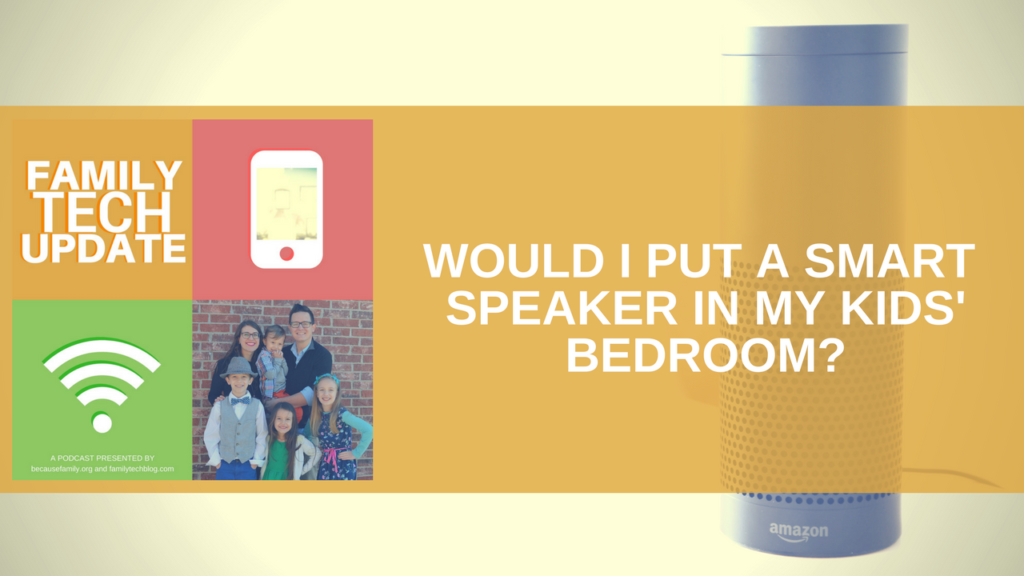
  • PODCAST: Will My Family Get an Amazon Echo Dot for Kids?

    PODCAST: Will My Family Get an Amazon Echo Dot for Kids?

    Family Tech Update: YouTube has taken down over 8 million videos, is it enough? Snapchat has games on their camera, and Amazon wants to listen to your kids.

    Screen-Free Week Hashtag: #BFScreenFree


    Social Media Links

    Facebook: http://facebook.com/becausefamily

    Instagram: http://instagram.com/becausefamily

    Twitter: http://twitter.com/becausefamily

    Newsletter Sign up

    Ministry Updates:: http://eepurl.com/R7Btr

    Weekly Blog Posts:: http://eepurl.com/cvnhXD

    Websites

    Ministry Site:: http://becausefamily.org

    Tech Blog:: https://safe.becausefamily.org

    Michael’s Speaking Info:: http://kmichaelprince.org

    Donate and Affiliate Links http://BecauseFamily.org/partnership

    Music by Kevin MacLeod at http://Incompetech.com

  • Amazon Echo Dot For Kids Released on the Same Day an Alexa Security Flaw Was Announced

    Amazon Echo Dot For Kids Released on the Same Day an Alexa Security Flaw Was Announced

    Voice is the new screen. That’s what all the tech gurus are saying these days. We’re moving beyond tapping to simply speaking. “OK, Google,” “Alexa,” even “Cortana” have become standard parts of our vocabulary. Even our kids know how to play music, stories, or get help with their math or spelling from a voice-activated assistant of some kind. Voice command started with Siri and quickly became a standard feature in all smartphones and even in some of our vehicles. What seemed like science fiction only 15 years ago is now a common tool for most of our culture.

    We are all hyper-aware, now, of the amount of information tech companies are gathering from our internet use. Since we carry fully connected devices around with us everywhere we go and use them to broadcast our daily routine on social media, there isn’t much that is hidden. Recently, though, we’ve become a bit cautious of how much of our data we share with these companies. It’s one thing to let Google know we like seeing ads on YouTube for our favorite movie genre, but tracking our location and schedule is a bit far.

    A test by security group, Checkmarx, found a security flaw that allowed them to design an app that would leave the Alexa microphone on long after you’ve finished using Alexa. Then, the app would send the hacker a transcript of what the mic picked up while you didn’t know it was turned on. Checkmarx found this flaw earlier this month and reported it to Amazon. It was corrected immediately.

    “Customer trust is important to us and we take security and privacy seriously,” the company said in a statement. “We have put mitigations in place for detecting this type of skill behavior and reject or suppress those skills when we do.” – Amit Ashbel, director of product marketing for Checkmarx

    This obvious flaw is the first of its kind that has been made public. There is no way to know how long it has been around or if it has been used by anyone to collect user data. Amazon was fast to fix the issue but only after a third party research group found the problem in the first place. There are always security risks with any smart-home or virtual device and having a microphone that is always on compounds that risks. The popularity of Alexa and Google home is ever increasing, though, despite these risks. With the outcry against Facebook for their data collection and usage, it seems interesting to me that these fully connected, in-home virtual assistants are becoming so common. So common, in fact, that they’re being designed for our kids.


    Enter, the Echo Dot for Kids
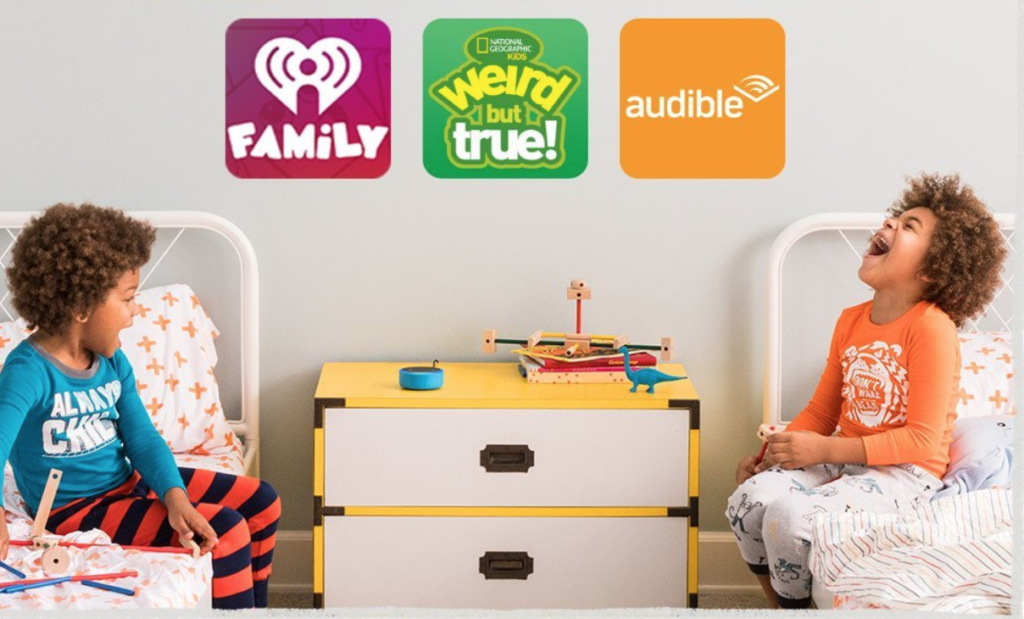

    The news of this breach was released today, and interestingly, so was Amazon’s new Echo Dot for Kids. The Alexa enabled personal assistant speaker comes with a protective case, a replacement warranty (for the inevitable drop on the hardwood floor), a year’s worth of Amazon Freetime, built-in parental controls, and a bunch of skills (apps) that are geared towards kids. The Dot will read to your kids, help them with homework, play kid-friendly Audible audiobooks and more. The Echo Dot for Kids is $79.99 on Amazon.com.

    What Parents Should Know

    Being able to lock your kids out of explicit music and audiobooks, disabling entertainment features in favor of educational skills, turning off voice purchasing, and other parental control options make the Dot for Kids a pretty appealing piece of technology. I am, however, very skeptical of putting a marketing company’s microphone in my kids’ rooms. I know that doesn’t sound like the opinion of a tech nerd but my distaste for targeted marketing to minors and collection of the data of children will always outweigh the desire to be in with what’s trendy in technology.

    Though the Alexa security flaw has been resolved, I wonder how long it will be until another workaround is discovered? I bet it’ll be pretty soon. Here’s why: Amazon is trying to strike a balance between a way to gather the most information about your family as possible and still make you feel that your information is secure. There will always be functionalities in their systems that allow them to gather just that little bit more than you know they’re collecting. When a security company (at best) or hackers (at worst) find these functionalities, they exploit them to meet their own needs. Sometimes the need is to sell the workaround info to the company to keep it all quiet and sometimes it’s worse, the collection of data for sale or use. We all seem to be ok with Amazon or Facebook or Google having a bunch of our private data. After all, it is often used to make our lives easier and more convenient. The problem comes when something like the Cambridge Analytica fiasco takes place and we have our information being sold to the highest bidder or used to target us with fake news and advertising.

    Unfortunately, as long as we have devices that take in our likes, dislikes, conversations, and habits, we will have companies using that information to further strengthen their bottom line. All I am saying is that, as families, we have to draw our own line. My line is drawn pretty strictly against voice-activated assistants in our home, especially ones designed to be used by my kids. Your line will be somewhere different than mine but I advise you to be knowledgeable about any tech you bring into your home. If you aren’t sure what something does or how it really works, I wouldn’t buy it or use it in the first place. I know that sounds a bit counter-cultural, but the culture seems pretty ok with giving away all of their personal information and then panicking when they find out it’s being misused. I don’t blame companies for that, I blame people. Facebook fooled us once, perhaps shame on them, if you’re fooled again, shame on you.


  • CES 2018: Family Tech Product Rollouts and Predictions for 2018 Tech

    CES 2018: Family Tech Product Rollouts and Predictions for 2018 Tech

    My first day at CES 2018 was kind of split into two categories. I spent the first half of my time at a press conference and a market research report. This may not sound fun to you but this information is why I’m here. There’s lots of information being shared and learned here that can benefit parents as we work to raise healthy kids in this digital culture. Along with a couple of videos, I wanted to present a simple list that will show you a little bit of what I learned here at CES on media day one.

    Day One Takeaways

    • Augmented Reality and Virtual Reality are being used for diagnosis and treatment by doctors and other healthcare providers.
    • Voice Controlled speakers were the name of the tech industry game in 2017 with a 279% increase in purchases with another 60% of growth expected in 2018.
    • 715 million connected devices are expected to be sold in 2018 to the tune of $351 billion.
    • Augmented reality will be making its way into our everyday lives with uses like shopping, gaming, and health tech.
    • Companion robots are bursting onto the scene. Used as a “family companion,” photos and video, security, speaker, entertainment, and even sleep and home health management.
    • People are more aware of how artificial intelligence (how websites and connected devices collect our data) works and getting acclimated to using it.
    • Virtual reality is becoming a real tool for the fitness and home gym industry.

    Family Tech Product Releases

    • Alexa ready baby monitor. By Project Nursery (More in videos)
    • In device augmented and virtual reality toy gun with 6 depths of field. By MERGEVR (More in videos.)
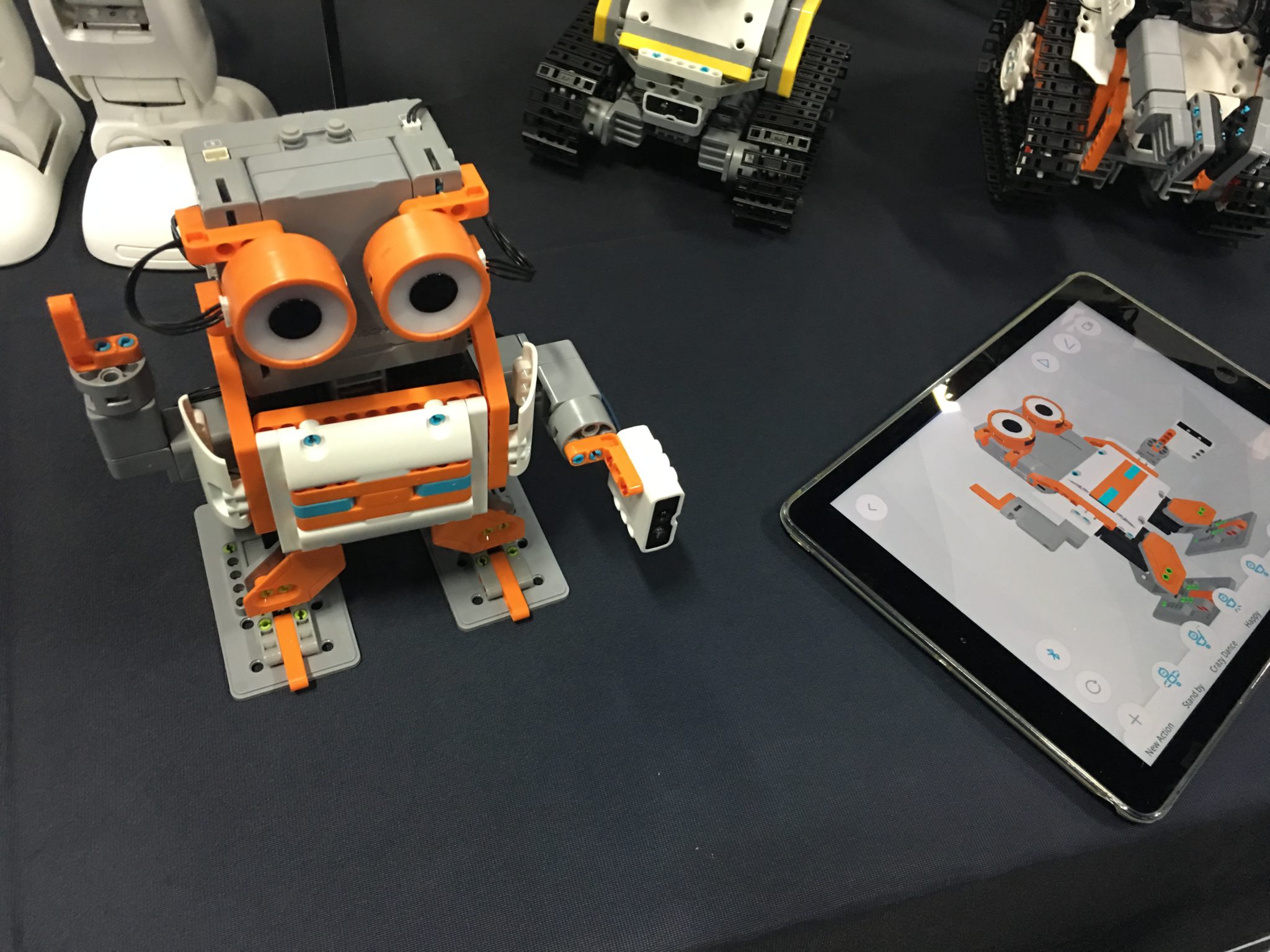
    • Jimu build and code robot. (Also in video)

    Final Thoughts

    Technology is continuing to move forward faster tthanwe can imagine. The biggest talk at this year’s CES is about voice command technology like Alexa and Google home, self-driving cars, and augmented reality content. As parents, our we should understand that our kids are going to be some of the first adopters of much of this technology and so it is important that we understand it. Kids aren’t watching content just on their televisions anymore, they aren’t having to type search terms into Google, and they are always always connected. That is what was said at day one the most, we are moving from the digital age to the connected age. You’re connected, your kids are connected, and so is everyone else so be sure to stay in the loop so that you can keep every connection safer.

    Stay tuned tomorrow for my report on day 2 of CES Media Days where I’ll talk about teen market research and more about the future of connectivity. Share this article with your friends and let them know that you’re keeping track of the latest tech trends by following FamilyTechBlog.com’s reporting on CES2018.


  • The Risks of a Fully Connected Home Part 3

    The Risks of a Fully Connected Home Part 3

    Security and advertising are the most obvious concerns when it comes to connecting your appliances and devices via smarthome technology. We must take precautions to protect our identity and our privacy. We should also be careful in our new wifi connected homes with the content that can come across these connections. In this final part of our Connected Home series we’ll talk about the content available on our smarthome devices and what we can do to filter that content.

    Unsupervised Content

    After a recent Setting Digital Boundaries workshop a  mother asked me what I knew about the parental controls on Amazon Echo. I hadn’t ever set one up and hadn’t really looked into them so I didn’t have many answers for her at the time. She told me why she had asked: her daughter likes to ask Echo to play songs that she likes but she’s young and her words don’t always come out sounding like they should. This causes the Echo to mis-hear what is said and the devices has, more than once, played a song that is not from any playlist they’ve set up and is not at all appropriate for a young toddler. With the increasing popularity of the Amazon Alexa and Google Home parental controls are becoming a major topic on tech forums and blogs. The reason it’s such a major part of the discussion is because there aren’t (yet) any real parental controls.

    On the Amazon products you can set a pin to make purchases. This will keep your child from making an order and you being shocked to find a two hundred dollar doll house at your door. That’s about it, though. There aren’t any music or video rating limits that you can set. There aren’t any separate voice commands that will let Alexa know the child is in the room. So far, there isn’t much. Google only has the filter settings you’ve given YouTube to protect from inappropriate content. These filters are strictly for video content though and won’t block explicit lyrics.

    It’s likely that more effective parental controls will become a reality on these popular products sooner rather than later but until then you should take precautions to keep your children from encountering more of the internet then you’re ready for them to connect to. 

    What Parents Should Know

    My advice is to hold off on extensive use of Alexa, Echo, or Google Home until real parental control options are made available. If you have already been using these devices or you’ve decided you can’t live without them I recommend setting up what restrictions are available. Protect yourself from surprise purchases with a pin on your Alexa or Echo and set your YouTube filter to protect your children from videos you wouldn’t want them to see. Other apps or web video and audio services that have parental controls may protect your family when connected through your smarthome device as well. Right now this is about all you can do but if you’re going to use these devices then something is better than nothing.

    Should Your Home Be Connected?

    The level of connectivity in your home is obviously a choice your family has to make. There are absolute benefits to having your house connected to a network and working together to make your life easier. The reality, though, is that these conveniences could come at a cost. Some may feel the cost isn’t that high and some may say it’s unfounded fear or foil hat conspiracy theory. My advice is to just stay informed. No matter your decision become a student of the way your connected home works. Reset passwords often, and don’t store your personal data somewhere that is easily accessible through your smart home device network. If you just use common sense and think ahead of the potential risks you may be able to be wired up like it’s the year 2025. Just do it with wisdom.

  • The Risks of a Fully Connected Home Part 2

    The Risks of a Fully Connected Home Part 2

    The Internet of Things has made its way into our homes and we are becoming increasingly used to being tracked and monitored. In this, part two, of our connected home series, we’ll look at advertising and what it means to our privacy, our homes, and our families.

    Advertising

    Our society has become so accustomed to our data being used to advertising that we aren’t even creeped out by the ads on Facebook reflecting our Amazon searches last night. When we get spam email based on what we did online last week, we just hit the delete button and think nothing of it. Individualised targeted advertising is a part of everyday life now and that’s probably not ok. When everything in our home is connected to the network we are feeding data miners with so much advertising fodder that it will become impossible to ignore the onslaught of targeted ads we will recieve. Imagine when your fridge can tell that you’re out of milk, so you get an advertisement for a coupon at Walmart in your email fifteen minutes after you’ve poured the last bit into your cereal. That sounds a bit creepy to me.

    When products like Google Home are “always listening” we have to wonder what some of that innocent conversation data can be worth to advertisers. Currently the policy is to not store any of that information but will the financial bottom line ever outweigh the disapproval of consumers? Is it possible that we will get so used to this targeted advertising that we won’t be phased by it anymore? Imagine standing on your back porch talking to your spouse about wanting to enclose it someday to make a screened in sitting area. What if, the following day, you saw advertisements for builders, finish carpenters, and handymen? Would that freak you out? Right now it may but if we continue to adapt to the “internet of things” we will soon take, even that level of targeted advertising, in stride. It will just become normal, everyday life. Especially for our children.

    What Parents Should Know

    Keep in mind that your children are a multi-billion dollar industry. Every time they play a game online or watch a video, they’re being marketed to. There is no way to avoid some of that marketing but there are ways to be smart about how we allow the corporations that sell us everything we use to come in contact with our children. As mentioned in part one, experts advise that if you are concerned about potential breaches in privacy while using a smarthome or digital personal assistant you should just avoid getting one. If you’re someone who thinks that the conveniences outweigh the potential concerns then take the steps necessary to shield your kids from targeted advertising as much as possible.

    Set parental controls if your devices have them. Make sure your usernames and passwords have been changed from the default ones and that you have read and understand the privacy terms of the product you have purchased. Set any privacy settings that may be available with your children in mind, not just yourself or other adults. Always remember that your child can activate Alexa, Echo, or Google Home as easily as you can. They aren’t equipped with voice recognition (yet) so you must have the safety features set up before you allow your child to use your digital PA. More on those safety settings in part three, tomorrow.