Tag: addiction

  • Pro Sports Teams are Banning Fortnite!

    Pro Sports Teams are Banning Fortnite!

    Professional sports teams are banning Fortnite in their locker rooms citing that it is distracting players. Apparently, players performance is being affected by video gaming. How do video games affect our kids?  Obviously Fortnite is the biggest thing to happen in video games in a very long time. It’s such a big deal for our kids,  teenagers, college students, and junior high and middle schoolers. They’re all playing Fortnite online and with each eachother forcing parents to scratch their heads to about what is so alluring about this game? Why does everyone love it so stinking much?

    It’s not only kids who are getting hooked into this game. News recently came out that the Boston Red Sox are banning Fortnite in their locker room for the 2019 season. The Texas Rangers had to do it. So to the Toronto Blue Jays and even the National Hockey League’s Kanuks have said, “You know what? You guys can’t play Fortnite anymore.” They’ve been saying that it’s causing their players to be distracted and that it’s affecting their performance. One team even says that a player’s gaming has caused him to get carpal tunnel, which has made him sit out some games.

    What Parents Should Know

    Fortnite is the type of game that consumes time very quickly. It is the type of game that you want to talk about even when you’re not playing it. It is very appealing to young people and the ability to play with your friends has kids coming back to it again and again. Unfortunately, this is also something that can make it very addictive. As I’ve covered before, the World Health Organization has said that video game addiction is a diagnosable condition and there are treatment centers opening up all over the country that allow you to come and be treated for video game and screen addiction.

    Video games are not the only issue. Obviously, many of us struggle to stop scrolling social media on our devices or to stop binging Netflix shows. Video games really take the spotlight because of their interactivity.

    I’m covering this story for two reasons. First of all, I want parents to understand that it’s not just your kids that can get hooked into fortnight so easily. These athletes spend a lot of time in high pressure situations and it seems like they’re using these video games to release some of that tension. It also seems like that release of tension should be coming out on the field in order to help them perform better and it that is not what’s happening. Secondly, I wanted to cover this because I wanted you to understand the real true need for parents to be good examples on how much time you should spend on your screens. If our kids see us watching YouTube videos all day long or scrolling Instagram or Facebook non stop then they think that’s a healthy approach to tech use. They don’t see the difference between that and them playing video games? Time limits are critical. We must help our kids understand that gaming is a luxury and screen time is something that we can use to benefit us and help us have that release or escape when necessary, but it can’t become something that distracts us from what we do in normal everyday life.

    Listen to this article as a podcast below:

  • Parents are Sending Kids to Fortnite Rehab

    Parents are Sending Kids to Fortnite Rehab


    There hasn’t been a game that has taken the tween world by storm quite like Fortnite has. Its “freemium” business model and “T for teen” rating has caused it to become a larger hit than any game ever has before. Recently, psychologists are making news because they are beginning to treat more and more kids who are addicted to gaming, namely, Fortnite. An article by Bloomberg quotes behavioral specialist Lorrine Marer:

    “This game is like heroin… Once you are hooked, it’s hard to get unhooked.”

    Game addiction was named an official disorder by the World Health Organization and can be diagnosed with some of the same symptoms of other behavioral disorders. Here’s a list of those symptoms:

    1. Obsession, or constant thoughts of the behavior
    2. Continuation of the behavior despite adverse consequences, risky situations, and poor performance of responsibilities
    3. Compulsive engagement of the behavior or inability to stop despite a desire to quit.
    4. Cessation of the behavior causes irritability, cravings to resume the behavior, restlessness, and depression.
    5. Denial of addiction and issues resulting from the behavior
    6. Concealment of the behavior from family and others close to the addict
    7. Amnesia regarding the behavior
    8. Depression, even when engaging in the behaviors

    Many parents report their children failing classes in school, falling asleep during classes, lying about how much time they’ve spent playing, and throwing toddler type temper tantrums when asked to turn the game off. Many of these behaviors are signs of an addiction and a combination of many of these could mean your child needs expert treatment. Children aren’t the only ones, however, with this problem. Medical and mental health professionals are also documenting cases of adults who have had many of the symptoms of behavioral addiction when it comes to playing video games, and even Fortnite itself.

    Epic Games, the company behind Fortnite, hasn’t said anything about the addictive nature of their game but it is obvious that their business model depends on gamer’s inability to give up the game. Since the game is free, Epic Games can only make money by encouraging gamers to buy items within the game to enhance the look and actions of their characters. This is causing kids to spend their parent’s money, sometimes without mom and dad even realizing what they’ve done.

    What Parents Should Know

    I have counseled several parents about potential addictive gaming behavior by their kids and I believe it’s important to keep the eight key symptoms in mind when looking at your child’s behavior. How are their grades? Do they have an offline social life? What is their reaction when you mention taking a break? If their responses to these conversations aren’t healthy, it might be time to get some help in convincing them they need time off from gaming.

    Games like Fortnite, Minecraft, and Roblox, are what experts call, “lost time” games. This is when players can spend so much time in-game without even realize how many hours they’ve been playing. This is how your son can play twelve hours of fortnite before you realize you haven’t seen him all day. Twelve hours, if you pretty good at the game, is only six to ten Fortnite matches. That’s nothing to your child while they are sitting there playing.

    If you haven’t opened the gaming pandoras box for your child yet, good for you. (My oldest is eleven and we are just now easing him into it.) Prevention is key. It is important to only allow gaming with time limit parameters set. If you can introduce these time limits as they start to get more into gaming that’s great. Sometimes you aren’t that lucky and you have to have the battle to set time limits once it’s already gone too far. My advice, though, is to do what you have to do because your child needs you to help them learn self control and your teenager needs your guidance as they learn time management. Remember to talk to them about it often and use terms like healthy and unhealthy instead of dumb, stupid, or right and wrong. Hopefully your child will never need a professional counselor to help them get over Fortnite. We have enough problems in the world, we don’t need a widespread epidemic of entertainment addiction.

  • Instagram Updates Give You More Control Over Your Feed

    Instagram Updates Give You More Control Over Your Feed

    So many people found themselves migrating their photo sharing to Instagram several years ago because of their chronological timeline. As Facebook became more algorithm based, people felt like they had no control over what they were seeing on their timelines so they opened Instagram accounts. A few years ago Instagram went the way of the algorithm as well trying to give posts you are most interested in a higher priority in your feed. This was met with mixed reactions and now Instagram is working to give you more control.

    external link…

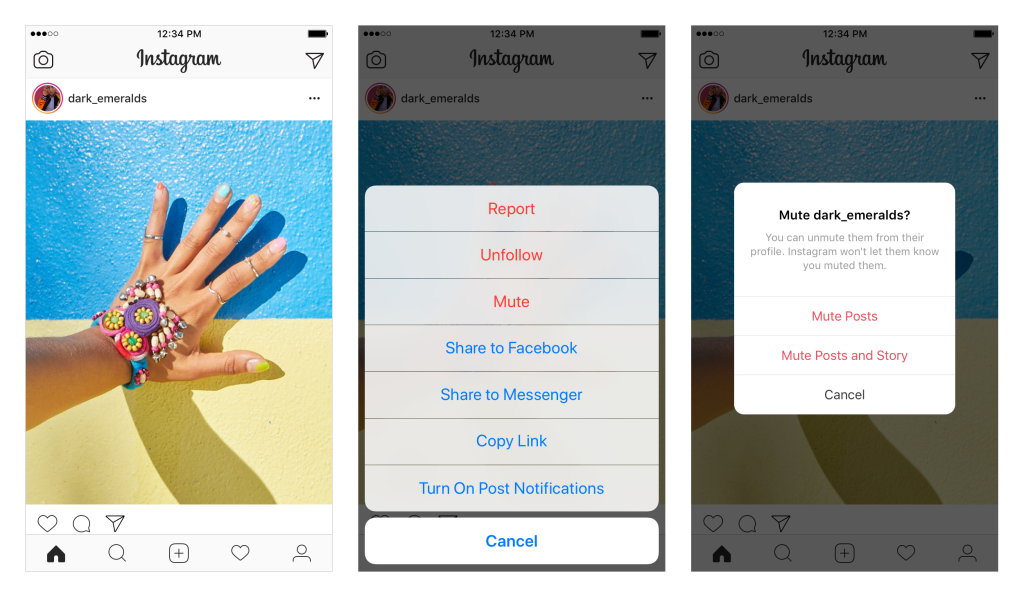
    The first addition, effective now, is the “Mute” feature. This allows you to hide posts from your feed without completely unfollowing them. This could be useful for hiding bullies without letting them see that you’ve unfollowed (which could encourage even more bullying) and just helping the algorithm know your preferences even better. To mute someone simply press the three dots to open the menu on a post. Select Mute in the menu and that’s it, you shouldn’t see posts from that user anymore.

    The second announcement is for updates that haven’t made their way to users yet. Soon, Instagram will include an insights feature that will allow you to see how often and how you use the social media service as well as a notification when you’ve seen all the posts from the previous 48 hours. Instagram and parent company Facebook are hoping that these features will improve the user experience by helping them develop better usage habits. There has been more of a focus recently on improving the “overall well-being” of their users. Some of the recent updates on YouTube, Facebook, Snapchat, and Instagram have been attempts to encourage more engagement within their communities without having to spend as much time using their services.

    What Parents Should Know

    Any changes made to social media sites that encourage breaks from screens are good changes. But nothing will replace a parent setting limits for their children. Remember, also, that there is no better lesson than your own example. Monitor your own screen time and make healthy choices so that you can advise your kids from a place of leadership. Instagram’s new mute feature will help moms and dads keep unwanted posts away from their kids as well as help older kids silence those they don’t longer want to hear from.

    My hope is that as parents we can guide our children into proper use of social media. Statistics are showing that the chance of depression increases the more our children use social media. More depression increases the rate of suicide among young people. In fact, suicide is now the second leading cause of death among teenagers. With these facts in place, even the social media services themselves are taking notice and making changes. Parents, do not allow yourself to be caught in the dark when it comes to your kids and safe use of their technology. While Facebook, Instagram, and Youtube have been making changes, the responsibility does not fall to these companies to protect our children. It falls to us, their parents.

  • Why I Told My 10 Year Old EVERYTHING About Pornography

    Why I Told My 10 Year Old EVERYTHING About Pornography

    Disclaimer: This post is a bit different than usual but it hits to the heart of why this blog exists. Thank you for understanding.

    Yesterday my 10-year-old son asked me what pornography is. Honestly, I thought he knew. I talk about it a lot when I speak and in podcasts and videos. I was surprised at his question but I answered him. I told him what porn is and why we avoid it.

    I told him that it affects your brain like drugs and causes your synapses to stop firing properly. I told him that what you see sticks in your mind and imprints as a template for what you prefer sexually. I explained, also, that the pornography industry is well known for abuse and sex trafficking. I told him EVERYTHING. Even though he’s only 10. Why did I tell him these things?

    First, because he asked. If we don’t take advantage of our kids’ curiosity we miss a chance to help them learn in a way that they’ll never forget. What’s worse is when we say “Ill tell you when you’re older” so they go find another way to learn about it now. Then we find out they googled “porn” or asked a friend about it and we come down on them. We get scared and explode at them and the shame cycle begins.

    I know this cycle well. That’s the second reason I told him the whole truth. I was 10 when my friend’s older brother brought in a VHS tape and said: “You guys HAVE to check this out.” From then on it was years of seeking out scrambled HBO or Cinemax. Sneaking up to the living room late at night to try and find something online to meet the insatiable appetite. Years of shame, of hiding, of never being satisfied. I was getting more broken with every video and every image. My mind was fracturing and I was losing who I was.

    When I was 18 I got busted. A super high phone bill (because that’s how the internet used to work) caused my mom to ask questions and I told her the truth. I told her I couldn’t sleep at night until I had “fed the beast.” That’s what it was like for me. I couldn’t function until that urge was given a release. She took away the computer and I started digging into scripture. I would read a verse and then write eight to ten pages about how it could apply to my life. I would dig into word meanings and unpack the context so I could fully understand what The Word said about who I am. That new habit changed me.

    Fast forward four or so years and now I am married. This is the third reason I am not shy to talk to my kids about sexuality and pornography. I married the most pure and righteous woman I’ve ever met. She had been taught to be pure and guard her heart while I was watching adult videos in secret. We are an incredible match but our intimacy wasn’t a match made in heaven. Imagine the confusion that comes from the two different ideas we had about sex. My mind was still wrecked from the fictional, abusive things I had seen. I had no clue how to respect and honor my wife in our intimacy. It has taken ten years to work all of it out and issues still surprise us every now and then.

    Our society isn’t afraid of sex. The culture your kids live in isn’t waiting for them to “come of age” before teaching them their truth about sexuality. The church isn’t helping. They’re too scared to speak up because people get uncomfortable. I fielded many frustrated parents when we, as a youth ministry, would try and teach healthy attitudes about relationships and sexuality. Moms and Dads HAVE to educate their kids and let them know how to understand purity, not as the absence of desire or sex, not as a discomfort with their body and what it needs, but as a healthy knowledge of why God created sex and in what context it can contribute to the overall wholeness of who you are and the relationship you have with your spouse.

    Share this to spread the word and if you feel the need to discuss this more, feel free to comment or send me an email. Let’s get this thing right. Let’s raise children who are less broken than we were.

  • Tumblr App Installs “Adult Content On Switch”

    Tumblr App Installs “Adult Content On Switch”

    Tumblr has lost some traction over recent years. It’s not so much a social media platform as a blog host and not really even that. It’s more used for GIF (animated images) posting than anything nowadays. Apple has always had a pretty strict standard on adult content in the apps in their app store. They require developers to have adult content disabled by default. This usually means that image searches on your browser should be without any blatant pornography unless your search is specifically for that. Tumblr has updated their iOS app with a workaround for this rule. There is now a switch that will allow users to turn adult content back on in Tumblr. It’s actually a “safesearch switch” and it’s set to on by default, thus following the rules set up by Apple. All it takes, however, is for someone to go to the settings page of the app and turn the safesearch option off. This will unleash the cacophony of adult content that is available on Tumblr (many say that pornographic images and gifs have become it’s main purpose) on the user.

    What Parents Should Know

    The Tumblr app is basically a browser in which anyone with an account can see any of the user generated blog content posted on the site. As mentioned above, the app has become inundated with adult content and is not safe for anyone you’d like to keep from those sort of images or videos. The safe search switch isn’t located in the restrictions settings on your iPhone. It is just in the settings for the app. This means safesearch changes can be made without a password. This app is an easy way for your child who has been looking at inappropriate images or videos to access more of that. Now that the safesearch can be turned off, you’ll want to add this app to the uninstall list.

    Our children can be greatly harmed by pornography. Studies are showing it’s addictive nature and the ability it has to alter a person’s sexuality and preferences, creating what they call an “arousal template.” This causes kids to be attracted only what they’ve seen online and can create serious problems for them in the future. They also say that kids who view pornography are six times more likely to force others into sexual behavior. Many in our culture view online adult content as only entertainment but it’s being proven that it’s detrimental to the mental health of our kids. If there is anything you can do to protect your children from adult online content, you must take steps to do so. Uninstalling Tumblr just became one of those steps.