
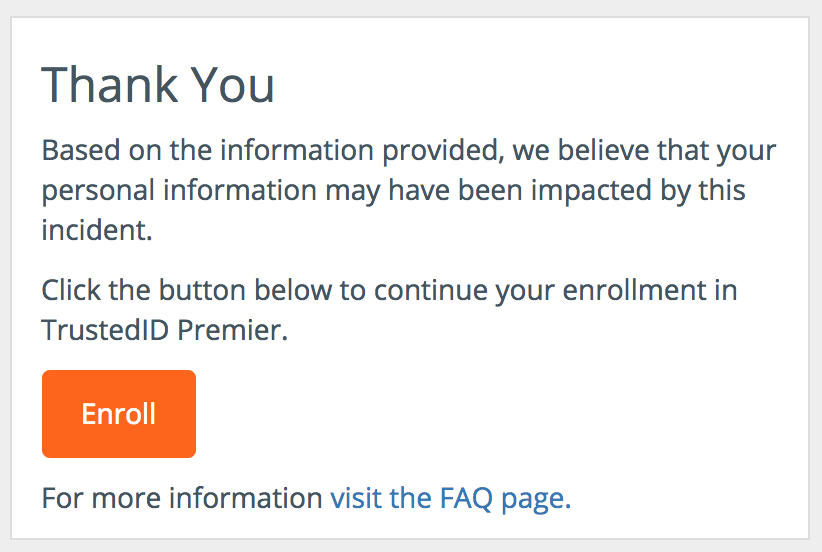
Reports yesterday confirmed that Equifax, a credit report bureau, was hacked and that the hack leaked private information of over 143 million Americans. The information leaked includes names, social security numbers, drivers license information, addresses, and birth dates. Some credit card numbers and credit dispute documents may have been leaked as well. Equifax will alert those whose credit card numbers were affected by mail. You can find out if any other information was leaked by submitting some info into their site. Then, if you were affected, you can enroll in one year free of their premium ID Protection plan, “Trusted ID.” This will give you the ability to check your score and credit report, scan your social security number, and lock your credit score. Hacks like this are becoming far too common and it’s likely only going to increase in frequency. This is why you should take precautions to protect yourselves and your family.
How to Protect Yourself and Your Family
Passwords
Most people who are affected by these hacks are hurt the worst by their lack of proper, strong, and effective passwords. You should follow a few rules when setting passwords. 1. Never use the same password twice. If a hacker gets a hold of your username and login information for a site, they can try that information on any site on the internet and if you have an account and used the same login info, they’re in. 2. Use strong passwords or pass phrases. Don’t use simple words or obvious information. Never use password as your password and don’t use any set or any length of chronological numbers. 3. Use a password manager. A PW manager like LastPass or Avast Passwords will allow you to set a different, strong password for every site you use and manage them by having one strong password that you use to login to your manager.
Check for “Secure” Sites
Never put any sensitive information on any site that doesn’t have a green lock symbol at the top of your browser next to the address bar. Sites that don’t have this should never be used to make credit card purchases, enter sensitive contact information, or share location data.
You should also use the tools Equifax provides to keep tabs on your credit report and check for transactions you don’t recognize. Setting up an identity theft protection plan may not be a bad idea either. Especially since our lives are becoming increasingly dependant on what we do online, and what we do online seems to be becoming increasingly easier to exploit.