Category: Social Media

  • Instagram Letting Users Change Privacy Settings on More Sensitive Messages

    Instagram Letting Users Change Privacy Settings on More Sensitive Messages

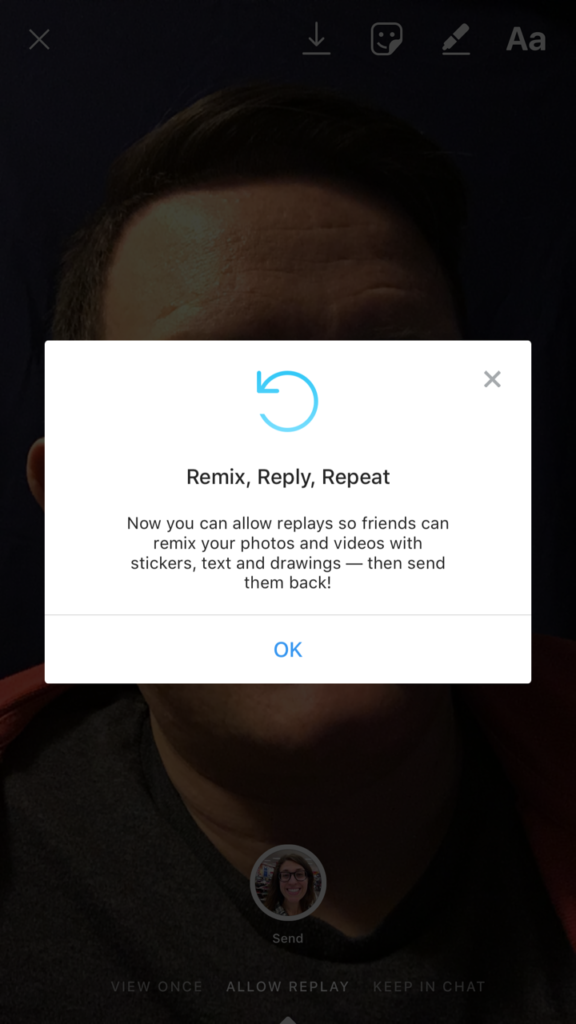
    Instagram has made an update that will let users set privacy settings on their private messages. With the options to “See once, Replay Once, or Show in Chat,” these settings provide a sense of safety when sending that “sensitive” message to someone. Until now, users could replay any message they got on Instagram, but the new Direct Camera settings will allow the sender to make the rules.

    Many are seeing this change as an obvious attempt to combat Snapchat in the disappearing-message department. There is still no way to change settings on your Snapchat private messages. Instagram and Snapchat have been competing back and forth for more than a year now and it seems Instagram is looking to take on the secret message market.

    What Parents Should Know

    As sexting becomes more common, the last thing parents need is another one of our kids’ favorite social media services featuring disappearing messages. The problem with sexting is that kids think there aren’t consequences for the messages they send. Something like a “See Once” feature is exactly what would cause your 14-year-old to give in to that pressure to send an inappropriate picture. Since they can’t see it more than once, nothing can go wrong, right?

    I’m not the only one saying that these features are meant for naughty images. It’s pretty much a given that when you don’t think these messages can be screen captured or saved, you’ll send whatever pops into your mind at the time. I’m adding Instagram to my uninstall list because of the addition of the see once and replay once feature. You’ll do whatever you think is best for your own kids but I’m going to call Instagram an 18+ social media app.

  • Snapmap Featured User Sourced Videos of the Florida School Shooting

    Snapmap Featured User Sourced Videos of the Florida School Shooting

    Snapchat’s “Snapmap” feature highlights news stories that are curated by their team of news editors. The team chose to feature posts from the school shooting in Parkland Florida on their map yesterday. It was comprised of Snaps from students in the school, news outlets, and passersby whom the editors thought had posted something that contributed to the viewers understanding of what was going on during the shooting. You can see that editing was done before the Snaps were put on the map because a “Warning Graphic Content” posts start the slideshow, followed by a video of what seems to be the inside of a classroom in which you can hear the gunshots from nearby. Language is bleeped out and there are no actual victims shown but you do see a couple of students who are talking about watching their friends be killed right next to them.

    Snapchat hired a former CNN exec to lead their team of news editors and they say their news team is doing their best to follow the right journalism practices. They are working to remove overly sensitive content and choosing to only feature Snaps that contribute properly to the story they are covering. Snapchat’s main audience is under 18 which likely contributed to the fact that they had so much content to use to cover the shooting in a High School. This also means though that our kids who use Snapchat, and anyone else using their map in a browser, can have access to on the scene footage of what is happening during events like this. A school shooting is a national tragedy and social media is becoming one of the most common ways that people learn about what is happening or has happened. Snapchat is attempting to provide a curated look at this news, but is that what we want our kids to see when they look at their phones?

    What Parents Should Know

    As mentioned above, posts from Snapchat are not automatically sent to the map. These posts are curated and especially selected and edited before being added. While I’m grateful for some oversite from Snapchat when it comes to sharing this news, I have to question whether or not I would want my 13 or 14-year-old to have access to some of the images seen during the shooting on Wednesday. Just seeing something so dangerous portrayed in such a real way can be damaging and cause fear in our kids. We have to look out for this and know if this is something our child can handle or not. For some of them it may be fine but for others, they aren’t mature enough to deal with that much realism.

    (Opinion warning!) I can’t tell you what’s right for your kids, I will, however, give credit to Snapchat for trying to bring some truth to the news by using information from people who are actually there. I will also keep this info from my kids for a while. There are enough things that cause fear in our lives, I wouldn’t want added influences like their social media accounts to increase that fear. Snapchat is on my uninstall list for a lot of reasons, I’m grateful they aren’t just putting every public post from one of these tragic events onto a feed that your and my kids could see but I will think long and hard before allowing my child access to this source of news.

  • Facebook’s “Messenger Kids” App Launches on Android

    Facebook’s “Messenger Kids” App Launches on Android

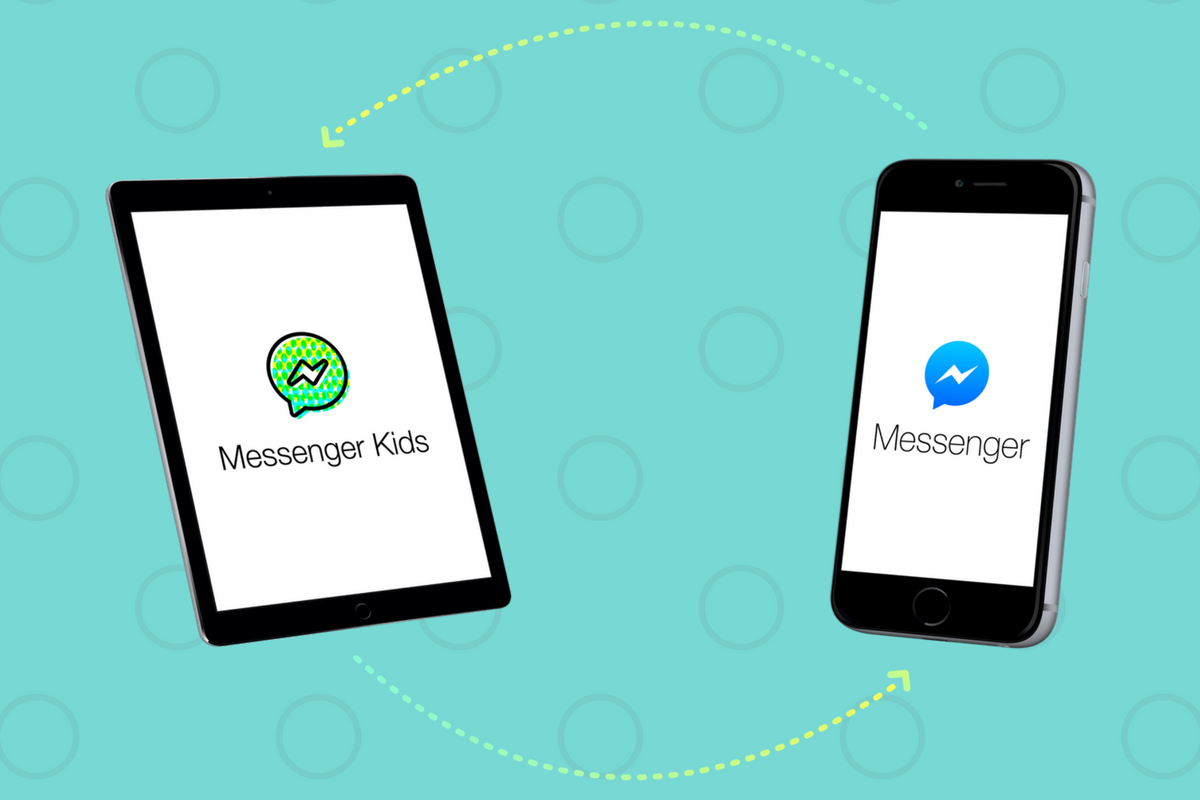
    Today, Facebook released the Android version of their Messenger Kids app. This means it’s available on iOS, Android, and Kindle now. That should pretty much cover most families. Facebook Messenger Kids puts the control in the parent’s hands, making it easy by building it into the Facebook App and Messenger App that you likely already use. You can decide who they are allowed to chat with and approve or deny friend requests.

    CHECK OUT: Facebook Messenger for Kids! for even more info about the app.

    My family uses Messenger Kids, albeit with some strict time limits (1hr per day) which we enforce through Circle (all devices) and unGlue (our older child.) It is a great way to help them get a feel for chatting through a messenger without strangers, bullies, or the constant notifications or FOM0 (Fear of Missing Out) that can accompany tech addiction. Facebook built in a lot of the controls and made the app kid-friendly by not allowing gifs that don’t originate in the Kids Messenger app and not allowing messages to be sent to unapproved friends.

    What Parents Should Know

    Since settings are controlled through your Facebook account, parents don’t have to have the same type of device as their child. You can set up your kids’ messenger app on his Android through your iPhone, for example. Keep in mind how addicting it can be to message your friends. Remember not to give them access to approve or disapprove of their friends on Messenger, this defeats the entire purpose. I know it can get tiresome to always have to sign off on everything they want to do online but Facebook makes it pretty easy with notifications on your own app.

    Use something to manage their time, like unGlue.  Talk to your kids about only messaging people they know in person and let them know what to do if someone asks them something they aren’t comfortable with. They should know that they can come to you when there is trouble. Messenger Kids is a good idea from Facebook and they did a lot of work to learn what parents would want out of a messaging app for their kids. Now the app is available on all devices so, if your kids have people they want to talk with, use this as a way to keep them in touch safely.

  • Two Ways Your Snaps Can End Up Anywhere On the Web

    Two Ways Your Snaps Can End Up Anywhere On the Web

    One of my initial internet safety tips for parents is to turn off location data for their camera. Many of them do this immediately upon hearing my advice. The problem, however, is that they then jump over to Facebook and Snapchat to use that camera and their location settings are as public as can be. Today’s news gives us even more information about how your location data is used by Snapchat and Snapmap.

    Embedding

    Snap has opened up the ability to “embed” a snap into a website. This means that if your snap is public, a code can be copied and pasted so that your post shows up on the site that contains the embed code. It’s easy to do and really isn’t a new concept since public Facebook videos and photos can be embedded by default as well. I’ve embedded a snap from Disney on Ice in Des Plaines, Illinois:

    SnapMap

    Snapmap went into browsers today. This means that you don’t have to have the Snapchat app to see public posts overlayed onto a map of anywhere in the world. Concentrations of Snaps show up as colored dots that range from light blue (few Snaps) to bright red (high concentration of Snaps.) When you click on these colors you see the Snaps in a slideshow style format. They appear as most recent first and move to the past as you click or watch until the end of each post.

    Most of the Snap-map posts highlight breaking news (i.e. the recent ice storm in my area or a basketball game or concert) but it will sometimes feature posts from the general user if their posts are relevant and set to public. Posts are curated by a team of news editors. The idea is that Snapchat wants news organizations and sites to use their map to highlight current events and breaking news in real time. This offers a real opportunity to see real news, as it happens. It could also be dangerous if your kids aren’t setting their Snapchat settings to private or friends only.

    What Parents Should Know

    Location privacy is a major concern for parents. We post more of our private lives online than ever before and a map that highlights where we are and what we are up to can be considered a privacy disaster. Especially when it comes to our kids. Users of Snapchat are meant to be 13 years old or older. Some kids under than 13 spend a lot of time on the app, though, and their snaps are, therefore, available to be used as news coverage on this public map. I consider this a real problem for parents.

    I would recommend that if your kids use Snapchat, you ensure that they have their profiles set to private or friends only. Disable the Snapmap (put it in Ghost Mode) so that what they are posting won’t show up. Not taking these precautions could lead to your home address being featured on Snapchat’s map and even someone else’s website. Take location privacy serious. Talk to your kids about staying private, encourage them to never post anything they wouldn’t be comfortable being seen by anyone in the world. The internet isn’t private and social media is growing increasingly more public. Your kids need to understand that.

  • Connectivity IS NOT Connection

    Connectivity IS NOT Connection

    Our society has more connectivity than ever. At CES 2018 the conversation was all about how we’ve transitioned from the “digital age” to the connected age. Psychologists, however, warn that connectivity isn’t the same thing as being connected. Here’s what they mean.

    Connectivity

    We carry supercomputers around in our pockets and instead of using them to solve complex arithmetic or learn new information we watch videos of cats, read fake news, and gossip publicly about our friends. All of our devices are united on the same network, sharing data (intentionally or otherwise,) and building our digital identities.

    The algorithms that run our favorite social media and search engines have learned how to continuously feed us the same versions of the information we want to see. When we search for a news story we will immediately see stories from the same source we always see it from, when our kids search for videos on a topic for school they will always get regurgitated versions of the same information. “This doesn’t broaden their horizons.” Dr. Jenny Radesky, developmental-behavioral pediatrician, American Academy of Pediatrics at yesterday’s “Truth About Tech” summit in Washington. While we think that screens and tech are the way of the future and critical for our kids’ education, we have to continue to balance the benefits of digital tools with evergrowing entertainment uses.

    From Tools to Entertainment

    Everything on the Internet has potential to be an awesome tool. Social media is no exception. However, when the information we use to connect is sold to the highest bidder as marketing data and our means of connection turns into entertainment it’s actual usefulness comes into question. Social media is great when we use it to keep in contact with friends and family but when we use the tech as a replacement for actual learning or time with our kids we have missed the point of connection entirely.

    Connection

    Social Media executives boast that they are connecting the world like never before but we aren’t seeing true connections. We are seeing these companies treat our information like a product to be sold. This results in a click/share/comment model of connectivity that doesn’t build meaningful relationships. Scientists have found that face to face conversations create empathy. When your brain sees the expressions on someone’s face it triggers chemical’s reactions that you to feel what they are feeling.

    Neuroscience is teaching us that constantly communicating through text and simulated video chat isn’t actually connection. Our bodies physically lack the response we’re supposed to have when interacting with other human beings. Studies have shown that people admit to caring less in general. Especially, though, about the things they see on social media. When a friend loses a job, a simple “thoughts and prayers” post on Facebook makes us feel better but we are less stirred into any form of beneficial action. Sure, we have connectivity like never before, but we are increasingly less connected.

    What Parents Should Know

    “Make media a shared family activity and play your kids’ apps with them.” – Dr. Jenny Radesky, developmental-behavioral pediatrician, American Academy of Pediatrics

    I can’t say it enough. We have to model healthy tech habits for our kids. If they see us caring less and less because of the increased connectivity without true connection, they’ll follow directly in our footsteps. Teaching them to manage the amount of time they spend on social media will go a long way to increase their desire and ability to truly connect with people. Spending time with them on and off of our screens and having critical, face to face conversations with them will encourage them to do the same thing.

    Our favorite online activities are designed to cater to our own preferences and can create a selfishness that we don’t even recognize. Our teens don’t need any help being selfish, their brain development makes it hard enough for them to empathize, overuse of technology and social media just exacerbates that problem. Parents are the first line of defense to make a change in your kids’ lives. You have to do something. Here’s what I would suggest.

    Use unGlue to monitor their time and let them set limits. Subscribe so you can see what they are doing online and help them make good choices. Maybe your kids are younger. Use Circle to limit certain types of sites that decrease empathy in young kids like social media and gaming. Talk to your kids frequently about the dangers of having serious conversations over text or chat. Remind them how important face to face conversation is and that a face on a screen doesn’t count. Model that behavior for your kids and help them make decisions that strengthen their concern and care about others instead of diminishing it. We can all agree that in the world we live in, we should all be caring more, not less. The first place kids will learn these traits is in their homes, from family.

  • Facebook and Snapchat Join the “Time Well Spent” Movement

    Facebook and Snapchat Join the “Time Well Spent” Movement

    What is “Time Well Spent?”

    The Time Well Spent movement is a project of the Center for Humane Technology who exists to “Reverse the Digital Attention Crisis and Realign Technology with Humanity’s Best Interest.” The idea is that we have been trained to focus so much on social media and technology that we are missing out on the quality time we’re meant to have in our lives. The CHT works to educate parents, teachers, and industry leaders on the dangers of our addiction to technology and what we can do to overcome that addiction.

    Taking time to enjoy nature and have real face to face conversations are things we’ve taken for granted and the Time Well Spent movement is trying to get us back to those beneficial offline activities. We have begun to see some major social networks take notice of the desire for healthier tech use. As you’ll read below, awareness of these problems has lead to some actual changes for some of the most popular social media networks.

    Snapchat Redesign

    Not long ago Snapchat redesigned their app to be more user-friendly. They’ve also quietly added features that allow you to silence conversations for a while and added new styles of text to your snaps. The silencing feature is an obvious attempt to join the “Time Well Spent” movement.

    The do not disturb feature allows you to silence groups or individuals so that you don’t get notifications from them but don’t have to leave the conversation completely this allows you to keep a streak going while taking some time off of Snapchat, it also allows you to silent someone for a bit without making them feel like you’re ignoring them. Being able to silence conversations on Snapchat can make it easier to take a break without completely silencing your phone. Sure, you want to be accessible but you may not want to be as accessible as we can be these days with social media. I say good on Snapchat for adding this new do not disturb feature.

    Facebook Timeline Changes

    Facebook has been taking strides to encourage their users to use the platform in a more healthy way. From notifying you when you’re reading fake news to lowering the frequency of viral video content in your timeline or removing reasons to just blindly scroll Facebook without purpose. These changes seem to have led to a decrease in time spent on Facebook to the tune of 50 million hours per day.

    Zuckerberg has spent quite a bit of time talking about the responsibility Facebook has as the leading social media platform to encourage users to be more responsible with their activity online. It seems that they were willing to take this belief seriously even to the point of temporarily affecting their bottom line. Facebook’s new stats show a decrease in revenue, likely based on the usage decrease. While income was down during the last quarter of 2017, Facebook predicts that their numbers will level off as ad appearances on your timeline decreases but serious/meaningful engagement increases.

    What Parents Should Know

    I’ve never fully believed that the blame for addiction or overuse of tech and social media falls on developers. Yes, they can create services that encourage healthier use, and it’s good that some of them are beginning to think in that direction. The responsibility, however, falls on users to keep a healthy attitude. If our kids are who we are worried about then the responsibility to teach and model a healthy digital lifestyle falls to parents.

    Monitor the time you’re spending on social media. Set limits for yourself using some kind of software, like unGlue. Learn about the clues to whether news articles are fake or reliable, how to report people online that are causing problems, and how to avoid spammers and phishers. You should take the role of educating your kids on “Time Well Spent” seriously enough to model it for them yourself. 


  • Bitmoji Selfies Could Lead to Facial Recognition on Snapchat

    Bitmoji Selfies Could Lead to Facial Recognition on Snapchat

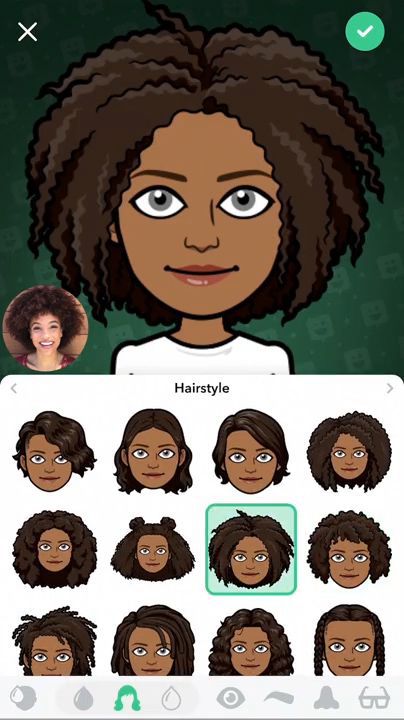
    Snapchat’s new “Bitmoji Deluxe” allows you to take a selfie and place it right next to your Avatar while you create or edit it. This lets you create your Bitmoji to look as much like you as possible. It starts with Snapchat asking if you’d like to take a selfie. Once you do, you will see an image of your actual self in the bottom corner the entire time you are editing your cartoon self. This isn’t a surprising new feature since Snapchat has teased that they may be using selfies to automatically create your Bitmoji in the near future. Facial recognition is becoming a mainstay in mobile technology so it’s only a matter of time before it works its way into social media.

    What Parents Should Know

    Snapchat is and will remain on my uninstall list. Bitmoji has never really been one of the reasons I don’t like Snapchat but I will admit I don’t “get it.” As parents, we have to keep an eye on our kids’ activity on Snapchat. One of the biggest concerns of educators, psychologists, and tech safety experts alike is the tendency for our young teens to filter their online identity. Even, sometimes, to the point of creating separate or even secret social media accounts for different followers or friends. Using a selfie to better create your Bitmoji avatar isn’t necessarily a sign of unhealthy behavior. I would, however, continue to pay attention to my teen’s conversations across all social media. Once facial recognition becomes a viable part of our social media cameras, that’s when I would consider not allowing my kids to use that service until they’ve reached an even higher level of maturity.

  • Google’s “Be Internet Awesome” Wants to Help Kids, Teachers, and Parents with Digital Citizenship

    Google’s “Be Internet Awesome” Wants to Help Kids, Teachers, and Parents with Digital Citizenship

    More than three-quarters of school-aged kids in the United States use the internet every week. Much of that online time, for seventy-nine percent of kids, is spent on a smartphone. Much of that time is also spent at school. Kids curriculum is increasingly web-based and school is even issuing computers to kids younger and younger. The internet has long been a place for kids and teenagers to find entertainment and now with the necessity for online activity for school work screen time and global communication among our young ones is on the rise. This has been a cause for concern among parents, teachers, and school administrators alike. Google wants to help parents, teachers, and kids understand what a healthy attitude towards internet activity looks like. While at CES I was able to hear representatives from Google explain Be Internet Awesome and how it was developed. I thought it would be a great resource for parents and teachers alike.

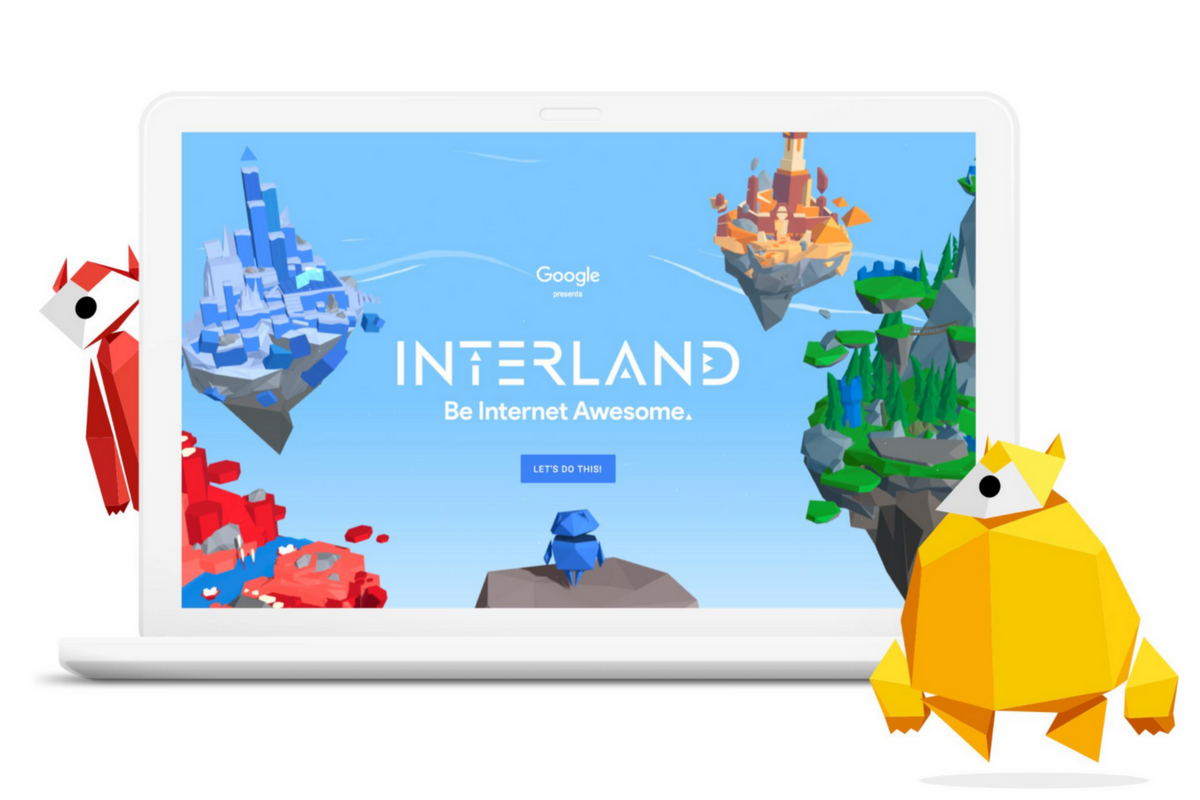
    INTERLAND

    “Kids can play their way to being Internet Awesome with Interland, an online adventure that puts the key lessons of digital safety into hands-on practice with four challenging games.” – beinternetawesome.withgoogle.com

    Interland is a gamified way of teaching kids internet safety and digital citizenship. You make your way through different levels that focus on different categories of your online life. You “report” cyberbullies and share kind words with online “friends.” The game is split into zones, Reality River is where you learn to recognize what’s real and what’s fake online, “Mindful Mountain” is where you learn how to think before you share online, “Tower of Treasure” will teach you how to secure your online activity with strong passwords and secure behavior, and finally “Kind Kingdom” is where you’re able to report those cyberbullies and speak kindly to friends you find online. 

    The games are fun and the characters are silly. The questions seem to be common sense but I know adults who, based on their social media behavior, probably wouldn’t score 10 out of 10. These games have good graphics and audio and they’re a simple and fun way to introduce your kids or students to proper online behavior.

    Curriculum

    The 5 part Be Internet Awesome curriculum is made for parents or educators to help kids go even deeper in their understanding of how to be secure, kind, and mindful when on the internet. By having kids analyze mock social media feeds and behavior they get a chance to think about what they learn about a person based on what they post online. Receiving fake phishing and spam messages allow kids to see what those messages look like and identify and report them easily. Recognizing bullies and how to report them is taught through group activities and clear, understandable definitions. Finally, the free 48 page PDF Curriculum, emphasizes the importance of finding an adult and talking about what they’ve experienced online.

    Pledge

    Finally, the pledge allows kids, teachers, and parents to summarize and agree to their stance on digital citizenship. This allows parents and teachers to get the whole family or class on the same page and hold each other accountable. A pledge is a good way to reemphasize what has been learned and highlight the importance of their commitment to be the best version of themselves online that they can be.

    What Parents Should Know

    I recommend you use this game and curriculum in your home if you haven’t already. Help your kids understand the dangers and concerns with the amount of time they spend online and encourage them to use their time as wisely as possible. Google has created a helpful and free tool for you as a parent or teacher to use and download as often as you need to. I say take advantage of it. If your family, like ours, has some specific rules about how you use the internet, interject them into this curriculum, using Google’s offering as a foundation for your internet safety plan and contract. Our kids will be spending more and more time on the internet as they grow. It’s important that their parents first, model proper citizenship for them, and second, take advantage of whatever resources we can to teach them how to treat themselves, their information, and others with respect on the internet.

  • Taking Too Many Selfies is Officially the Latest Mental Disorder

    Taking Too Many Selfies is Officially the Latest Mental Disorder

    “Selfitis” is the new term for obsessively taking selfies and it’s being called a symptom of other, more serious, mental disorders. The study by Nottingham Trent University was held in India because of their high population and social media user numbers. Also, because of the high number of deaths caused by taking selfies in a dangerous situation. Researchers studied a focus group of 200 people and asked them questions about their selfie-taking behavior. The results had some surprises and some expected outcomes. The most likely candidates to have selfitis were men, which was unexpected, but as you may have guessed, the youngest group also scored the highest probability to suffer from the disorder.

    The idea for this study came from news stories in 2014 about selfitis becoming a recognized mental disorder. At the time these stories were false but now the term is beginning to get scientific research to back it up. The researchers’ findings are, probably, only the beginning of the information we will get about what our increasingly online lives are doing to our habits and mental condition.

    “Typically, those with the condition suffer from a lack of self-confidence and are seeking to ‘fit in’ with those around them and may display symptoms similar to other potentially addictive behaviors,” – Dr. Janarthanan Balakrishnan

    What Parents Should Know

    It’s obvious how the appeal of Instagram likes and Twitter followers can lead to obsessive behavior. This condition falls under the same category as internet, video game, and media addictions and its actual diagnosability is debatable in some psychological circles. My unprofessional but educated opinion is that anything that becomes obsessive and compulsive should be considered dangerous by parents. It can take conscious effort for many of us to avoid taking a photo or selfie to share during an event. I have often made the distinct decision to not take a photo and just enjoy a moment for myself. The study of selfitis shows that there are increasingly more people out there who cannot make that decision for themselves. The first thing they think about is what a good social media post this moment would make and then they can’t deny themselves the opportunity to share it online and see how many likes it gets.

    Selfitis and other social media related conditions will always be ridiculed because it seems like just making a decision to stop something would solve the problem. Serious professionals, however, are giving these behaviors real attention and I think we, especially parents, should too. Find out what your child’s attitude is about social media. Why do they post? How important is it to them to get likes and followers? Do they take down photos if they don’t get the amount of attention they want them to? Knowing your child’s online and social media habits can go a long way to help them have a healthy attitude towards how they represent themselves online. Mom and dad are the first line of defense and diagnosis. You should be having conversations with your kids.

    You can see the entire study HERE. Including the questions asked to those tested in the study. Maybe you can use these questions (also listed below) to see what your kids think about their selfie habits…or your own.


    Selfitis Behavior Scale

    1. Taking selfies gives me a good feeling to better enjoy my environment
    2. Sharing my selfies creates healthy competition with my friends and colleagues
    3. I gain enormous attention by sharing my selfies on social media
    4. I am able to reduce my stress level by taking selfies
    5. I feel confident when I take a selfie
    6. I gain more acceptance among my peer group when I take selfie and share it on social media
    7. I am able to express myself more in my environment through selfies
    8. Taking different selfie poses helps increase my social status
    9. I feel more popular when I post my selfies on social media
    10. Taking more selfies improves my mood and makes me feel happy
    11. I become more positive about myself when I take selfies
    12. I become a strong member of my peer group through selfie postings
    13. Taking selfies provides better memories about the occasion and the experience
    14. I post frequent selfies to get more ‘likes’ and comments on social media
    15. By posting selfies, I expect my friends to appraise me
    16. Taking selfies instantly modifies my mood
    17. I take more selfies and look at them privately to increase my confidence
    18. When I don’t take selfies, I feel detached from my peer group
    19. I take selfies as trophies for future memories
    20. I use photo editing tools to enhance my selfie to look better than others

    Scoring: Responses are rated on a 5-point Likert scale: (5 = strongly agree; 4 = Agree; 3 = Neither Agree or Disagree; 2 = Disagree; 1 = Strongly Disagree). Scores are summed. The higher the score, the greater the likelihood of selfitis

    Items 1, 7, 13, and 19 relate to environmental enhancement – Items 2, 8, 14 and 20 relate to social competition – Items 3, 9, and 15 relate to attention seeking – Items 4, 10, and 16 relate to mood modification – Items 5, 11, and 17 relate to self-confidence Items 6, 12, and 18 relate to subjective conformity
     

  • Now ANYONE Can Make a Facebook Camera Filter!

    Now ANYONE Can Make a Facebook Camera Filter!

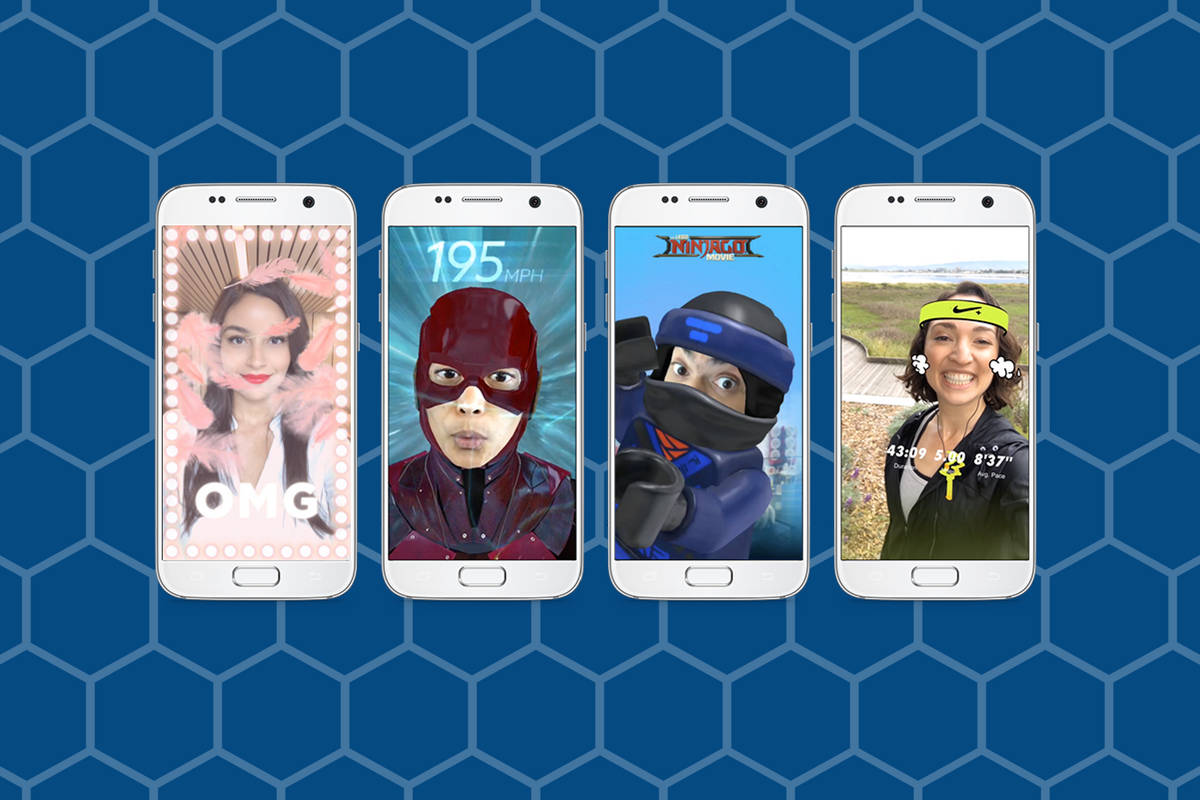
    Augmented Reality (AR) and Location Filters have become a mainstay of the social media camera. Snapchat started and Instagram, Facebook quickly followed suit, and before you know it, we’re all posting images and videos of ourselves with animated beards, mustaches, and hats. Your favorite fancy additions to your photos have always been created by select developers or advertisers so that those who run our favorite social media outlets can keep tabs on what’s being allowed on their platform. That has now, officially, changed. Facebook has opened up their public Filter and AR creator tools.

    “Starting today, we’re expanding availability of the platform and the AR Studio creative tool to everyone.” – https://www.facebook.com/FacebookforDevelopers/

    It’s truly as simple as going to the facebook developers site and downloading the AR software. Making non-AR overlays is even easier. The tool is built into the website. You simply upload your images and move them around wherever you’d like on the screen. You can use the tools to resize and edit your image as well as to remove the background so you get a transparent effect. While making a 3D mask takes some coding and design experience, making an overlay is a pretty simple process that just about anyone should be able to do.


    What Parents Should Know

    Obviously, there is no stopping the “AR train.” We all love taking photos with those crazy filters and it’s so neat to put some strange creature on your countertop and film it playing the guitar. Until now, we could trust that content being posted as filters on the Facebook camera had been created by legitimate developers and didn’t contain anything that wasn’t allowed by Facebook’s guidelines. Allowing public access to these tools basically makes filters and AR User Generated Content. I made one for FamilyTechBlog in about six minutes. There was no approval process (as far as I could tell) which leads me to believe that inappropriate content will only be identified by a “user flag and review” system. This could lead to who knows what kind of violent or adult-oriented filters showing up on our Facebook (and most likely eventually Instagram) camera.

    My advice for parents is to continue to talk to your kids about what content they use and see on their social media accounts. User Generated Content means that most of what has been posted hasn’t been edited or reviewed by anyone who can pull down non-approved posts. Algorithms and a flag system can only get so far in protecting our families from dangerous content. Parents should always be seeing what is posted by their kids and what their kids are seeing in the apps they use.