Category: Social Media

  • FB Messenger Kids “Error” Allowed Thousands of Kids to Talk to Unapproved Strangers

    FB Messenger Kids “Error” Allowed Thousands of Kids to Talk to Unapproved Strangers


    Facebook Messenger kids was created to give children a safe place to communicate through text, stickers, video, and gifs with friends that are pre-approved by their parents or guardians. This week, however, the kids’ messenger app has had to send notifications to thousands of parents about their children having access to strangers in the app. 

    What happened is that a technical error allowed kids to create a group message with friends who would then invite their own friends who, while approved for them, may not have been approved by the parents of the first child. Confusing? Ya, this is possibly why the flaw was even possible in the first place. Facebook says they have alerted parents whose children may have had this type of interaction and that they’ve disabled any chats that were created, using this flaw. The story isn’t over, though, as some are calling for the FTC to look in to the error since it may have resulted in a COPPA violation.

    Released Today: Facebook Messenger For Kids!

    What Parents Should Know

    The moral of this story centers around trust. It is important that, while we may trust our children, we can’t always trust who our kids are in contact with. We definitely shouldn’t blindly trust the companies who make the hardware and software that our children are using. When our kids use an app like Messenger Kids, the whole point of the app is that it gives parents control. When the control is hindered, even by a “technical error,” that is a severe violation. We can, however, take actions to protect our kids from dangerous effects that could come from these errors.

    I recommend having a copy of the messenger kids app on your phone logged in to your child’s account. My wife and I are each logged in to one of our kids’ messenger kids apps and can see when they get messages and what the messages are about. We are notified when they receive a message and can look to see who it is from and even read it. I have, a time or two, jumped into the app to tell a friend to stop messaging since my son was past his allowed time for social media that day. I received a “yes sir,” and there were no more messages until the next day. We also use BARK to monitor their messages and alert us of any dangerous or inappropriate content.

    Parents are gate keepers. Our job is to be sure our kids are growing up with guidance through every area of life. If they aren’t being taught how to manage social media and internet use safely then they will struggle to make healthy decisions when they are older. Messenger Kids is a good tool to help your kid learn the right way to use a messenger but it won’t work if you are uninvolved, pretending that the creators of the app only have your kid’s best interest in mind. The truth is that they want to provide you a service to make a profit. We cannot overlook that. It is our responsibility, and ours alone, to teach our kids how to be safe online. We should take it seriously. We should hold companies accountably when they have errors that put our kids at risk but ultimately we should be the ones making sure our children are protected on every app, site, and software they use.

  • Is FaceApp Sending all of Your Private Data to Russia?

    Is FaceApp Sending all of Your Private Data to Russia?


    Last week everyone was posting pictures of themselves looking older or younger. They were all using FaceApp, an Android and iPhone app that uses AI to change your face to make you look older or younger, change your gender, and all kinds of different things. Then, suddenly everyone who had been posting pictures of themselves began sharing articles about the privacy dangers of FaceApp. What is true? What does FaceApp do with your pictures? Should we use apps like this? Here are the answers I found.

    Your Pictures Aren’t in Russia

    One of the major concerns due to political news lately is that all of these pictures have been stored by the Russians since the company that makes FaceApp is in Russia. The truth is that these pictures are stored on servers owned by Google and Amazon. Many of the photo apps you use including some of the social media apps you frequent use the same server companies to store your pictures and posts. There is no evidence to suggest that your images are being collected by the Russian government or even companies in Russia.

    Your Photos are Deleted after 48 Hours

    The face app privacy policies state that photos uploaded to their servers are usually deleted after 48 hours. They do state that some photos may be kept for analytical purposes but that they are not sent to the FaceApp companies. These photos are used by the artificial intelligence to make it smarter and help it do a better job of editing photos for people.

    FaceApp Terms Mention Affiliate Companies and Governments

    The policies of FaceApp do allow for them to give your photos to other companies “in their network.” Again, they say that this is for analysis purposes and not data tracking. They also say that they’ll give your photos to law enforcement if requested through legal means. 

    You Can Use FaceApp Without Giving Personal Information

    The company that makes FaceApp says that 99% of their users don’t login to the app. That means there are no ways for them to have your personal or identifying information. The only thing that they collect in those cases are your photos. If you have location settings turned off for your camera then there isn’t much personal data that can be gained from the images. All they actually have is a picture of a non-identified person’s face. Also, FaceApp only uses the photos you tell it to upload. Not your whole camera roll. 

    “…please note that we may transfer information, including personal information, to a country and jurisdiction that does not have the same data protection laws as your jurisdiction.” FaceApp Privacy Terms

    FaceApp Doesn’t Handle Data Differently than any Other Social Media Service

    The only major difference between FaceApp’s privacy policies and those of Facebook and Instagram are how much terminology they use to describe them. Personal data and photos are basically handled the same way by all these companies. You may consider it more of a fair trade off for Facebook and Instagram to collect your data in exchange for the services they provide. You also may be less inclined to be worried because of Facebook and Instagram being from the United States. Either way, your data is being used in the same way by all of these companies.

    Musical.ly is now Tik Tok


    Just Share Smart

    These instances of public outcry about the privacy policies of an app or a company are a great time to be reminded of the importance of thinking before you share. The truth is that everything, once shared on the internet, is public domain. It belongs to every citizen of the web and not to you any more. This should govern every choice you make on every site you visit and every app you use. If you wouldn’t want the whole world seeing that photo of you, your child, or your spouse, then you shouldn’t share it. If what you are about to post as a status would put your security in jeopardy then you shouldn’t post it. If you aren’t sure about a company or an app that is asking for your personal information then you shouldn’t give them your personal info. It is very simple. Just think before you fill out an online form. Think before you share a photo. Think before you past your thoughts about anything and everything.

    The issue isn’t where your information is stored. It is the fact that you share photos, phone numbers, credit card numbers, and even your social security number like it is no big deal. You don’t have to be an internet security expert, you just have to pause and think.


  • Research Finds Another Link Between Social Media and Depression

    Research Finds Another Link Between Social Media and Depression


    Researchers in Montreal have spent the last four years studying nearly 4,000 students and their screen time. The study was looking for links between self reported depression symptoms and uses of different kinds of screen time. The types of screen time studied were social media, television, video games, and computer use. The study used annual surveys to sample students  in the Greater Montreal area in 2013-2018 and the results were analyzed in December of 2018.

    The study found a substantial depressive symptom increased for every hour spent on social media, computer use, and even for television. Adolescents reported more cases of comparison to others because of their use of social media, leading to depressive symptoms. The study concluded that “Both screen time modes (social media and television) should be taken into account when developing preventative measures (for depression) and when advising parents.”

    Why Your Teen Posts Her Feelings On Social Media

    What Parents Should Know

    There has been a lot of research concerning screen time and the health of our children. This study is interesting because they chose to separate the types of screen time in order to try and identify if one type or another has a greater impact on the mental health of the children studied. There are a few things that stood out to me as I read this study. First, video games didn’t seem to be a determining factor for depression. While video games can cause other issues, it seems that the direct comparison or contact with others available through social media and even some of the stories on television create the atmosphere for decreased self satisfaction and can lead to depressive symptoms. While many kids between 7th and 11th grade can falsely report feeling “depressed” just because of their stage of life, this study found a pretty significant correlation between the subjects’ symptoms and their screen time activity.

    Secondly, their approach of separating types of screen time should become a new standard for this type of research. Researchers are finding that the amount of time your kids spend on a screen can have varying affects based on what it is that they are doing. This study supports that approach by proving that some categories of screen time affect depressive symptoms in different ways. Finally, the final sentence of the conclusion supports the idea that screen time should be taken into account when developing preventative measures and when advising parents. Psychologists, doctors, and counselors should be considering, not just the amount of time kids spend on their devices, but exactly what they are doing. Parents should be considering those same things.

    Your son may play a ton of video games and you’re worried about anger or lack of social skills, those worries could be valid and more research is needed to identify if video gaming is, indeed, a factor. Social Media use is proving to be a determining factor in the mental health of young teens as they age. Our kids are exposed to so many ideas and so many different environments at such an early age that we, as parents have to be the gatekeeper for what enters their minds. We have to help them guard their hearts and properly interpret their emotions. If kids are seeking help from other kids, they aren’t getting the mental health advice that they need. We parents should provide a safe space for our kids’ to express how they feel. We should then be willing to make arrangements to get the professional help they need if necessary. Parents can’t ignore our children’s feelings, we have to take them seriously and make every effort to support them in exploring their own mental health.


  • ALERT! Kids Can Get to Pornhub from Snapchat in 5 Clicks

    ALERT! Kids Can Get to Pornhub from Snapchat in 5 Clicks

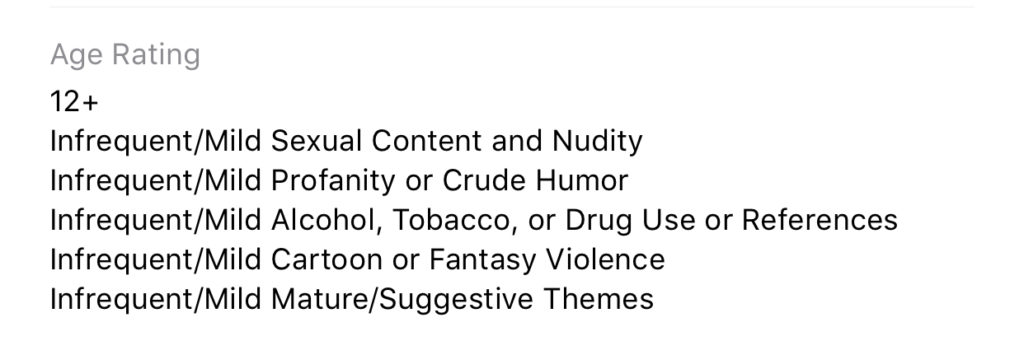
    We don’t like Snapchat. It has a history of allowing content that isn’t appropriate for kids even though the app is rated 12+ in the app store. The app is built around disappearing messages that are a nightmare for trying to prevent predatorial communication and sexting. Now, Protect Young Eyes has written an article highlighting the fact that, in just a few taps on your screen, you can get from Snapchat’s home page to Pornhub, the most popular pornography site on the internet. They even included a video that shows how easy it is to navigate to the adult site without ever leaving Snapchat’s app.

    Monitor Song Lyrics with Bark!

    What Does This Mean for Parents?

    Most filters for iPhone don’t monitor browsers in apps like Snapchat and Facebook. This is why the ability to connect to adult websites within these apps is so dangerous. It only takes a few taps on your screen to go from the Snapchat story to the “Premium” page on which you can click links to all of their other accounts. These links don’t open other apps that would be blocked by Screen Time or other parental control software. Instead, it opens in a browser within Snapchat, allowing access without being blocked by your filter or sometimes even reported by your Accountability software. The only real way to keep your kids off of those sites is to limit which apps they are allowed to use by blocking the app altogether.

  • Monitor Song Lyrics with Bark!

    Monitor Song Lyrics with Bark!

    Listen to any of the current top ten songs and you’ll find all sorts of content that may not be considered appropriate for children. Profanity, sexual content, violence, and suicidal ideation abound in today’s popular music. How can we, as parents, keep an eye on what our children are listening to without having to go through and read lyrics for every song on every playlist? Bark is offering a pretty good solution with their latest update. The AI-based message monitoring system now monitors lyrics on Spotify.

    Connecting your accounts to Bark is pretty simple with the Android app but demands a bit more tech expertise to connect to iOS (due to Apple’s strict anti-monitoring policies.) You have to download Bark’s software to your computer and then set your child’s iPad or iPhone to back up to that same computer in order for Bark to monitor the device. Spotify, however, connects on the account level which means set up is a simple as logging in to Spotify and giving Bark permission to access data in the app. That does mean that shared accounts will be monitored as one so your listening habits will be monitored as well and then reported to you as if your kids listened. We raised our Spotify subscription to the 14.99 price in order to set up separate accounts for our kids. This means they can be monitored separately giving us more accurate reports.

    Reports from Bark are notifications about specific songs with the lyrics listed along with recommendations for discussing the songs with your children. We saw immediately that some of the songs our son was listening to had some lyrics that were a bit more violent than we would approve of. We were able to discuss this with him and he removed them from one of his playlists immediately. The songs were in no way “explicit” since we have turned off access to explicit content on his Spotify app but the Bark system allows you to set the sensitivity so that it will report songs that even hint at innuendo, violence, or other adult content. Our approach is to always err on the side of caution so we have sensitivity turned all the way up.

    Bark’s message monitoring has also resulted in quality conversations with our children, even within just a few days of activating the software. We were notified that our daughter had been “bullied.” It turned out she was just telling her brother to stop texting her over and over again. The AI noticed that she was asking him to stop and he was continuing to message her and it flagged it. That is EXACTLY the kind of thing we want to be notified of. Her brother was just being annoying but if that was some older boy asking for pictures or a friend telling her something inappropriate or mean, we want to be notified. For us, a false alarm is evidence that the software is working and we are happy to weed through false reports so that we’ll be sure to get the one that could save us and our children from a lot of trouble.

    Song lyrics, videos, messages, and social media posts are helping shape our kids’ worldviews. We should be on guard against the kinds of content that don’t meet our family’s standards. Bark allows you to do that without your kids’ privacy being interfered with. You don’t see all their messages, just the ones that Bark flags as potential dangers. This means they can have their phone or tablet, message their friends, watch their shows, and listen to their music without you always asking what they’re doing. You won’t have to ask because you’ll be alerted if they do something you don’t approve of. Just remember that we never recommend spying on our kids without their knowledge. Talk with them about Bark and any other software you use to report content. Let them know why you are using the software and talk with them about any reports you receive. This is how we help them build a healthy attitude towards tech.

    You can get Bark by clicking THIS LINK, using the promo code: BF56WBD, or clicking the banner near the top of this article. We are an affiliate of Bark and will receive a small donation when you pay Bark for your subscription. Thank you for protecting your kids and for supporting this blog and our ministry.

  • Facebook is Making a Dating Feature while Instagram Works to Curb Bullying

    Facebook is Making a Dating Feature while Instagram Works to Curb Bullying

    Social Media News from Facebook’s F8 Conference

    The F8 Developers Conference is Facebook’s annual event to showcase what they are working on in their numerous social media and messaging platforms. Tuesday’s announcements featured Facebook’s new features to connect people for romance and new friendships. Instagram is looking to stop bullying before it happens.

    Facebook Dating

    The dating feature for Facebook has been tested in several countries including Mexico, Thailand, and Canada. It will be rolled out soon to more countries and finally released in the United States “by the end of this year.The latest update to Facebook Dating allows you to build a secret crush list. This list of eight people will be saved and compared to the lists of your friends who also use Facebook Dating. If any of your crushes add you to their crush list you will both be notified so you can make a connection.

    I guess, if you’re going to try to make romantic connections on social media it is better to start with people you’re already friends with. Facebook says it will help you with connections based on your groups, likes, and comments on their app. Their goal is to help connect you to people with whom you share interested, thus, increasing the chance of you having a match. They actually said they are not trying to make connections for a one time hook up but to actually help you find someone you’d be interested in having a real relationship with.

    Facebook is also testing features that will recommend new friends based on your interests, location, work, and even what college you went to. Again, being tested in just a few countries, the Meet New Friends feature will allow users to opt-in and then customize their profile to tell the system what interests to prioritize while connecting them with new friends. You can even list what activities you’d like to do with new friends and then be prompted to send a private message to someone and make plans to do that activity.

    What Parents Should Know

    Fewer of our kids use Facebook now but there are those that still spend time on there. Dating and Friend Finding features can be problematic for parents who are concerned about their kids making unwanted connections on social media. My advice is to not allow your child on social media until around the age of 16 (based on their maturity) and even then keep open conversation with them about the kind of people they make friends with online. My rule will be to only allow my friends to communicate online with people they already know really well in real life.

    Instagram Fights Bullying

    While Facebook is trying to connect you with more people, Instagram is working to protect you from the people you’re already connected to. Developers have announced a tool that will nudge users to think twice before posting a negative comment on an Instagram photo. They can choose to ignore the advice and post it anyway, but Instagram is hoping that causing them to give pause will curb some of the negativity that Instagram is becoming known for. There are also tools in development that will allow users to block comments from certain users without blocking their accounts altogether.

    Just in case blocking comments isn’t enough of a break from the negativity, another Instagram feature will let you take a break by going into “away mode.” This is a way to sign off of Instagram for a while, no longer get messages, comments, and notifications or be prompted to post, but still not have to delete your account. Also, in an attempt to make Instagram “less pressurized” they are testing the ability to hide like counts.

    What Parents Should Know

    We have all heard stories of young people deleting or archiving photos because they didn’t get enough likes. We’ve read the horrible news stories about kids who harmed themselves, or worse, as a result of being bullied on Instagram or Snapchat. These efforts by Instagram to curb some of the negativity are a great idea. In my opinion, however, there is no better line of defense that parents. Our job is to create that safe space for our kids to come to when they have a question or concern about social media. We should be the ones determining how old they should be before they sign up for that Instagram profile. We should be who they come to when some stranger reaches out to them on Snapchat. That can’t happen if we aren’t aware or if we are too timid about the time they spend on social media. If we will take our role seriously we can raise kids who are healthy and whole.

    Listen to this post as a podcast below:

  • Memes: A Parent’s Guide

    Memes: A Parent’s Guide

    The term Meme was coined by Richard Dawkins in his book “The Selfish Gene.” It was simply defined as any form of media that was passed from person to person until it reached a massive level of popularity. Nowadays we would call that going viral. It is difficult to put your finger on a single meme as the first one or even to identify how some of today’s most popular memes got their start. In this article we’ll look at the history of memes, how we got to where we are, and what it parents need to know about Memes. Keep in mind that you can see some Meme examples in the video above.

    History of the Meme

    It didn’t take long once the internet was available to most people for Memes to become a major part of how people spent their time online. In 1991 we saw such memes as the dancing baby, motivational posters, and the hamster dance being passed along in emails and forums. These images, videos and gifs were passed from person to person and inbox to inbox, shooting this silly content to Meme stardom.

    Then came the 2000s, some would say this was the golden age for memes due to the rise of YouTube, Social Media, and Viral Videos. This took us from sharing content within a limited access forum or the contact list in our email to sharing them on our public social media page to be re-shared over and over again to thousands or millions of people. This period is where we were blessed with the rick roll, Chuck Norris jokes, turn down for what, cat videos, and Vine videos.

    We are currently living in the age of the modern Meme. Most originating on Reddit before they become popular on other social media sites, Memes are going mainstream in television, radio, politics, and marketing. Memes are used to promote idealogical ideals. Memes like the Harambee meme are an outlet for those who are bothered by certain things in society to express their belief or concern. Politicians even capitalize on the popularity of their own Memes, sharing them on their social media accounts to gain recognition and strengthen support.

    The Dank Meme

    Dank usually means dark, damp, and gross. When it comes to Memes, dank is a positive term. A dank Meme is usually one that can be used and reused with different other Memes added. Sometimes popular sound clips or songs from a Meme will make its way through a whole bunch of different videos. Something like the “oof” of a dying Roblox character being dubbed over videos of people falling or otherwise hurting themselves. This is what a dank meme usually is.

    The Memes you see gain popularity on your social media account. That Condescending Willy Wonka image with someone’s sarcastic comment typed onto it is a dank meme, having been reimagined several times, thus gaining more popularity.

    What Parents Should Know

    Memes are an easy way to express yourself. It can be a fun way for kids to have a laugh or share what they think about certain issues. My problem with some Memes is that they tend to simplify complex concepts. Something as complicated as political beliefs are packaged as Memes and expressed in a shallow, unhelpful way. The Meme is a limited genre, only allowing so much space for sharing what you think. This can cause confusion and can ultimately be polarizing.

    Memes also have a tendency to take us in a circle of reasoning. We share more Memes that we think are funny because of the statement they are making and this tells the algorithm of the social media account we use that we want to see more Memes like this. We then are simply only fed a steady diet of the same thoughts, repackaged as dank Memes and our view is never questioned or challenged in a way that can be healthy and help shape who we are.

    Finally, we have to be careful because Memes can often be very adult oriented. Memes are an expression that has been limited to those who understand them. When we start into the Meme rabbit hole, whether it’s on Reddit or Youtube, we can tend to find ourselves getting to some strange and even dark places. I am not squeamish and there are a lot of Memes that I’m a fan of and I share regularly when I see them repackaged in a way I find humorous. I did, however, get into some content while researching this article that just made me feel stupider for seeing it. See what I go through to help you out?

    Thanks for reading. Share this article with a friend who needs to know what a Dank Meme is.

    You can listen to this post as a Podcast below:

  • Indian Agencies Ask for Removal of TikTok from App Stores Citing “Pornographic and Illicit Content.”

    Indian Agencies Ask for Removal of TikTok from App Stores Citing “Pornographic and Illicit Content.”

    The Ministry of Electronics and Information Technology in the country of India has asked Apple and Android to remove Tik Tok from their app stores due to pornographic and other inappropriate content. The statement says that the app encourages illicit content. This comes just months after being fined by America’s Federal Trade Commission for improperly managing data collected from users in their young target audience.

    TikTok, managed by Chinese company Bytedance, has hundreds of millions of users and features user generated lip-sync, livestream, and other short form videos. The app has come under fire from many child protection agencies because of their lack of age verification and limited parental controls. The app is most popular with kids under 20 and mostly with girls. The app is wildly popular with kids under the age of 13 but it isn’t likely that stats will show that demographic since most who sign up say they are over 13 years old to line up with the company’s terms and agreements.

    Tik-Tok Under Fire as Study Finds 25% of Kids Talk to Strangers Online

    What Parents Should Know

    TikTok is another example of user generated content getting away from the company who is supposed to manage that content. They say they are doing all they can and boast how many videos and posts they’ve removed due to violations, all the while more illicit content is being uploaded by new accounts. While these companies play catch up our kids are the ones seeing the inappropriate videos that haven’t been flagged enough yet and being contacted by the creepy predators who’s accounts have yet to be removed. As I often say, the responsibility falls to parents to protect our kids from this content.

    You have to ask what it is, besides the sheer scale of numbers, that makes it so difficult for companies to get a handle on this. These issues continue to flare up yet the companies continue to grow and growth is ultimately the goal. Growth means money. Companies need more users to grow. More content will earn you more users. So perhaps they try to remove as little content as possible because it is easier to ignore the illicit and pay the bills than take a stand to protect your users and possibly slow the growth of your company. 

    Parents have to be aware of what apps their kids use. We should know when they are live-streaming or posting videos of themselves. We should follow their accounts and see what everyone who follows them see. If they won’t allow you to follow them you shouldn’t allow them to use the app. It’s really simple. Tic Tok, Snapchat, Instagram; none of them exist to keep your kids safe, they exist to make money and only take steps toward security and privacy when not doing so may hurt their bottom line. Parents have to stand up, not to these companies, but to our kids, and tell them that our goal is safety and health. Then set the right example and work with them to have the right attitude about our time on social media and other tech. You can do it! We’re here to help you.

    Listen to this article as a podcast below:

  • Snapchat’s Social Gaming = More Time on Social Media

    Snapchat’s Social Gaming = More Time on Social Media


    It has barely been a year since Snapchat joined Facebook in a movement to help people better manage the amount of time they spend in the social networking apps they develop. Snapchat added the ability to silence notifications from certain conversation and redesigned their app to be more about time with your friends and less about time in the app. Yesterday, however, CED Evan Spiegel announced their new focus on Social Gaming and several new original video series citing a new way to keep young people in their app even longer. 

    The games featured you and your friends’ Bitmojis. In them you play silly games that include pool toy fights, field goal kicking, and keeping your Bitmoji atop a spinning record as your friend DJs for you. In the announcement Spiegel says “On Snapchat, you’re free to be you, with your real friends. As we use the internet more and more in our daily lives, we need a way to make it a bit more human.” Apparently the idea is that as social beings, we need to hang out and since we are all spending so much time on our smartphones, Snapchat wants to be the place your kids hang out in.

    Facebook and Snapchat Join the “Time Well Spent” Movement


    What Parents Should Know

    I have said it several times before, we can’t blame tech companies for wanting people to spend time on their software, that’s how they make their money. Quotes from this announcement boast of a place that people can be themselves, obviously what they truly are creating is a place where we can spend more time, see more ads, and make Snapchat and its shareholders more money. No matter what social media companies say about time well spent, privacy, or security they are protecting their bottom line. They have shareholders that they must impress with the numbers so that’s what shapes their decisions. Knowing this helps us remember that the responsibility for healthy tech use falls to users, and our kids’ tech health is the responsibility of parents.

    Talk to your kids about the amount of time they spend on social media. Don’t allow them on social media that is rated higher than their age. Teach them not to expose sensitive information like their phone number or the name of their school on these apps. Finally, use some sort of filter or time management software to help you enforce your standards. Parents are the first line of defense against the dangers of unlimited and unmonitored internet use. We have to take on that responsibility because nobody else truly will.

    You can listen to this post as a podcast episode below.

  • Tik-Tok Under Fire as Study Finds 25% of Kids Talk to Strangers Online

    Tik-Tok Under Fire as Study Finds 25% of Kids Talk to Strangers Online

    Tik-Tok is at the center of a controversy surrounding the exposure to predators and child pornographers through live streaming on their app. One in twenty children who use live-streaming apps have been asked to take off their clothes according to a study by the UK’s Children’s Charity NSPCC.  Originally called Musical.ly, Tok Tok claims to “empower everyone to be a creator directly from their smartphones, and is committed to building a community by encouraging users to share their passion and creative expression through their videos.” Their mission statement sounds like they are building a place for our kids to stretch their creative muscles and build a supportive audience but in reality it is exposing them to potential danger.

    Sexual exploitation is only a part of the issue, there are popular hashtags on the app that highlight self harm and eating disorders. Tags like #thinspo (thinsporation) feature videos of children as young as eight showing their rib cages through their skin and proclaiming that they are inspiring to others who desire to be thin. Suicide and self harm are also featured on the app with complete with encouragement to hurt yourself and instructions on how to do so. Tik-Tok says you have to be 13 to use the app but as we have shared multiple times on this site, that age exists to protect the company from legal action concerning the collection of children’s data, not to protect your children from content on the app.

    While the app is rated 12+ in apps stores in the U.S. the reasons listed for the rating prove to be, in fact, very mature. The issue, again, as I’ve mentioned, is user generated content. Anyone with a smartphone and a wifi connection can make videos and now livestream in Tic-Tok, they can also watch you perform on the app. This makes for an open, dangerous atmosphere filled with predators, adult content, scams, and violence.

    What Parents Should Know

    Tik-Tok says they have filters and parental controls in the app that allow you to set the app to private but all of these measures have proven to be less than effective. Kids who use the app on their own can easily come across content that isn’t age appropriate. The content restriction and  time management settings in the app are password protected; they can be useful and should be set up if you allow your child to use Tik-Tok. Also be sure to turn off the ability for non-friends to comment on, share, and download (this is on by default, creepy right?) your child’s videos.

    We don’t want our kids talking to strangers online. All parents understand the dangers associated with live-streaming and posting public videos to the internet. Unfortunately many parents feel that their hands are tied when it comes to keeping their kids safe on these apps and websites. That isn’t the truth, however, there are tools (some in the app and some third party) which you can use to keep them from accessing things that are dangerous. An algorithmic filter is never going to be enough, though, so it is important that we have open communication with out kids about what they are posting and seeing on apps like Tik-Tok. Also, if your child doesn’t meet that age restriction then they shouldn’t use the app.

    Twenty five percent of kids talking to strangers online is a horrifyingly high statistic. It shows that while there are privacy settings and parental controls out there for parents to use, either parents aren’t using them or their kids are getting around them. I know that the privacy settings in Tik-Tok aren’t password protected so if your children want to talk to strangers on the app and they have time using the app by themselves there are ways for them to make that happen. It is important that parents take the responsibility to protect our kids online. Many media outlets are blasting these companies for putting our kids in danger but I have to be honest, you don’t blame the slide for your kid falling off and busting their face, you think of precautions that YOU can take to keep that from happening in the future.