Category: Social Media

  • Should Your Kids Use Sarahah?

    Should Your Kids Use Sarahah?

    Sarahah is an app that snuck up the charts over the past weeks. It was originally put on the app store in June but is already sitting at number one on the free app charts in iOS. This app allows you to leave anonymous comments about people. The idea is that, since it’s completely anonymous, you can be honest and say what you really think. This can obviously lead to some really encouraging and uplifting posts, maybe it could cause a crush to reveal themselves, but definitely, it will cause mean people to do what mean people do. The risk of bullying on this app is very very high.

    This isn’t the first app of its kind but none have risen in popularity so quickly. “Sarahah” is the Arabic word for honesty, the app’s website describes the goal of the app simply:

    “Sarahah helps you in discovering your strengths and areas for improvement by receiving honest feedback from your employees and your friends in a private manner.”

    Again, the app is very new but development is happening fast (five updates since its June 13th release) and the app promises more features to come. Something like a planet icon on the bottom of the screen seems to hint at a future explore or discover page and they mention on their site that they’re studying an option to allow users to reply to the comments that come through Sarahah. The appeal of the app is obvious, most of us wish we could say whatever we are thinking to someone and there are also those of us that wish we could hear exactly what people think of us all the time. This may be fun or even cathartic for grown adults, but when teens and tweens are in the throes of development, hormones, and emotion, is this app a good idea?

    What Parents Should Know

    My Facebook feed has begun to blow up with Sarahah messages that have been screenshotted and shared. Most of the ones I see are people celebrating a super nice comment they got from someone but I’ve seen a few that were laughing at the commenter who was being a jerk. Those I’ve seen on Sarahah were adults, mostly because I don’t follow many young people on Facebook but there is no doubt, seeing this app climb the charts like it did, that there are younger users too. Parents should be cautioned that this app is rated 17+ for unrestricted web access, profanity, and adult humor. The issue is that since anyone who wants can post whatever they want (it’s called user generated content) it’s next to impossible to ensure there will be no adult content on the app. Secondly, I warn parents, as I did above, about the dangers of bullying through this app. The bully follows our kids around in their pocket and this app gives them the ability to say whatever they want without any way to identify who they are.

    There is already an epidemic of kids feeling like they can say whatever they want online without consequence. Unfortunately, that isn’t the case because the one reading what is written feels real emotions based on what’s been said. The ability to be completely anonymous could cause kids to be even crueler and could even lead to kids who wouldn’t say anything mean to some one actually doing it because they don’t see how they can be identified as the culprit. You can block users who you don’t want to message you anymore but once you’ve done that the damage could already be done.

    My advice is to disallow this app on your kids’ phones. You can do it the old fashion way by looking at their phone yourself and uninstalling that app if you see it. You can also set age restrictions in the app store or parental control/restrictions options on your kids’ devices. This should block Sarahah since it’s rated 17+. As an adult, maybe you enjoy this app, I would advise caution to you too. Not only are you putting yourself out there to be spoken to anonymously by anyone who could say whatever they want but you’re also setting an example for your kids.


  • Facebook Stories is Going Public

    Facebook Stories is Going Public

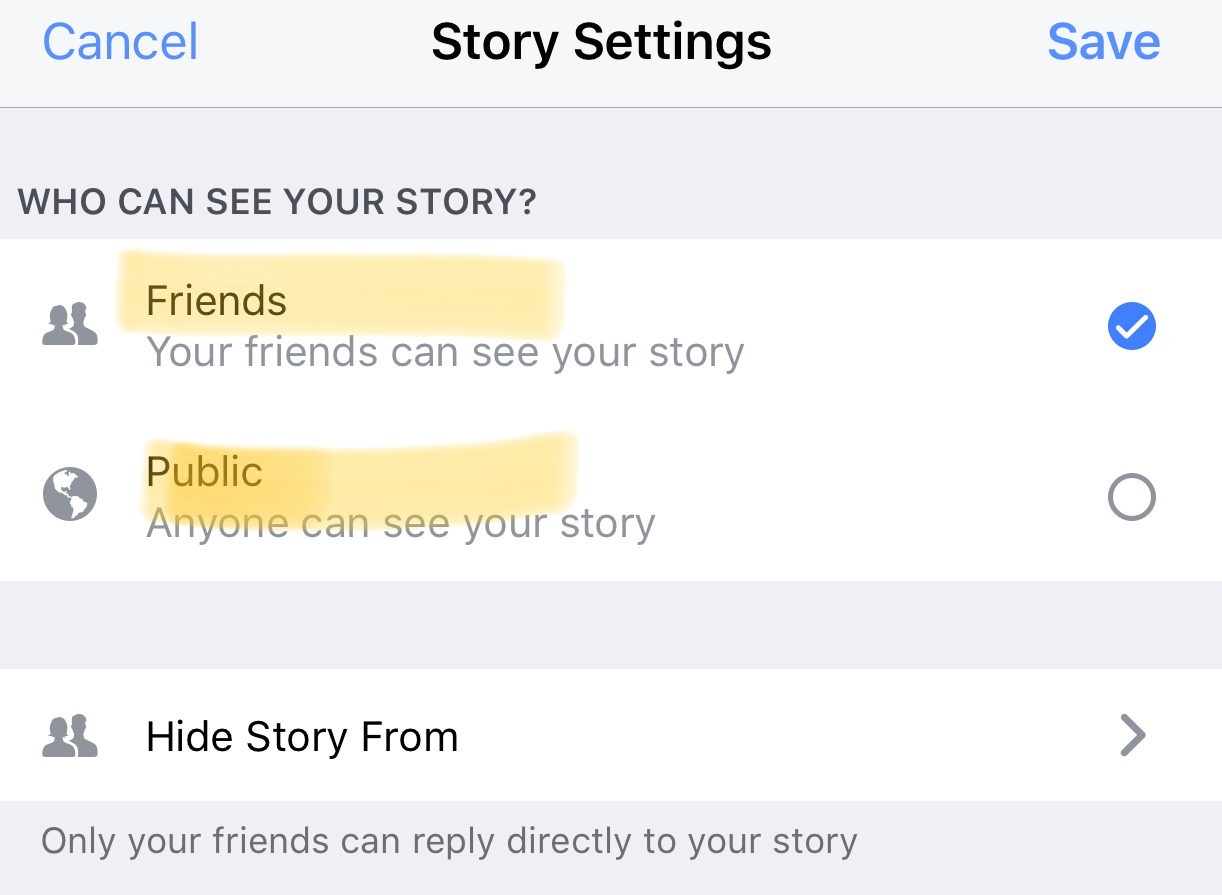
    Instagram, WhatsApp, and Snapchat have proven that 24-hour disappearing story feeds are the latest social media trend. Facebook is trying to increase user-ship of their stories feature by allowing people to post publicly. After a recent Facebook update, you can now change the privacy settings on your story posts to make them visible to anyone on Facebook. 

    Facebook Stories is really the only version of the daily posts feature that has been lagging behind in user-ship. Celebrities and brands will now be able to use Facebook stories to promote publicly just as easily as they can on Instagram and Snapchat. This may be an attempt for Facebook to increase the number of people using their stories feature but it’s likely, also, a way to entice more advertisers into using the feature.

    What Parents Should Know

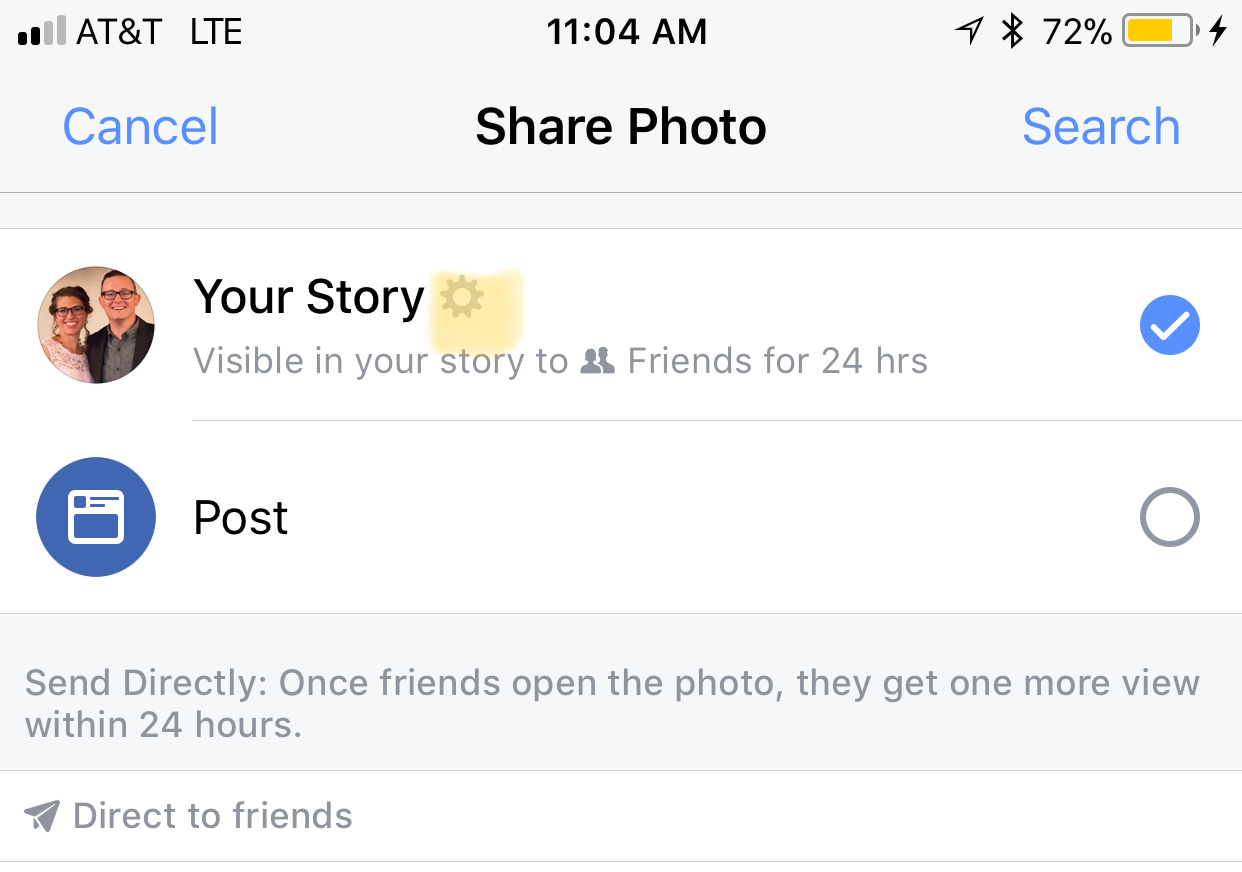
    Any option to share something publicly should be known to parents. If your kids use Facebook and enjoy posting their daily activities on their Story feed you should know how to check and see if they’re posting publicly. Below is a slideshow of how to check the privacy settings on Facebook Stories.

    Be sure to check out what your kids have been sharing publicly and talk to them about the permanence of anything shared online. It’s also a good idea to talk to them about what to do if they receive contact from people they don’t know on any social media platform. As parents, we are the ones responsible for our kids’ safety and privacy online. Learn the ways these social media services have provided for you to keep them safe and private.

  • Bullying in 2017

    Bullying in 2017

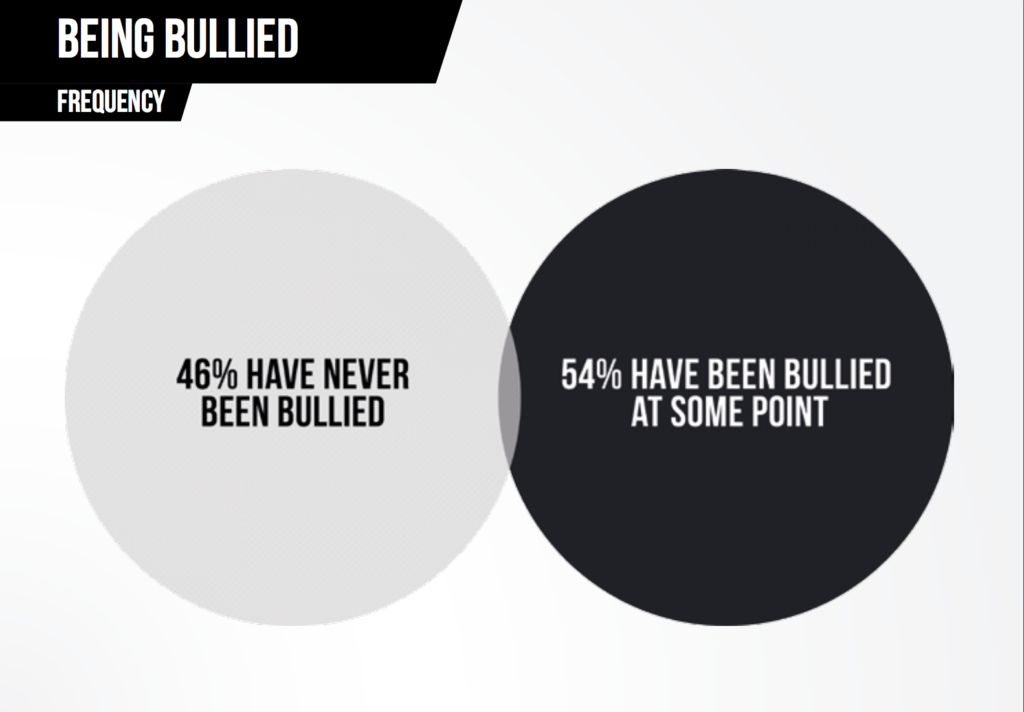
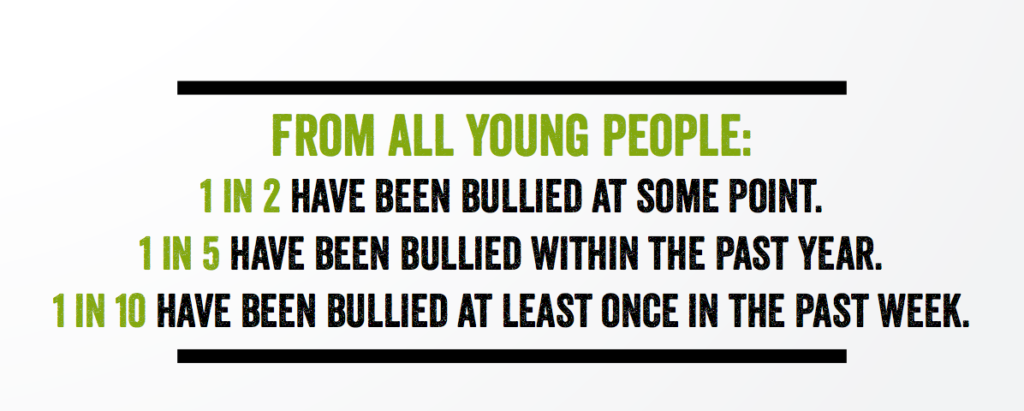
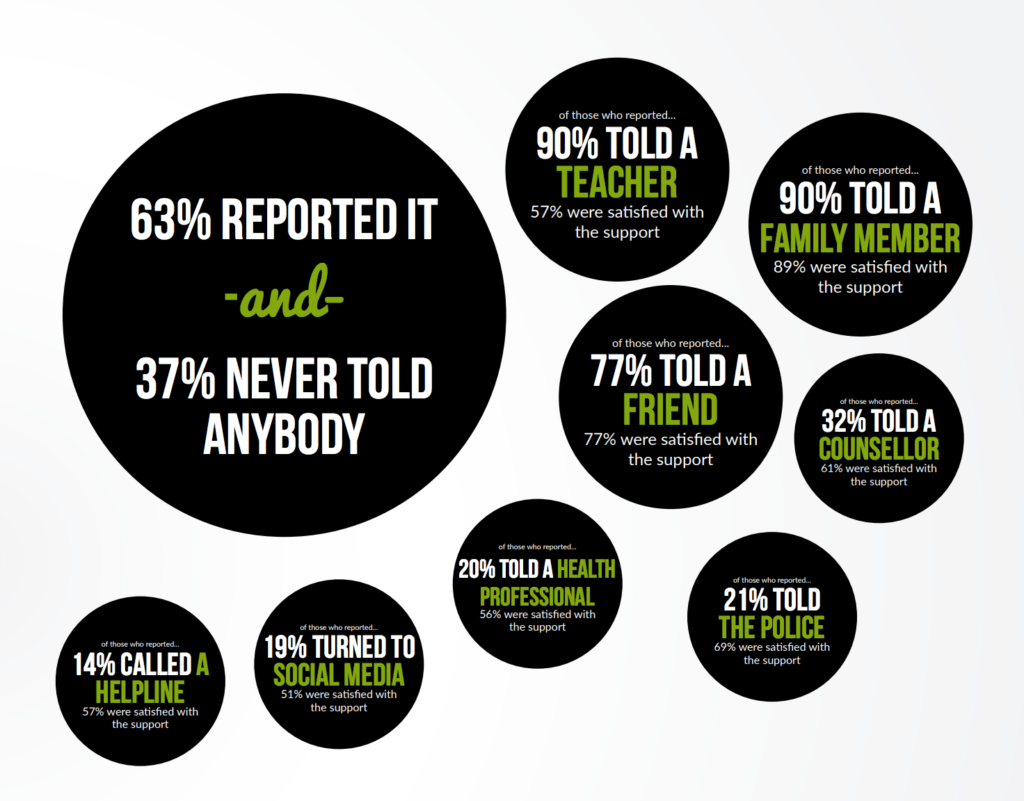
    Ditch the Label has released their annual bullying survey and the results aren’t surprising at all.  It seems that bullying is increasing and people feel more comfortable bullying online than offline. They surveyed over 10,000 people between the ages of 12 and 20. The people they surveyed all lived in the UK and could answer gender identity, race, religion, and other questions to help get information about the reasons behind bullying. You can see some screenshots of the results I found interesting below.


    Another interesting fact pulled from this study was that young people considered Instagram the most common social media site for bullying. Facebook came in a close second. The reasons for bullying varied greatly in the study with appearance and interests/hobbies being the most common and gender identity, sexuality, and religion all coming in near the bottom of the list. This is the largest study of its kind with some of the most extensive and well rounded results we’ve ever seen. This should be a great resource to parents, teachers, and school officials.

    What Parents Should Know

    I preach research and education for parents every single day. This is the kind of information parents need to be aware of. Notice that in the final screenshot about who kids went to when they were bullied, those who say they reported to a family member said they had the highest satisfaction in the support they received. Parents, aunts, uncles, grandparens, and everyone else with a family relationship to a young person need to be ready to have these conversations about bullying and how to handle it. It’s important to understand the issues facing your teens and to know how technology has escalated these issues.

    Go read up and learn all you can. You can see the entire report from Delete the Label on this PDF here.

  • Video Chatting Apps You Should Uninstall NOW

    Video Chatting Apps You Should Uninstall NOW

    Chat Roulette was a challenge that became its own website. The idea was that people could log on to the site and be connected with someone from around the world at random. The website isn’t as popular as it once was but there are many apps that simulate that experience and some of those apps are gaining popularity. Here are some of the ones climbing the app store charts. The ranking listed is for the Social Media category in the iOS App Store as of the publishing date of this article. I’ve only listed the live video or random connection chatting apps in the top fifty.

    Melon #14

    Melon is making the news as the latest video chatting fad. It connects you with new people based on social media friends and offers private messaging, video chat, and a people search feature. It’s gaining popularity and being featured in articles that are blasting it for the frequency of cyberbullying and the high concentration of males looking for girls that will do whatever they ask on camera.


    Live.Me #16

    Live.Me touts the ability to chat with stars and celebrities and broadcast to anyone all over the world. You can find anyone from anywhere or just look to see who is broadcasting around you. There is also the ability to search by topic or interest. Live.Me uses “gifts” and “diamonds” to allow you to share things with other users and even advertises the ability to “date” virtually through the app.


    Monkey #25

    I’ve written about Monkey before. This app was created by a couple of teens who dropped out of high-school to launch a tech startup. It quickly gained a reputation for having too much nudity and not taking some of the responsibility for the content found in the app. This app has been on the FamilyTechBlog uninstall list for a while now.


    MeetMe #35

    Formerly called “MyYearbook,” MeetMe is a app that advertises itself as a way to “meet new people.” The app uses your location to find people near you and information that you’ve entered to connect you with people who share your interests. It’s popular in the app store as it’s been around for quite a while and has the largest fan base. MeetMe offers private chat and video chatting as well as live video broadcasting.


    Climbing the Charts:

    YouNow #52

    Live stream video chat is pretty much all YouNow is about. You can broadcast yourself, find broadcasters, and even join the broadcast as a video guest. The app store listing calls for you to build your fanbase and become a YouNow celebrity. There are some complaints on in the reviews about accounts that have been reported for inappropriate content not being removed because they are popular on YouNow.


    CAM #56

    CAM is popular because it allows you to select the gender you’d like to chat with. It automatically connects you with someone and even automatically texts an invite to everyone on your contacts list without your permission. This practice has caused it to dip in the standings but some continue to use the app because they like the ability to chat or flirt with people they are attracted to.


    What Parents Should Know

    I don’t usually recommend any of these type of app for your teens or kids. Not only is it dangerous to connect with random people who could be broadcasting whatever they’d like for you to see. It’s also a problem because of the potential for predators. Any connection with strangers is dangerous. Some of these apps use your location to connect you and it’s therefore possible to meet people online that you may meet up with later. My advice is to uninstall any of these apps if you see them on your kids phones or tablets. There is no reason to use one of these apps to connect with friends since you can use Instagram or Facebook Messenger to do that now. Uninstall on sight.

  • Just Be Nice!

    Just Be Nice!

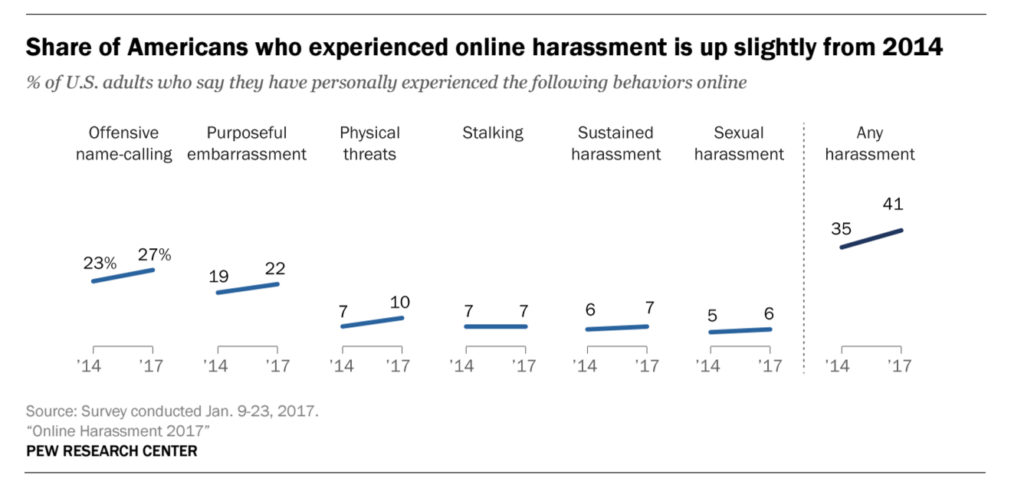
    A new study by the pew research center has highlighted that online harassment and bullying isn’t isolated to kids and teens. It seems that adults have become more comfortable with speaking their mind online even if what’s on their mind isn’t very nice. The study shows 27 percent of adults admit to being called “names” on social media and as many as 41 percent say they’ve been harassed in some way. This was up from 23% being called names and 35% being harassed in 2014.

    Obviously social media was the most popular platform that people reported seeing harassment. Men were the most harassed except for sexual harassment cases, more women admitted to being victims of unwanted sexual content including images sent over messaging. You can see more of the results in the chart below.

    What Parents Should Know

    How can we expect our kids and teens to stop or report bullying if we are participating as well? What example are we showing our kids when we profane someone because they disagree with something we said or shared online? Just because we aren’t face to face doesn’t mean the words don’t have an effect. These are things we should be teaching our kids but we obviously need to heed these warning ourselves.

    We’ve all heard the old adage, “If you can’t say anything nice, don’t say anything at all.” Apparently we have forgotten that what we say online still has consequences. This is the exact message that I have shared with teenagers and kids all over the country and I can guarantee I’ll be sharing the same message with adults now as well.

  • Snapchat Update Adds New Effects and Sharable Links

    Snapchat Update Adds New Effects and Sharable Links

    Snapchat’s latest update will give the camera background effects and allow you to change your voice without using one of their filters. The other major feature is the ability to share links and open them within Snapchat’s very own browser. While you can’t type a url into the address bar at the top of the browser you can click around online and end up at any website you’d like. That’s right, that means your kids can now browse the internet within Snapchat. This has always been possible in other social media apps like Twitter, Instagram, and Facebook but now Snapchat will allow users to tap right on a picture and open a link without leaving the app.

    What Parents Should Know

    If the Discover Page, disappearing photos, private video chat, and SnapMap isn’t enough to put this on your uninstall list, perhaps the ability to access the entire internet without leaving the app will help you pull the trigger. Yes, this feature is available in other social media apps but when you factor in all of the other features that can be a detriment to your internet safety plan it puts Snapchat at the top of my uninstall list.

  • FB Now Boasts 2 Billion Users, What Does That Mean for Your Family?

    FB Now Boasts 2 Billion Users, What Does That Mean for Your Family?

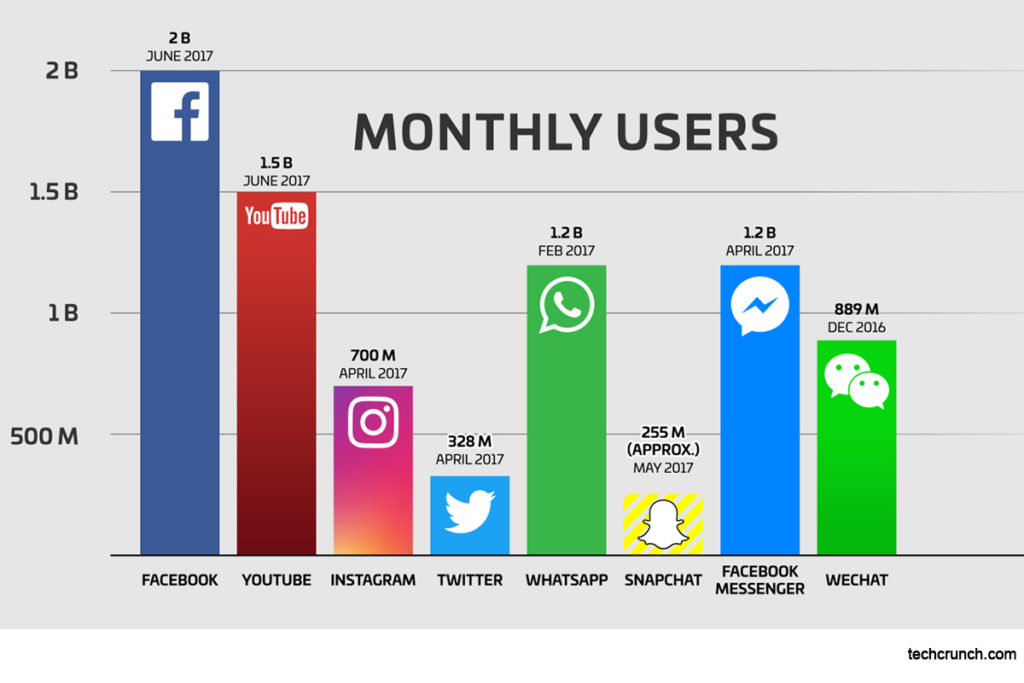
    Facebook CEO Mark Zuckerberg announced today that the social media platform has surpassed 200 billion users every month. The growth has been said to come from a focus on developing countries and regaining lost users. Zuckerberg’s response to this growth was one of excitement and responsibility, he said:

    “We’re making progress connecting the world, and now let’s bring the world closer together.” -Mark Zuckerberg

    Facebook started in 2004 and reached 1 billion users in 2012. The social media is the most used platform with YouTube a distant second with 1.5 billion users every month. What’sApp and FB Messenger both have 1.2 billion but they are also owned by Facebook. The obvious staying power of Facebook is evident in these numbers and their strategy of gaining new users in developing countries and regaining users who had left Facebook is paying off. What do these numbers tell us about the state of Social Media and the Internet? (If they really are two different things.)

    1. Your kids are probably on Facebook.

    The joke has forever been that once parents started using Facebook the kids jumped off. In reality, your kids are most likely using Facebook again. The reason they’ve returned is simple. There is more there to offer. The option to adjust what they see on their timeline and what ads they see are appealing and the AR camera and story feature in Messenger and the Facebook app has come a long way to entice former users to give Facebook another try.

    2. The entire world is available to your kids on Facebook.

    Two billion users is almost a third of the entire world. That means the influence available to your kids is more global than ever. When you add in the other social media services your kids use the globe just gets even smaller. Every idea anyone has or has ever had is available to your children through social media. Every thought anyone has or has ever had on any topic is available to digest and use to develop their own beliefs and thoughts. The influence of the world available on social media has changed the way our kids grow up and what they believe tremendously and the more these services like Facebook grow the more confusing some of these voices can be. There is, of course, a great opportunity to help your kids understand the larger world they live in but you have to help them navigate that world in a healthy way.

    3. Your example of internet citizenship is more important than ever.

    The globalization of our kids’ influences through social media should be a wake up call for parents. We need to understand the responsibility we have to keep our kids protected from the many dangers that are available to them online and to teach them how to be a good citizen of the internet. What do we do when we see something that could be fake or click-bate? Do we fall for the trap? What photos do you share? Are you smart with how you broadcast your location? These are all important safety concepts that our kids have to understand. The best way they’ll learn this wisdom is by watching us implement it ourselves.

    Facebook is proud that they’re the pinnacle of social media greatness. Mark Zuckerberg is emphasizing the responsibility they have to use this influence to bring people together and not tear them apart. Recent news and election cycles have been an example of how social media can cause people to ignore facts and strengthen their own beliefs with information from sources that haven’t been proven or vetted at all. Facebook is doing what they can to curb this trend. The reality, however, is that it’s up to us as the citizens of these social media services to make the right choices and to teach our kids how to do the same thing. The responsibility lies with us, not with Mark Zuckerberg or Facebook. These tech giants are going to make choices based on what is right for their companies and we, as parents and leaders, have to step up and make the choices that are right for our families.

  • New Filters, Reactions, and Screenshot Controls in FB Messenger

    New Filters, Reactions, and Screenshot Controls in FB Messenger

    Facebook is updating their camera in Messenger so you can have some new AR filters while video chatting. The first is Filters which will add color schemes and other effects to your video feed. Reactions will allow you to use the like/love/emoji reactions you can use on FB posts to enhance your live video chat experience. Finally the screenshot button will let you take a still image of your chat with a simple tap of the screen instead of having to fumble around with the hardware buttons on your phone.

    Obviously Facebook is doing its best to separate itself from the rest of the video chatting market. These new features make Facebook live video chatting more interesting than Skype or FaceTime and definitely go a long way to compete against Snapchat’s offerings. What will this all mean for our families? Well, the main thing to remember is that your kids should only be chatting with people they know.

    What Parents Should Know

    It’s important that your kids understand the dangers of video chatting with anyone they don’t know. Messenger uses your friends list to populate your contacts so, in theory, your kids should only be chatting with friends. These augmented reality filters and reactions will add to the reasons to want to upgrade a text messaging session to video chat so if you’re against video chatting by principle then you’ll want to keep them off of FB Messenger. I recommend keeping an eye on who your kids have been messaging no matter what platform they use or if it’s by text, images, or videos. You can do this a number of ways but none is better than having their passwords and checking in on their account regularly. As always I recommend you have a conversation with your children about what they are and aren’t allowed to do on messenger and why. Let them know you’re keeping an eye on things and don’t sneak around. You want your kids on your team.

    Want to get exclusive content and support our work to keep you more informed about your kid’s digital culture? You can partner with us at Patreon.com/BecauseFamily.

  • Turn Off Snapchat’s SnapMap NOW!

    Turn Off Snapchat’s SnapMap NOW!

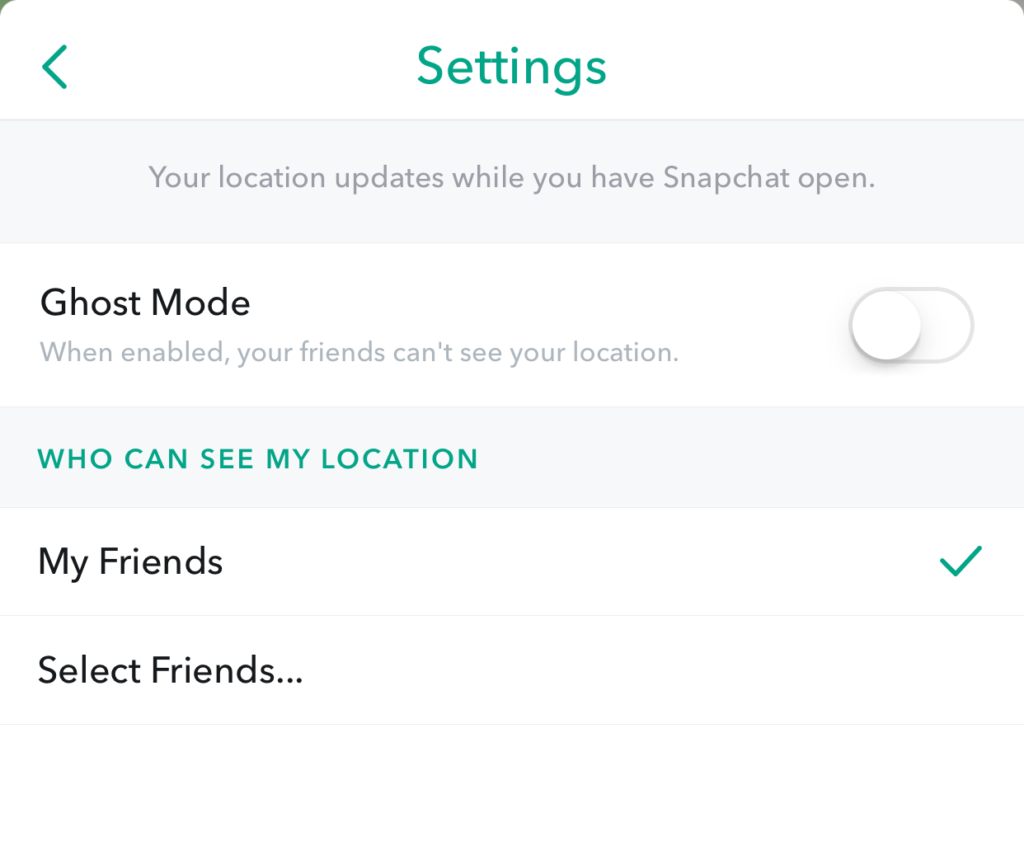
    Snapchat’s newest addition to it’s offerings is SnapMap. This feature shares your location on a map so that other’s can see snaps from similar places or events in real time. This all sounds well and good but what’s really happening is causing tech experts everywhere to warn against using SnapMap. SnapMap shares your location every time you open the app, not just when you post something. This isn’t concerning for just tech safety writers like myself but everyone who spends any time learning about the latest Tech trends is warning that users should disable this feature on their SnapChat account.

    I heard a story last week of a mother who’s daughter and her group of friends had been targeted by a sex trafficking ring using snapchat. The predator befriended a large group of related friends all at the same time and just watched their posts for a while. They all thought they were befriending someone who went to school with them since they had a bunch of friends in common. This person got very close to my friend’s daughter and started talking about a meet-up. Mom saw the posts during a check-in of her daughter’s phone and decided this “friend” was a bit shady. She contacted the police and found out that this predator was part of a larger ring of sex traffickers who use Snapchat to locate and abduct their victims. These guys had to work for months to learn more about where these teens spent their time. The SnapMap would give them that information in seconds.

    SnapMap’s initial setup is only a four step process, if you decide to turn on SnapMap you won’t be warned that your location will always be available. You’ll only be told how your friends can see where you are when you post. If you aren’t sure who all of your friends are and if you don’t know that SnapMap is pinging your location every time you open the app whether you post or not, you’re eliminating every privacy setting you’ve ever set on your phone. Your teenagers don’t know this!

    What Parents Should Know

    Teenager’s brains are developing in such a way that they’ll always fire before they aim. They’ll see the SnapMap option and opt-in just because they want to have everything set up like their friends do. You MUST talk to your kids about what SnapMap is and why it’s dangerous. You’ll want to advise (or demand) them to put their SnapMap on “GhostMode” which will hide their location on their friend’s map. If you’re allowing them to use Snapchat (which is on my uninstall list) you can’t expect them to see the SnapMap for the red flag that it is. You have to protect them by setting that boundary on their behalf.


    Don’t miss a single post. Get a list of our top posts every Friday in your email.

    Subscribe to our mailing list

    * indicates required


  • Tumblr’s New “Safe Mode” isn’t All That Safe

    Tumblr’s New “Safe Mode” isn’t All That Safe

    I have a list that you can download here of all the apps I recommend you remove from your kids’ phones if you see them. Tumblr is on that list because of the overwhelming amount of easily accesible explicit content. A few months ago Tumblr launched a way to turn off the automatic safe search required by apple on all iOS devices. Now they’ve added a “safe mode” to their app and website to keep NSFW (not safe for work) content from appearing in your Tumblr feed. This mode is available in the settings of the app and website in your browser. It will be automatically on for people who’s age is under 18 and who aren’t logged in to Tumblr when accessing content.

    The safe mode works, not as a filter to keep out content, but as a cover to hide NSFW images so any onlookers won’t see. The feature adds a cover on posts with explicit content that can be removed by tapping or clicking “show post.” The goal isn’t to keep sensitive material from appearing in your feed, it’s meant to keep you from getting caught looking at the sensitive content. The safe search option, together with this safe mode setting could lead you into a false sense of security with what is available for your kids to see on Tumblr but these settings aren’t meant to keep this content away from people trying to find it. They are more suited to keep folks from scrolling past something on accident. Both security modes can easily be bypassed in settings that can’t be protected by a password.

    What Parents Should Know

    The fact remains that pornography is by far the most commonly searched content on Tumblr (over 20% of all searches are for porn the next most popular is literature at just over 7% of all searches.) Explicit content is easily available on Tumblr and because of that I caution parents about this app all of the time. This is one app that I recommend be uninstalled and a social media platform that I would keep my kids from altogether. My advice is that you add Tumblr to your filter blacklist and your accountability software red flag list. This will keep the entire site off of your kids phones and computers and give you peace of mind that they won’t find any of the easily accesible images so prevalent on the site.