Category: Screen Time

  • Family Link’s New Features are Great but Still Not Good Enough

    Family Link’s New Features are Great but Still Not Good Enough

    Android has updated their Family Link parental controls feature. The above video will take you though what they’ve done and give you some questions to ask yourself about using the service.

    Make sure your device is compatible.

    The site is very clear that Family Link is only compatible with newer android devices. Go into the settings on your kid’s device and tap the ABOUT button in the menu to see if your software version is 7.0 or newer. If it isn’t your child may not be able to install Family Link which will mean you can’t use the software to set limits and restrictions.

    Double check their privacy policies.

    COPPA regulates the collection of children’s data without parent permission. You have to create an account for your child to use Family Link and to do that you must give permission for Google to collect some of their data. The video explores a bit more of what information they can collect and what they do with that data.

    Be aware that your kids get full control at 13.

    If you are one that wants to be able to see what your older child is doing on their device you’ll have to use the child’s phone to adjust parental control settings with Family Link as control is shifted to the child at age 13.

    Do your homework!

    As I mention in the video above and the podcast episode below, you need to familiarize yourself with the benefits and limitations of Google’s Family Link software. Visit families.google.com to see their information about it and check out our other articles and videos about Family Link as well. You can never be too informed.


  • HOW TO: Set Parental Controls on Macbook and iMac (OSX)

    HOW TO: Set Parental Controls on Macbook and iMac (OSX)

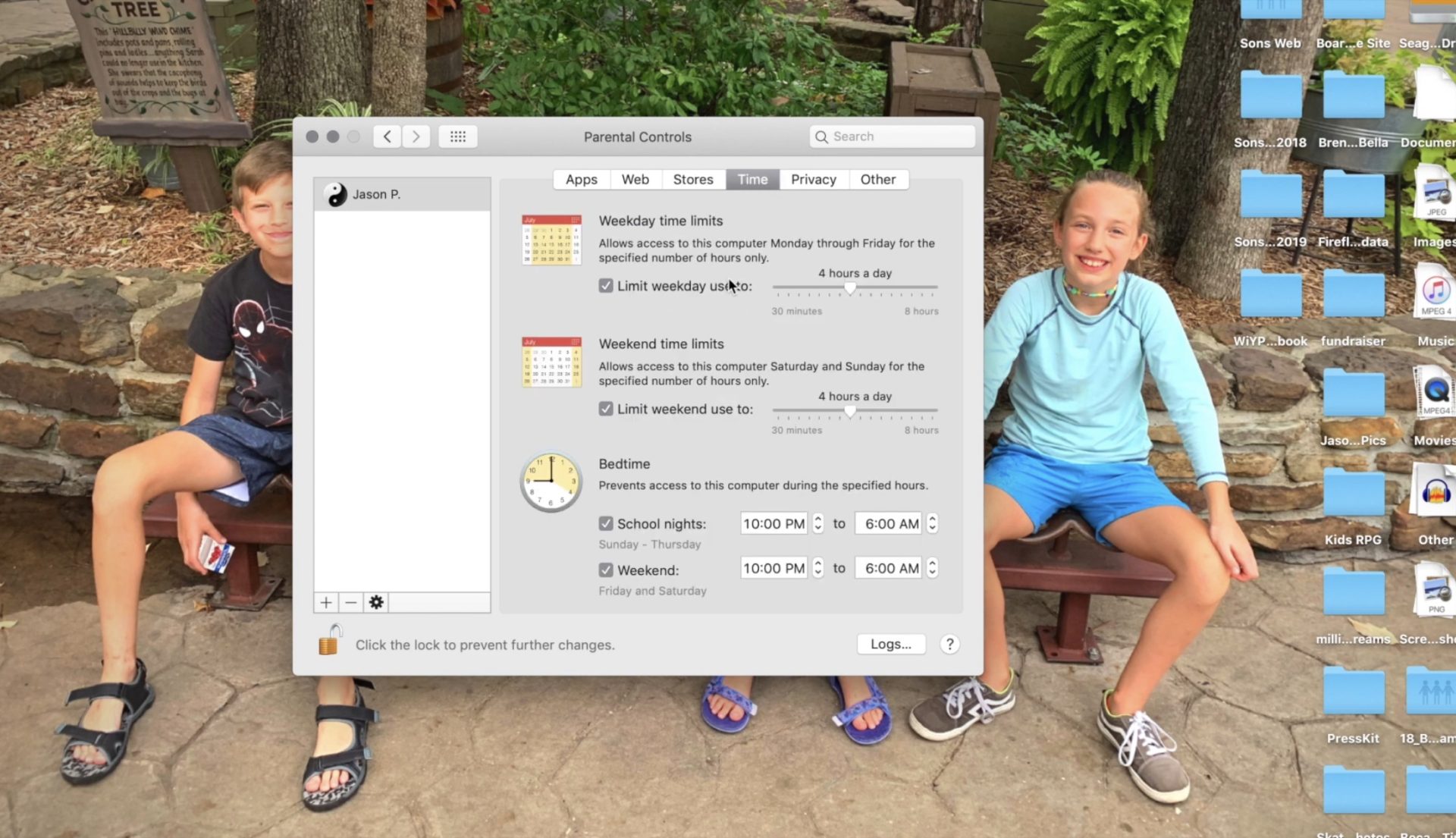
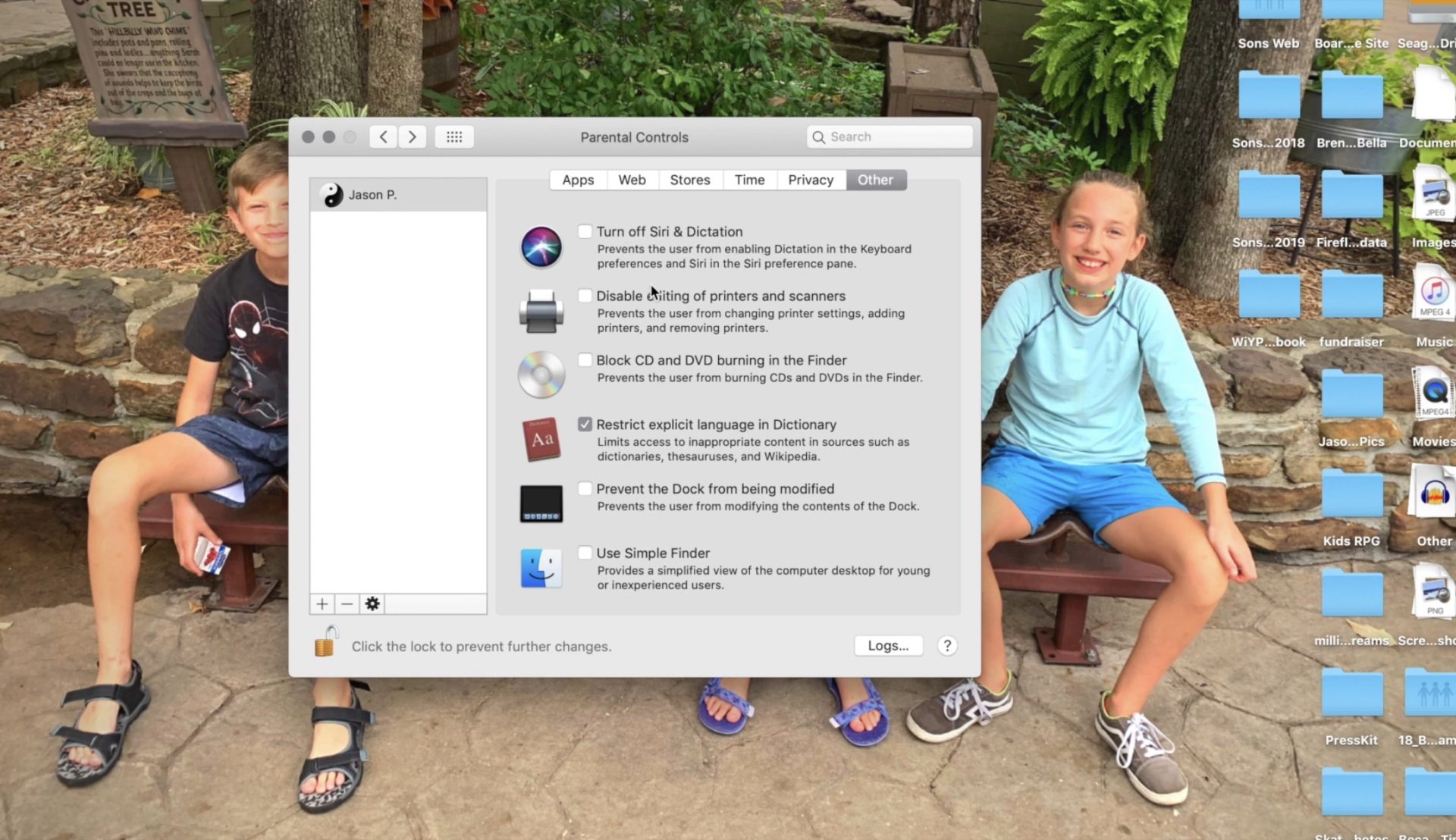
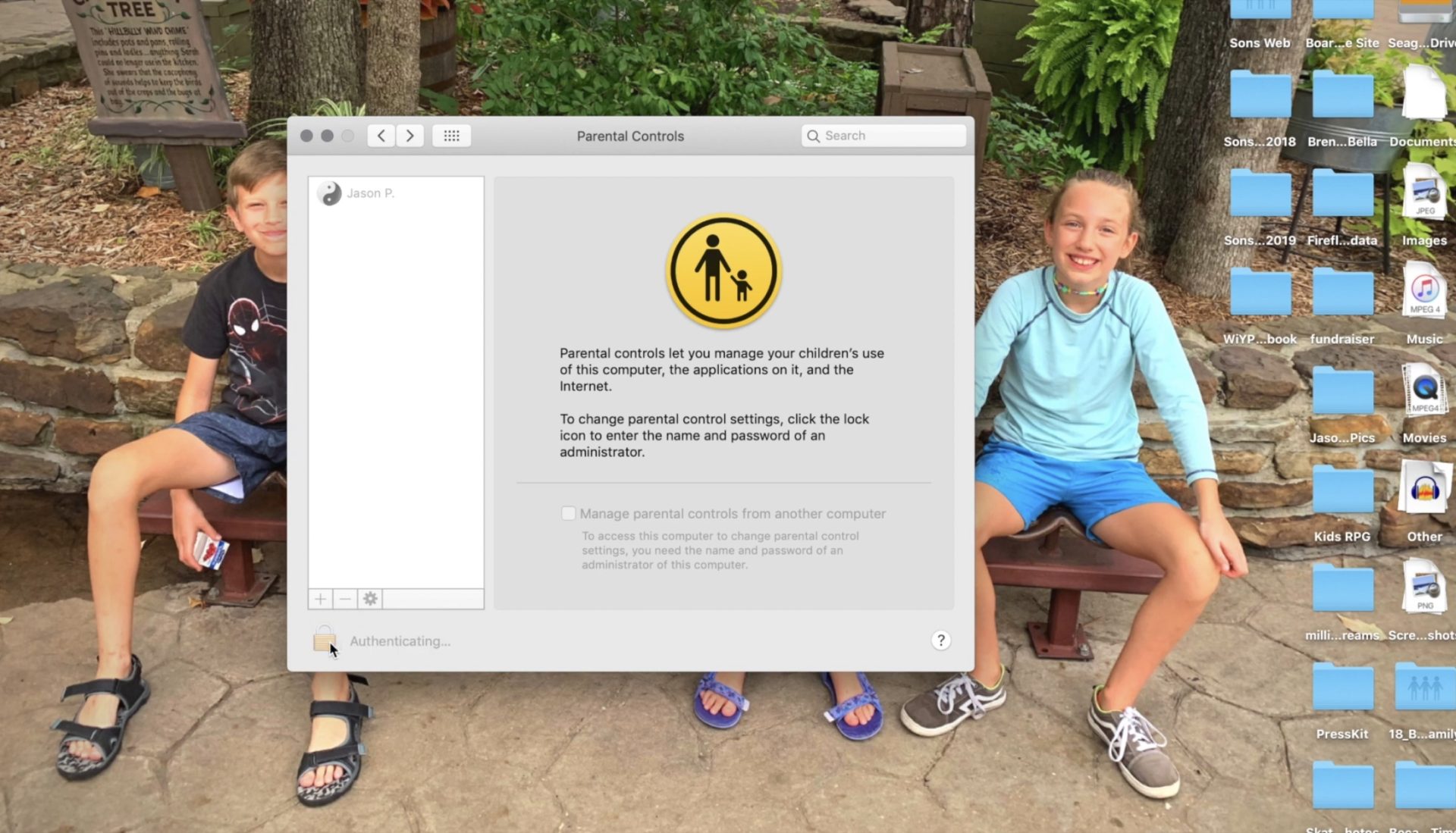
    The tutorial video above will walk you through the steps necessary to set up parental controls on your Macbook Pro, Macbook Air, or iMac. These settings work with OSX High Sierra or OSX Mojave. Below is a brief summary of the steps necessary to set up these parental controls.

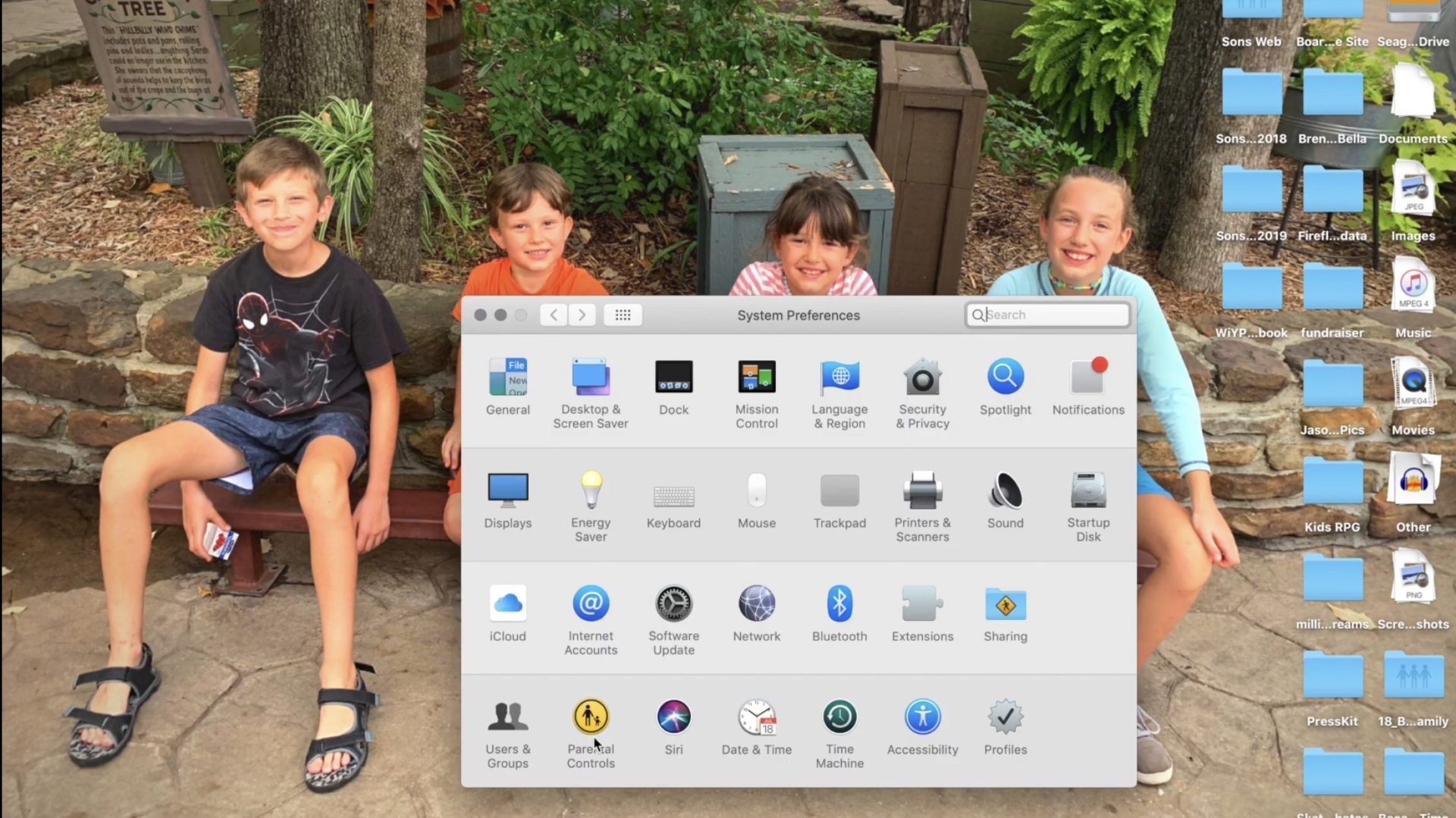
    Open Preferences by clicking the apple logo in the upper left corner of your Macbook desktop and then clicking Preferences.


    Click on Parental Controls on the bottom row of icons in the Preferences menu.


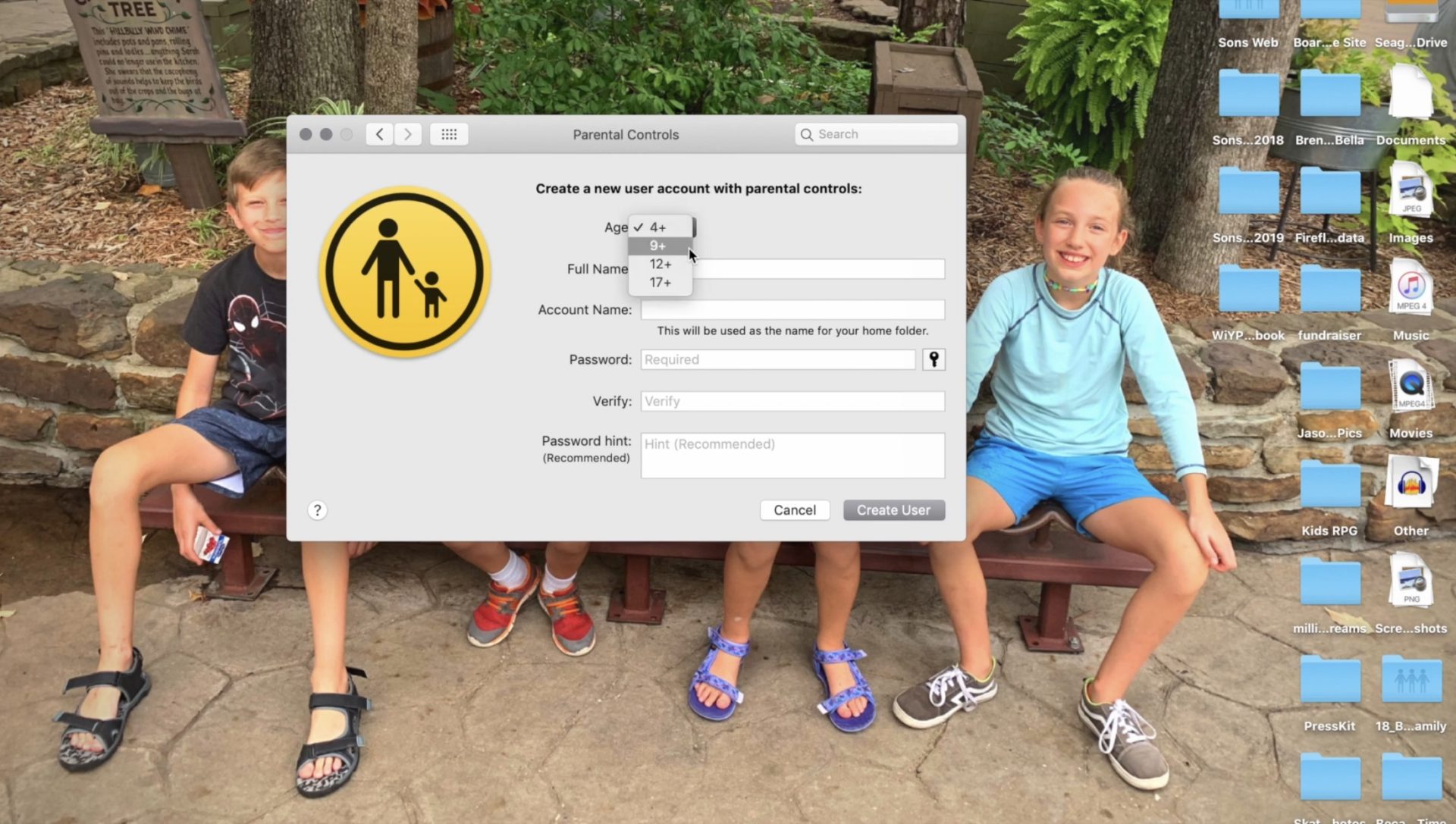
    Follow the steps for creating a new account with the information of the person you are trying to set filters and restrictions for.


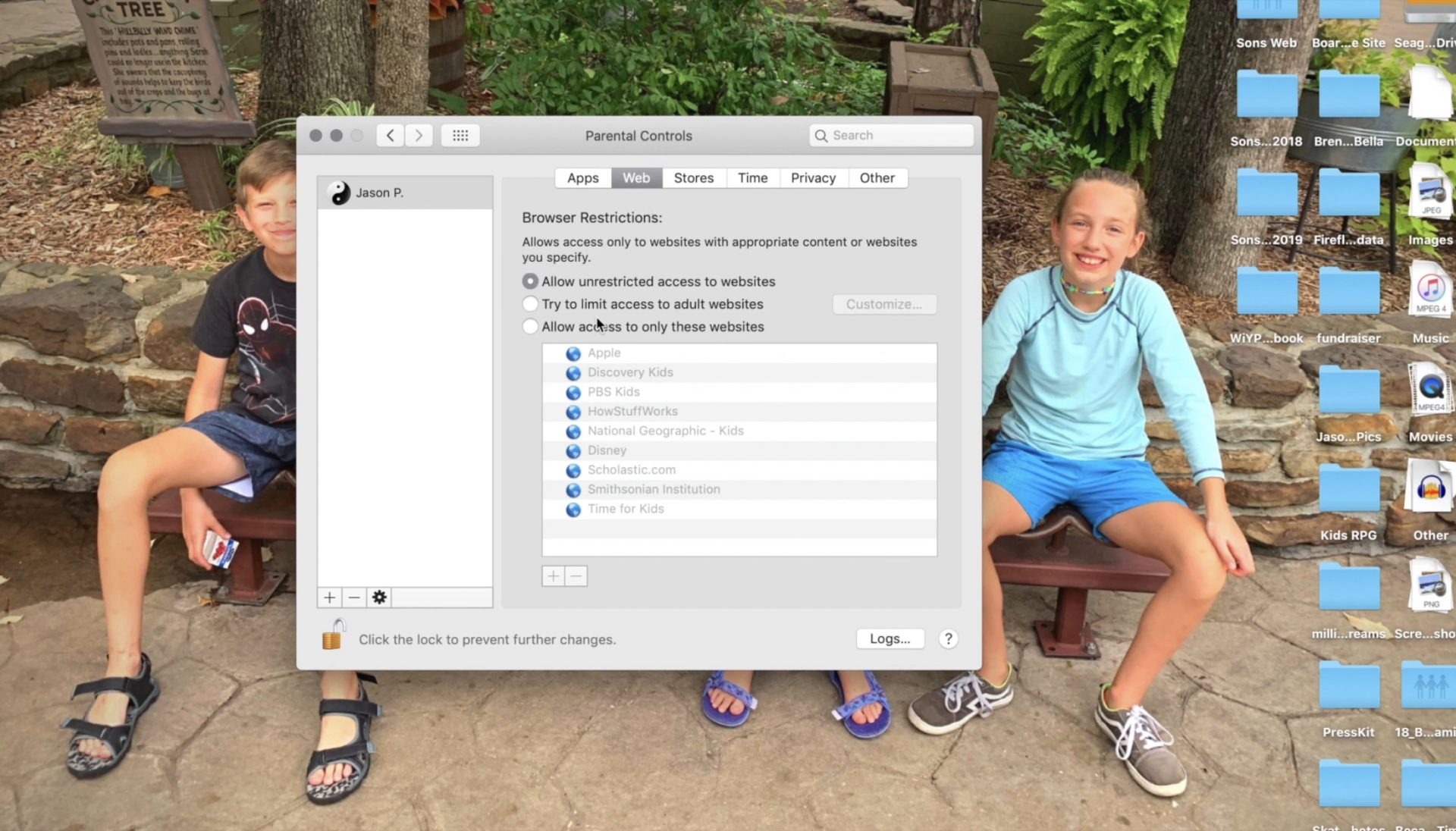
    Set Restrictions for apps and web content.


    Set desired time restrictions and bedtime hours.


    Adjust settings for other content such as Siri and the OSX dictionary.


    Clicking the lock with set the changes and password protect the settings you adjusted.

    Setting these restrictions will help you have peace of mind while your child or teen uses their OSX device. If you would like further confidence that they are only seeing things that they should be seeing, look into an accountability software like Accountable2You. Also, if you come across any problems or have any questions please comment below or send us a message on Facebook.


  • Research Finds Another Link Between Social Media and Depression

    Research Finds Another Link Between Social Media and Depression


    Researchers in Montreal have spent the last four years studying nearly 4,000 students and their screen time. The study was looking for links between self reported depression symptoms and uses of different kinds of screen time. The types of screen time studied were social media, television, video games, and computer use. The study used annual surveys to sample students  in the Greater Montreal area in 2013-2018 and the results were analyzed in December of 2018.

    The study found a substantial depressive symptom increased for every hour spent on social media, computer use, and even for television. Adolescents reported more cases of comparison to others because of their use of social media, leading to depressive symptoms. The study concluded that “Both screen time modes (social media and television) should be taken into account when developing preventative measures (for depression) and when advising parents.”

    Why Your Teen Posts Her Feelings On Social Media

    What Parents Should Know

    There has been a lot of research concerning screen time and the health of our children. This study is interesting because they chose to separate the types of screen time in order to try and identify if one type or another has a greater impact on the mental health of the children studied. There are a few things that stood out to me as I read this study. First, video games didn’t seem to be a determining factor for depression. While video games can cause other issues, it seems that the direct comparison or contact with others available through social media and even some of the stories on television create the atmosphere for decreased self satisfaction and can lead to depressive symptoms. While many kids between 7th and 11th grade can falsely report feeling “depressed” just because of their stage of life, this study found a pretty significant correlation between the subjects’ symptoms and their screen time activity.

    Secondly, their approach of separating types of screen time should become a new standard for this type of research. Researchers are finding that the amount of time your kids spend on a screen can have varying affects based on what it is that they are doing. This study supports that approach by proving that some categories of screen time affect depressive symptoms in different ways. Finally, the final sentence of the conclusion supports the idea that screen time should be taken into account when developing preventative measures and when advising parents. Psychologists, doctors, and counselors should be considering, not just the amount of time kids spend on their devices, but exactly what they are doing. Parents should be considering those same things.

    Your son may play a ton of video games and you’re worried about anger or lack of social skills, those worries could be valid and more research is needed to identify if video gaming is, indeed, a factor. Social Media use is proving to be a determining factor in the mental health of young teens as they age. Our kids are exposed to so many ideas and so many different environments at such an early age that we, as parents have to be the gatekeeper for what enters their minds. We have to help them guard their hearts and properly interpret their emotions. If kids are seeking help from other kids, they aren’t getting the mental health advice that they need. We parents should provide a safe space for our kids’ to express how they feel. We should then be willing to make arrangements to get the professional help they need if necessary. Parents can’t ignore our children’s feelings, we have to take them seriously and make every effort to support them in exploring their own mental health.


  • Get Parental Control Tools for Cheap on Amazon’s Prime Day

    Get Parental Control Tools for Cheap on Amazon’s Prime Day


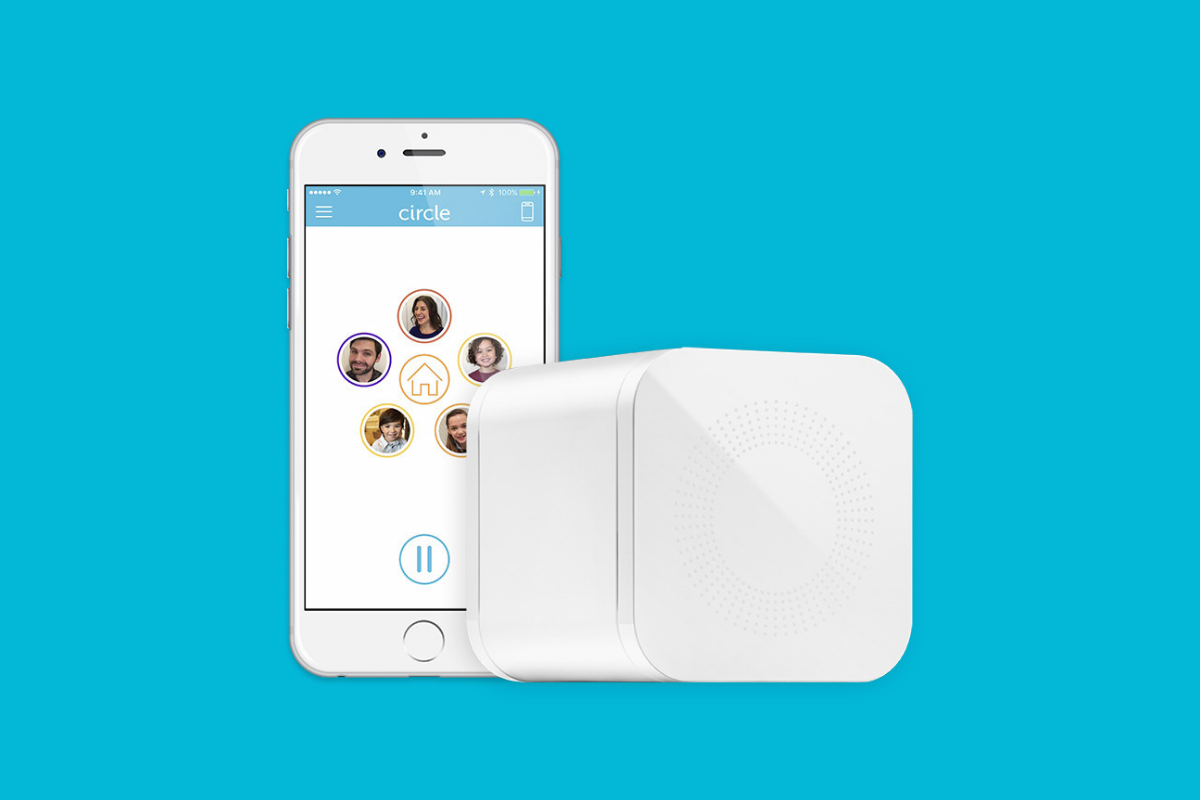
    Meet Circle, Our Favorite Home WiFi Parental Control Solution

    We love Circle. It monitors our kids online activity and protects them from happening upon websites they should be avoiding. I recommend Circle everywhere I go and to everyone I talk to. They have released a NEW VERSION of Circle that includes a year of premium features when you buy the device. If you are ok with having the older version (which is still supported, at least for now) you can get it for a third of the original price on Amazon right now.

    A Kid Friendly Watch with Messaging

    You may not want your child to have their own phone but need them to be able to contact you when necessary. This watch uses the Android operating system and allows GPS tracking, WiFi, Calls and Messaging. It also has a camera. The watch is kid sized, made for children ages 4-12. If you want the phone call option you will need to get a sim card from your cell service provider (Verizon and Sprint not supported.)

    Have Some Screen Free Fun!

    Parental Control doesn’t always mean keeping them safe while on technology. Sometimes it means keeping them off of tech completely. Board games are a great way to achieve the goal of entertaining your kids without screen time.

    Whatever age your kids are, there are some awesome off screen games available on Amazon’s Prime Day today. Whether you want to build a Unicorn Army, expand civilization through villages and farms, or collect jewels to earn more points than your opponents, these games are a ton of fun! Check out the deals on these tabletop games and sit down with your family, with no screens, and have a good time. Board games encourage eye contact, communication, healthy competition, and creative/critical thinking. They are good for learning as well as fun.


    Enjoy Each-other Outdoors

    Sometimes you just have to get outside. These activities will give you a chance to leave the technology indoors and head out for some “green time.”  Use your aim and dexterity to score as many points as possible in the classic Ladder Toss game which is on sale at a special Prime Day price for then next couple of days. If you’d rather toss Horse Shoes, this kid safe version of the outdoor favorite is also priced for Prime Day. If you want a new twist on an old classic, check out this Cornhole/Golf Chipping Target combo. It’s only $40 today.

    Thanks for partnering with BecauseFamily (Four Point Families 501c3)

    BecauseFamily exists to protect children and teenagers by bridging the technology gap between them and their parents. As we work to provide resources to parents and kids alike, you partnership helps us continue our mission to keep kids safe. Your options for supporting BecauseFamily are available at BecauseFamily.org/partnership and include direct donation through PayPal, ongoing support of our media content through Patreon, using our affiliate links, and signing up to support us on smile.amazon.com. The links above all direct you to the smile.amazon.com page for those products. You may be asked to sign up for who to support, search Four Point Families to elect us as the benefactor of your Amazon Smile donations. We are eternally grateful for your support!

  • YouTube May Have to Stop Making Money Off Our Kids

    YouTube May Have to Stop Making Money Off Our Kids

    The US Federal Trade Commission is finishing an investigation into YouTube’s Children’s Data and Ad policies and at least one member of Congress is now asking for YouTube to make some major changes. Massachusettes Senator, Ed Markey has officially requested that the FTC enforce some major policy shifts on Google for how YouTube handles advertisements to children and the collection of kids’ data.

    The request states that:

    Personal information about a child can be leveraged to hook consumers for years to come, so it is incumbent upon the FTC to enforce federal law and act as a check for the ever increasing appetite for childrens’ data. – FTC YouTube COPPA 2019

    This three-page document outlines a plan for rules that the FTC should enforce upon YouTube in order to keep them compliant with  COPPA and to better regulate their child advertising practices. The rules include requiring Google to stop collecting data from users under 13, requiring YouTube to develop a way to identify users under 13 and implement COPPA compliant policies, disallow influencers from marketing products geared towards children under 13, and forcing Google to create a fund for developing content meant for children that is ad-free and COPPA compliant. 

    COPPA imposes certain requirements on operators of websites or online services directed to children under 13 years of age, and on operators of other websites or online services that have actual knowledge that they are collecting personal information online from a child under 13 years of age.

    What Parents Should Know

    Parents have to be intentional about teaching their children about online privacy. Regulations from the FTC will, likely, be coming in the near future. Even if these changes aren’t as strict as the ones listed in the letter from Senator Markey, they will still cause major ripples in the YouTube creator and viewer community. The way that YouTube seems to try and handle these kinds of problems is by “demonetizing” videos that contain the type of content they are taking heat about. The heat they are getting from the FTC right now, though, is concerning some of the most profitable channels on any video sharing platform ever.

    Advertising is the way these companies make their money and collecting data is their sole model for targeting their advertising. If they aren’t allowed to target children anymore then there won’t be much content on YouTube for children at all. Our approach has always to only allow our kids to watch YouTube videos that we have selected and they must watch them on the television in the living room. That protects them from any surprises and we curate the types of videos they are allowed to watch. We also have YouTube Premium which removes ads. This is helpful since the algorithm that selects which ads show up on what videos often doesn’t take the age of the target audience into account. (i.e. an ad for the latest Childs Play film on a video about kids making slime.)

    As I always say, we should hold these companies accountable as much as possible but it falls to parents to be the responsible ones when it comes to our children’s digital health and online safety. What is your approach to YouTube, do your kids watch as much as they want? Do you limit their viewership on YouTube? Do you think this news will affect how much time you allow them to use the app? Let me know your thoughts in the comments below.


  • The Three Worst Tech Parents

    The Three Worst Tech Parents

    I had the opportunity to speak at a conference last week that was full of educators and school administration. They were extremely excited about the things I had to share, they loved learning about ways to protect their students online, and they were generally interested in the statistics and facts about online dangers. They all, however, had one major complaint. “Parents just don’t seem to care.“

    That’s right! Teachers, administration, afterschool program leaders, and even librarians want to help kids learn the best way to use their tech devices. Everyone is concerned about overuse and too much screen time. Nobody wants kids to end up on the wrong websites or being communicated to by the wrong people. They all want kids to be protected while they’re on school property but they know that that is only a very small amount of time compared to the time they spend online at home.

    This all falls on parents. There is no one who has as much influence over their children as the parents who raise them. Teachers, coaches, pastors, and mentors all do what they can and have a real heart to protect your kids but if mom and dad aren’t taking part then it is an uphill battle.

    Here are three kinds of technology parents and where they mess up.

    1. The ”Do as I say, not as I do.” parent.

    I’ll never forget my neighbor’s grandfather when I was a child. He smoked like a chimney, several packs of cigarettes every day. When we would be outside playing with our friends, it never failed, he would come out light up a cigarette and immediately tell us all, “Never start smoking, it’s really bad for you.”

    I get addiction. I understand that there are things people can’t just give up. But this “do as I say not as I do” attitude can be very harmful to our kids. When it comes to technology most of us lift our phones about every 10 seconds on average. We spend 4 to 6 hours per day creeping Facebook, watching YouTube, and posting to Instagram.

    Even as a 10-year-old kid I realized how weird it was that this man was standing there, chain-smoking cigarettes, and telling us not to do the same thing. Our kids get confused when we tell them they can’t have any more screen time while we are looking at our phone just like we have all day long. Put it down, look up, and set a good example for your children.

    1. The “I’m super busy.” parent.

    I remember being told to play outside because my mom needed a few minutes to her self. We would go play at friends’ houses and every now and then a friend would say that his mom wouldn’t let us play there today because she needed the house to her self. Parents have always needed time without kids running around asking for things and getting on their nerves. The difference is that when I was a child I was going to the homes of people my parents knew. Now we set our kids down in front of devices on which they can communicate with the entire world.

    Using Netflix or YouTube as a babysitter is just simply a bad idea. It can be useful if you know how to set it up properly but most of the time parents know less about these sites and apps than their kids do. I get that you’re busy. I understand you have things you have to get done. It’s just very easy to allow your kid to be on the screen for 4 to 6 hours before you realize how long it has been. Use some sort of app that sets a time limit for your kids’ Screen time. That way it doesn’t fall to you to remember when they their time is up. It automatically kicks them off and you can tell them to get outside and have some fun in the sun.

    1. The “I have great kids.” parent

    Of course you have great kids. I know they don’t want to do anything wrong online. They will not bully people, they won’t send inappropriate photos, and they are definitely not visiting adult websites. The problem with this logic is that they don’t have to seek out these things, they come to them. Two out of every three kids who see adult content for the first time saw it by accident and the average age a young man sees pornography for the first time is age 8! These are, most likely, children whose parents would consider “Good Kids.”

    I sat and watched a young lady of seven years old create videos of herself and post them publicly on an app called Likee. I went to look at this app in the App Store and saw that it is rated 17+ because of the ability to post your videos publicly online. I guarantee mom didn’t know that app was posting videos that strangers can see online. Moms and dads trust their kids because they believe they’re going to do the right thing. The issue isn’t usually what your kid does online. Most of the time the problem is the strangers on the other side of that screen.

    Your kids need you to care!

    The worst thing we do, as parents, is decide that we can’t learn any more about the tech our kids are using. We cannot be fooled into thinking that the digital world is moving too fast for us to keep up. It does move fast, I understand, but there are resources that we can and should use to help us better wrap our minds around our children’s time on tech. Use FamilyTechBlog.com, our YouTube Channel, and Podcast to help you stay informed. Knowledge is definitely power. You need that power to keep your kids safe and help them develop healthy habits.

    Secondly, we often get too focused on ourselves and what we need. While our homes shouldn’t be fully centered around our children, we have to set some boundaries and standards to protect our kids from the nonsense that the online world can provide. We should pay attention to what they do on social media and not let them use those apps until they are old enough to use them responsibly. We need to be knowledgable about the video games they play, the sites they visit, and who they communicate with online. We should learn all we can, every chance we get, to continue to keep our kids safe.

    It is easy to get discouraged. We hear of the worst case scenario on the news almost daily. kids going missing, kids hurting themselves because of something they’ve seen online, and studies showing how damaging excessive screen time can be for our childrens’ brains. I advise that you don’t get discouraged but get inspired. Let this information drive you to learn more to protect your kids. Learn all you can and share what you learn with all of the parents you know. That’s the best way to protect our kids and help them build healthy habits.


    Listen to the podcast here:


  • Is Apple Blocking Parental Control Apps Because they are Competitors to Screen Time?

    Is Apple Blocking Parental Control Apps Because they are Competitors to Screen Time?

    The Story So Far

    It is a long and arduous story, the tale of Apple shutting down parental control apps. Some say it was done to protect Apple’s investment in their own Screen Time app while others believe Apple truly has the wellbeing of their customers at heart. It is hard to look at this story from any one angle alone without making a blanket statement about the opposing side. This is why I have taken a look at all sides and wish to help you, parents, understand what is happening in this strange new war.

    Last fall, after announcing the release of iOS 12 which feature their new controls app “Screen Time,” Apple began to deny certain parental control apps access to the app store. Apparently, citing the fact that Apple doesn’t allow apps to use any method to block other apps (a pretty important feature in a parental control software.) Eleven of the top seventeen parental control app developers such as Mobicip, OurPact (the top Parental Control app in the app store,) and Quistudo were all in communications with Apple for months about their apps being removed and what it would take to get reinstated. Apple’s comments seem to have been centered mostly around the removal of apps and the use of something called MDM or Mobile Device Management. They stand on the fact that MDM allows access to information that should remain private. Developers of the Parental Control apps are saying that Apple said nothing about privacy in any of their communication about getting their apps reinstated. This is causing a bit of concern for developers, media, and parents alike.

    Even more information about MDM in the video and podcast.

    Recently, the New York Times released an article about Apple’s removal of the parental control apps from the app store alluding to the possibility that the move was to eliminate competition for Apple’s Screen Time or even to keep people from using apps that cause them to use the iPhones less often. We are obviously getting a lot of they said/they said back and forth with this story and there is more to come (law suits and such) but here is what I think it all means for parents. 

    What Parents Should Know

    Above all it is important for parents to understand that there is no such thing as the perfect parental control app. The free ones are likely selling your data and the paid apps are usually using some sort of loophole to even work properly. Apple uses a pretty closed approach to their app store, only allowing a very small “sandbox” for developers to work in. This causes many of the parental apps in question to fall short of complete and total control. The MDM allowed for a bit more of that control but without that access, many of these apps are simply useless. I do believe that parental control apps should be held responsible for what they do with the data that they collect. Apple takes data security and privacy very seriously. This is what they have said is at the core of their stance against some of these apps. Apple must protect the privacy of their users, it is a major part of their platform and what sets them apart from their competitors.

    Time Management Dashboard Coming to Instagram and Facebook

    What does this mean for us as parents who want to protect our kids? First of all we have to remain vigilant to keep our kids safe online. Use some sort of network level parental controls. Whether you use Circle or something else that is built in to your router, it is a lot easier to set up filters that block your entire network than to set it up on each device. Also, you can just learn and use the built in parental controls that Apple and Android have created. Screen Time isn’t perfect (as I said, none are) but it is pretty good. Use the resources you have as well as a good, healthy environment of conversation and security to keep your kids using tech properly and discussing it with you regularly.

    Until Apple makes it easier for software developers to access user behavior, any built in parental control options will be bettor for iPhone and iPad users. Screen Time is currently a bit limited but is is a lot better than nothing and will work for most families. The best part is that the stance Apple has taken for privacy will also apply to users who have set up Screen Time. Any account that you have set up for your child will be treated as a child’s account and Apple’s terms state that their data will be treated as such also. Maybe your favorite Parental Control app is a part of this whole drama. If so, hang in there and set up something you can use because this whole story isn’t over. I’ll keep you updated as more happens.

    For even more, listen to the podcast episode below:

  • Ten Screen Free Things to Do This Week!

    Ten Screen Free Things to Do This Week!

    Today marks the first day of Screen Free Week 2019. We have become so used to doing everything on our phones, TVs, tablets, and computers that it can be difficult to think of things to do when we unplug. It can especially be difficult for our kids who spend so much time on screens every day. Here are some ideas to help you start thinking of how you’ll spend your time this Screen Free Week. I’m sure that whichever activity you chose to do you’ll be blown away at how good it was for you to be screen free, even if only for a little while.

    1. Read Books

    No, I mean a physical book. With paper and glue and pages and everything. Many of us are spoiled to our audio books and ebooks. We carry around a library of hundreds of volumes and read whichever we want, whenever we want. This Screen Free Week, why not forget about the books in your digital library and take a look at some of the adventures you have on your actual bookshelf. You’ll be amazed at how cathartic it can be to just turn a real page instead of swiping to the next set of pixels that make up the story.

    2. Share a Screen Free Meal

    Having a meal with friends and family can be a great way to reconnect and charge up that need for social interaction. Food brings people together. Unfortunately, our phones can often get in the way of this beneficial time. Celebrate Screen Free Week by choosing to keep your phones away from the table during meals together. Look each other in the eye, have conversations, and share the time with your friends and family.

    3. Play Board Games

    You can pull out the old classics like Monopoly and Life or maybe sit down to a newer hit like Settlers of Cataan, Forbidden Island, or Dice Forge. Whatever board games you choose, you and your family and friends can enjoy screen free entertainment. Personally, I look forward to Dungeons and Dragons every week when I sit down with some guy friends, eat snacks, roll dice, and tell a story together. A story filled with imagination, humor, and adventure. Don’t underestimate the power of time around a table playing a game.

    4. Play Outside

    Trade in Screen Time for some Green Time! Get outside and get moving. Play a sport, run a race, skip, hop, jump, run, anything you can think of outside will be so good for you. Your body will thank you for the exercise and your brain will thank you for the release.

    5. Go for a Hike

    Screen Free Week is a wonderful time to get out and experience the beauty nature has to offer. You’re bound to have a hiking trail just a short drive from your home. Maybe it is just through a park in the city but it will be great to slow down, walk through nature, and stop and look at what the beauty all around you. Bend down and look at those leaves or that insect working away. Feed some ducks or squirrels. You’ll be amazed at how wonderful life is beyond the six inch space in front of your eyes that your phone often tends to occupy.

    6. Act Out Your Own Play

    We love to be entertained. Netflix, Youtube, Hulu, and Amazon Prime make their money off of our desire to escape reality by enjoying a movie or series. Take this week without screens to create your own entertainment. Play an improve game or charades to get your imagination moving. Get some friends together and act out some of your favorite scenes from the movies and shows that you love. How fun will it be to play the characters you love and laugh with your friends as you channel that inner child.

    7. Play a Musical Instrument

    How long has it been since you’ve picked up that guitar in the corner of your room? How long has that violin been sitting in its case, untouched? Without the distractions of y0ur screens this week you can take some time to play that instrument you’ve been neglecting. Maybe you aren’t a musician. Why not try something new? Borrow an instrument from a friend or just bang out a beat on your knees with some pencils. Make some music this Screen Free Week!

    8. Write in a Journal

    Social Media is often the place where we share our deepest feelings. Many of us look for validation by posting what we think about this thing or that. Since you’re avoiding screens more this week, start practicing a new train of thought. When you have an opinion you think would make a good Tweet or status update, write it down in a journal instead. Write down your deepest thoughts on all of the topics you usually post about publicly. You may find that journaling gives you the same cathartic feeling without the drama of other people’s comments and debate.

    9. Do an Art Project

    Our screens train us to consume consume consume. Why not take this break from consuming so much media as a chance to do some creating. I have a weekly goal to create more than I consume. I ask myself every day what I’ve created that I can be proud of. Often my creations are videos, blog posts, and podcasts but I can look back and say I created something instead of just consuming all day long. Give yourself a chance this week to be more creative. Make something awesome. Do some art. Maybe sidewalk chalk, or a craft project, perhaps you can knit or crochet. Do something creative that you can look back on at the end of the week and actually see the product of your time. It is so very rewarding.

    10. Plant a Garden

    Again, Screen Free Week is a great time to get outside. The spring weather is just waiting to be enjoyed. This early in the spring, it is also a great time to plant a garden. Go get some flowers and plants and set yourself up a nice patch of nature. Your kids will love helping and digging around in the dirt and your whole family will love seeing the plants come to life as the spring and summer progress.

    Beyond Screen Free Week

    There are lots of things you can do without your screen. If you are like me, Screen Free Week is a great reminder to adjust my priorities. Hopefully this Screen Free Week, you can remember the importance of time in which you intentionally unplug and spend time with those you love. Use tools like Screen Time to monitor that amount of time you spend using your devices. It is amazing what good just being aware of your screen time can do for you. Have a happy happy Screen Free Week.

    For 101 more Screen Free Week ideas visit ScreenFree.org!

    Listen to this post as a podcast below:

  • Snapchat’s Social Gaming = More Time on Social Media

    Snapchat’s Social Gaming = More Time on Social Media


    It has barely been a year since Snapchat joined Facebook in a movement to help people better manage the amount of time they spend in the social networking apps they develop. Snapchat added the ability to silence notifications from certain conversation and redesigned their app to be more about time with your friends and less about time in the app. Yesterday, however, CED Evan Spiegel announced their new focus on Social Gaming and several new original video series citing a new way to keep young people in their app even longer. 

    The games featured you and your friends’ Bitmojis. In them you play silly games that include pool toy fights, field goal kicking, and keeping your Bitmoji atop a spinning record as your friend DJs for you. In the announcement Spiegel says “On Snapchat, you’re free to be you, with your real friends. As we use the internet more and more in our daily lives, we need a way to make it a bit more human.” Apparently the idea is that as social beings, we need to hang out and since we are all spending so much time on our smartphones, Snapchat wants to be the place your kids hang out in.

    Facebook and Snapchat Join the “Time Well Spent” Movement


    What Parents Should Know

    I have said it several times before, we can’t blame tech companies for wanting people to spend time on their software, that’s how they make their money. Quotes from this announcement boast of a place that people can be themselves, obviously what they truly are creating is a place where we can spend more time, see more ads, and make Snapchat and its shareholders more money. No matter what social media companies say about time well spent, privacy, or security they are protecting their bottom line. They have shareholders that they must impress with the numbers so that’s what shapes their decisions. Knowing this helps us remember that the responsibility for healthy tech use falls to users, and our kids’ tech health is the responsibility of parents.

    Talk to your kids about the amount of time they spend on social media. Don’t allow them on social media that is rated higher than their age. Teach them not to expose sensitive information like their phone number or the name of their school on these apps. Finally, use some sort of filter or time management software to help you enforce your standards. Parents are the first line of defense against the dangers of unlimited and unmonitored internet use. We have to take on that responsibility because nobody else truly will.

    You can listen to this post as a podcast episode below.

  • Family Tech Blog’s Top Five Posts of 2018

    Family Tech Blog’s Top Five Posts of 2018

    Thank You for Everything!

    I can’t believe the year is over. During 2018 the Family Tech Blog has more than doubled in monthly reach and many articles have been read thousands of times each. I am so grateful for all of you who read and share our content and especially to those who have chosen to support BecauseFamily financially so that this blog can exist. Looking back on this past year it is crazy to think of what all has happened in the tech and family tech safety world. I wanted to write one last post for 2018 that highlights some of the most read articles from this past year. Here are the most read posts from a busy and fascinating 2018.

    Number Five

    Three Ways to Identify a Dangerous YouTube Video Before Your Kids See It

    YouTube is a popular topic for parents and educators. The video streaming site provides some of the most helpful and easy to access free resources on the internet. Unfortunately, however, when anything is as easy to use and popular as YouTube, you will have content on there that isn’t appropriate. I think this article was so popular because in it, I lay out some steps parents can take to identify dangerous or misleading videos on YouTube just by looking for a few signs. I’ve had parents, youth workers, and teachers tell me this article helped them make better choices in what their child was able to watch. Remember that YouTube is the wild wild west. Nearly anything goes. Parental supervision is HIGHLY recommended.

    Number Four

    unGlue is a Great Way to Teach Your Older Kids Screen Time Management

    There comes a time as parents that we should transition from control to guidance. unGlue (a BecauseFamily affiliate) is a great software option for parents who want to add guidance to their internet safety plan without giving up all control at once. This article came out before Apple rolled out Screen Time so it was one of the first software options to provide the kind of limits parents were looking for. It you are trying to protect Android devices or even some older hand me down iPhones, unGlue is still a great option.

    Number Three

    Do Violent Video Games Create Killers?

    Tragedy at a gaming competition in Florida spurred this article that explored some of the opinions that float around about gaming and violence every time a young man commits a violent crime. This article unpacks actual research that has been done to try and answer the question: Do violent video games create killers?

    Number Two

    Tools to Monitor Your Own Screen Time in 2018

    As parents, it is critical that we live out the lessons we try to teach our kids. They retain more of what they see you do than what hear you teach. Monitoring your own screen time, even if just to increase your awareness, can be a very helpful practice in trying to set a healthy example for our kids and teens. This article was released right at the beginning of 2018 and continued to grow in popularity all year long. It is obvious that people realize they spend a lot of time on their phones, here’s hoping they used some of these resources to keep track and make some healthy choices.

    Number One

    Parent Guide: Call of Duty Black Ops 4

    Finally, we are back to gaming. Call of Duty Black Ops 4 released on the back of a ton of hype based around their Battle Royale mode titled “Blackout.” The game released to positive reviews but had a lot of kids asking their parents if they could play it. This Parent Guide is a great way for moms and dads to see if this game would be appropriate for their child.

    Final Thoughts and Trends

    There are the top five posts from 2018. Obviously video games and screen time was a major trend with YouTube maintaining  a presence as one of the most common apps used by parents. I was surprised that there were no articles about Fortnite on the list as that game has taken the world by storm. You can’t look anywhere without seeing the dances, costumes, and merchandise. Voice control is another major trend in 2018 that I am surprised didn’t get as many readers as some other topics. I imagine 2019 will be all about gaming, internet privacy, voice control, and of course…YouTube.

    Thank you for reading the Family Tech Blog this year. We appreciate your support and sharing. Keep checking in through the next year as we have even more awesome plans including adding more tutorial content, including Xbox and Android tutorials, and a lot of news from CES2019, starting next week. Thank you again, Happy New Year, and we will see you in 2019!