As CES 2019 approaches (my flight leaves in 17 days) I find myself more and more interested in the different topics that will be discussed at the Kids@Play Family Tech Summit. The summit features leaders in the industries of tech, toys, education, psychology, software, and entertainment. Sessions last all day long and the topics discussed are exactly the kind of information we parents need to know as we raise our kids in this digital age. The problem is, those in attendance are all industry people who are making apps, toys, and technology for our kids and families. There is very little to no representation of those who work to educate parents themselves on the connected age we live in. That’s where I come in.
To my knowledge, BecauseFamily’s FamilyTechBlog, is the only publication in attendance at CES that offers our news and stories exclusively from the viewpoint of helping parents protect their children. While I sit and take notes and record footage of the summit my mind is processing how this information can help parents make quality decisions to keep their kids safe on their tech devices. I am glad that this event exists and happy that leaders in this industry are having serious discussions about how to be responsible while developing their products for children. I am also glad that our donors and readers have made it possible for me to be there, as the only exclusive family tech safety website in attendance, and report back to you.
Here is some of what I’m looking forward to seeing, learning, and reporting on at CES 2019:
Jobs of the Future
Coding Without Screens
Gaming and Creativity
Tech Addiction
Data and Privacy for Connected Kid’s Products
Augmented and Virtual Reality to Help Kids Get More Active
There is a ton more that I’m excited to see and learn but these are going to be the highlights for sure. Parents are always asking about things like gaming and tech addiction and the jobs that are available to our children now will be completely different in ten years. Having some insight on these questions will be pivotal to making decisions as parents. Many of us have issues with keeping our kids active as they’d rather play with tech than each other at times. Can the tech increase their activity without impacting them in other negative ways? Finally, coding will soon be a skill that is not optional if you want to have your pick of the jobs of the future. How can we introduce coding logic and principles to our children without exacerbating the screen addiction problems we already see in out kids? I am looking forward to finding answers or at least more insight on these topics and questions at CES 2019.
You Can Help!
Very briefly, allow me to ask for your help for this trip to Las Vegas for CES 2019. The costs associated with this event are covered solely by donations from our non-profit partners and donors. If you would like to sponsor a meal, an Uber or Lyft ride, or something like that, please visit BecauseFamily.org/partnership to see how you can donate to BecauseFamily and send your family tech safety representative to CES on your behalf. Thank you.
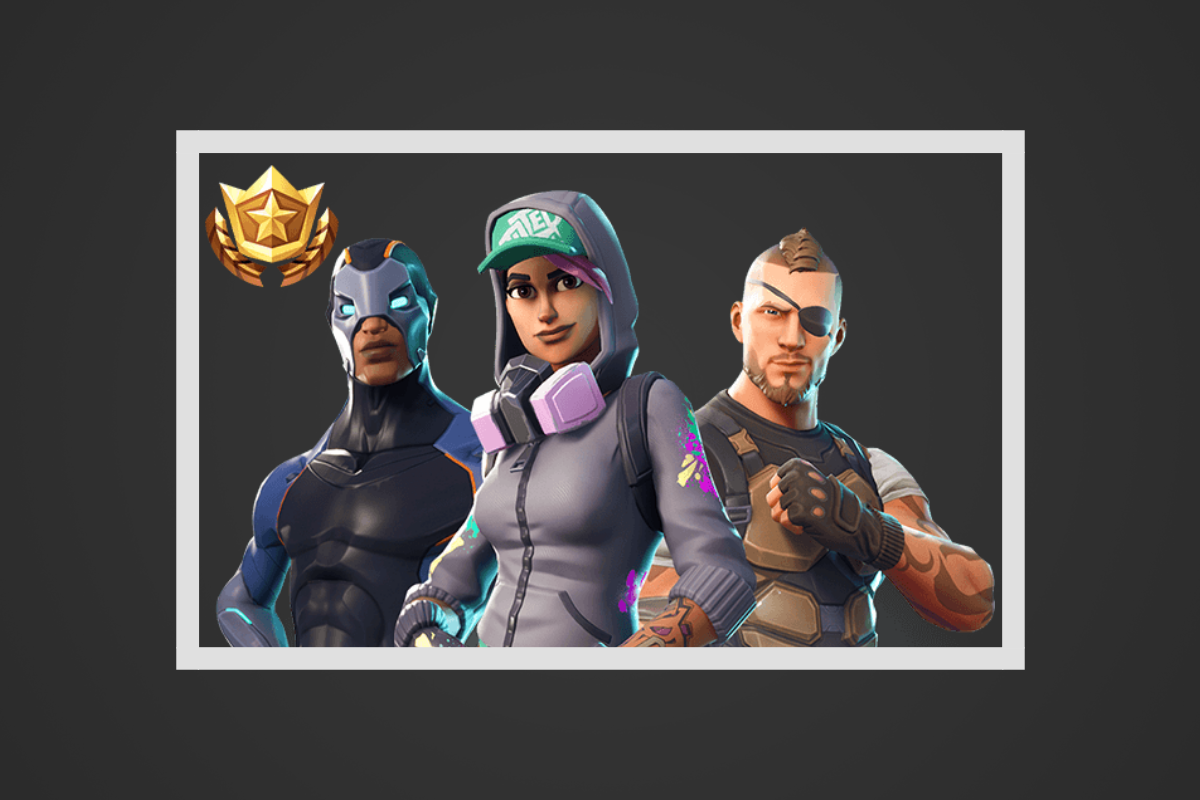
There hasn’t been a game that has taken the tween world by storm quite like Fortnite has. Its “freemium” business model and “T for teen” rating has caused it to become a larger hit than any game ever has before. Recently, psychologists are making news because they are beginning to treat more and more kids who are addicted to gaming, namely, Fortnite. An article by Bloomberg quotes behavioral specialist Lorrine Marer:
“This game is like heroin… Once you are hooked, it’s hard to get unhooked.”
Game addiction was named an official disorder by the World Health Organization and can be diagnosed with some of the same symptoms of other behavioral disorders. Here’s a list of those symptoms:
Obsession, or constant thoughts of the behavior
Continuation of the behavior despite adverse consequences, risky situations, and poor performance of responsibilities
Compulsive engagement of the behavior or inability to stop despite a desire to quit.
Cessation of the behavior causes irritability, cravings to resume the behavior, restlessness, and depression.
Denial of addiction and issues resulting from the behavior
Concealment of the behavior from family and others close to the addict
Amnesia regarding the behavior
Depression, even when engaging in the behaviors
Many parents report their children failing classes in school, falling asleep during classes, lying about how much time they’ve spent playing, and throwing toddler type temper tantrums when asked to turn the game off. Many of these behaviors are signs of an addiction and a combination of many of these could mean your child needs expert treatment. Children aren’t the only ones, however, with this problem. Medical and mental health professionals are also documenting cases of adults who have had many of the symptoms of behavioral addiction when it comes to playing video games, and even Fortnite itself.
Epic Games, the company behind Fortnite, hasn’t said anything about the addictive nature of their game but it is obvious that their business model depends on gamer’s inability to give up the game. Since the game is free, Epic Games can only make money by encouraging gamers to buy items within the game to enhance the look and actions of their characters. This is causing kids to spend their parent’s money, sometimes without mom and dad even realizing what they’ve done.
What Parents Should Know
I have counseled several parents about potential addictive gaming behavior by their kids and I believe it’s important to keep the eight key symptoms in mind when looking at your child’s behavior. How are their grades? Do they have an offline social life? What is their reaction when you mention taking a break? If their responses to these conversations aren’t healthy, it might be time to get some help in convincing them they need time off from gaming.
Games like Fortnite, Minecraft, and Roblox, are what experts call, “lost time” games. This is when players can spend so much time in-game without even realize how many hours they’ve been playing. This is how your son can play twelve hours of fortnite before you realize you haven’t seen him all day. Twelve hours, if you pretty good at the game, is only six to ten Fortnite matches. That’s nothing to your child while they are sitting there playing.
If you haven’t opened the gaming pandoras box for your child yet, good for you. (My oldest is eleven and we are just now easing him into it.) Prevention is key. It is important to only allow gaming with time limit parameters set. If you can introduce these time limits as they start to get more into gaming that’s great. Sometimes you aren’t that lucky and you have to have the battle to set time limits once it’s already gone too far. My advice, though, is to do what you have to do because your child needs you to help them learn self control and your teenager needs your guidance as they learn time management. Remember to talk to them about it often and use terms like healthy and unhealthy instead of dumb, stupid, or right and wrong. Hopefully your child will never need a professional counselor to help them get over Fortnite. We have enough problems in the world, we don’t need a widespread epidemic of entertainment addiction.
This is just a brief notice to let parents know that PUBG, a battle royale game similar to Fortnite but more realistic and graphic, is free today and for a limited time on Xbox. The game usually costs $29.99 but has been marked down for the rest of the week and likely the weekend. The version for iOS and Android has been free since release.
Player Unknown’s Battleground is similar to Fortnite in that you parachute onto an island and try to be the last player standing. That is about where the similarities end, though. The graphics, while not nearly as polished, are more realistic and the death animations are geared a bit more towards adults. This news is important for parents who keep their credit card number or csv from their kids as a way to force them to ask permission to download a game. Since PUBG is free right now, this method of monitoring may not be effective since a payment won’t be necessary.
I always advise that parents know what their kids are playing on their game consoles and that you discuss with them that there is a healthy and safe way to play and that they should make those good choices. Avoiding strangers and keeping from sharing too much personal information is the best start for your multiplayer gaming safety conversation. Just remember that like Call of Duty’s Blackout, PUBG may seem like its “basically Fortnite,” but it is very different.
Coming November 9th, NFL fans will be able to represent their favorite teams with their Fortnite avatar. The uniform packs will be available for purchase ($12-$15) and will allow you to customize your uniform to select any of the NFL’s 32 teams and any jersey number you’d like. You will not see any names on the back of the jersey’s, though. Emotes (dances,) goal posts, and referees will also show up during your Battle Royale matches.
The partnership between the NFL and Epic Games (developer of Fortnite) is no surprise as the video game phenomenon has taken the world by storm. We’ve already seen many of the NFL’s end zone celebrations feature some of the dance moves showcased in Fortnite’s emotes and heard many players discussing their love of the game. Blending the video game world with the NFL team culture is great marketing for both Epic Games and the NFL. The NFL will especially benefit since gaming is such a major market for younger generations whom the league is wanting to attract for obvious future-proofing reasons.
A major frustration for many parents is the constant nagging from their children to allow them to buy skins for their avatars on Fortnite. It’s possible it will get a lot worse. The biggest difference, though, is that some parents may actually see the benefit of allowing their kid to get an NFL Themed skin. If parents are major supporters of an NFL team, it’s possible they would approve of such a purchase because of their desire to see their child express their fanaticism as well.
All of this is well and good. Just know, if you are the type of parent who doesn’t want your kid spending actual money in a game like Fortnite, this could be one of the first major areas of conflict between you and your child. If you’re ok with Fortnite and even making purchases in the game, remember to keep track of the amount of time your child is spending playing the Battle Royale game. Be aware that advertising your favorite NFL team in a massively online game could broadcast a little bit (obviously not always) about where you live. i.e. Chiefs fans are in Kansas or Missouri, and Broncos fans are likely in, or at least from, Colorado.
There have been instances of predators grooming kids in Fortnite and any detailed interest about your child that is proclaimed through their profile or avatar can give a predator more information to use for grooming purposes. Talk to your child about who they are playing with in-game and remind them to avoid lengthy conversations or “squadding up” with strangers. I don’t say any of this to scare you, only to remind you to be vigilant in monitoring the amount of time your child spends on the game, and to maintain an ongoing conversation with them about their time in the game, who they play with, who they talk to, and what their experience is like.
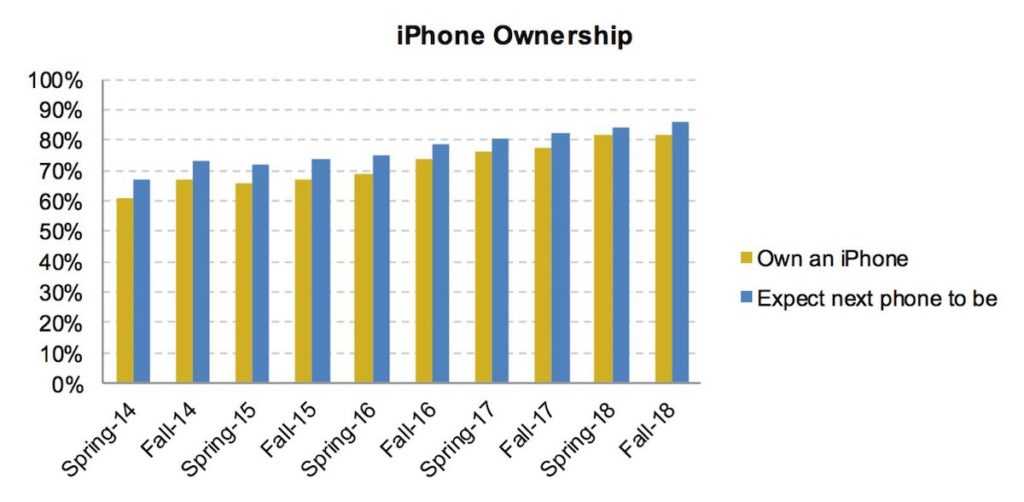
A new survey by research firm Piper Jaffaray called “Taking Stock with Teens” has highlighted some of the most noticeable trends in teenagers’ purchasing habits and tastes. The survey polled more than 8,000 teenagers about how they spend their money and what influences their purchase decisions. The average age of teens surveyed is 16 and the survey is done every spring and fall. The Fall 2018 survey revealed a dominating presence by iPhone, Netflix, and Instagram.
The survey concluded that 82% of teens owned an iPhone and 86% planned to buy an iPhone for their next smartphone. The iPhone has dominated the marketshare for a while now but it’s still growing in the Teen market. Only 10% of teens said they planned to buy an Android phone. Nearly half of those surveyed said that the brand of a product had a major influence on their decision to purchase.
Instagram is now the social media leader among teenagers passing up Snapchat and Netflix provides the most streaming video to our adolescent kids at 38% of the share vs 33% for YouTube. Other interesting info from the survey is that food is the highest budget priority for teens, they prefer to shop online, and the majority of video game purchases are now made through online download.
What Parents Should Know
This info is meant to help marketers plan their products and advertising campaigns but it can go a long way to help moms and dads and other guardians of kids better understand how our teenagers tick. The emphasis on the iPhone speaks to the exclusive nature of the brand, the appeal of feeling like you belong to a niche group causes kids to move towards a brand that is considered to be more premier than the rest. Instagram has passed snapchat by adding much of the features that kids loved about Snapchat without changing the core timeline of the app. Snapchat has admitted to making a mistake by altering what made their app popular with the younger crowd. After going public, Snap made decisions to buffer their ability to become a marketing destination for companies. This undermined their core fanbase of kids and teens who are more likely to skip an ad or unfollow an account that seems to be too “pitchy.”
Netflix is now a more popular video streaming service among teens than YouTube, though not by much. The focus on original content and many of our kids’ favorite stars creating shows and movies for Netflix is driving them to use the streaming service. There has also been a surge in younger people enjoying television shows from the past twenty years or so because of Netflix’s ability to keep those shows streaming on their service. While YouTube is pushing their own TV solution, Netflix is just continuing to build upon the genres they created and it seems to be drawing in folks from most demographics.
I want to conclude by mentioning again that kids are buying their video games through online downloads. This means that the restrictions on games have to be set digitally or your kids can buy whatever games they’d like. If you have set up their Xbox Live or Playstation accounts to make purchases then they can buy whatever games they’d like without any restriction. You have to set that up yourself. There is no longer a cashier at the store who will ask to see your kids id when they try to buy a game that is rated M for mature. It is up to you to get those settings set up.
This data is super helpful for us, as parents, to understand our kids’ preferences and influences. Information like this can help us make quality decisions and chose the right battles when trying to protect our kids from adult content, online predators, cyberbullying, and other dangers of using the internet with no filters or boundaries. Subscribe to our newsletter, our YouTube account, our Twitter and Facebook, and to our podcast to stay in the know as to what’s happening in the digital and connected culture your kids are growing up in.
In the new iteration of the Family Tech Update Podcast, we’ll be sharing the audio from our most recent top posts. In today’s episode, we’ll be discussing Call of Duty Black Ops 4, shopping in social media, Facebook’s new touchscreen smart speaker, and new research about screens and the cognitive health of our children.
If you enjoy this podcast please consider subscribing on iTunes and sharing it with some friends. Also, you can enter to win 6 months free with Accountable2You’s accountability software by simply EMAILING ME a question to ask on the front end of the next podcast episode.
Violence/Gore - 1 out of 5
Language - 1 out of 5
Sexual Content - 4 out of 5
Positive Message - 2 out of 5
The Game
It’s that time of year again. Time for another Call of Duty game. This one is a bit different, (more on that later) but it is a CoD game none the less. The last game in the series was set in WW2. This on is set in the not too distant future, the 2040s. There isn’t much of a storyline in Black Ops 4 but there is no shortage of gameplay depth and replay-ability. Your kids are sure to ask for this game for the Holidays but what should you say? Hopefully this brief guide will give you an idea of the content in Call of Duty Black Ops 4 so you can make a quality decision for your family.
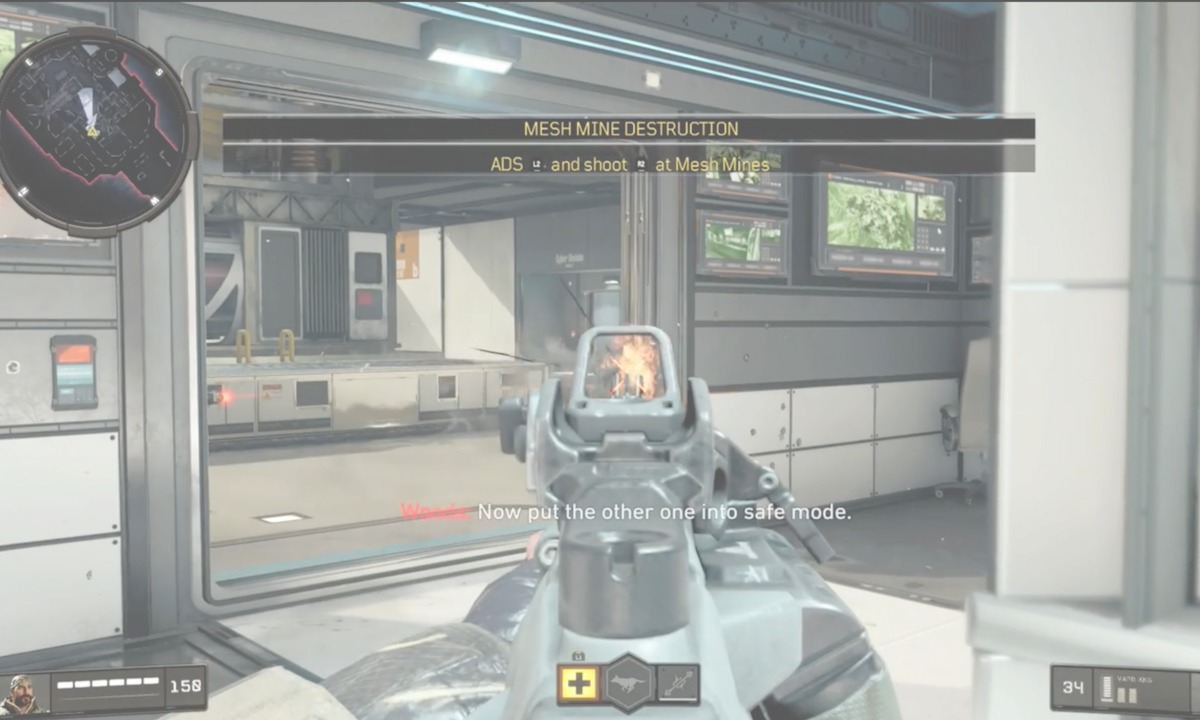
Black Ops 4 has several game modes available. You can play missions related to each character. They are more multiplayer tutorials with narration than actual campaign type missions. There is a zombies mode with a few levels and different stories included as well. The most anticipated mode, however, is the Blackout mode which is a battle royale game setting similar to Fortnite or PubG. I wrote about Blackout a while back, before its release. Below, I will unpack the content in Call of Duty Black Ops 4 for you.
Violence/Gore (1)
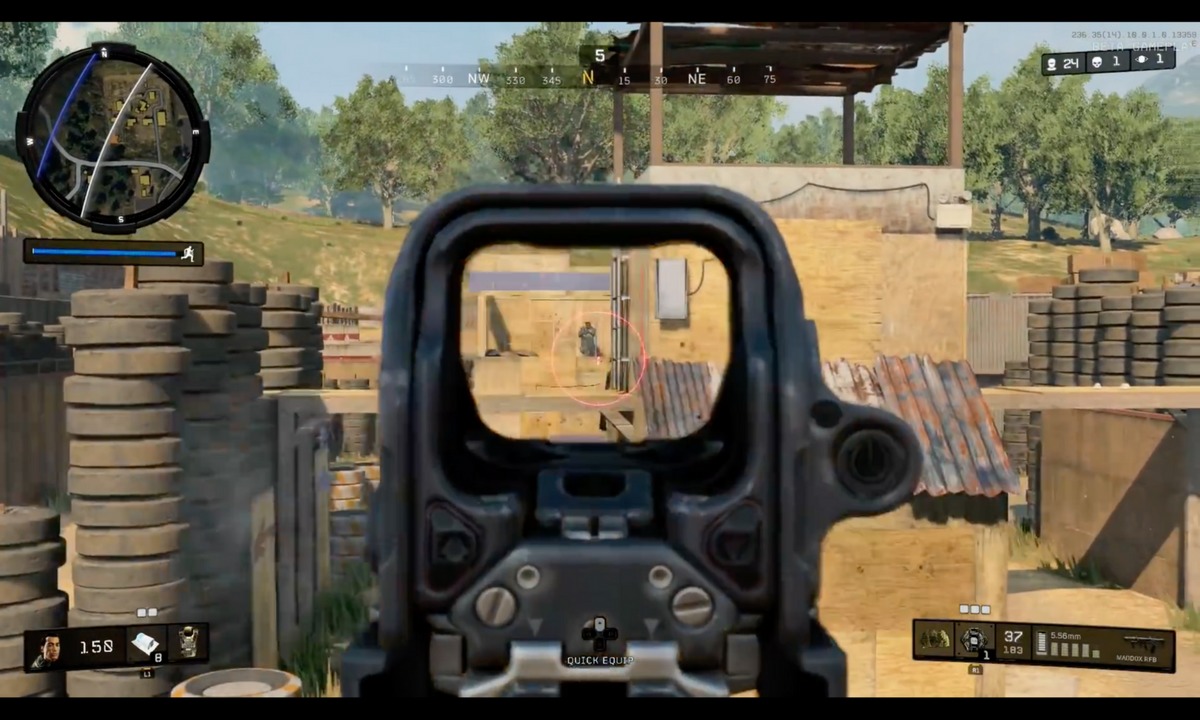
It likely goes without saying that Call of Duty Black Ops 4 is loaded with violence and gore. Gunfights are realistic, (albeit a bit science fiction based) blood is abundant, and body parts (more like chunks of meat) fly when hit by grenade or bomb blasts. Honestly the violence in CoD Black Ops feels a bit like an over the top 80s action film. Or a modern Quinten Tarantino movie. The game celebrates killing your enemies in the most gruesome and creative ways possible. Weapons are a bit futuristic and feature ways to bounce explosives, cluster bomb, and drive remote detonators and turrets against your enemy.
The zombies mode is extra bloody with creatures ripping people apart who are chained to posts and body parts being flayed off with swords and blown off with firearms and other weapons. As you’d imagine, the zombies themselves are pretty gory looking with yellow glowing eyes and shriveled up skin. While multiplayer plays down the gore a bit, the blood spray and rag-doll effect is still more realistic than other popular shooter games.
There is a way to turn off the extra graphic content including language and user generated content but that setting isn’t protected by a password. In my book, if parental controls aren’t password protected they aren’t there at all.
Michael Prince – BecauseFamily.org
Content filters with no password protection.
Language (1)
This game is has plenty of adult language. Every word you would imagine being said during a firefight with bullets flying overhead and explosions surrounding you is yelled, muttered, said over the radio, and written out in subtitles throughout the small story sections of the game. Your drill sergeant type instructor barrages you with explicit insults as you progress through training in the story mode. Much of the dialog also discusses substance use and the celebration of violence and combat.
Sexual Content (4)
There currently isn’t any sexual content in Call of Duty Black Ops 4. The dialog contains a bit of sexual reference but much would go over kids’ heads if they noticed it at all. Multiplayer will contain user generated content and therefore you can expect more sexual innuendo and possible conversation in online game modes.
Positive Message (2)
I honestly struggle to find much positive message in this Call of Duty game. Extreme violence is celebrated and encouraged. You are driven to kill in creative and gruesome ways. There is a bit of comradery between the characters but you have so little story in the game that this message is not likely to come across well, if at all. Most of the gameplay is centered around multiplayer so this game isn’t designed to portray any kind of message.
Black Ops 4 is rated M for mature for “blood and gore, intense violence, strong language, and drug references.
Parents should be aware of the intense level of graphic violence that is in Call of Duty. It is not like the cartoon style of Fortnite or the lower graphic quality of PubG. The graphics are very good in this game, thus the level of intensity is increased, as is the level of realism. While there is no sexual content, there is also very little redeeming quality to the game since there isn’t even much of a storyline to explore a deeper meaning or message.
Multiplayer gaming opens up kids to communicate with people from all over the world. There is an element of anonymity that is felt when you play online but that is quickly lost as you build a friendship with people through experiencing this intense gameplay together. There are known cases of adult predators using these multiplayer environments to identify and groom their targets to later expand their relationship to social media messaging apps. This is one reason multiplayer gaming can’t be rated. The level of safety depends on those playing the game.
There is a way to turn off graphic content and language but it isn’t password protected. In my book, if parental controls aren’t password protected, they aren’t there at all. I would advise following the 17+ recommendations for Rated M games on this one. If you are thinking about allowing you younger kids to play Call of Duty Black Ops 4 you should be confident that they can handle such intense action and gore without it causing any lingering affects on them emotionally or psychologically.
Finally, first person shooter games with multiplayer modes are notorious for causing what is called “lost time,” in which players compete in level after level of the game without realizing how much time they’ve spent playing. When they are asked to stop or they have to move on for some reason they are often shocked at the amount of time that has passed, sometimes even getting angry at being asked to stop. I recommend setting screen time limits on your game systems like Playstation and Xbox as to create a built in system to help your kids keep better track of the amount of time they are spending playing video games.
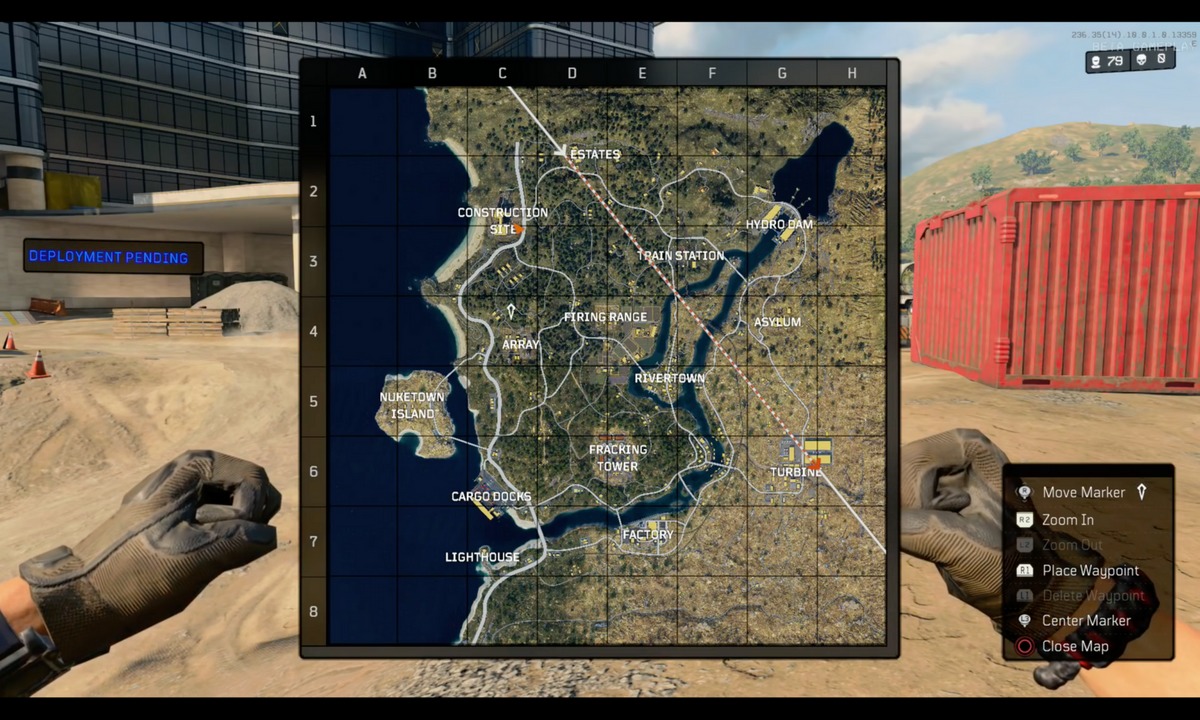
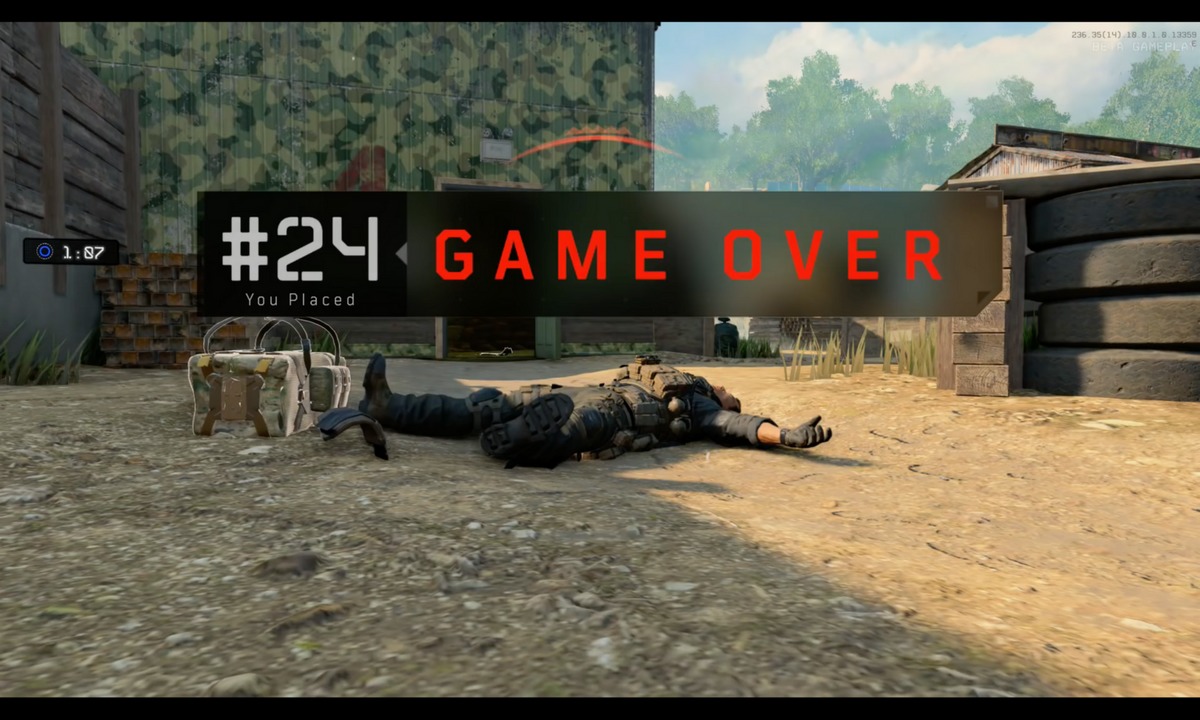
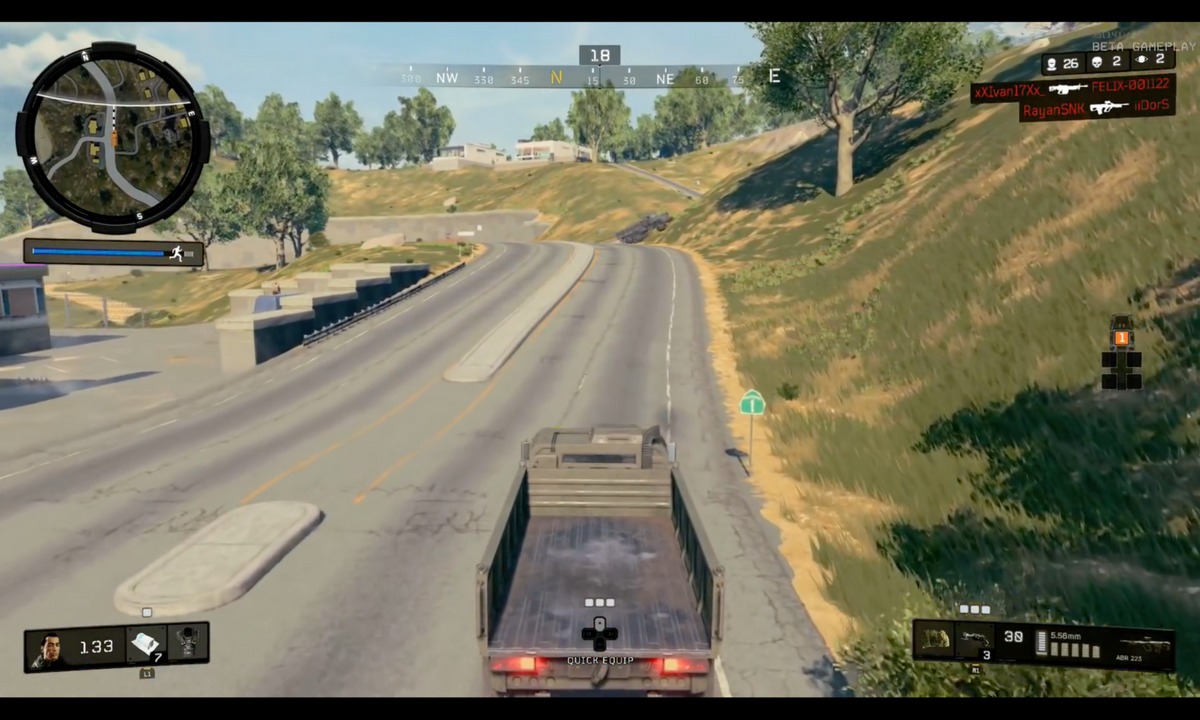
The game that you could say “started it all” when it comes to multiplayer first person shooter games is joining the Battle Royale fray. Call of Duty Blackout will be released next month with the newest installment of the franchise, Black Ops 4. Blackout will follow all of the typical Battle Royale tropes and include parachuting onto an island, finding weapons, and killing everyone there to be the last man standing, and thus, the victor!
The most significant difference between Blackout and Fortnite is going to be realism. The Call of Duty games are known for their realism and more intense warfare simulation. Where Fortnite is silly and feels a bit like a cartoon, Call of Duty is made to feel more like combat. The blood spray when a character is shot, the flailing of bodies when killed, and the sounds of vehicles, explosions, and weapons are likened to more realistic battle simulation than an entertaining game.
What Parents Should Know
I won’t tell you what to do as a parent. I will, however, caution you to be suspicious when your child asks you for Call of Duty because it’s “Basically like Fortnite.” It is not like Fortnite, it is very different and it is rated M for Mature. Mature games are intended for those over the age of 17 and usually obtain that rating for violence and language or nudity and sexual content. In the case of Call of Duty games it is nearly always because of the blood, gore, violence, and language.
Most kids won’t be able to get past the $60 price tag (Fortnite is free to play with premium in app purchases) and the fact that it has to be purchased through a console or PC. Not being on mobile devices and tablets will also deter many children from getting ahold of Call of Duty Black Ops 4. My overall advice is simple: if you wouldn’t buy a Call of Duty Black Ops game for your child under the age of 17 before Blackout was released, I don’t recommend you buy it for them afterward either.
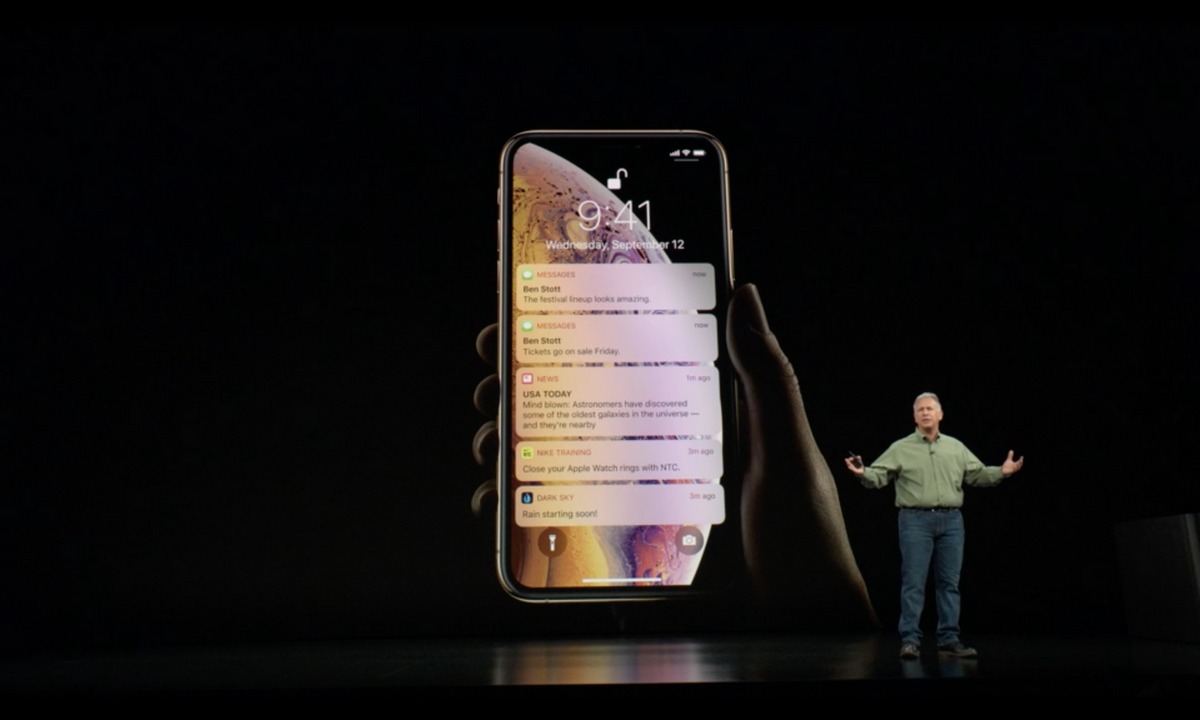
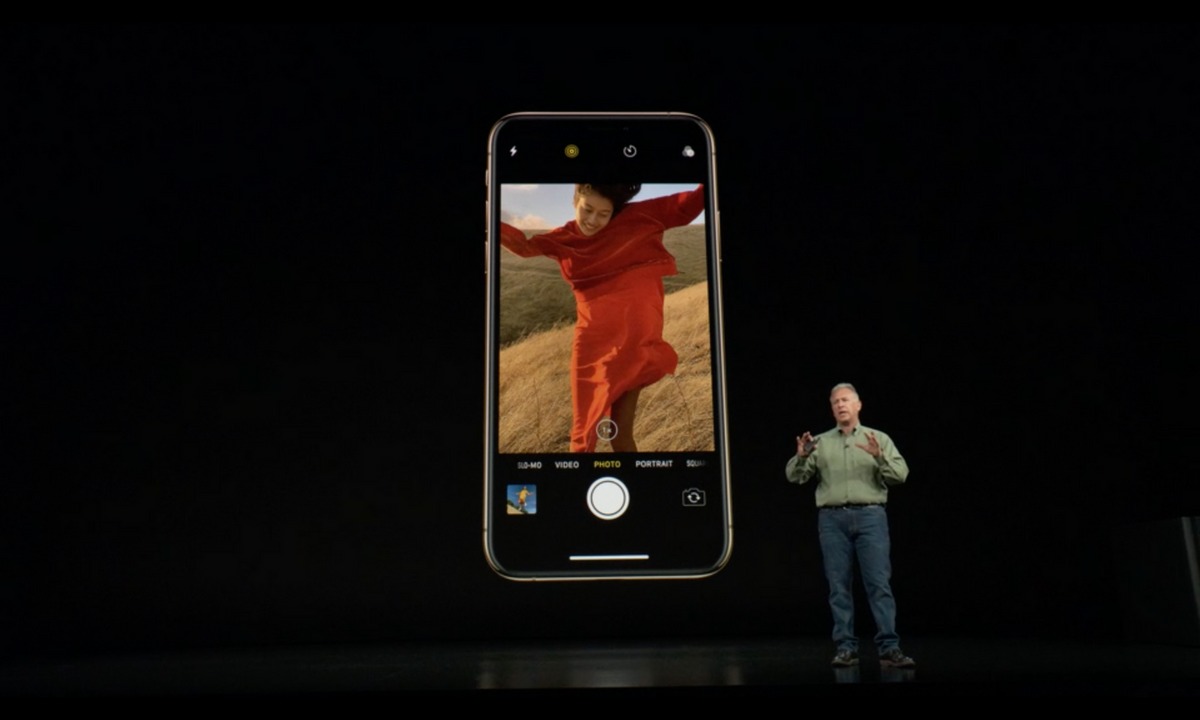
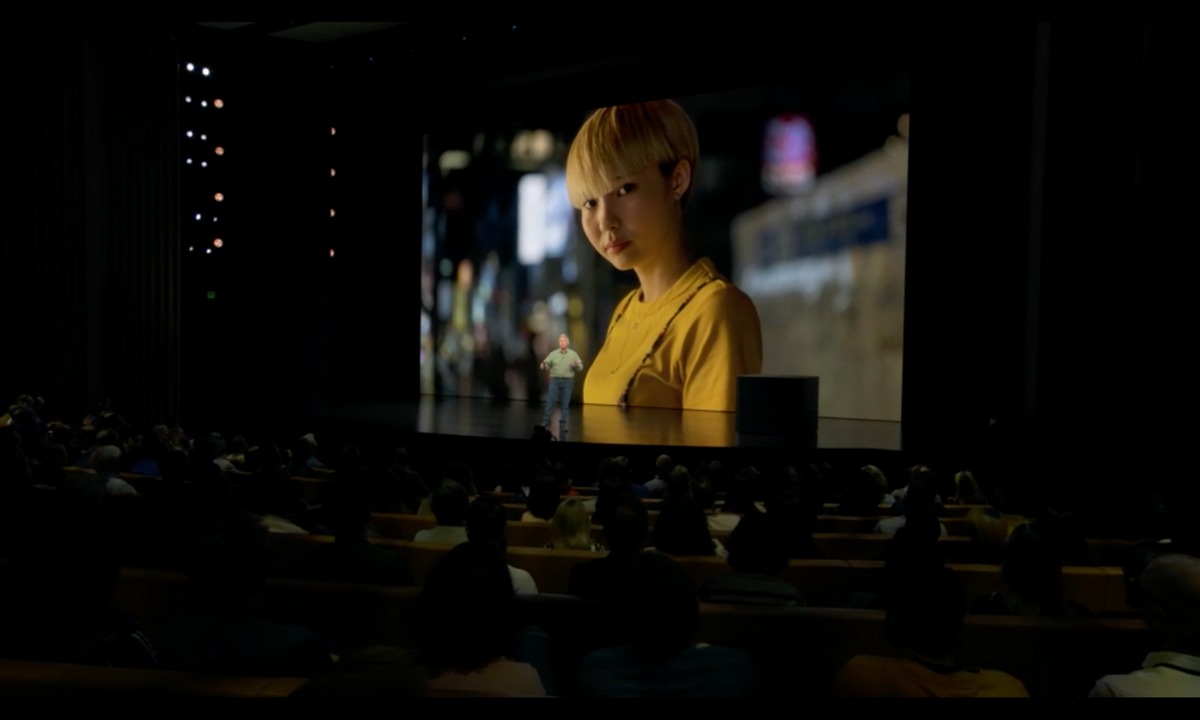
The Apple Special Event aired today on their website and featured a slew of announcements about their upcoming line of products. They only spent a brief time at the end talking about their operating system updates but the focus was on hardware…namely their three new iPhone offerings.
Apple Watch
The latest apple watch is newly designed and will feature some pretty good improvements to health management. The things that stood out to me the most were the ability to sense a fall and make it easier for you to contact emergency services. It even messages your emergency contacts immediately if it senses you’ve fallen and then you don’t move for sixty seconds. The latest heart rate sensor and ECG abilities are top of the line and an industry first. The ability to give yourself an echocardiogram is even backed by the American Heart Association and the FDA. New Apple Watches can be preordered now and will be shipped next week.
XS, XS Max, and XR.
The majority of time was spent discussing the new iPhones that are being released this month and next. Beginning with XS (available next week at $999) and XS Max. The largest improvement in these phones is “under the hood” with a larger a processor, a neural engine, and new tech that give the graphics, processing, and camera more power than ever before.
The event highlighted the ability of this new technology to allow the iPhone XS Max (available next week at $1099) to be used for serious gaming. They featured a short talk from Bethesda games and discussed a new Elder Scrolls title that is coming out soon. The demo highlighted the new iPhones ability to process better lighting and graphics while offering smooth gameplay. It was really quite impressive for those of us more inclined to enjoy gaming as a form of entertainment. The stereo speaker system was another feature that seemed to bring major improvements. They also featured augmented reality gaming with a multiplayer AR version of Galaga.
The XR is a sort of XS lite with a simpler screen, a single lens camera, (still with many of the same feature’s, though) and a smaller price tag ($749). Speaking of the camera, that’s where there was a lot of improvement for the new iPhones. Selfies can look incredibly good with portrait mode and studio mode and they’ve even added a feature to change the depth of field (blur of the background) after you’ve taken the picture. They dove in quite a bit to explain how they accomplish this new wave of photography but I won’t bore you here with the nerdy details.
What Parents Should Know
These new phones will obviously be in high demand (can I do a fundraiser to get the new XS Max?) and we’ll see how well they perform once they’re out in the marketplace. I prefer Apple’s smartphone offerings because of their attitude towards privacy and data as well as the mostly internal approach to design and manufacturing. I think iOS is well advanced, and most of all the parental control options built into Apple products (including new screen time) puts all iPhones on my recommendations list for your kiddos.
Fortnite is the biggest of big deals in gaming. Kids play it, adults play it, boys play it, girls play it, and it’s making Epic Games tons and tons of money but their desire to not share that money with Google may be putting some of their millions of players at risk. Namely the players who are installing the game on their Android phones.
“With Fortnite’s influence over more than 125 million players, teaching people to download apps outside of the official store is exposing millions of people to a risky practice, researchers warned.” – CNET
Experts are warning that Fortnite’s “side loading” method of installation, which bypasses the Google Play Store, is opening up users to a ton of security risks. One such risk was found by Google’s team only two days after the game officially launched on Epic’s site. The flaw allowed hackers to exchange the game file for any file they wanted as long it was named the same thing as the installation file it replaced. This meant hackers could have put whatever malware, spyware, or virus into another file and millions of devices would have been infected. Also, since it’s release, over 1/3 of the malicious files found by Google security experts have been Fortnite themed.
The solution to this is obviously to roll out an update, herein lies the biggest issue with side loading software, it is difficult to push a forced security update out without an app store. This means that users will either have to seek out an update or allow it to install when they boot up the game. If someone has the game installed for a while without playing it, any corruption will stay in their phone until an update is found or forced by opening the app.
What Parents Should Know
If your child wants to play Fortnite, I recommend letting them do so on their computer or a console. My advice is to not allow your child to play the game on Android at all. I recommend not allowing side loading of apps at all either as this opens their device up for major security threats. If you are using Android Family Link to manage app installations then sideloading will completely undermine your methods of parent control. If you’re monitoring activity and see something called An .APK file you’ll know that side loading is happening and you should talk to your kids about what they’re installing on their device.