Category: CES

  • Turn Your Drawings into Playable Games with Doodlematic

    Turn Your Drawings into Playable Games with Doodlematic


    Doodlematic lets you take a picture you’ve drawn on paper and turn it into a playable mobile game. 

    I met Martin Horstman, the dad who developed Doodlematic at CES2020. He talked me through how you can take any kind of art, as long as it uses the colors the APP recognizes, to create a real playable mobile game. They sent us their box set and we were able to play with it. My son had a blast drawing out games, especially platformer games that you had to jump from platform to platform an achieve goals. 

    To use Doodlematic, you simply draw the game on paper, take a photo of it, the APP processes  it, and then you play. You can then share it in the Doodlematic app and other people can jump in and play your games if you’ve allowed them to be public. 

    How it Works

    There are two types of games you can create on doodle matic. You can make the platformer, like I mentioned already, or you can make an Angry Birds style launch game where you shoot your “avatar” over to knock over targets. It’s all based on a series of different colors that create different types of objects in the game. Anything black is your platform or your ground. Red is obstacles, things that get in your way and end the game when your avatar touches them. Blue items are your goals and anything green is your character or avatar. 

    Your avatar jumps from platform to platform trying to grab the blue goals while avoiding all of the red obstacles. The app uses the colors to develop the Games behavior. This allows kids to basically make the game whatever they want it to be. The best part is there’s a lot of trial and error. I don’t know how many times my son drew something, took a photo of it, and then realized game just didn’t work properly. Not because the app was messed up but because his drawing didn’t allow the Doodlematic to do what it needed to do to make the game playable. Back to the drawing board, literally. Just a few fixes here and there and the games was doing what he wanted it to. 

    What You Get

    Doodlematic comes in a box with notebooks to guide you through the game creation process. It takes you through a step by step tutorial showing you what to draw and how to use that to create the behavior you want in game. 

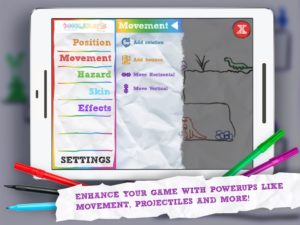
    Doodlematic is probably usable for any kid over three years old. Once they can draw a little bit and grab a pen or pencil, they can create a game in the app. There are some advanced controls you can set up that make things move back and forth constantly or make the obstacles do things.  You can learn how to do that as you gain more experience in Doodlematic. However, all you have to do to get started is draw with the proper colors and play your games. 

    Apps like Doodlematic are great for kids because they teach them that trial and error process that’s necessary in developing any kind of technology. If you’re learning to code or if you’ve done any website building or graphic design you know that there’s a lot of times you start to create something that just cannot work. Then you have to go back to the drawing board. Doodleatic gives you a similar experience but it’s also still fun. It doesn’t take away any of the excitement because you know what you did wrong and can fix it.Then, suddenly, your game is working. That sense of reward and excitement is real and kids love it. 

    I have four kids. All of them have loved Doodlematic. My boys loved it. My Girls Loved it. My twelve year old loved it and my five year old loved it too.? I recommend checking it out at the website below and getting your family into Doodlematic and make yourself some games. You’ll love it.

    ThinkDigital.com


  • Toys Teach Computer Science and Coding

    Toys Teach Computer Science and Coding

    I have said it before, there will likely not be a lot of low wage jobs available for our youngest children when they reach employment age. We’re seeing burgers ordered and prepared by machines and having our groceries check out, stocked, and even bagged by computers and robots. What will be necessary is the workers who know how to operate those machines and program those computers. That is why coding education is becoming so important. It is important for our kids to have toys that teach computer science and coding. 

    There is never any shortage of coding toys available at CES. While many have seemed to be copycats of things we’ve already seen, there are some cool options out there. Here is a look at some of what I found to be most interesting. 

    Artie3000

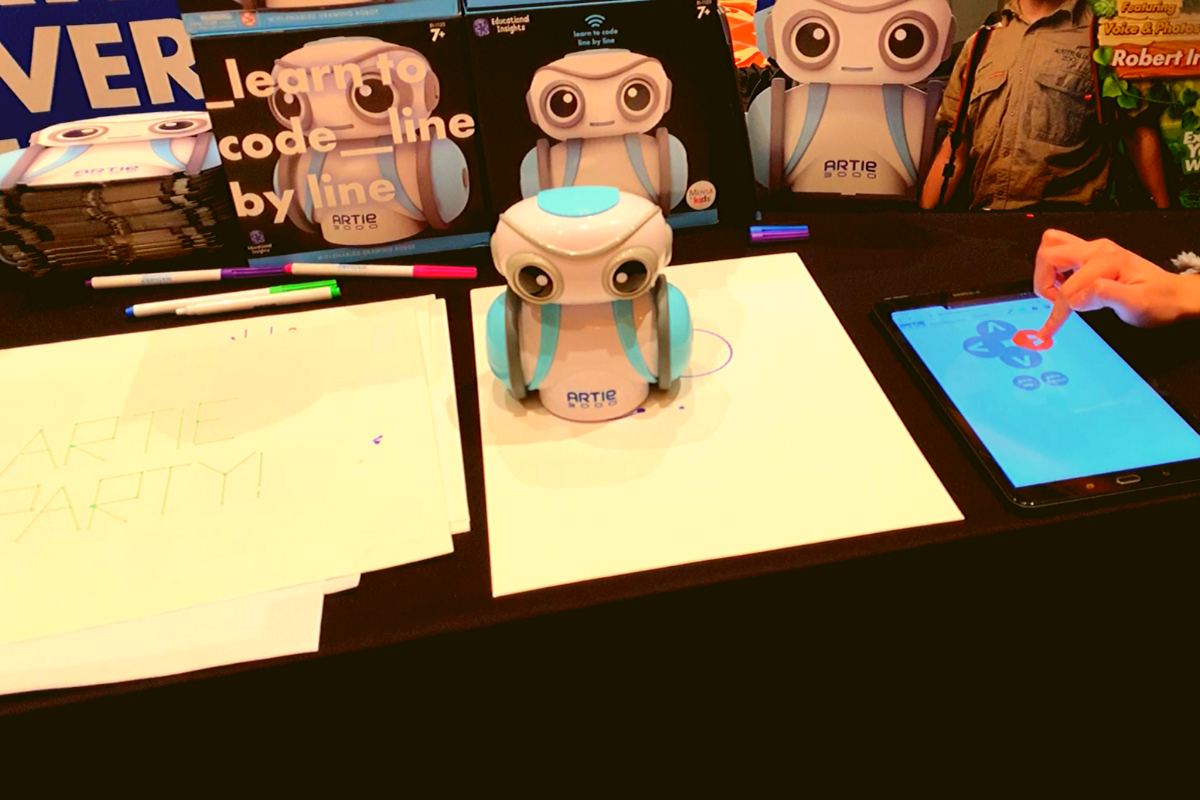
    Artie3000 is an artist. He’s a cute little robot that draws pictures based on the code you enter on his app. He comes with preprogrammed designs, shapes, and games and there is a library of videos to let you learn all about what Artie can do. 

    Artie introduces coding logic and basics, encourages creativity, and provides STEM and STEAM education. He is secure with no connection to the internet, his app is designed to work one way, from the tablet to Artie himself. This keeps your kids offline and out of danger. Artie also doesn’t collect any data from the user. That’s a huge plus.

    Watching Artie draw was cool. He is intended for kids above 7 as some of the coding assignments assume you’ve learned a bit of the logic already. I think the blending of robotics, programming, and art is a big win for parents since some of our kids may not see the benefit of coding robots. Our more creative type of kids may see a benefit to robotics and engineering after all. 

    Botley 2.0

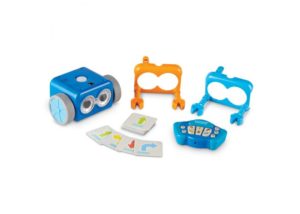
    My kids love Botley. They’ve put hours and hours into programming him to go through their obstacle courses and tracks. It has proven to be a fun way for them to learn the language and logic of programming. I don’t know how many times I have said, “If he isn’t doing what you want, it is because you didn’t input the right commands.” That, my friends, is the essence of programming and coding in a single phrase. 

    Botley 2.0 brings the same adorable robo-friend with some new behaviors and lots of cool new features. He lights up in the dark thanks to his new light sensor and he can use those lights to do a programmable light show. He also features a Simon Says type game and code by color features. 

    Doodlematic 

    Doodlematic is an app that takes any photo that contains the color combinations required and turns it into a playable game. Kids can draw a picture with markers, paint a scene, or even bake a cake using red blue and green icing. When they take a photo of their art and import it into the app it applies features to each color, turning into a game that they can play. Blue becomes collectible targets, green is your character and red turns into platforms and scenery in the game. Doodlematic isn’t a coding app but it is a really neat way to get your kids who are interested in gaming and making games into drawing out their ideas on paper first. 

    Doodlematic isn’t a coding app but it is a really neat way to get your kids who enjoy playing and learning about video games to design their own. It even rewards them for using paper first. I am really excited to play with Doodlematic with my kids. I know they’ll have a blast challenging each other to the games they’ve designed.

    Important Skills for the Future

    Having toys that teach computer science and coding is very important for our kids. There are a lot of toys that teach computer science and coding but I liked these the best. One of these options doesn’t even use a screen while the other two combine tangible products with the screen to teach computer skills. These toys are getting better and better at teaching our kids. I highly recommend you check out these items. Maybe one of them is something your kids with truly enjoy.

  • The Worst Thing About CES2020!

    The Worst Thing About CES2020!

    I spent five days walking around the show room floor and attending conference sessions at CES2020. It is the largest trade show in the world. I saw all kinds of technology from smart cars, smart homes, and toys and ed products for kids. These people are why I am at CES. I’m there to learn how their products can benefit our kids in the future. Tech is super helpful and useful as a tool for education, entertainment, and development. Many kids are learning in ways they couldn’t before, children are getting opportunities they didn’t have before because of vr and ar classrooms. Technology is and always will be a part of our lives. The world is getting more and more tech-centric. The worst thing about CES2020 seems to be that parent’s concerns about the amount of tech in their kids’ lives are being ignored.

    The Worst Thing about CES2020

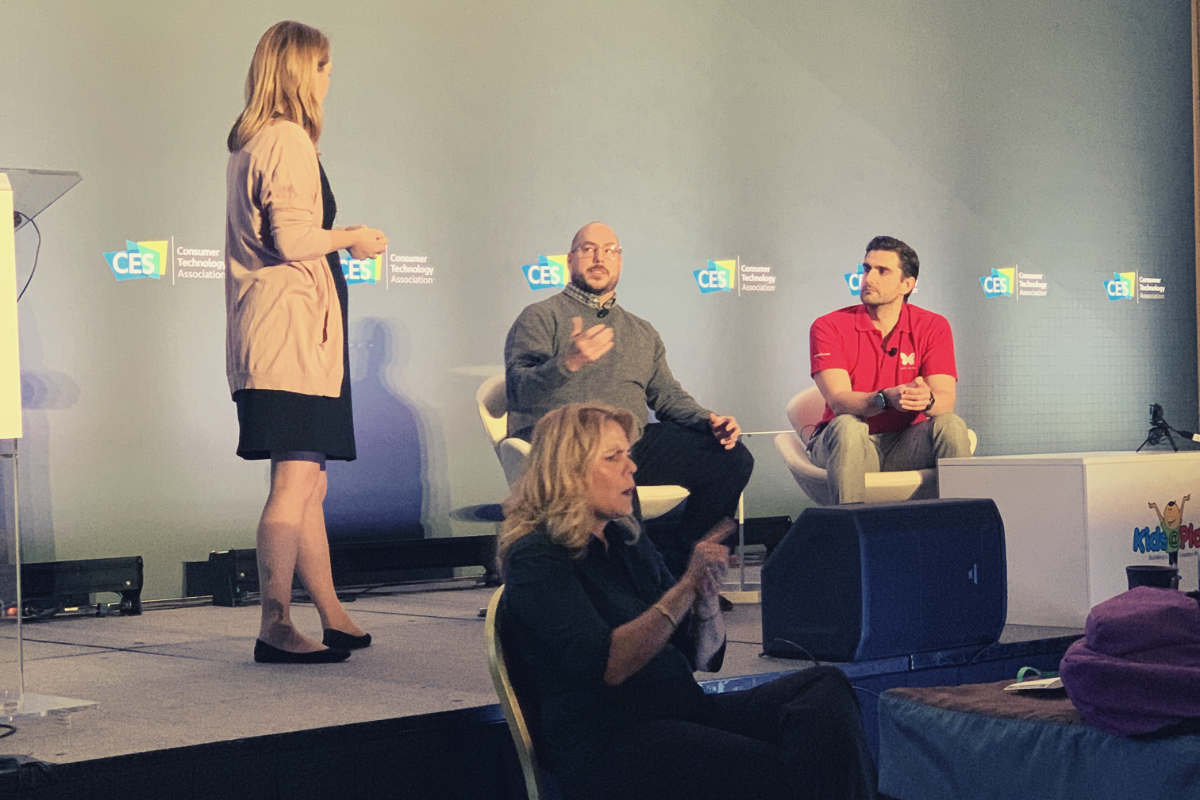
    I heard a lot of mixed messages at CES this year. Especially at the Living at Digital Times “Family Tech Summit.” It has become increasingly frustrating to listen to software developers and hardware engineers talk about how their new technology is going to change the world. While much of this technology is very neat, and as mentioned, can be helpful. There are also a small percentage of people on the stages at CES warning us that our kids are becoming too dependent on this technology. Parents and teachers are getting concerned because they feel like technology is moving far faster than they can keep up. The experts at CES don’t seem to understand the anxiety caused by new, “world changing,” technology being announced every single year.

    Most technology being announced at CES is a new take on the same thing we’ve had for the past ten years. I am walking in to the Family Tech Summit expecting to hear about what new products will be best for our kids. Instead I am hearing what will be best for these developers and companies. How to market and close sales with their new products. I did hear from a few people about ways to protect our kids on the technology we allow them to use.

    Unfortunately they were given a small amount of time. They were followed by someone who just got on stage to celebrate the latest voice control tech. This “expert” explained how great it is for our kids. He marginalized parents’ concerns by calling them misguided. then he touted the fact that parents seem to be concerned but don’t take action to protect their kids. He ignored the fact that companies make their products and advertise them as safe. They build in parental controls that are weak and hard to set up. Then they wonder why they show up in the news when a kid comes across adult content on a smart speaker or is visited by a stranger on their in-room nanny cam.

    It wasn’t all bad.

    There were highlights at CES2020, though. Dr Amanda Gummer with the Good Toy Guide, spoke of using tech to encourage kids to play and learn. Sean Herman, author of “Screen Captured,” shared about his own kids and how their attention to screens caused him to start Kinzoo. Kinzoo is a messenger app that “turns screen time into family time.” I met Carrol Titus, founder of GoldenPoppy Inc. who is making augmented reality games to teach physics, programming, and positive self awareness. I enjoyed speaking with Ahren Hoffman and Sue Warfield from the American Specialty Toy Retailing Association, “ASTRA.” We talked about the lack of attention to giving parents tools to learn and use tech wisely and the benefits of kids playing off of screens. Especially young children.

    Everyone can say what they want about screen time and the benefits or risks. The truth I see is ‘that technology should enhance our play and education. It shouldn’t replace it. Parents aren’t freaking out because their kids are spending too much time watching educational videos. They’re not concerned about them playing apps that teach them to read or do math. The concern is the unstoppable flow of entertainment that comes flying at our children at toy stores and app stores. Entertainment that has no intention of teaching anything, just using up your child’s time and attention to show them ads or sell them access to more entertainment. I understand that many want to see tech become the new norm for education, recreation, entertainment, and everything else.

    The issue is that we currently aren’t promoting balance. Surely not at CES2020, definitely not in our app stores or on the shelves of our retailers. Once again, it falls to us as parents to take the step towards a healthy attitude toward s tech. Digital wellness is our responsibility and the more I hear from app developers and toy makers, the more I am sure they won’t be taking it seriously, not really, so we have to.


    If you’re concerned about what your kids are doing online, be sure to check out Accountable2You.com. This software is my favorite accountability software and will help you keep a close eye on the websites your kids view.

  • CES2020 | Protecting Your Family’s Privacy and Data

    CES2020 | Protecting Your Family’s Privacy and Data

    Walking the show floor at CES can be a major assault on the senses. Every booth has music and lights and giant screens or projectors showcasing the latest and best of their technology offerings. One thing that is cutting through all of the noise, however, is the need for tech companies to earn the trust of their target consumers. Voice control, smart home technology, and data mining for convenience in retail are on the rise. The companies who use our information to make our lives easier have to convince us that they are going to stop there. The good news is that it seems they are understanding this truth.

    Protecting Your Family’s Privacy and Data

    Robin Raskin, the founder of Living in Digital Times, said that trust will be a major theme at CES this year. I spent several days on the CES show floors and I can tell you this is the truth. Car manufacturers are explaining how their tech is built to keep you safe. They are saying that the information gathered about you is meant to make the goal of safety more attainable. Convenience is being showcased at nearly every booth on the floor as well. Convenience requires data, so it is no surprise to see these exhibitors featuring their privacy policies upfront for all to see. Even toy makers are touting their focus on privacy. The connected toys your children will play with shouldn’t be tracking their every move.

    Trust and Responsibility

    Protecting your family’s privacy and data is a huge responsibility. The responsibility for data privacy, security, and trust are shared, though. We, as consumers need to know the role we play in protecting our information. There are key factors we must keep in mind when thinking about security. Our passwords are very important. We must make sure we have different passwords across our online accounts. Also, be careful to use passwords that aren’t too easy to guess. Finally, we have to remember to set the security settings on our new smart devices when we take them out of the box. That new thermostat or camera is connected to the internet. That makes it susceptible to hacking and therefore security settings must be set. If your device offers “two-factor” authentication then set that up as well. It can seem inconvenient but it will protect you from a lot of trouble in the future.

    Companies can only do so much to protect your data and security. They can give you tools to protect yourself but they can’t force you to use them. Check out my other articles on data privacy HERE.

    One last important tip is that you only buy smart home devices from well-known, trusted companies. Most of the time, these larger tech companies have had multiple levels of scrutiny concerning their privacy policies. Some smaller developers from other countries will have had less accountability for what they do with your information. Their products cost less and seem to work in the same way but you aren’t guaranteed the safety settings some of the larger companies will give you. All of these products are a privacy risk but you’re likely to have more transparency from a larger, more established company.

    A Caveat.

    Some privacy/security startups are making big waves right now. They are smaller companies that have security and privacy in “front-of-mind” as they develop their technology. My advice is to ask questions and look for more info on their privacy policies. Some of this new security tech is very cool and will be very helpful. Others are taking advantage of the new focus on privacy to sell more stuff that doesn’t work. Be a wise consumer. That is the most critical step in protecting your privacy.