Blog

  • You May Be Shocked by the Top Grossing Mobile Games of 2016

    You May Be Shocked by the Top Grossing Mobile Games of 2016

    The way game developers make their money has changed quite a bit over the past several years. There was a day when you would just purchase a video game and then play the whole thing until you either got tired of it, beat it, or wore it out. Nowadays we have access to so many mobile games on our phones and tablets that don’t ask for any money up front. Somehow, though, these “Freemium” games end up being the ones that make the most money every year. How is that?

    If you have spent any time playing these games you have experienced it yourself. You download a game that looks awesome in the commercial and in the app store. You get started and enjoy the gameplay right away. Soon, however, you seem to stall out a bit, or you’re playing in an open world with other real people and they all seem to be way ahead of you and are destroying your village or blowing you away on the scoreboard. What’s a gamer to do? Never fear, the premium game designers built in a way for you to get a boost to your game score or a new way to skip the long wait to let your in-game work get done so you can collect your reward. All you have to do is spend a few bucks here and there and you can play the game non-stop without any delay. This is how Freemium games make their way to the top of the money makers list. Here’s a screenshot of Statista’s top ten of 2016 list.

    Every game in that top ten list is free to download. Note that the amounts listed are daily revenue. These are dollars made from people who have decided to spend little bits of money here and there to help themselves play these games a little faster or a little better. The top game, Clash Royale, is one where you battle against friends with an army you have built. You have to use gems to build your army so you must either spend money to build your army faster or play a lot and wait for your “chests” to open and give you new soldiers (in the form of cards). Pokemon Go comes in at number two. This one will allow you to keep trying to “catch ’em all” by buying new Pokeballs when you’ve run out. Finally, numbers three and four are Game of War – Fire Age and Mobile Strike. These two games are often advertised on television and have received much criticism about the gameplay in their product being a lot different what they’ve portrayed it to be. For some, the promise of better gameplay causes them to spend money in hopes to gain more levels faster. It’s a new way to do mobile games and has even trickled into the console and computer game markets.

    It’s called DLC and stands for Downloadable Content. This is new features and game content that gamers can spend more money on to enhance gameplay or keep the story of the game going. Obviously, the success of the in-app purchases in mobile games has inspired other game developers to use this model to increase the profitability of their product. The largest difference is that you still have to purchase for the initial version of most console and computer games. As you see below on the screenshot from ThinkGaming.com, the first pay up front mobile game on the top grossing list is Minecraft Pocket Edition at number 35.

    What Parents Should Know.

    Obviously you should know that nothing is truly free. Our kids should understand that too. As I explored in more depth in our Mobile Device Vocabulary Series, there have been instances of parents finding out their kids have made very large in-app purchases without permission. There are ways to protect your accounts from money being spent unintentionally. Make sure your app store account asks for a password every time you make a purchase. If you have Apple products, set up your icloud accounts with family share so you can see what apps your kids have and make them ask permission to download anything new. Also, be sure to discuss with your children that sometimes their favorite games ask for real money. Teach them that they should ask you before agreeing to buy anything “in-game.” You don’t want a surprize charge on your credit card. While iTunes and GooglePlay have pretty good track records of refunding purchases, it’s a hassle I’m sure you’d like to avoid.


     

  • Instagram Adds Live Video to their Stories Section

    Instagram Adds Live Video to their Stories Section


    It’s no surprise that we are covering more news from Instagram, they’ve been busy keeping up with the likes of Snapchat. Adding Stories and disappearing private messages were just a couple of their latest moves. Today they’ve released the first change that will allow them to pass up Snapchat in the Social Media “engagement” game. Today, they added Live Video!

    Live video has been available on Facebook for a while now so it’s a bit of a no brainer that it’s been added to their other assets. There are a few major differences between Facebook and Instagram’s live video. First, it’s the fact that Instagram’s videos disappear. Unlike making a live video on Facebook, where it will upload to your timeline and allow you to share it, Instagram’s version will end and never be seen again when you hit finish.

    Another major difference is the inability to share while you’re broadcasting. These features may change but for now they set it apart quite a bit from Facebook’s live option. The ability to go live at all is super trendy and sets Instagram apart from Snapchat which is a major win for them. It doesn’t change our view on Instagram but it can teach us a couple of things.

    What Parents Should Know.

    Snapchat is in every Social Media conversation right now, even when we’re talking about a different app. When apps like Instagram work so hard to keep up with what’s popular it’s a major sign for us as parents. We can see that live video is becoming popular on all Social Media platforms. The transparency and realism of Live Video is en vogue these days. Your kids want something real, raw, and in their face.

    As parents we have to keep this in mind while we raise our kids and keep them safe online. They are looking for something real. We have to be real with them when we are teaching them how to make good decisions. Whether it’s decisions online or offline they have to be taught in a way that your kids know is real. Your transparency and openness are critical because they can see through any facade.

    Usually I try to give you tech advice on Safe.BecauseFamily.org, but this post is all about using the trends in technology to help us learn more about our kids.


  • Three Things from This Week!

    Three Things from This Week!


    It’s been a slow Family Tech News week but here are a few tidbits that you should know were making headlines.

    1. Fake News

    Fake News on social media is finally getting labeled for what it is. It’s dangerous and stupid. Our kids buy into these things as easily as anyone so we should be glad that something is being done. We, as parents, also have to be careful not to just post anything that comes across our social media timelines. These messages are spread by those of us who don’t check our sources and just share things because what’s written agrees with our opinion. Nothing is more important than truth. If our children are going to be using social media, and they are, we need to do what we can to keep it the kind of place that can be as safe as possible.

    I have shared about UGC (User Generated Content) before and how it is hard to control. The only thing you can control is what you post on your feeds and what social media you allow you children to be involved in. Let’s share responsibly.

    2. Data Storing Toys

    Did you see that movie where the toys your kids play with are listening to them and saving the information they share in some big company’s database? Remember the part where the toy asks the children questions and uses the answers to store data about the child and their likes and dislikes? That was crazy, how they used it to market to the kids and even let the police and government use the voice data to develop voice recognition software. Man, that was a scary movie. Except it wasn’t a movie, it was what happened in THE ACTUAL NEWS THIS WEEK!

    Parents have to pay close attention to the toys our kids are playing with. Being more connected isn’t always good. Be careful to protect your kids by paying close attention to terms and agreements about what companies do with the information you and your kids put on apps, software, and toys that they use. You can’t be too careful when your family’s personal information and privacy is at stake.

    3. Facebook Messenger Games

    Here’s a fun one. You can now play games (Even some old school classics) within Facebook Messenger. Facebook is trying to get you to spend more and more time using their service so they can spend more and more time putting ads in front of your face. Right now these games are free and fun but there will soon be ads and most likely in-game purchases available too. Be aware that the more time your children spend online with other people the more time they have to be influenced by those people as well as whatever advertisers pay to put their content in front of your child’s face.

    Weekly Recap

    Here’s my advice. Hold your family close this weekend. Put away the tech toys, and the news, and the games and just enjoy being together. We can get so carried away with the next big thing or what’s happening in the news and all over our huge world that we forget what’s happening in our little world at home. Spend some time in that world this weekend. That’s what I’ll be doing. Have a good weekend, see you Monday.


  • Musical.ly Defends Appealing to Underage Users

    Musical.ly Defends Appealing to Underage Users

    We have already said Why We Don’t Like Musical.ly. The app is in the news again. The CEO of musically has defended their handling of young persons who use their app. More than 1 million videos are updated every day. They have over 40 million users and many of them are under the age of 13. Musically doesn’t ask, upon signup, if you are 13 years old or older.

    We would collect ages but those kids would just say they are 13 so it doesn’t change the conversation. – Zuh (Musically CEO)

    The company says that it is up to parents to be sure their child is old enough to use their service. Their goal is to make the “environment safe” meaning that their focus is to protect content and profiles within the app. They maintain that many parents encourage use in the app and some are even involved in the videos posted by their children. However, the CEO of the company admits that they have “no way to know for sure” if children are using the service in the safest way possible. 

    What a Parent Should Know

    Nobody is going to look out for the safety and security of your kids except for you. You have a responsibility to pay attention to the privacy settings and functions of an app, game, or toy and decide if it lines up with the vision of your family. If they you are ok with them doing everything the app allows them to do then no problem. If you are throwing your hands up because you just don’t know what it does, you’re putting your children at risk.


  • Trusted Contacts by Google Is a Great Idea for Parents

    Trusted Contacts by Google Is a Great Idea for Parents


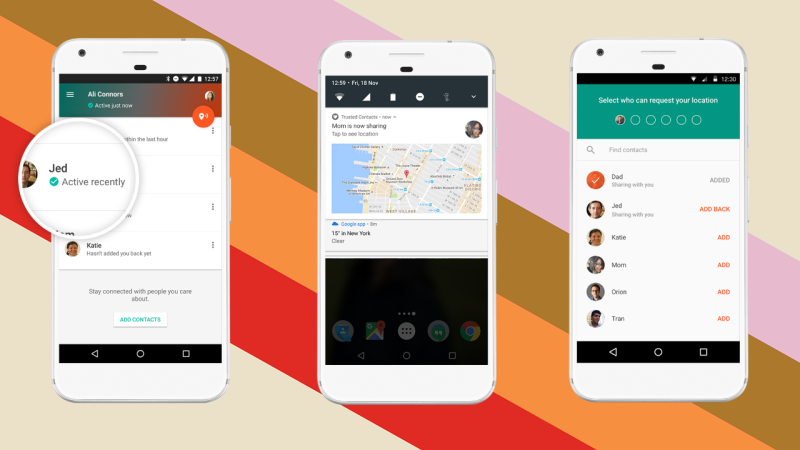
    I remember being a kid and riding my bicycle or rollerblades all over the neighborhood. We could go out and have all the fun we wanted as long as we checked in here and there. That usually meant trekking back to the house and hollering in the back door, “Mom! We’re good” and heading back out for the next adventure. Times are changing. It’s getting increasingly troublesome to allow your kids or teenagers to go out and do things without you. Our technology has been giving us ways to keep updated with our children’s activities for a while now but the newest app from Google, “Trusted Contacts” might be one of the better options.

    For years I have been helping parents set up tools they can use to protect their kids online. GPS tracking has always been available in some way as addons or with a workaround in certain apps but Trusted Contacts was built to do exactly what parents have in mind when they think of tracking their kids’ location.

    “We’re actually going to help some people, and potentially save some lives.” – David Tattersall, (Google)

    The app was built to help keep people safe. Whether checking in as ok during a natural disaster, allowing your location to be viewed while walking home from a friend’s house at night, or keeping an eye on our kids while they are out with friends, Trusted Contacts gives a simple way to remind them to check-in. Even tech writers are seeing the implications for family safety:

    I can definitely see how parents will want to install this on their kids’ [ . . . ] phones though. – Frederic Lardinois (TechCrunch)

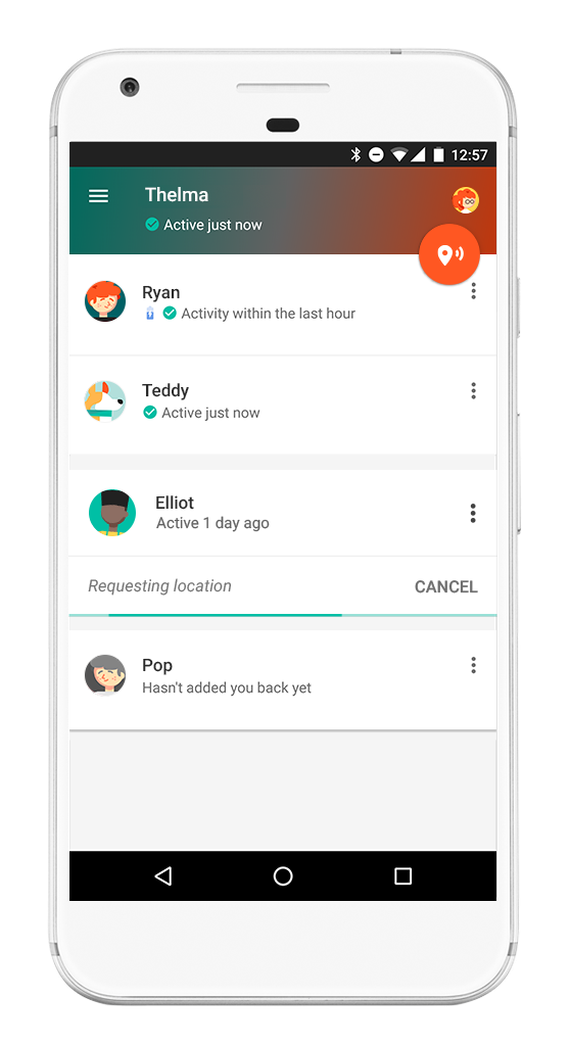
    trustedcontacts2After installing the app you set up which contacts in your phone are “trusted.” Then whenever they want, they can ping your phone with a notification to check in with your location. You will tap the button to check in and it will update them for you. You can decline to update but if you don’t do anything for five minutes, it’s going to send them your information automatically. This will allow you to update them that you’re safe, as it will alert them that you declined, but without disclosing your location.

    Trusted Contacts is only available for Android but the iPhone version is in development. If you and your kids have Android phones I recommend downloading this app and setting it up soon. As your kids go about their increasingly busy schedule, you’ll quickly see the benefit of being able to remind them to check-in with their location. This is a pretty cool new tool for parents.

    In the meantime, there are ways to view and track location on an iPhone (mainly using messenger.) Stay tuned for a video for subscribers that will teach you how to set that up.

  • VIDEO TUTORIAL: iCloud FamilyShare Set-Up

    VIDEO TUTORIAL: iCloud FamilyShare Set-Up

    Apple has a great way to help families keep track of what their children are downloading on their ios devices. Your kids can even have their own profiles. It allows for families to share the apps they have downloaded without having to purchase multiple copies. It lets the administrator see what apps the other accounts have downloaded. Best of all, though, it lets you set requirements for young users to ask permission before an app can be downloaded. If you have specific requirements and standards for the apps you want your kids to use, this feature will help you keep those standards in tact.

    The video below is a simple walkthrough on my Macbook of how to set up your iCloud FamilyShare settings. I will add one new child account and even give some information about why you may want to use this feature.


  • Don’t Let Your Kids Download a New Calculator

    Don’t Let Your Kids Download a New Calculator


    Looking today at a list of free apps in the Apple App store I noticed that a secret calculator app has been discounted. Be aware that there are secret photo apps disguised as calculators available for your kids phones. The one below is pretty simple to spot since the icon shows photos behind the peeled back calculator but they’re not all that simple to identify.
    screenshot-2016-12-01-12-26-21 You would normally look at a calculator app and not think anything of it but these apps will allow you to hide files behind a code that unlocks access when it’s entered into the calculator. In most of these apps, the calculator actually works as well. The best way to identify if your kids are trying to hide things from you with one of these apps is to look at it’s page in the app store. The description will mention the abilitscreenshot-2016-12-01-12-35-20y to hide files. If you find that your kids have one of these apps on their smartphone or tablet I recommend you uninstall immediately.


    An important tool to help you with this is iTunes FamilyShare. Be sure this feature is set up so you can pre-view any app your kids want to download and they can even be required to ask your permission. Check out this tutorial on setting up FamilyShare for to subscribers.

  • Is iBooks Storytime Looking to Replace Mommy and Daddy?

    Is iBooks Storytime Looking to Replace Mommy and Daddy?


    “I’m bored.” This is the most terrible phrase for a parent to hear their kids say. Seriously, parents would pay ungodly amounts of money for just a couple hours of boredom. Boredom sounds so relaxing but our children are complaining about it. Our most common response to this phrase is “Go get a book and read.” We still have a couple who can’t read so they want us to read to them. That’s a good thing to do (More on that later.) but aren’t you busy? I know I am. Now you can say “go turn on the TV and read.” It’ll even read to them. But is that such a good thing?

    Enter iBook StoryTime

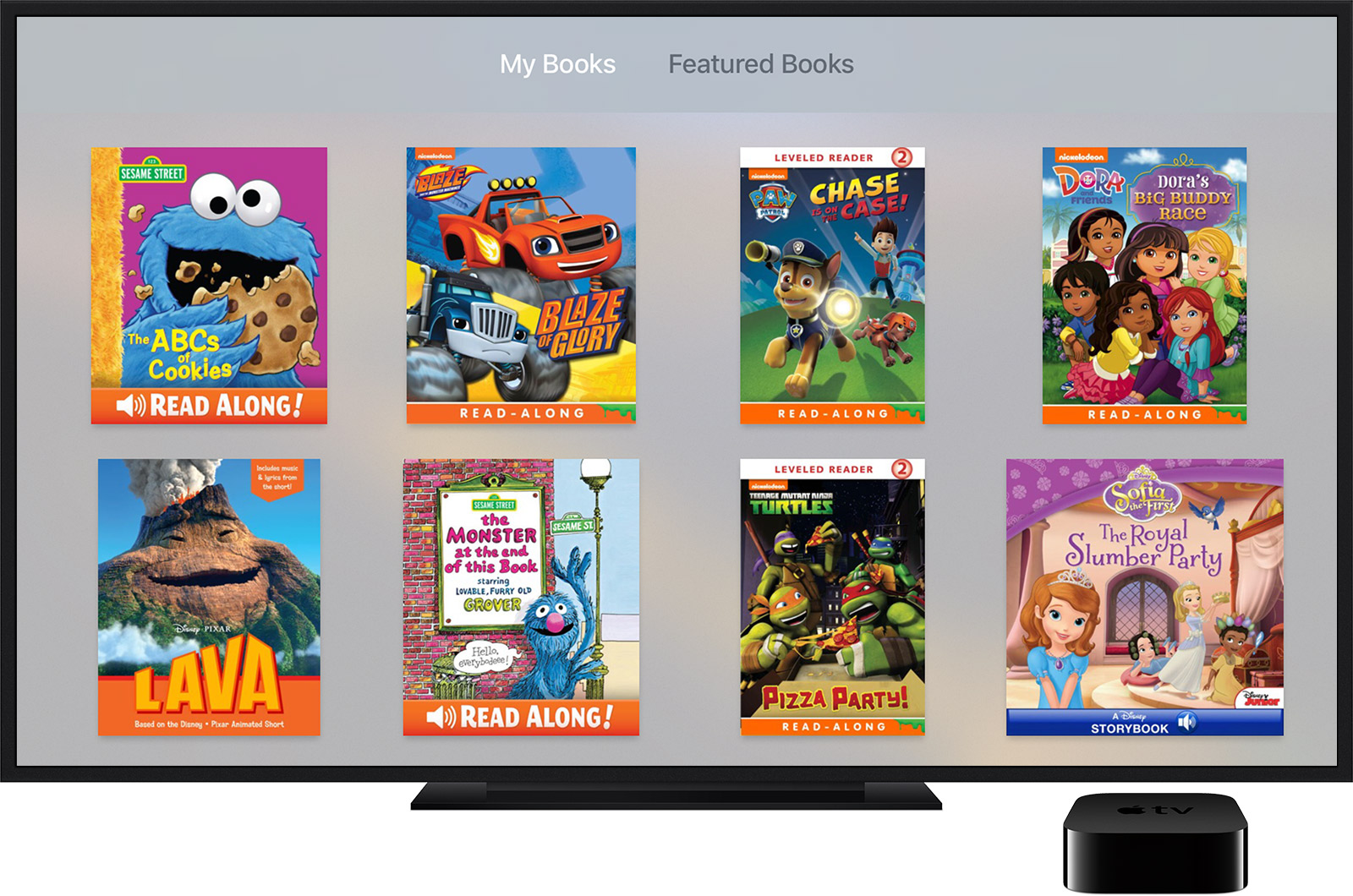
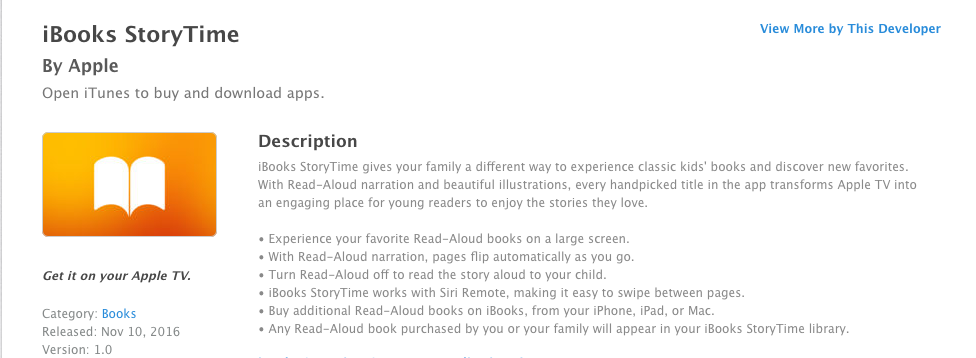
    Offering classic kids books, new stories, read-aloud narration, and Hi-Def illustrations, StoryTime is looking to be “an engaging place for young readers to enjoy the stories they love.” (App Store) StoryTime is available for AppleTV as well so stories can be viewed on larger screens. Pages flip automatically and there is an option to turn off the narration so you can read to your child yourself.

    The question is whether or not apps like iBooks StoryTime encourage reading or just disguise screen time to seem like it’s educational. Many experts have recently concluded that too much screen time is bad for the development of children. Obviously we can see the concerns with attention span or problems in social situations but one issue that relates specifically to this app is :

    an internalization that all actions have an immediate effect, and all stimuli elicit a quick response. – Psychology Today

    screenshot-2016-11-30-12-44-14This constant immediate reward from the quick response of digital media can lead to a preference to screen type activities and addictive behavior. 

    Reading to our children is critical. One of the most significant benefits is how reading together builds and strengthens our relationship with our kids. If a pre-recorded narrator is doing all the reading to our children, they are building a relationship with that screen and not with mom and dad. There are of course enough benefits to reading, no matter how. Kids who read well do better in every subject in school. Children who have been read to are better at communicating and reading to them at a young age makes it easier for them to learn to read when the time comes.

    Numerous studies have shown that students who are exposed to reading before preschool are more likely to do well in all facets of formal education.

    The most important thing is balance. An app like StoryTime can be a great tool to inspire and encourage reading in our children’s lives. It can also be a way to distract them so that we can do whatever thing we feel is urgent enough to cause us to neglect the important activity of bonding with our kids. We just have to be careful.

    My wife can’t even read a book on a screen. She says that there is something to the tactile effect of turning a page. The smell of the pages and even the sound of pages rustling as you go from chapter to chapter. I’m not sure if science backs up all of that but there is a ton of research leading experts to believe that even though an app like StoryTime can be a good tool, nothing beats sitting with your child, opening up a book, and reading together.

  • DirecTV NOW is Not Family Friendly Yet

    DirecTV NOW is Not Family Friendly Yet


    It’s the future! I have been saying for years that paying for cable tv service is ridiculous. What if I could just stream the channels I want and not have to buy a whole package of useless Home Improvement and Movie Channels? Well, they aren’t exactly there yet but DirecTV is getting closer with DirecTV NOW.  AT&T announced yesterday that they’re offering a television streaming service called DirecTV NOW; it’s available for purchase in bundles starting today, November 30th.

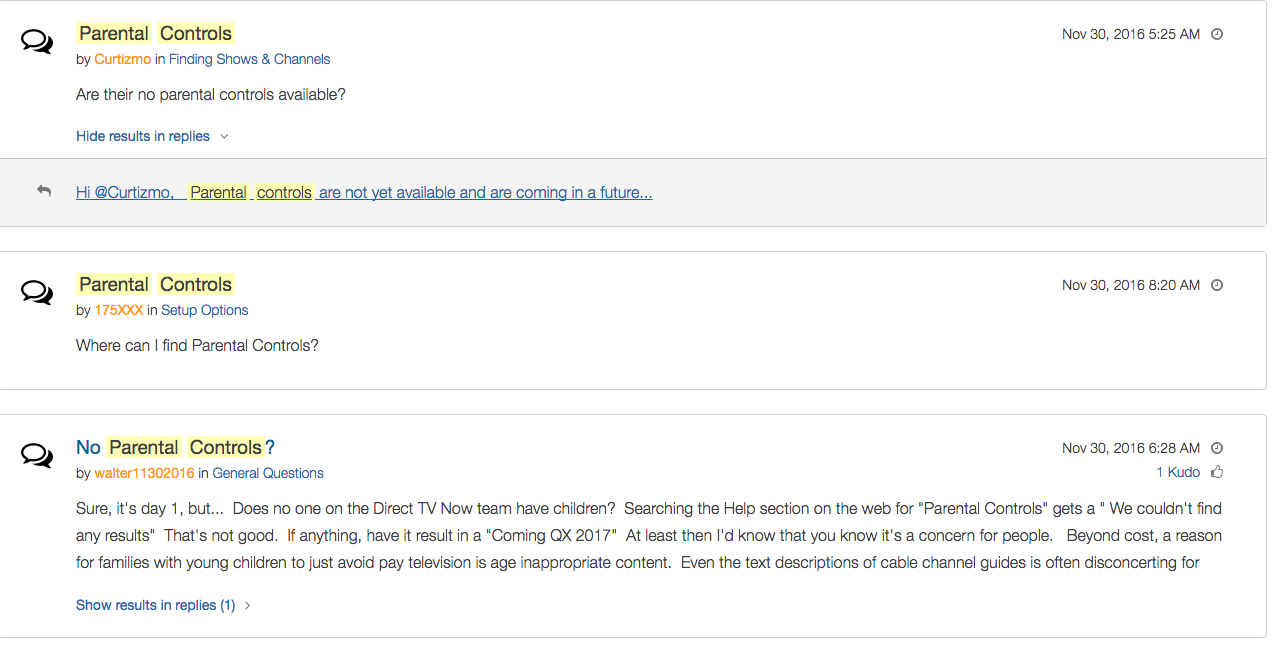
    Yes! It’s exciting to see that our TV options are expanding and even keeping up with the times a bit more. With ChromeCast, Apple TV, RoKu, and mobile access available we are finally being offered a version the tv service we wanted. Unfortunately, however, after some time with my free trial I have noticed that there is absolutely no parental control options built in for DirecTV NOW. I looked at the menus and in my account settings (there’s no option to create separate profiles, i.e. a kid profile, either.) I also tried to find a “block” option per channel to no avail. Then, a search for “parental controls” on the support and FAQ page led to no results and that was pretty much my final clue. There is currently no way to protect your kids from unwanted content on DirecTV NOW.

    That’s a deal breaker for me, especially with so much of what has become acceptable on cable television lately. Sexual activity, language, and increasing violence are mainstays in both broadcast and cable television shows. Even the commercials seem to highlight all of the features we would like to protect our young children from. I guess “keeping up with the times” comes with its costs as well.

    What’s a Parent to Do?

    screenshot-2016-11-30-12-15-35I would say wait. Just wait for a while and I’m betting we will see parental controls rolled out on DirecTV NOW before too long. In fact, a quick search on the AT&T Community Forums showed several concerned parents had already begun asking about this feature and it’s in development.

    DirecTV NOW looks to be a great way to save some money while still getting the entertainment content we want. Thankfully parental controls and content restrictions are becoming commonplace these days and this will be no exception. It is literally “day one” for this service so we’ll give them some time and the benefit of the doubt. You can join the future too if you’d like, I would just recommend keeping your kids off of it until you can set up some restrictions. 

  • VIDEO: FACEBOOK LIVE Q&A

    VIDEO: FACEBOOK LIVE Q&A


    Circle, Accountable2You, YouTube Kids, Young Kids and Internet Safety. All this and more in this Facebook Live video. This #givingtuesday live video was a great way to meet parent’s needs right where they are. Be sure to visit BecauseFamily.org/partnership to learn more about donating.