Blog

  • The Worst Thing About CES2020!

    The Worst Thing About CES2020!

    I spent five days walking around the show room floor and attending conference sessions at CES2020. It is the largest trade show in the world. I saw all kinds of technology from smart cars, smart homes, and toys and ed products for kids. These people are why I am at CES. I’m there to learn how their products can benefit our kids in the future. Tech is super helpful and useful as a tool for education, entertainment, and development. Many kids are learning in ways they couldn’t before, children are getting opportunities they didn’t have before because of vr and ar classrooms. Technology is and always will be a part of our lives. The world is getting more and more tech-centric. The worst thing about CES2020 seems to be that parent’s concerns about the amount of tech in their kids’ lives are being ignored.

    The Worst Thing about CES2020

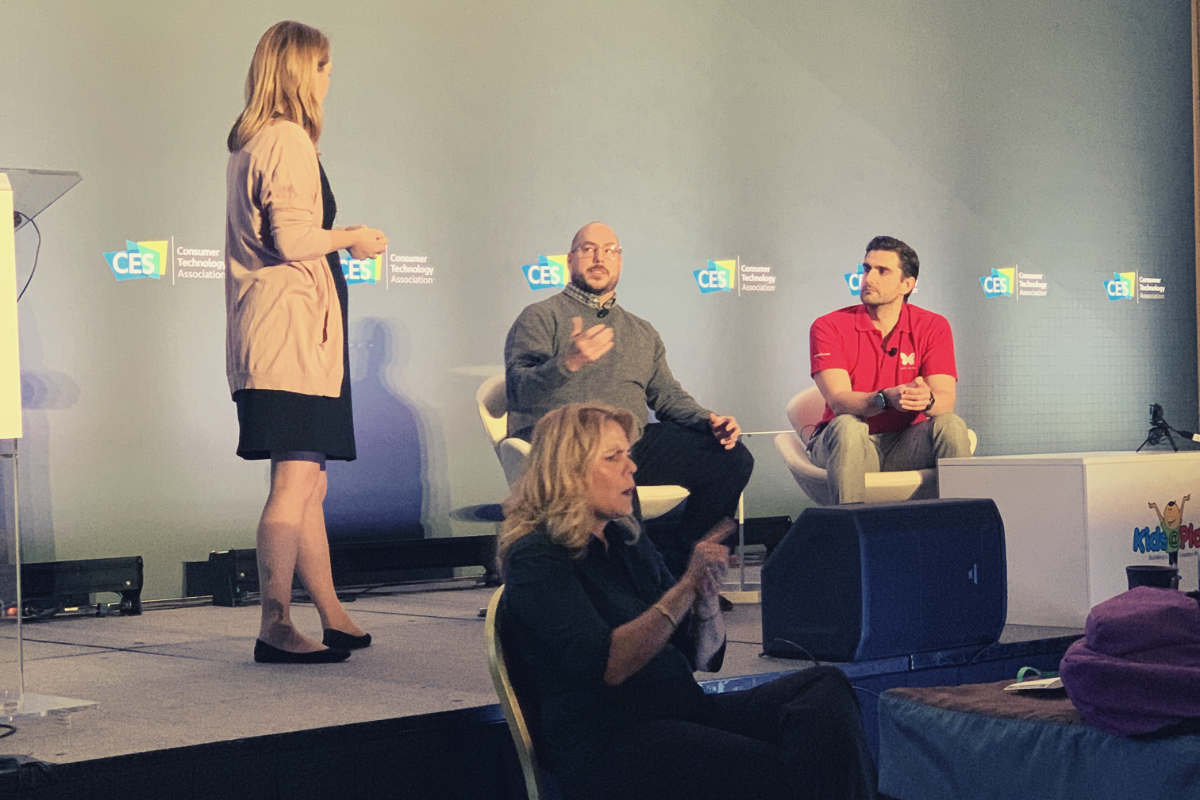
    I heard a lot of mixed messages at CES this year. Especially at the Living at Digital Times “Family Tech Summit.” It has become increasingly frustrating to listen to software developers and hardware engineers talk about how their new technology is going to change the world. While much of this technology is very neat, and as mentioned, can be helpful. There are also a small percentage of people on the stages at CES warning us that our kids are becoming too dependent on this technology. Parents and teachers are getting concerned because they feel like technology is moving far faster than they can keep up. The experts at CES don’t seem to understand the anxiety caused by new, “world changing,” technology being announced every single year.

    Most technology being announced at CES is a new take on the same thing we’ve had for the past ten years. I am walking in to the Family Tech Summit expecting to hear about what new products will be best for our kids. Instead I am hearing what will be best for these developers and companies. How to market and close sales with their new products. I did hear from a few people about ways to protect our kids on the technology we allow them to use.

    Unfortunately they were given a small amount of time. They were followed by someone who just got on stage to celebrate the latest voice control tech. This “expert” explained how great it is for our kids. He marginalized parents’ concerns by calling them misguided. then he touted the fact that parents seem to be concerned but don’t take action to protect their kids. He ignored the fact that companies make their products and advertise them as safe. They build in parental controls that are weak and hard to set up. Then they wonder why they show up in the news when a kid comes across adult content on a smart speaker or is visited by a stranger on their in-room nanny cam.

    It wasn’t all bad.

    There were highlights at CES2020, though. Dr Amanda Gummer with the Good Toy Guide, spoke of using tech to encourage kids to play and learn. Sean Herman, author of “Screen Captured,” shared about his own kids and how their attention to screens caused him to start Kinzoo. Kinzoo is a messenger app that “turns screen time into family time.” I met Carrol Titus, founder of GoldenPoppy Inc. who is making augmented reality games to teach physics, programming, and positive self awareness. I enjoyed speaking with Ahren Hoffman and Sue Warfield from the American Specialty Toy Retailing Association, “ASTRA.” We talked about the lack of attention to giving parents tools to learn and use tech wisely and the benefits of kids playing off of screens. Especially young children.

    Everyone can say what they want about screen time and the benefits or risks. The truth I see is ‘that technology should enhance our play and education. It shouldn’t replace it. Parents aren’t freaking out because their kids are spending too much time watching educational videos. They’re not concerned about them playing apps that teach them to read or do math. The concern is the unstoppable flow of entertainment that comes flying at our children at toy stores and app stores. Entertainment that has no intention of teaching anything, just using up your child’s time and attention to show them ads or sell them access to more entertainment. I understand that many want to see tech become the new norm for education, recreation, entertainment, and everything else.
    The issue is that we currently aren’t promoting balance. Surely not at CES2020, definitely not in our app stores or on the shelves of our retailers. Once again, it falls to us as parents to take the step towards a healthy attitude toward s tech. Digital wellness is our responsibility and the more I hear from app developers and toy makers, the more I am sure they won’t be taking it seriously, not really, so we have to.


    If you’re concerned about what your kids are doing online, be sure to check out Accountable2You.com. This software is my favorite accountability software and will help you keep a close eye on the websites your kids view.

  • CES2020 | Protecting Your Family’s Privacy and Data

    CES2020 | Protecting Your Family’s Privacy and Data

    Walking the show floor at CES can be a major assault on the senses. Every booth has music and lights and giant screens or projectors showcasing the latest and best of their technology offerings. One thing that is cutting through all of the noise, however, is the need for tech companies to earn the trust of their target consumers. Voice control, smart home technology, and data mining for convenience in retail are on the rise. The companies who use our information to make our lives easier have to convince us that they are going to stop there. The good news is that it seems they are understanding this truth.

    Protecting Your Family’s Privacy and Data

    Robin Raskin, the founder of Living in Digital Times, said that trust will be a major theme at CES this year. I spent several days on the CES show floors and I can tell you this is the truth. Car manufacturers are explaining how their tech is built to keep you safe. They are saying that the information gathered about you is meant to make the goal of safety more attainable. Convenience is being showcased at nearly every booth on the floor as well. Convenience requires data, so it is no surprise to see these exhibitors featuring their privacy policies upfront for all to see. Even toy makers are touting their focus on privacy. The connected toys your children will play with shouldn’t be tracking their every move.

    Trust and Responsibility

    Protecting your family’s privacy and data is a huge responsibility. The responsibility for data privacy, security, and trust are shared, though. We, as consumers need to know the role we play in protecting our information. There are key factors we must keep in mind when thinking about security. Our passwords are very important. We must make sure we have different passwords across our online accounts. Also, be careful to use passwords that aren’t too easy to guess. Finally, we have to remember to set the security settings on our new smart devices when we take them out of the box. That new thermostat or camera is connected to the internet. That makes it susceptible to hacking and therefore security settings must be set. If your device offers “two-factor” authentication then set that up as well. It can seem inconvenient but it will protect you from a lot of trouble in the future.

    Companies can only do so much to protect your data and security. They can give you tools to protect yourself but they can’t force you to use them. Check out my other articles on data privacy HERE.

    One last important tip is that you only buy smart home devices from well-known, trusted companies. Most of the time, these larger tech companies have had multiple levels of scrutiny concerning their privacy policies. Some smaller developers from other countries will have had less accountability for what they do with your information. Their products cost less and seem to work in the same way but you aren’t guaranteed the safety settings some of the larger companies will give you. All of these products are a privacy risk but you’re likely to have more transparency from a larger, more established company.

    A Caveat.

    Some privacy/security startups are making big waves right now. They are smaller companies that have security and privacy in “front-of-mind” as they develop their technology. My advice is to ask questions and look for more info on their privacy policies. Some of this new security tech is very cool and will be very helpful. Others are taking advantage of the new focus on privacy to sell more stuff that doesn’t work. Be a wise consumer. That is the most critical step in protecting your privacy.

  • The Family Tech CES2020 Preview

    The Family Tech CES2020 Preview

    Every year at CES, tens of thousands of people gather to see the latest that technology has to offer. Every tech media outlet covers CES. They’ll be talking about everything from virtual reality to massage chairs. This is your Family Tech CES2020 preview. There are a lot of interesting topics being covered at CES this year. Here are some that I think are the most interesting and some that are specifically important for families like yours.


    TV Talk

    Welcome to the age of the 8K television. That’s right, we’ve skipped from 4k resolution to the mind bendingly clear 8k quality. Some say that the human eye can’t even discern that kind of clarity but it sure would be fun to find our for ourselves. The 8k tvs from LG, Samsung, and Sony tout such amazing tech that you need a screen larger that 65 inches to even get the full benefit.

    Voice-Enabled Digital Assistants on Everything

    Voice assistants are in everything. It’s in your car, your TV remote, even your toilet and shower. That is going to continue at CES 2020. Look to find voice activated technology in more and more gadgets this year. Even our kids are being offered toys and gadgets with voice command tech built in. Voice Assistants aren’t new but seeing them integrated into everything else only proves that this concept is here to stay.

    foldable phones family tech ces2020 preview

    Crazy New Gadgets

    There is always some crazy stuff at CES. Some is pretty unimportant but interesting. Some things are said to be the new face of technology but just seem strange to me. Foldable phones fit into that category, so do many of the robot offerings at the conference. Either way I’ll be looking for the most amusing and interesting gadgets to show you at this year’s CES.

    5G Technology

    5G is a bit of a buzz phrase these days but there is some actual technology behind the term. This fast, “over the air,” data connection is finally starting to spread for real. Many major cities are adding 5G to their infrastructure. It’s expensive and coverage is spotty but wherever it works, it’s lightning fast. The reason 5G is so critical is the role it will play in the roll out of self driving car technology. The connection speed that 5G offers is critical to the success of the self driving revolution.

    Self Driving Car Technology

    Self Driving Cars are always the bell of the ball at CES. This year will be no different with more and more companies finding ways to implement the improving technology. Not only are the cars themselves a big deal but the tech around mapping, connection speed, and entertainment inside your self driving car is becoming a major reality as well. It isn’t easy to hitch a ride in one of these vehicles at CES but I’m going to try my hardest this year.


    What Parents Should Know

    The future of technology is always going to include products to entice our children. Coding toys, games, gadgets, and safety tech are all being highlighted at CES2020 and I’ll be there to show you what to look out for and what to look forward to. As I look toward this year’s conference, here is a family tech preview of CES2020.

    Ed-Tech

    As highlighted last year, education technology is a going to be all over the show floor at CES. I’ll show your new coding games and toys as well as virtual and augmented reality classrooms. Robots will play a major role in training students for future technology jobs as well. Keep your browser open to the Family Tech Blog to see more as the conference starts up next week.

    pet tech family tech ces2020 preview

    Pet-Tech

    The furry members of our family have a place at CES as well. Dog toilets, cat toys that move across the ground, connected leashes, and even fenceless boundaries highlight the pet tech industry at CES. You’d be surprised how much tech can help people care for their pets and help pets care for their people. You probably wouldn’t be surprised, however, at some of the goofy pet tech that shows up at CES as well.

    Smart-home/ Home Security

    Everyone’s homes are becoming smarter and smarter, even if the way we use the technology isn’t so wise. Technology that can keep our home network and connected devices safe is crucial and thus, a major factor at CES. I’ll be spending quite a bit of time chatting with developers about their products intended to keep your data secure. Some even offer new parental control solutions as well.

    Connected Toys

    So many of our toys are connected to the internet now. Games, robots, even racetracks are finding ways to connect your tablet or smartphone. You are given an online account in order to fully play with these toys. This is introducing our kids to use of the internet earlier and earlier. What products are coming up that feature connected toys? I’ll gave updated information for you from CES next week.

    Avast All-in-One Security and Safety – Omni

    I’m very excited to test out one specific piece of family safety technology. Avast’s Omni device is an all-in-one way to protect your network from hackers, malware, spyware, viruses, and even set up parental controls and GPS alerts. I’m excited to have a hands on look at Omni while I visit their booth at CES. I’ll also be able to hear from their VP of Product Deliver as she shares at the Family Tech Summit on Thursday of the conference.

    A Long Six Days

    Hope you enjoyed this family tech CES2020 preview. This event is a lot of work and makes for long days. It is, however, some of the most useful and rewarding work I do all year. The new tech, updates on the latest trends, and marketing strategy research gives me such great information to pass along to you, parents. Thank you to those who have partnered with BecauseFamily for this trip to Las Vegas. If you would like to partner with our organization just visit our Partnership page. You can follow every detail of my adventure to CES2020 on our Facebook Page, our Instagram, and on YouTube. Thank you again, see you soon, from Vegas!

  • BecauseFamily 2019 Year in Review

    BecauseFamily 2019 Year in Review

    2019 was an incredible year! Thank you, our readers, for supporting our organization by reading, watching, listening to, and sharing our posts. We have been able to help thousands of families be internet safe in 2019. The infographic below is a celebration of the advancements our organization has made this year. Be sure to watch the video above to hear about all of the exciting new things in the works for 2020.


  • YouTube’s Children Privacy Policies Causing Content Creators to be More Crude in their Videos

    YouTube’s Children Privacy Policies Causing Content Creators to be More Crude in their Videos


    I am an avid YouTube viewer. I get most of my entertainment from the video streaming service, watching gaming videos, D&D streams, and educational tutorials. I have noticed a trend since YouTube changed its policies for creators to be more responsible for their channel’s content as it pertains to advertising to children. 

    Since YouTube cannot collect viewer data from videos that are intended for children, the company has asked creators to label whether their videos are for kids or not. They are also using an algorithm to view popular videos and identify the content as meant for kids or not meant for kids. This algorithm has content creators concerned for the viability of their channel. This has caused them to be more blatant with crude content and swearing in order to make it very obvious to this algorithm that their video is not meant for children.

    One YouTuber that I enjoy watching, partially because he isn’t overly crude, has been starting his videos with strings of swear words and jokingly saying “This video isn’t for kids YouTube, just be aware, not meant for children.” One of the reasons he feels the need to say this so blatantly is because he plays video games on his channel that may appeal to children. The images of the game alone could lead a person or artificial intelligent software to believe the video was made for children even though that isn’t this creator’s main target audience. Another YouTube content creator that I know has lamented on social media that his channel, which is family-friendly, has lost hundreds of dollars monthly in revenue since YouTube changed their policies. 

    SirWillow is a Family-Friendly YouTube Channel with nearly 30,000 subscribers and over 4 and a half million views.

    1. Would you be willing to tell me a percentage your ad revenue went down when YouTube changed their policies?

    I’m still waiting to see how it all sorts out, but right now in my case I’m looking at about a 30% drop, but it’s in a state of flux. What will be telling will be the end of January when the full force of the new policies kicks in.

    1. How have the changes to the ad policy changed your process for making videos?

    In my case, it hasn’t changed any of my process.  But I may not be the norm in that regard. I know several that do YouTube “full time” and for them, it has meant some drastic changes.  I know at least one that is likely going to shut down, another is cutting back on YouTube to increase time in other projects. For me, it’s been a hobby that has brought in a part-time job income, and while the income has dropped it’s still going to fit the same role.  It has meant a change in how many videos though. I am cutting back my production some from 10-12 videos a month to closer to 7.

    1. Your videos are “family-friendly.” Do you think that YouTube is becoming a less friendly place for families in general or is it mostly up to creators?

    I absolutely think YouTube is becoming less family-friendly, and these changes are going to directly impact that and make it worse.  The changes are going to pretty much destroy financial benefits for anyone producing kid-focused videos, and there are a lot of family-friendly channels that are going to get caught in that backwash and cut back or stop producing. It’s also going to be harder to find kid and family-friendly videos because of all of the blocks that will remove them from the normal algorithms that recommend videos.

    And there are a number of producers who have, as you mentioned, increased cursing and crude language, along with images and subjects to make it clear that they aren’t “kid-focused”  It’s going to make it hard to find, and hard to produce and make money, kid and family-friendly content.

    My thanks to SirWillow for answering these questions for me. He does videos about theme parks and what it has been like working at theme parks. Go check out his channel!

    What Parents Should Know

    It should be very clear by now that YouTube isn’t intended for children. It is becoming harder and harder for people who make videos for kids to sustain a profitable channel on the site. This is causing some different reactions. Some kids’ channels are switching to a subscription method where you can sign up to pay monthly for more content from them. Others are changing to Facebook or Twitch because of their less strict ad policies. 

    The only real way to be sure your kids aren’t watching videos that aren’t intended for their age is for you to control what they are viewing. Legally, our young kids (under 13) are supposed to be using only apps intended for their age group. The legal responsibility, however, doesn’t fall to our kids or even us as their parents, it falls to the company. Hundreds of millions of dollars worth of fines have been handed out by the FTC for companies illegally collecting data from children. They are being investigated and forced to make changes. The changes seem like they should be good for the safety of our children but so far they are only truly helping protect the company from the repercussions of disobeying child safety laws.

    When the safety measures protect only from advertising info being collected, they may be intended to protect children but in practice, they seem to be increasing the volatility of the content on the service while only protecting the service itself. Parents are the only true guardians of our kids’ hearts and minds. The only way to protect them from adult content and crude language on the videos they watch are to take responsibility for their screen time ourselves. Here are some tips:

    • Only allow screens in a public area. 
    • Limit headphone use so you can hear what they are watching.
    • Build playlists on YouTube to ensure they are only watching videos meant for kids.
    • Use apps like PBS Kids or DisneyPlus to keep them watching family-friendly videos.
    • Use YouTube kids instead of YouTube; while not foolproof its a far better option than basic YouTube. 
    • Limit the amount of time watching videos; the more time spent on YouTube the more chance of coming across inappropriate content.

    Parents should take the steps necessary to protect their children online. Companies should be held responsible for their advertising practices and the content on their sites and apps but the responsibility for protecting our children falls strictly to parents. When the measure taken by companies to protect kids backfire by causing creators to lose money unless they swear, use violent and sexist language, or show adult images on their videos, the measure don’t protect our kids, they make the app more dangerous. Parents are the gatekeeper. Protect your children. 

  • Instagram is Adding Useless Age Verification to Comply with Child Privacy Laws

    Instagram is Adding Useless Age Verification to Comply with Child Privacy Laws

    Users on most social media platforms are supposed to be 13 years old or older. Some apps have had a form of age verification available for a long time. This allowed them to collect data on all of their users without failing to comply with child privacy laws since you can’t have an account if you’re 12 or younger. They then, as much discussed on this blog and elsewhere, sell that data to advertisers or use it to sell targeted advertising on their own platform. Instagram hasn’t had age verification since it started. That is changing as of this week.

    You may have already seen your birthday show up on your profile in the Instagram app. Don’t worry, that information isn’t public, only you can see it. All users will have their birthday information on their profile as of this week. If the birth year used to create your profile shows that you are under the age of 13, your account will be suspended. When setting up a new Instagram account, the app will now ask for you to put in your birth date.

    “Asking for this information will help prevent underage people from joining Instagram, help us keep young people safer and enable more age-appropriate experiences overall,” the company wrote. “In the coming months, we will use the birthday information you share with us to create more tailored experiences, such as education around account controls and recommended privacy settings for young people.”

    Asking for users ages has already been a part of major social media apps like Snapchat but Instagram hadn’t added it to their sign up process yet. TikTok added age verification after being fined nearly 6 million dollars by the Federal Trade Commission. The problem with these age verification practices is that they are fully reliant on users being honest about their age. All you have to do is a little bit of math to determine when you have to have been born to be over 12 years old. When you enter your new determined birth-date you would be allowed into the app just like anyone else. Parents have been known to lie about their kids ages to allow them to have social media accounts, this is allowed by COPPA as it counts as parent permission. The problem is that developers of these apps can’t tell the difference between a parent making an an account for their child or the kid making their own and lying about their age.

    What Parents Should Know

    Age verifications on social media apps are a hand wave towards regulations that depend solely on users to take the rules into account when using the apps. This means that they aren’t concerned with the safety of users as much as their own ability to skirt around fines and other regulations from the Federal Trade Commission. It is very obvious that these apps are meant to be open and as public as possible. The want as many users as they can get because they aren’t social media companies, these are advertising companies. They sell ads, plain and simple. When you sign up to use social media you are signing up to be advertised to specifically and aggressively. When we sign our kids up and lie about their age we are telling these companies to treat them just like any other consumer.

    If you are honest with yourself, the reason you’re allowing your young kids to use social media is pretty weak. Because their friends have it? Because a teacher says that’s how they contact students? There are ways around any of the reasons you think lead to your hands being tied. All it takes is your own knowledge of what being on these social media apps means for your kids and then a little bit of confidence to just say no. Stand up to your kid, you are the parent after all, or stand up to that teacher or coach. Ask them why they want to contact your 12 year old on social media anyway, does that sound appropriate to you? I submit that in nearly any other context it would not be acceptable.

    You are the first line of defense. Advertising and data collection is the main issue that the government leans on when saying they are trying to protect children online. There are, however, so many other issues to be concerned with. Pornography is rampant on apps like Snapchat, Instagram, and TikTok. You se report after report of young people discussing suicide, mental health problems, and eating disorders on these apps. This information is just sitting there for our children to see. When you give in and allow them to use social media at an early age simply because you think it’s no big deal, or you trust your child, you are allowing things into their minds that cannot be unseen. You’re giving them access to a world that cannot be left behind. Once you know about or begin to contemplate these things, they are permanently a part of your psyche. We must do better. We have to be smarter about our children’s access apps with user generated content. Whether it be games, social media, or any other software. We cannot trust software companies to do the right thing. They are looking after their bottom line first. It is up to us to protect our children. Not the government, not app developers, not the schools, or even police departments and social workers. It is up to you, mom, dad, aunt uncle, grandma, and grandpa. Only you.

  • Be S.A.F.E. Online During the Holidays

    Be S.A.F.E. Online During the Holidays

    **This post is an updated version of an article from 2017. 

    The Holidays are a time of fun, family, faith, and food. Everyone coming together can be super fun for the entire family. There can also be some struggles here and there, especially when it comes to what shows up on the screens in the house. Your younger kids could end up seeing too much social media on their teenage cousin’s smartphone. Uncle so and so can show Youtube videos to some family with adult language and content not noticing the children in the room. Heres a few tips to try and keep your Holiday internet safe and family friendly.

    Protect Your Kids

    Encourage a host home internet filter.

    Ask the family member or friend who’s hosting your festivities if they have some sort of content filter on their wifi. Many routers have a basic filter and some folks may even have another filter system in place. If there isn’t an option, recommend one like Circle. If they don’t have kids or aren’t interested in filtering their wifi long term you can recommend a free trial with something like Mobicip or NetNanny. This usually allows you to use the filter for seven days to a month at no cost. Offer to help them set it up and then you can breathe a little easier when your kids are using their wifi.

    Keep devices with screens in a common area.

    Intentional poor behavior will happen in private. If you keep the screens around everyone else you’re much less likely to have an incident. Make a rule that screens should be kept in the most common area of your Thanksgiving meeting place. The living room full of people or the dining room around a busy table is a great place to let kids spend whatever time on screens you’ve allowed while adult eyes can glance down to see what’s being viewed. This will also keep sneaky cousins from pulling up something age appropriate for their younger family members.

    Talk to your kids.

    Your kids need a safe place. They need to know that if they see something inappropriate online they can come to you and receive no judgment or criticism.  It’s critical that they are allowed to explain what they saw and how it made them feel. Discuss your screen boundaries ahead of time, your kids should know what you expect even if you aren’t able to get the whole extended family onboard with your plan. Tell them if you want them staying off screens completely. Let them know not to look at older kid’s phones or tablets while they play. Think ahead of the likelihood of your kid seeing something they shouldn’t and try to head that off at the pass. Accidents happen but if you and your kids are on guard, you should be able to have fun without too much worry.

    Protect Your Privacy

    Turn off camera location settings.

    Your camera defaults to save your location every time you take a photo. This tags those photos with where you were when you snapped that pic. Then, when you share the image on Instagram, Facebook, or Snapchat your location is uploaded with the image. This means that with the right software your location can be extracted from that photo and used for unseemly reasons. 

    • Go into your settings app and access your “location” settings.
    • Go to the camera app settings under “location” and tell your phone never to use “location” while using your camera.

    Changing these settings will keep your location data off of your pictures.

    Advise family members not to tag their location on their Holiday posts.

    Finally, you’ll want to be careful not to tag your location on your photos. Yes, pictures of the pie, stuffing, turkey, and gravy boat have become as much a part of the holiday tradition as the cornucopia, but when you share it you’ll want to leave the address of the host off of your status update. Sharing your address with public social media posts is never a good idea. This can lead to all kinds of dangers. Imagine the images of all the neat and expensive stuff in the host home. Now imagine you’re a local who likes to break and enter to take things every now and then. What better way to identify a target than creep Instagram holiday posts for the people with the coolest stuff. Then, find the posts with their address tagged on the photo and off you go. Share away, but share with wisdom.

    The holidays should be a time of rejoicing and happiness. We should stuff ourselves with food and enjoy being together. Following these steps can help you stay safe and help keep your holiday party guests safe as well. 

  • Dangerous Random Live Video Chatting Apps are Dominating Social Media

    Dangerous Random Live Video Chatting Apps are Dominating Social Media

    A reader sent me this article written in the Washington Post today and I wanted to post my response. The article outlines the problems that Apple is having keeping “unwanted sexual content” out of apps on their iOS App Store. Apps like Monkey, Yubo, and ChatLive are all apps that allow you to chat live with random people, often only connecting you based on the gender you say you’d like to chat with. The problem with these apps is that most of them have no way to verify your identity, gender, age, or anything. This means that kids who use these apps are chatting with random strangers, many of whom are much older than them and have nefarious intentions.

    The complains in the article are centered specifically around “unwanted sexual material.” As you can imagine, the consequences of this content is often our young kids seeing images of people in mature circumstances whether they were seeking that kind of content or not. When you can just chat with someone randomly, you never know who is going to show up on your screen. When the person that shows up is in a compromising position, you’ve already seen it and it is impossible to unsee it at that point. Our kids are being shown this nonsense and the developers of apps are monetizing some of the only ways you can filter the content. (i.e. Monkey making you spend their in-app currency called “bananas” to select what gender you want to chat with). Those who run the app stores (Google or Apple) often say they do their best to keep apps with inappropriate content off of their stores, especially when it comes to apps that children use, but once they’ve labeled the app 17+ they pretty much shift the responsibility to the adult who is caring for the child.

    The Monkey App will be a Hotbed for Predators

    What Parents Should Know

    Two years ago I wrote an article about the dangers of the app Monkey and how it would become a hotbed for predators and “unwanted sexual content.” Today, Monkey is mentioned in the Washington Post article as one of the main companies with this content in their app, citing: “About 2 percent of all iOS reviews of Monkey, ranked 10th most popular in Apple’s social networking category earlier this month, contained reports of unwanted sexual experiences, according to The Post’s investigation.” Does 2% constitute a “hotbed?” I don’t know. But I will say it is a cause for great concern, especially since this is only a percentage of the reviews that mentioned the problem, mostly parents who saw that their children had been assaulted with adult content in the app. It doesn’t measure those who saw it and didn’t report it for one reason or another. I had been contacted by Allen Loh, head of global expansions for the Holla Group, operators of the Monkey App, six months ago or so and he assured me that they were working to address some of the safety and content concerns within the app. I have reached out again to get updated information about these issues but have not, as of yet, received a response.

    iOS 12’s Screen Time App Changes Everything!| Video

    The only real way to ensure your child is protected from the unwanted content in apps like these is to use the restriction settings built in to your operating system. Apple’s Screen Time has a restrictions setting in which you can set a maximum age rating for apps that your child can download. If your 15 year old has an iPhone, you can set the restriction to 12+ to ensure that apps rated 17+ won’t be available. Android users can use FamilyLink to set App Store restrictions for their younger children. These restrictions, however, will be automatically set to “adult” when your child turns 13.

    As I always say, the most important thing is communication with your child. You have to make them aware of the dangers of chatting with random strangers on the internet. As obviously dangerous as that sounds, these apps are branded and marketed as a fun way to meet new people. They build an environment that is like going to the mall or the movies back in our day, but instead it is all within the anonymity an app. Unfortunately, within an app, the weirdo who wouldn’t go out into public and make advances at your kids is there waiting to find someone he can groom, send adult pictures to, or violate in some other way. Parents need to create a safe space for our kids to come when they feel threatened or violated by someone online or in an app they use. Many of the stories of parents finding unwanted sexual content within an app were made known only because their child knew to come to them when they saw something that made them uncomfortable or feel violated. Do everything you can to protect your children’s hearts, eyes, and minds and then be sure they know they can come to you if something inappropriate comes across their screen.


  • Youtube’s New Kids Content Policies Explained

    Youtube’s New Kids Content Policies Explained


    Starting today, all creators are required to mark their content as made for kids or not made for kids in YouTube Studio. -YouTube Creators Email

    YouTube will be limiting the data they collect form videos that are targeting children. This is in effort to comply with the FTC’s demands that they be responsible for the information they gather on their site which lists children among their most frequent audience members. Wording in the email suggests that YouTube is “helping” creators comply with COPPA as well as meeting the demands the Federal Trade Commission put on YouTube as a media company.

    YouTube will use an algorithm to monitor content for child centric content and flag it as such if it is not flagged by the creator of the video. The email reminds creators to be vigilant to properly tag their videos if they are made for children as failure to comply could cause them to be in violation of the FTC’s demands.

    The FTC has outlined what constitutes children’s content and YouTube has that information available on their support page. YouTube’s announcement briefly defines children’s content as:

    • It is directed to children as the primary audience (e.g. videos for preschoolers).
    • It is directed to children but children are a secondary audience (e.g. cartoon video that primarily targets teenagers but is also intended for younger kids).

    YouTube’s guidelines state that they may override content creator’s settings if their content seems to be geared toward kids but isn’t marked as such. This could result in content creators being demonetized or held accountable in some other way for not properly categorizing their content.

    What Parents Should Know

    The FTC fined YouTube for their inability to comply with COPPA and told them they had to have a plan by next year to keep children’s data private on their site. Many thought YouTube Kids was the solution but so few parents actually used the kid version of YouTube so children remain a major audience for YouTube’s main site and app. The information creators give YouTube about their videos and channels will help YouTube know what videos to collect data from that will be used for advertising in the future. Also, the advertising on videos marked as “for children” will be different, focusing on the content of the video as an indicator of the audience rather than viewing data from the viewers themselves.

    These changes, in my opinion, are a step in the right direction for YouTube. Their collection of data from young audiences have been a point of contention for tech safety experts, security and privacy agencies, and family advocacy groups for several years now. The policies handed down by the FTC are in direct response of some of these experts and agencies asking for an investigation into YouTube for their lack of compliance with COPPA.

    As parents we rarely think about our kids digital footprint being collected and used against them but it is happing every time they log on to an app or game. It is important, however, to remember that the trail they leave behind online will follow them for the rest of their lives. The things they buy, the sites they visit, the videos they watch, and the games they play are all being compiled to create a profile on them that will be used to market to them online for years to come. If parents remember that our children’s web traffic is being collected we can take steps to protect them from excessive data collection. Encourage them to use messenger apps that are made just for kids. [Facebook Messenger Kids, not WhatsApp or FB Messenger.] Remind them that what they share online becomes public the moment they share it. Tell them they should only use video and game apps that are intended for children and made by major developers who are more likely to comply with COPPA. Parents are responsible for the safety of their children, as well as their privacy and security so take the steps you can to keep their data private.

  • Call of Duty Modern Warfare | A Parent’s Guide

    Call of Duty Modern Warfare | A Parent’s Guide

    Call of Duty Modern Warfare Parent’s Guide

    The rating below is based on the game content. Online interactions will always increase the risk of unwanted content.

    Violence – 1
    Language – 1
    Sexual Content – 4
    Positive Message – 1

    Total Score – 7  out of 20
    (The higher the rating, the safer the game is for kids.)

    ESRB Rating – M for Mature [for Blood and Gore, Intense Violence, Strong Language, Suggestive Themes, and Use of Drugs]


    The Game

    Call of Duty has set the standard for realistic first person shooter gaming for more than 15 years. 2019’s Modern Warfare seems to be a  tribute to the original games in that the story of the latest release is as good as any in every other CoD game to date. The campaign mode takes you through the story through the eyes of British, American, and Middle Eastern soldiers and insurgents who are fighting to free a country from a Russian general and his armies. The story is rich and the characters include soldiers you’ve fought with in different games, giving an instant buy in and causing you to care about these characters from early in the story. While the game does ask you to make some pretty difficult decisions, the realism is unlike any other FPS game I’ve ever played, mostly because of the gruesome situations you are put in during the campaign. Overall, Call of Duty Modern Warfare, as much as the campaign is concerned, is one of the best games of 2019. I recommend it for those mature enough to play as long as you have a strong constitution.

    Violence [1]

    Violence is intense in this game. Explosions blow people apart, every bullet hit causes a spray of blood that can be seen from far away. The rag doll effect is used to increase realism causing enemies to fall limply to the ground and fly through the sky when an explosion takes place nearby. Like many of the most recent Call of Duty games there is an option to disable gore effects but this option is in the settings and not password protected. If you set the gore settings to off they can be easily turned back on without any trouble.

    Language [1]

    CoD Modern Warfare is full of profanity. Every mature word in the book is used in the game and in every mode of the game. Commentary from non-player characters contains extreme language and obviously online multiplayer modes is likely to contain adult language from other users as well. The gore/content filter will turn off language from characters in the game but, again, it isn’t password protection and online play is not affected by these settings. 

    Sexual Content [4]

    There isn’t any obvious sexual content in CoD Modern Warfare. Early in the campaign you interrupt a man who is abusing a woman, it is hinted that he was possibly going to abuse her sexually. You kill him before anything happens. There are some character models/outfits that could be considered revealing, especially with cleavage in the multiplayer modes.

    Positive Message [1]

    Modern Warfare is honest about the cruelty and awful things that happen in modern war. It sets up the Russians as enemies and the US and the UK as the heroes. The campaign story is very dark in places and, while intriguing and well performed, is intended for adult audiences. This game puts players through situations that those who experience PTSD from actual combat often describe as what gave them their condition. Kids who experience anxiety and anxiousness could be seriously harmed by the extreme situations in Call of Duty Modern Warfare.

    You could argue that the cruelty shown in this game can be a commentary on how awful war can be but the fact that you spend 99% of your time in the game participating in combat would likely overshadow any lesson the game is trying to teach.

    What Parents Should Know

    The most important information about this specific game is already mentioned above. I would like to address something I see often when discussing violent video games and first person shooters. There are different schools of thought on the dangers of violent first and third person shooter video games. Obviously there are some who think they are bad for everyone, decreasing sensitivity to violence, and causing people to act out. There is little actual evidence to back up this opinion but there are those who will always feel this way. Another group feels that these games are no big deal. They believe that playing games with violence and blood and gore can help kids understand the true danger of gun violence and lower the risk they they themselves become violent. Many will compare games like Call of Duty to other shooters like Fortnite by saying that Fortnite is too tongue in cheek and puts our kids at risk because it doesn’t take combat seriously enough. As the first opinion there is little to no evidence supporting these ideas either.

    The only statements about violent video games that can be backed up by viable research is that they can cause increased anxiety and adrenaline in children, can exacerbate attention problems in children who already have those issues,  and that there is far too little research to outline the true effects these games have on our children. It may be difficult for parents to be alright with the fact that there is no obvious bad or good answer for video games like Modern Warfare. The truth is that you have to know your child and their maturity level. You should watch their behavior and pay attention to signs like grades, relationships, diet, and exercise to be sure your child has a healthy balance between life and time on their screens.