Blog

  • Fidget Spinners are Coming to Your App Store

    Fidget Spinners are Coming to Your App Store

    When something becomes trendy in the offline world you can almost guarantee it’ll show up in some digital form. The theory rings true with the latest elementary school kid craze, the Fidget Spinner. While doing my daily scroll through the most popular apps on the Apple App store I noticed a couple of Fidget Spinner games. “Of course!” I said to myself, “it was only a matter of time before the app store tried to cash in on the popularity of the toy trend. Fidget Spinners have caused a lot of conversation among psychologists, sociologists, parents, and educators recently. Everyone seems to be talking about them. My goal was to avoid them on the blog because, “Hey, they aren’t on a smartphone or tablet.” Well, that’s no longer the case.

    Fidget Toys have gained popularity recently as a way to help kids with ADD, ADHD, and anxiety focus during class and other times when they need a longer attention span. Blocks, dice, balls, and other items have served teachers and psychologists well as they help these children excel in their every day tasks. Spinners toys gave another option and even boast in their advertising that they can increase focus and productivity. The problem with that according to some teachers and psychologists is that a good fidget tool will allow you to keep your eyes focused somewhere else while playing with it. This will increase your attention on the speaker or teacher or video simply because your hands are busy. A Spinner’s main benefit is the spinning itself. This spinning must be viewed to be fully enjoyed. This is why many teachers are banning the toys from their classrooms. They are saying the Fidget Spinner is simply a distraction. In a recent CNN story a teacher said:

    We have kids using them in class and the kids nearby are distracted by them. There are kids playing with them (during class) and showing other kids. – CNN

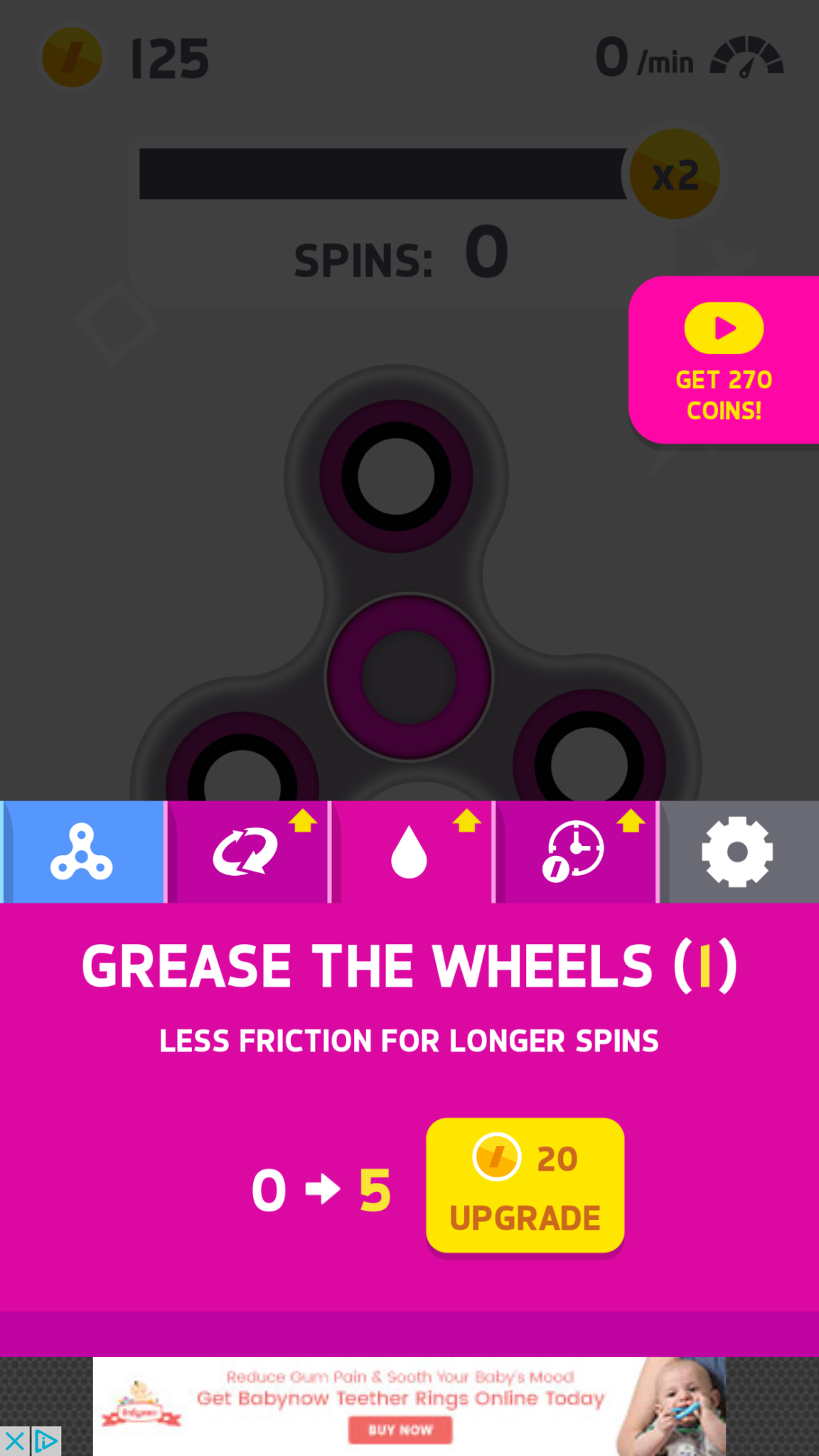
    Many kids have a Fidget Spinner simply because its the latest craze. They don’t need it for focus, its just a toy for them and that’s completely fine. The benefit I’ve heard many parents mention from using the Fidget Spinner as a toy is that it keeps the off of their screens for a longer time. Well, app developers have an answer to that too. Currently, the fasting rising apps on the Apple AND Android app charts are Fidget Spinner games. I downloaded a couple of the iOS games and played for a bit. Here’s how it works.


    What Parents Should Know

    Obviously these apps aren’t dangerous on their own. There is advertising involved, however, and it will most likely not always be geared toward young users. You can also watch ad videos to get coins, the ads were mostly for other free, casual style games. You can pay to get rid of the ads if you’d like. If screen time is a problem then these games could cause some issues. The one I spent the most time on, Spinner, had me trying harder and harder to get more spins out of my spinner. I wanted those coins so I could see what the next spinner design looked like or upgrade my speed. Kids who find themselves hooked on games like this would definitely have the same problem with one of these fidget spinner apps.

    My advice is, as always, to know your child. You have to know if your kid is the type to get hooked on something like this. If they use fidget toys because it helps their attention span then apps like Spinner may not be a good idea since its well known that screen time can cause kids to have more trouble focusing. Let me just finish by saying that these apps are not designed to help your kids with focus or attention. They are simply created to capitalize on the Fidget Spinner craze. In fact, playing the game could take the place of the real spinner altogether for some kids. That just means more screen time, more advertising, and more distraction. We, as parents, have to have the right information and make quality decisions about how our kids spend their time. Hopefully the info in this article can help you take the right steps.

     

  • Interactive Advertising Coming to Snapchat

    Interactive Advertising Coming to Snapchat

    I’ve heard marketers say that it is their job to ruin everything. Well, the cameras and filters built into our favorite social media platforms are proving that. Today Snapchat announced they’re launching advertiser access to their Geo filters and camera “lenses.” This means that you can use the augmented reality settings to not just make yourself look like a puppy but also to advertise for your favorite restaurant, the latest movie coming out, or a special event.

    A few weeks ago Facebook announced that they would be opening up the lenses to more developers. This will also increase advertiser use of these products. So now Instagram, Snapchat, and Facebook will all be serving up interactive advertising to our kids.


    What Parents Should Know

    These updates are just one more way that advertising can get to our kids. We know that marketers are only after our money, that’s no surprise and should be expected. However, we have to know our kids and decide if we are OK with them being advertised to in this way.

    My advice is that parents take a look at these Geo filters and lenses and see what they could potential be advertising to your kids. Again, Snapchat is on our uninstall list and advertising is the main reason. Today’s news only strengthens that position.

  • Original TV Content in Snapchat is a Sign of the State of Social Media

    Original TV Content in Snapchat is a Sign of the State of Social Media

    Have we come full circle? Maybe, because live-TV is becoming the trend. Well, it is now that television companies are bringing programming to social networks. Snapchat is the latest platform to announce that they’re bringing content from traditional TV to their feed. The shows will take the form of short-form supplemental episodes to direct Snapchat users to the shows on their networks. Snap has announced that Turner, A&E, ABC, the NFL, Vice Media, Discovery, and Fox are already signed on to produce this original content. Many of these companies are larger networks that can promote content from a large group of TV channels.

    Apparently Snap isn’t interested in advertising disguised as a show. They are after “true original content.” While the hope of the networks is to move users from their short-form shows on Snapchat’s stories to their programming on Television or their streaming services, Snap is hoping to provide more income from these companies. Especially since their first report after taking the company public showed some major losses. (They say most of the losses were due to paying shareholders after going public.) There is already data to support that social media content by TV networks improves their viewership:

    Nielson reports that media companies that publish Snapchat content see “notable audience growth” on TV and other platforms, and that the app delivered a 16-percent boost to the average monthly reach. – Digital Trends

    This means they shouldn’t have any trouble filling the Snapchat stories and discovery section with more of these shows. These short episodes will have ads that play before, during, or after. That’s where the income for Snapchat will come from.

    What Parents Should Know

    I think there are two things parents need to take into account as our social media becomes more inundated with traditional media and advertising. First of all, some parents are concerned with overexposure to media and entertainment. Setting restrictions on what content your child can see is getting harder and harder to do. Adding this content to their social media apps just makes it even more difficult. Moms and dads need to keep an eye on what shows and ads are showing up in these apps and take action if they see something that they’re not comfortable with.

    The second issue is time. Many of us are learning how important it is to watch the amount of time our kids are spending online or consuming TV, games, and movies. With Twitter, Youtube, Facebook, and now Snapchat moving towards more original TV style content we are seeing social media become more about the entertainment and less about communication and sharing with friends. It’s important for parents to understand that social media platforms now count as entertainment. If you have a time restriction set on Netflix, Youtube, or Hulu, you should have it on Snapchat and Instagram too. That’s just where we are now. Social Media isn’t a trend. It’s basically the state of the internet in this culture. We have to treat it as such.

  • Here is Everything Snapchat Added in it’s Big Huge Update

    Here is Everything Snapchat Added in it’s Big Huge Update

    Snapchat’s fastest growing demographic is young adults but it still built it’s success on the short lived selfies of High School kids. Your High School kids. Today Snapchat released a major updates that adds some very new, never before seen features. While I don’t expect these new additions to make Snapchat more of a problem. I do think its smart for parents to understand what the apps their kids use are capable of. Here’s what’s new:


    No Time Limit

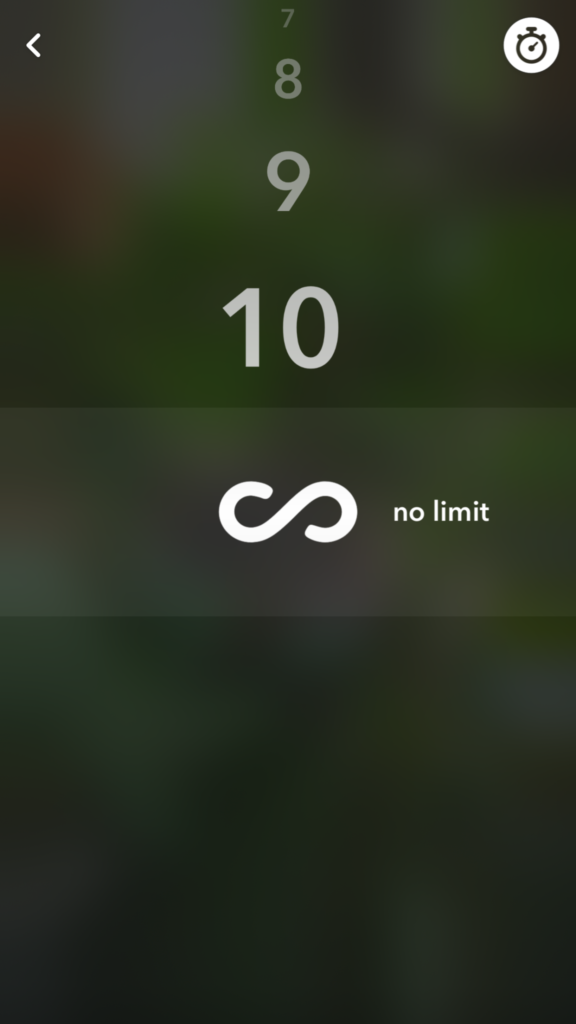
    You can now post you images without a time limit counting down until transitioning to the next photo. Videos also have a “play forever” option that will loop your videos. The “disappearing” images is what made Snapchat such a novelty at the beginning. This is a major step away from that.


    Emoji Brushes

    This is pretty much just a way to draw with emojis. Dumb? Maybe. Annoying? Definitely. Will it be used like crazy? Absolutely. You’ll be seeing emojis plastered all over snapchat images now. Enjoy!


    Magic Eraser

    This is just what it sounds like. It’s probably the coolest new feature in this update. It allows you to cut out sections of your photo and replaces the background automatically. This makes whatever you erased disappear like it was never in the photo in the first place. Features like this have been available in photo editing software but it’s the first time we’ve seen it in a social media camera.

    What Parents Should Know

    As I already mentioned these features don’t necessarily make Snapchat a more dangerous app. (It’s already on our uninstall list, mostly because of the potentially adult themed articles in the Discover section.) If you’ve been telling your teen they can’t install Snapchat this update might make it a bit more difficult. You are sure to hear “but mom, so and so has it” or “all of my friends..” just remember that while these updates are cool, there are other reasons you may not think this app is smart for your teen to have. This update doesn’t change any of that.


  • Uninstall Instagram? Your Kid Can Still Use It!

    Uninstall Instagram? Your Kid Can Still Use It!

    Many of the tools parents use to protect their children depend on being notified what apps they have and are using most often. When it comes to social media, being able to monitor posts and direct messages is critical. Sometimes, finding something you didn’t want to see will result in forcing your child to uninstall the app from their device. Until recently, Instagram has been a social media platform that only allows users to post from within the app. Therefore, uninstalling was a good solution for parents who wanted to give their kids some sort of time out. Instagram has just updated their mobile site and it’s going to ruin everything.

    Instagram’s mobile browser update allows users to post photos and use the explore feature without having the app installed. This means that the most major features of the app are available. You still aren’t able to send direct messages through the mobile site, which is a good thing, but posting, viewing posts and accounts, and finding new accounts through search and explore are now accessible. This update is meant to give access to Instagram in countries and areas who have limited  access to app stores or network services. Being able to use Instagram without an app means that more and more people across the country and the world will have an opportunity to share pictures of their lunch or coffee.

    What Parents Should Know

    There is a simple way to monitor what your kids are doing on Instagram, whether it’s on the app or in the browser. I recommend installing Instagram on your own device and adding their account. Even if you have an account of your own, you can add another one and see everything they have been doing. Using the mobile browser will definitely affect your ability to “ground” your kid from social media but there are ways to avoid that to. Here are a couple of options.

    1. Remove access to browsers within the parental controls or restrictions of their device or your parental control apps.
    2. Put instagram.com on the blacklist in your filters or in the “red flag list” on your accountability software.
    3. Take the entire device from your child until the grounding is over. Make them use the family computer for any online activities they must do. This will really give an extra impact to the punish.

    Instagram isn’t inherently bad, of course. Just like any site or app with user generated content you’re going to find inappropriate content. These things can’t usually be filtered so monitoring what they are doing is critical. The most common issue is time spent on social media. Teens are spending upwards of six hours a day online and many of those hours are on some form of social media. If time is your concern, then a simple uninstall of the app won’t cut it anymore. You have to lock down some of the browser options as well. Otherwise, you’re only keeping them from a couple of the features of Instagram, not the entire platform.


  • PODCAST: Is There Really a Porn On/Off Switch on Tumblr?

    PODCAST: Is There Really a Porn On/Off Switch on Tumblr?

    How can you see what you want on your social media timeline? Is there a porn on/off switch for tumblr? Android instant apps will screw up your accountability software.

    CLICK HERE TO SUBSCRIBE ON ITUNES (a review would be cool too.)

    FAMILY TECH WEEKLY EPISODE SIX

    Social Media Links

    Facebook: http://facebook.com/4pointfamilies
    Instagram: http://instagram.com/becausefamily
    Twitter: http://twitter.com/becausefamily

    Newsletter Signup

    Ministry Updates:: http://eepurl.com/R7Btr
    Weekly Blog Posts:: http://eepurl.com/cvnhXD

    Websites

    Ministry Site:: http://becausefamily.org
    Tech Blog:: https://safe.becausefamily.org
    Michael’s Speaking Info:: http://kmichaelprince.com

    Donate and Affiliate Links

    http://BecauseFamily.org/partnership

    Music by Kevin MacLeod at http://Incompetech.com

  • Social Media Live Video Causes Public Mental Health Concerns

    Social Media Live Video Causes Public Mental Health Concerns

    Mark Zuckerberg is on a mission to make Social Media safer for our minds. No, he isn’t trying to protect us from adult images, he’s more concerned with fake news and potential damaging live video. Over the past several weeks there have been some live Facebook videos that have garnered much attention because of the graphic and horrific nature of the content. Videos of murder or suicide have been passed around social media and showed up on many of our Facebook feeds. Once these videos are filmed live, they are uploaded to the account of the person who filmed it and spread across the timelines of their followers. This often leads to more shares and potentially a viral spread of the video. The sudden popularity of these gruesome videos will then lead to thousands or even millions of people seeing them before Facebook can have them taken down. This is where the concern for public mental health comes in.

    Facebook’s response to this issue is the hiring of 3,000 new employees who’s job it is to screen these live videos for any content they may deem a danger to the mental health of Facebook’s users. This team of editors is an addition to a team of nearly 4,500 people who have been screening content. The issue is that live video adds to the challenge of keeping content on Facebook free from graphic images and videos. Just responding to reports that a post may be harmful isn’t enough anymore. Facebook is trying to screen some videos and images before they’re posted. Hopefully, this will make for fewer viral videos that give us nightmares. This will also set a precedent for other social media. Including the platforms that your kids use.

    What Parents Should Know

    If you haven’t had a reason to talk to your kids about what they see online yet, this one should do it for you. With consistant opinions and world-views being tossed around social media, we have to have an active, ongoing conversation with our kids about what they’re seeing on their timelines. Videos are posted and shared long before any of us can see them and remove them and long before we can step in and keep our kids from seeing them. News articles are taken as fact even if they are in the “opinion” category on the news site. This is why my advice is to be a safe place for your kids to come when they see something troubling or have questions about what they’ve seen. 

    Whether it’s violence, bullying, or sexual content, what we see can’t be unseen. In a world where technology is changing faster than we can keep up it’s critical to be the one your kids come to when they’ve seen something that will stick with them. If the companies who develop these social media platforms are concerned enough to hire more employees to help solve the problem then those of us whose family use the service should be on top of setting up safeguards, learning more about these tech topics, and keeping the lines of communication open.


    Keep in the loop with our weekly posts sent straight to your email.


    Get Our Latest Posts in Your Inbox

    * indicates required


  • Why Your Teen Posts Her Feelings On Social Media

    Why Your Teen Posts Her Feelings On Social Media

    I’ve seen them called “vaguebook posts.” It’s the status on social media that hints at some sort of trouble or drama but doesn’t go into detail. It can be annoying to see these things on our Instagram or Facebook feeds but sometimes they’re not just cries for attention, they’re cries for help. Teens are being taught (rightfully so) that it’s better to express their feelings than to hold them inside. Studies are showing that more and more young people are admitting to having bouts with depression, anxiety, and even suicidal thoughts. Social media has become a safe place for them to express how they feel. The problem is that it can often open them up for criticism and unwanted attention. 

    The 12-month prevalence of MDEs (major depressive episodes) increased from 8.7% in 2005 to 11.3% in 2014 in adolescents and from 8.8% to 9.6% in young adults (both P < .001). – Pediatrics Journal Study

    The reasons for these increasing numbers could be related to increased awareness of the symptoms of depression but regardless of the reason, they are statistics that parents should pay attention to. Mental Health professionals are championing more awareness and openness about depression and anxiety. They agree that being outspoken about how you feel can lead to prevention, early detection, and even increase the likelihood of sufferers getting professional help. The problem, however, may be that this transparency is happening in a public forum like Social Media. This is where parents come in.

    What Parents Should Know

    I am not a psychologist  or licensed counselor. I don’t have a professional opinion on the mental health of your teenager. I do, however, have a professional opinion of their activity on Social Media. As a family internet safety expert I see parents struggle to open the lines of communications with their teens. An emotional post on social media should be seen as an open door. There is no more important thing in the life of your young adult or teenager than the ability to be transparent with you about how they feel. If they are posting on social media about depression, anxiety, and especially suicide, it’s time to bring that conversation into a face to face meeting. Posting such transparent posts (even if they’re vague) on social media opens your child up to more bullying and harassment which could be what’s contributing to the problem in the first place. They should be advised to express those thoughts vocally to someone they trust.

    My advice is to start the conversation with your child even before you see any sign of depression. Ask them how they are doing and feeling. Ask them if they feel overwhelmed and if there is anything happening in their lives that you should know about. If you are seeing true signs of these depressive episodes then don’t hesitate to seek out a licensed counselor that can mediate your discussions with your teen. The world they are growing up in is very different than it was even twenty years ago. The standards that kids are asked to live up to are higher. Criticism is more public and the media is teaching messages that conflict with what many of feel is healthy for our kids to believe. This problem is real and it isn’t going to solve itself. We, as parents, have to step up and help our teens make quality decisions when it comes to their feelings and mental health. Take the first step today. Have a conversation.


    Sign up for our email list to get our family internet safety checklist and the Safe Blog Uninstall List.

    Get Our Latest Posts in Your Inbox

    * indicates required


  • How To Control What You See on Every Social Media Timeline

    How To Control What You See on Every Social Media Timeline

    One of the most common complaints I hear from parents is that they never see the posts they want to see on their social media timelines. They will scroll through their Facebook or Instagram feed looking for an interesting post, something from family, or even their own children and instead be bombarded with articles about politics or silly memes or chain letter type posts that want you to click like and share for some reason. If your feed is crowded with this sort of chatter it makes enjoying the purpose of social media very difficult. If you’re like me, you use your social media feeds as a way to keep up with friends and family, to promote the work that you do, and to be entertained and laugh at silly internet things. Well, the algorithms designed by those who build these social media platforms are created to give you the best experience. The problem is that it’s all based on your behavior on the site or in the app. If your behavior contributes to the clutter then you’re just going to get more clutter. Here are some tips to help you sort out the mess that may be your social media feeds.

    Remember who is on what social media service.

    There are different audiences on different social media sites. The split is based on a number of factors. Age, career, and gender are the major contributors. Twitter, for instance is more popular for young professionals looking to network and build a community of like minded business people. Instagram is a whole lot of young people and young parents who got tired of the clutter in Facebook and Twitter and just enjoy sharing photos. Facebook has a very large middle aged demographic and has seen a major decrease in young users over the past several years. Snapchat is full of youngsters but is growing rapidly in the 18-25 demographic. The reasons that people choose the platform that they choose can seem pretty obvious and it’s important to keep those reasons in mind as you use social media. You aren’t going to care too much about the photos of a ton of young parents and teens if you’re a middle aged parent who’s adult kids who have no children of their own yet so you may not open an Instagram account. As soon as your 22 year old daughter and son-in-law have a baby, though, and post photos of her online. Instagram is where you’ll want to be.

    Don’t like and join every FB page or group you’re invited to.

    Facebook Pages are created for advertising and promotion. They all link to a business, blog, or something of that nature. Because of this they’ll post nonstop and any time you react to one of their posts in any way you’re telling Facebook to show you more of what they post. So, if you’re a follow of a Facebook page, say the BecauseFamily Page, for instance, and you want to see more of the great resources and articles that they share, you’ll want to interact with their posts more. If you follow a page like Silly Kittens Playing Piano (I think I made that up but it’s probably out there somewhere) that posts fifty pictures a day that you don’t really even find that funny, you’re going to see more of those photos than you see most other things. Especially if you have ever clicked the like button on any of them.

    You see, the algorithm on Facebook gives you posts from the pages and groups you’re apart of based on how often you react to those posts. When you click the like button on every kitten picture you see, you’ll eventually see almost nothing but cat pictures on your Facebook feed. Now, if that’s what you want then awesome, but if you’re trying to keep tabs on what your kids are posting online, those cats are going to get in the way. You should probably click like a lot less. That’s my next tip.

    Leave the Like Button Alone!

    The like button on Facebook or the heart icon on Instagram and Twitter is basically a little “show me more” button. This is you telling the algorithm that you enjoy that kind of content and want to keep seeing it. The problem with this is we treat the Like button as passive aggressive head nod toward the content we’re seeing. You have to understand, it’s more than a head nod. It’s a subscription. You may be seeing tons of posts that you think are stupid or posts from people you barely even know. If you are, it’s because you’ve been clicking like as if it’s the same thing as a casual grin across the room. I’m sorry to say it but it’s your own fault.

    A couple of years ago I swore off of the the like button. I decided that if a post isn’t worth a comment, I wouldn’t react at all. After a couple months of that behavior, my Facebook feed started to become enjoyable. I see the geeky stuff that I like more than I see anything else, I don’t see much annoying click bait content anymore, and my friends and family are front and center and they don’t even have to tag me in their posts. I’ll often show my wife something hilarious that has come across my Facebook feed and she’ll ask me why my feed is so awesome. I don’t click like on ANYTHING I will tell her. Now, I will add that likes on comments within a post are an exception. I’ll often click like on a reply to one of my comments. That doesn’t add to the clutter since it’s on a post I have already commented on, thus deeming it worthy of being filed with the algorithm as something I’d like to see more of.

    Lastly on this topic, it’s important to remember that nobody gets blessed, goes to heaven, or receives better medical care because of a Facebook like. That’s called click bait and it only exists to help the page that shared it get more traffic and sell more advertising. 

    Only open posts from people you want to hear more from.

    Sometimes we see a post that peaks our interest and before we know it we’ve dived head first down a rabbit hole. When you click on a post on Facebook or Twitter, the algorithm remembers it and feeds you more posts by that poster. That means the rabbit hole doesn’t end when you’ve closed the article. It will continue on your feed from now on. The most important thing when deciding what links to click on on social media is who is posting it. If you don’t want to see more from that person or poster then you shouldn’t click the link. Also, it’s important to consider the original poster, not just the person who shared it. This info can help you populate your feed with only people who’s word you trust and respect and fewer of the random and nonsensical articles that seem to be so prevalent in our social media feeds these days.

    Use the “Follow,” “Notifications,” or “See First” options. 

    A great way to make sure you don’t miss a post by someone you care about is to tell Facebook you’d like to “See if First.” You can also tell Instagram or Twitter to notify you when someone you want to follow posts something. You can watch this video to see how to set up notifications on most of your accounts.

    Take Control

    Social Media algorithms are often treated like an enemy that we struggle to fight against. Every time Twitter or Instagram or Facebook changes the way they order your news feed petitions start showing up to put it back the way it was. The truth, though, is that these algorithms are tools. It’s a form of artificial intelligence that was designed to give you more of what it thinks you want. It decides what you want based on how you act. This means that if you don’t like what you’re seeing on your timelines, you need to change what you’re doing on your social media accounts. I’ll ignore the obvious life application here and just recommend that you apply some of the above advice to how you handle your online experience. Get back to me in six months and you can thank me for how much more “well behaved” your timeline has been recently.