Blog

  • Snapchat Adds Games to Their Camera

    Snapchat Adds Games to Their Camera

    Snapchat’s newest update adds gaming to their camera. That’s right, you can now use their augmented reality camera to play silly games. Some are even multiplayer. They’re calling the games “Snappables” and they range from throwing kisses at each other to dance competitions. Users control the games with their face or touch and motion controls. Snap is planning to release new Snappables weekly featuring basketball, alien combat, and a lot of other themes.

    What Parents Should Know

    Right now, the multiplayer Snappable games are centered around your friend list. This means you shouldn’t be able to play games with random players you have never met. That could be an added feature and we’ll let you know if and when that is the case.

    I recommend knowing what your kids are using their social media apps for. If they are connecting with their friends to play games and chat, and you’re ok with that, then that is just fine. I never recommend allowing your kids to meet new people online through Snapchat or other social media apps. Games like Snappables are pretty harmless other than more ways to waste time and the obvious opportunity for corporations to launch games featuring their brand for advertising. More than anything, just stay knowledgeable about what your kids are doing online and keep the conversation open with them. This way they won’t be concerned about you seeing what they do online and the lines of communication will stay open with them.

  • Amazon Echo Dot For Kids Released on the Same Day an Alexa Security Flaw Was Announced

    Amazon Echo Dot For Kids Released on the Same Day an Alexa Security Flaw Was Announced

    Voice is the new screen. That’s what all the tech gurus are saying these days. We’re moving beyond tapping to simply speaking. “OK, Google,” “Alexa,” even “Cortana” have become standard parts of our vocabulary. Even our kids know how to play music, stories, or get help with their math or spelling from a voice-activated assistant of some kind. Voice command started with Siri and quickly became a standard feature in all smartphones and even in some of our vehicles. What seemed like science fiction only 15 years ago is now a common tool for most of our culture.

    We are all hyper-aware, now, of the amount of information tech companies are gathering from our internet use. Since we carry fully connected devices around with us everywhere we go and use them to broadcast our daily routine on social media, there isn’t much that is hidden. Recently, though, we’ve become a bit cautious of how much of our data we share with these companies. It’s one thing to let Google know we like seeing ads on YouTube for our favorite movie genre, but tracking our location and schedule is a bit far.

    A test by security group, Checkmarx, found a security flaw that allowed them to design an app that would leave the Alexa microphone on long after you’ve finished using Alexa. Then, the app would send the hacker a transcript of what the mic picked up while you didn’t know it was turned on. Checkmarx found this flaw earlier this month and reported it to Amazon. It was corrected immediately.

    “Customer trust is important to us and we take security and privacy seriously,” the company said in a statement. “We have put mitigations in place for detecting this type of skill behavior and reject or suppress those skills when we do.” – Amit Ashbel, director of product marketing for Checkmarx

    This obvious flaw is the first of its kind that has been made public. There is no way to know how long it has been around or if it has been used by anyone to collect user data. Amazon was fast to fix the issue but only after a third party research group found the problem in the first place. There are always security risks with any smart-home or virtual device and having a microphone that is always on compounds that risks. The popularity of Alexa and Google home is ever increasing, though, despite these risks. With the outcry against Facebook for their data collection and usage, it seems interesting to me that these fully connected, in-home virtual assistants are becoming so common. So common, in fact, that they’re being designed for our kids.


    Enter, the Echo Dot for Kids
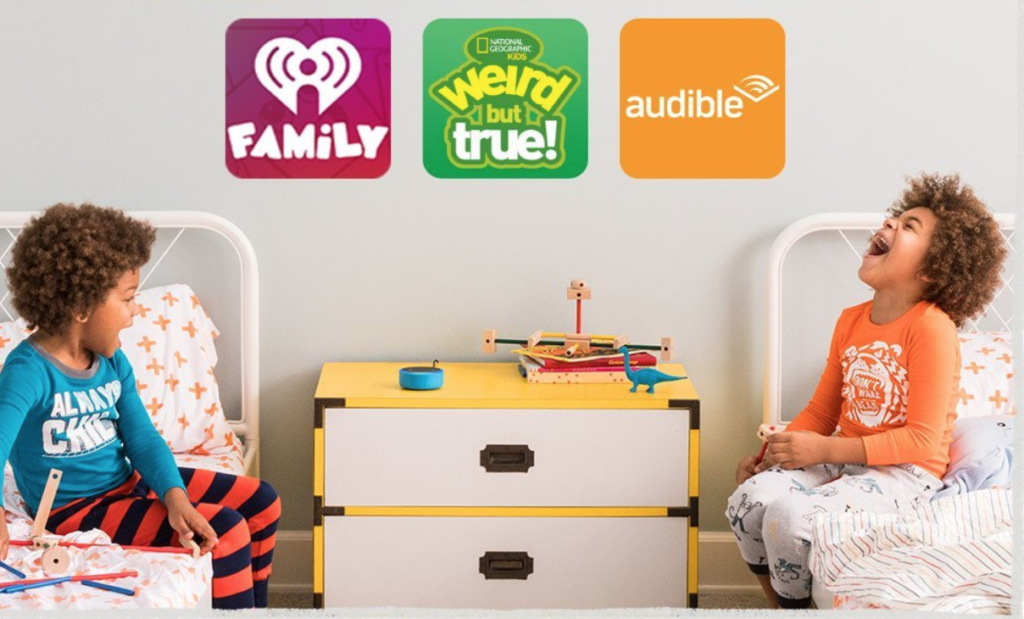

    The news of this breach was released today, and interestingly, so was Amazon’s new Echo Dot for Kids. The Alexa enabled personal assistant speaker comes with a protective case, a replacement warranty (for the inevitable drop on the hardwood floor), a year’s worth of Amazon Freetime, built-in parental controls, and a bunch of skills (apps) that are geared towards kids. The Dot will read to your kids, help them with homework, play kid-friendly Audible audiobooks and more. The Echo Dot for Kids is $79.99 on Amazon.com.

    What Parents Should Know

    Being able to lock your kids out of explicit music and audiobooks, disabling entertainment features in favor of educational skills, turning off voice purchasing, and other parental control options make the Dot for Kids a pretty appealing piece of technology. I am, however, very skeptical of putting a marketing company’s microphone in my kids’ rooms. I know that doesn’t sound like the opinion of a tech nerd but my distaste for targeted marketing to minors and collection of the data of children will always outweigh the desire to be in with what’s trendy in technology.

    Though the Alexa security flaw has been resolved, I wonder how long it will be until another workaround is discovered? I bet it’ll be pretty soon. Here’s why: Amazon is trying to strike a balance between a way to gather the most information about your family as possible and still make you feel that your information is secure. There will always be functionalities in their systems that allow them to gather just that little bit more than you know they’re collecting. When a security company (at best) or hackers (at worst) find these functionalities, they exploit them to meet their own needs. Sometimes the need is to sell the workaround info to the company to keep it all quiet and sometimes it’s worse, the collection of data for sale or use. We all seem to be ok with Amazon or Facebook or Google having a bunch of our private data. After all, it is often used to make our lives easier and more convenient. The problem comes when something like the Cambridge Analytica fiasco takes place and we have our information being sold to the highest bidder or used to target us with fake news and advertising.

    Unfortunately, as long as we have devices that take in our likes, dislikes, conversations, and habits, we will have companies using that information to further strengthen their bottom line. All I am saying is that, as families, we have to draw our own line. My line is drawn pretty strictly against voice-activated assistants in our home, especially ones designed to be used by my kids. Your line will be somewhere different than mine but I advise you to be knowledgeable about any tech you bring into your home. If you aren’t sure what something does or how it really works, I wouldn’t buy it or use it in the first place. I know that sounds a bit counter-cultural, but the culture seems pretty ok with giving away all of their personal information and then panicking when they find out it’s being misused. I don’t blame companies for that, I blame people. Facebook fooled us once, perhaps shame on them, if you’re fooled again, shame on you.




  • YouTube Boasts 8 Million+ Flagged Videos Removed, is That Enough?

    YouTube Boasts 8 Million+ Flagged Videos Removed, is That Enough?

    A new report from YouTube has disclosed the removal of over 8 million videos that didn’t lineup with their content guidelines. Most of the videos were removed by their algorithms system. Videos that contained sexual content, extreme violence, hate speech, or terrorism all made the list of removed content. Some had been flagged by the system, some by viewers, and a few by YouTube employees who watch for non-compliant material on the video site.

    Many of the videos that were flagged by YouTube’s software were removed before they even received a single view. These algorithms can scan the videos through the processing system and deny them before they’re made public. Does this mean that YouTube is a lot safer for Felix?

    Check Out: Youtube Kids

    What Parents Should Know

    This is a major step in the right direction for YouTube. Unfortunately it’s never going to be full proof. The only real way to monitor inappropriate content is for human eyes to be on that content. Also, as parents it’s tough to allow another person, much less a company, to decide what is appropriate for our families and what is not.My advice, as always, is that parents have their eyes on the stuff their kids are watching whenever possible. If not possible then be sure to use tools like Guided Access or android family link or kid mode to be sure kids can’t explore YouTube unmonitored or unfiltered. YouTube does have a safe mode as well as a separate app for kids (YouTube Kids) and I recommend these tools as well.

  • Top “Family” Android Apps Found to Collect Kids’ Data Without Parental Permission

    Top “Family” Android Apps Found to Collect Kids’ Data Without Parental Permission

    It’s so nice to just head to the Google Play store and grab a couple of free apps to keep your child busy for a few minutes. There are a lot of free options and Google Play has a “Designated for Families” section to help you know if the app will be safe. Unfortunately, many app developers haven’t been following the rules. Android’s compliance rules are very specific about requiring apps to stay true to the Children’s Online Privacy Protection Act (COPPA.) That means there are certain types of data they aren’t allowed to collect without parental permission and other types they can’t gather at all. A recent research project has found that the majority of these apps ignore the rules of COPPA entirely.

    Overall, roughly 57% of the 5,855 child-directed apps that we analyzed are potentially violating COPPA. – Proceedings on Privacy Enhancing Technologies

    The study found that most apps collect the data of their users, even though the apps are geared towards an audience under 12 years of age. The research group formed from North American and European universities developed an automatic system to study nearly 6,000 apps. They looked at data such as ad tracking, location tracking, ID sharing, and wifi address tracking. Many of the transmissions were unsecured which put data at a greater risk.


    What Parents Should Know

    When an app is free there are some things you need to consider. There’s a reason it is free, not because they want to give you free access but because developers make their money in other ways. Obviously, advertising is one of the ways, the other way is your personal information. Things like your location, device type, web search habits, and internet history are very valuable resources to advertisers. App developers are able to gather this information and sell it for marketing purposes. The common phrase is data is the new currency.

    There are certain laws concerning the collection and use data of people under the age of 13. This study shows that many android app developers are ignoring the rules. This proves that the method of self-regulation may not be viable when it comes to protecting our information and privacy.

    My recommendation is that parents pay very close attention to the privacy practices of the apps they use for their kids. Read the terms and agreements. Read their privacy policies. Most importantly, understand that a free app is free because they are selling something else. Namely, your and your family’s personal information.

  • Here’s How To See if Your Private Data Leaked to Cambridge Analytica

    Here’s How To See if Your Private Data Leaked to Cambridge Analytica

    There is a tool to help you find out if your data was leaked to Cambridge Analytica. There may not be much you can do about it, but it is interesting to see if your app approval habits led to the sharing of your private data. Facebook has said that they’ll be highlighting the tool on the top of everyone’s news feeds but in case you haven’t seen it or don’t see it, here’s how to find the tool on your own.


    I recommend you check this out for your own Facebook account as well as any accounts your kids may use. Just in case you don’t have a minute and a half to watch the video above, I’ve listed the steps below for you. Thanks for reading FamilyTechBlog.com and remember to be careful how much access you give apps to your social media data.

    1. Open your Facebook App
    2. Click on the “Hamburger Menu” to the bottom right. (Three stacked lines.)
    3. Scroll all the way down to the bottom of the menu.
    4. Select “Help and Support”
    5. Select Help Center
    6. Search {Cambridge}
    7. Select the first auto complete option.
    8. That’s where it tells you if you’ve shared data with Cambridge Analytica.

    Thanks again, and share this with your friends.

  • Fortnite is Free; and also the Highest Grossing Game on iOS

    Fortnite is Free; and also the Highest Grossing Game on iOS

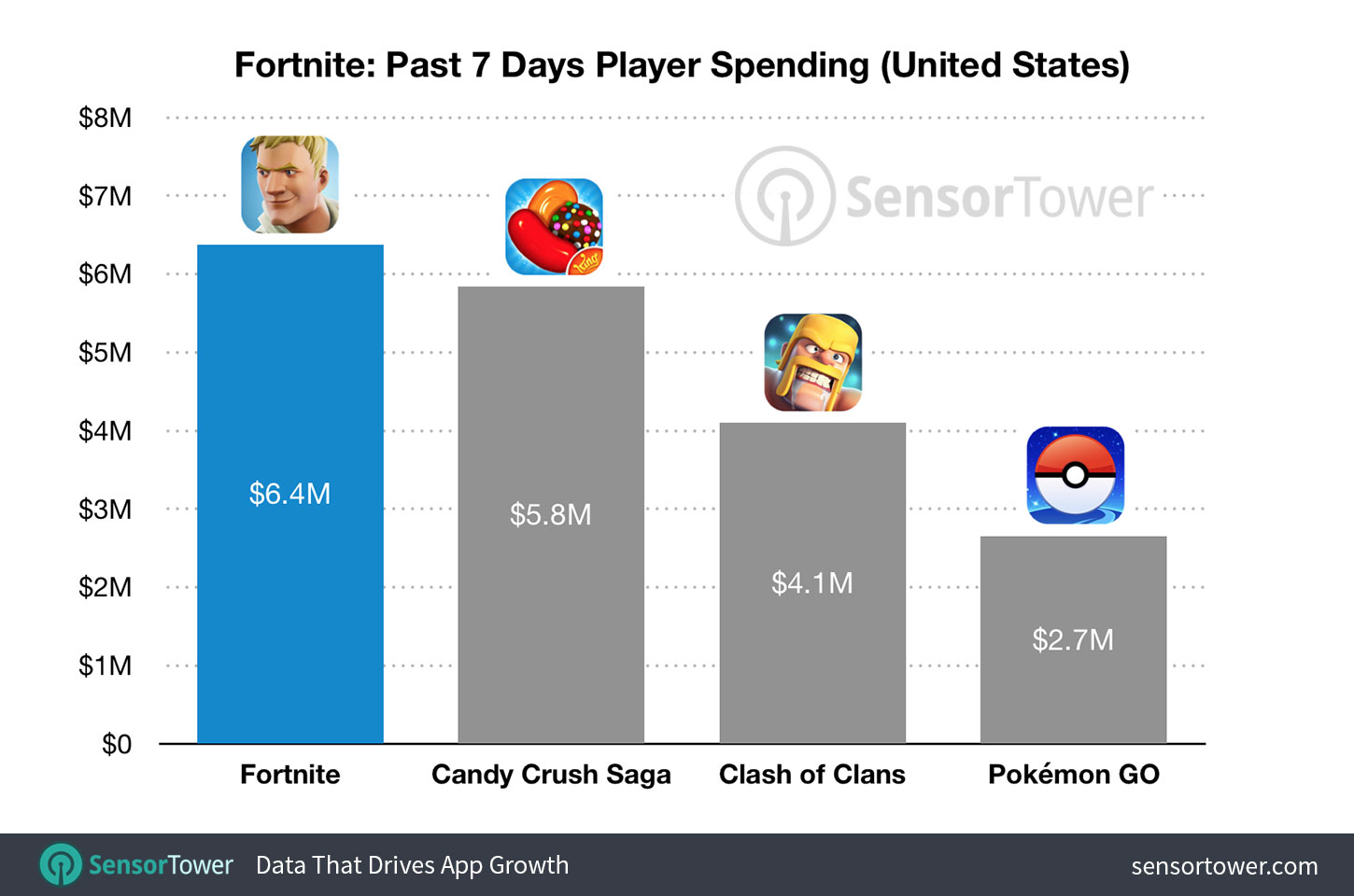
    Freemium games aren’t new and there is a reason that that category has graced the top of the charts on iOS for a long time now. Fortnite: Battle Royale, however, has rushed into the Freemium Game Revenue lead, making $15 million in the first three weeks since launch. The game, in which you fight it out against 99 other players to be the last man/team standing, is free to download on iPhone. You don’t buy items to increase your skills or character’s strength, you just buy costumes and dance moves. Obviously, the lack of game-changing in-app purchases hasn’t hurt the bottom line for Epic Game’s wildly popular third-person shooter and crafting game.

    SensorTower.com

    What Parents Should Know

    For my thoughts on shooter games and kids, you can read my game reviews and listen to this BecauseFamily Podcast episode. As far as in-app purchases go, it is up to you. You should know how to set up your kids’ devices to not allow purchases without approval. Failure to set this up will likely lead to surprise expenses as the temptation for that new dinosaur hat or “Carlton” dance moves becomes too great for your kid to withstand. 

    My advice is for you to talk to your kids about the time they spend playing games on their devices. Make sure you have an understanding of what a healthy amount of time on devices looks like. Also be sure that you have your credit card settings secured to keep unwanted purchases from surprising you next month. Again, talk to your kids about spending your money on the games they play. I agree that these developers deserve every dollar they make from their games. I also strongly believe that if a kid is underage, it is up to the parents to regulate whether or not their child can spend money on their favorite games. That is up to you as mom or dad.

  • How To: Encrypt Your Facebook Messenger Conversations

    How To: Encrypt Your Facebook Messenger Conversations

    Facebook’s data mining habits have been in the news for the past few weeks and today they’ve admitted that they’re reading your private messages in FB Messenger. They use some of this information to better your experience, they scan images and text to be sure you’re not breaking any of their policies and to check in on reported users. They also, however, scan your messages to receive more data about you. Advertising has been in messenger for a while and your private conversations are being used to customize that info for marketers.

    Check Out: How to download your Facebook Data…

    Facebook messenger has had a way for you to encrypt (or hide info in) your messages for a while, the above video is a walkthrough on how to turn those settings on. Unfortunately, you have to opt-in per conversation but once it’s on your messages are encrypted “end to end” meaning they can’t be read by Facebook’s AI and should they be intercepted by a third party, they would come through as gibberish-like code instead of the messages you’ve sent. 

    Here is a step by step guide for turning on “secret conversations” in messenger.

    1. Select the conversation you’d like to make secret.
    2. Tap the name of the group or contact above your conversation thread.
    3. Scroll down and select “Secret Conversation.”
    4. That’s it…you’re encrypted.


  • New Snapchat Feature Enables 16 Person Video Chat

    New Snapchat Feature Enables 16 Person Video Chat

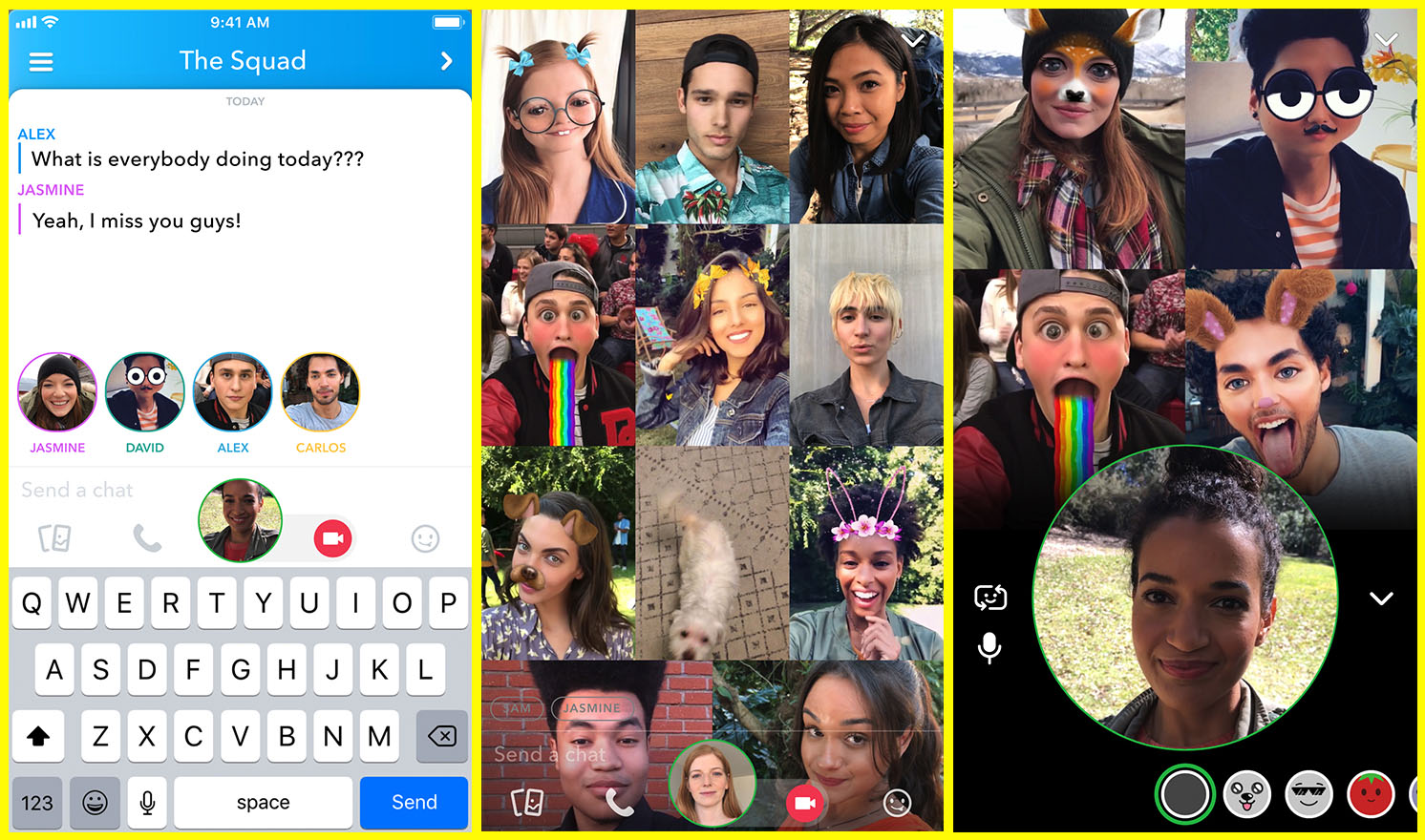
    Group chat has been available for a long while now, even in Snapchat, but now you can hang out with a large group of friends on video without ever leaving home. Snapchat’s new group video chat feature is now available and allows you to include 15 of your friends. You can sign on to a regular chat and add friends as you go or set the chat up with your large group from the beginning. Of course, Snapchat’s AR filters and masks will be available during these chats as well. Another feature that is available with this update is tagging or mentions. You can “@” tag a friend in your posts so they’ll be notified that you’re mentioning them.

    What Parents Should Know

    Parents should already know how much time their kids spend on social media. If unsupervised, they’ll chat with friends and creep their timelines all day long. In fact, many teens say they feel addicted to social media, while not doing anything to curb their own addictions. Addiction isn’t the only problem with extensive social media use. Social contact over our devices has proven to be far less beneficial than face to face interaction. There have been countless studies comparing video chat to actual conversations with someone in person and the conclusion is always the same. Spending time in the same room as someone is better for your development than only texting, calling, or video chatting. Take this excerpt summary from ScienceDirect.com’s 2014 study.

    When engaging in face-to-face communication, social information is conveyed by vocal and visual cues within the context of the situation. Nonverbal communication, defined as communication without words, includes apparent behaviors such as facial expression, eye contact, and tone of voice, as well as less obvious messages such as posture and spatial distance between two or more people (Knapp & Hall, 2010). The understanding of these kinds of nonverbal social cues is particularly important for social interaction because of the need to modify one’s own behavior in response to the reactions of others (Knapp & Hall, 2010). – ScienceDirect.com

    With apps such as Houseparty and Snapchat’s group chat out there, we have to be more intentional than ever about the time our kids spend on their screens. Hanging out with friends through our devices is becoming easier and more acceptable. Kids aren’t going out as much, the malls are closing, arcades are few and far between, and movie theaters are having to serve food like restaurants to attract the older generations because the younger ones aren’t as interested. Why go out when you can stay in and hang out with your friends online? Video chat can be an awesome way to stay in touch with long-distance family or friends but when our kids leave school and go home to do their homework while video chatting with six of their best buds all evening, something is missing from their life experience. We have to monitor their online activity and set time limits. Use unGlue or Circle to set some boundaries. Talk to your kids about the importance of face to face interaction. Don’t deny them opportunities to go spend time with friends (in families you trust). Drive them to that get-together or youth group event. Say yes when a friend wants to come over. Give them opportunities to spend face to face time with friends, outside of school, and you’ll be giving them the best chance you can to develop the skills they need to succeed.

  • Parent Guide: Farcry 5

    Parent Guide: Farcry 5

    Farcry 5 S.A.F.E. Rating

    Violence: 1 out of 5
    Language: 1 out of 5
    Sexual Content: 3 out of 5 (so far)
    Positive Message: 2 out of 5

    Total: 7 out of 20 = Adults Only!

    The Game

    The Farcry series is known to feature regular people type characters who are put in extraordinary situations and forced to fight their way out. Players try their hand at fighting crime lords, warlords, and drug cartels. In Farcry 5 you’re a sheriff deputy who is trying to overthrow a cult in the mountains of Montana. You team up with locals, wildlife, and even secret agents to eliminate the influence of “The Father,” a man who considers himself the spiritual leader of an entire group of religious followers.

    This game is set in an open world. There is a storyline but it isn’t linear, it unfolds as you explore different areas of the game. You can go around doing whatever you want, liberating outposts, saving citizens, hunting and fishing, all the while increasing your influence over the region through something called “resistance points.” These points allow you to unlock new areas and items and eventually lead you to your final showdown with the leader of the cult. The story of Farcry 5 is very interesting and well told. It is, however, a bit on the anti-religious side, albeit so extreme that it is hard to view it as a serious commentary on religion. The cult is very extreme and a caricature of anything it may be trying to actually represent. I wouldn’t take seriously any complaints about this game being anti-christian or anti-religion.

    Violence: (1)

    This game features extreme violence right from the start. You are attacking enemies with a large collection of different weapons. Melee, explosives, firearms, vehicles, and even animals can be used to take out your enemies. You can choose to use stealth to eliminate your enemies or you can go in guns and dynamite blazing and take ’em all out that way. The worst violence in the game takes place during the cinematic cut scenes. There are executions, eye gouging, and self harm/mutilation featured in the cinematic scenes that drive the story. The violence is used to show the extremity of the cult you are up against and it begins with the first cut scene at the beginning of the game.

    Farcry 5 scores a 1 for violence meaning it’s meant for Adults.

    Language: (1)

    Farcry 5 has multiple uses of every word imaginable right from the very beginning. It is rated M for Mature because of language and it is obvious early on in the game play.

    Farcry 5 scores a 1 for Language meaning it’s meant for Adults.

    Sexual:

    So far in my current, incomplete, walkthrough of Farcry 5 there isn’t any sexual content. The rating of the games mentions sexual themes but I haven’t seen it yet. I will update this post on this topic once my walkthrough has completed.

    Farcry 5 scores a 3 (so far) for sexual content meaning it depends on your child. 

    Message:

    Like most 1st person shooter games, Farcry 5 puts you in a position where your only option is to pick up a machine gun and start mowing people over. As mentioned before, this game is full of scripture and even some reimagining of some old church songs. They are used in a context that features the cult in a negative way. There is no positive message in this game, except maybe that you shouldn’t join a violent cult. The themes of this game are very grown up and explore what happens when people give themselves blindly to someone like “The Father.”

    Farcry 5 scores a 2 for message meaning it contains very mature themes. 

    Final Thoughts

    Farcry 5 isn’t meant for your 15 year old son. It’s a game made by adults for adults. It features very adult themes and content and doesn’t apologize for the gruesomeness of the violence or the complexity of the story. While there isn’t any sexual content that I’m aware of, it still ranks very low as far as its playability for even some older teens. I recommend keeping informed on the content of this game and know if your kids are playing it. Many kids will ask for it and some will get to buy it because their parents don’t know what the game consists of. My advice is that you share this review with other parents and let them know what content the game their kid is asking for contains.